
Can nutrition improve fertility even after 35
 Written by
One World Fertility
Jan 21, 2026 13 min read
Written by
One World Fertility
Jan 21, 2026 13 min read
Discover how nutrition supports fertility after 35, including key nutrients, diet tips, and realistic expectations backed by medical science.

If you're over 35 and trying to get pregnant, you've definitely heard the numbers, and they can be fairly disappointing. But here's something hopeful: how to improve egg quality after 35 naturally starts by changing what you eat three times a day. Your fertility diet after 35 doesn't have to be hard or rigid. Think of it as giving your eggs the nutrition they need to grow and thrive. Making small changes to your diet helps your eggs, hormones, and ovulation become healthier and stronger.
This article goes into detail on what works: which foods really help fertility, what a fertility-friendly diet looks like in real life, and easy meal ideas you can start using right away. Just simple actions that you may incorporate into your busy life without any complicated scientific terms. You have more control over your ability to get pregnant than you think. Let's work together to find this out.
Understanding Egg Quality and Fertility Changes After 35
Let's be honest about the egg quality after 35. The first step to doing anything about it is to know what's going on in your body.
The truth is that female fertility after 35 changes. The eggs you're letting go of today have been with you since birth, and like everything else in your body, they've gotten older. This doesn't mean that getting pregnant is impossible, far from it. But after 35, egg quality and fertility naturally go down due to oxidative stress (which is like "rusting" in cells), lower energy production in the egg cells, and more mutations in chromosomes. Everyone's egg quality changes with age, but most women discover changes in their egg quality and fertility in their mid-to-late 30s. You might be asking yourself, "How do I know if I have low egg quality?"
Poor egg quality symptoms aren't usually apparent, but keep an eye out for:
- Menstrual periods that are shorter or not regular
- Having trouble getting pregnant, even though you have sex regularly and at the correct times
- Chemical pregnancies or miscarriages
- Lower levels of AMH (anti-Mullerian hormone) in tests for fertility
You can't change your age, but you can affect the health of your eggs right now. That's when nutrition becomes your superpower.
How Nutrition Directly Impacts Egg Quality and Fertility After 35
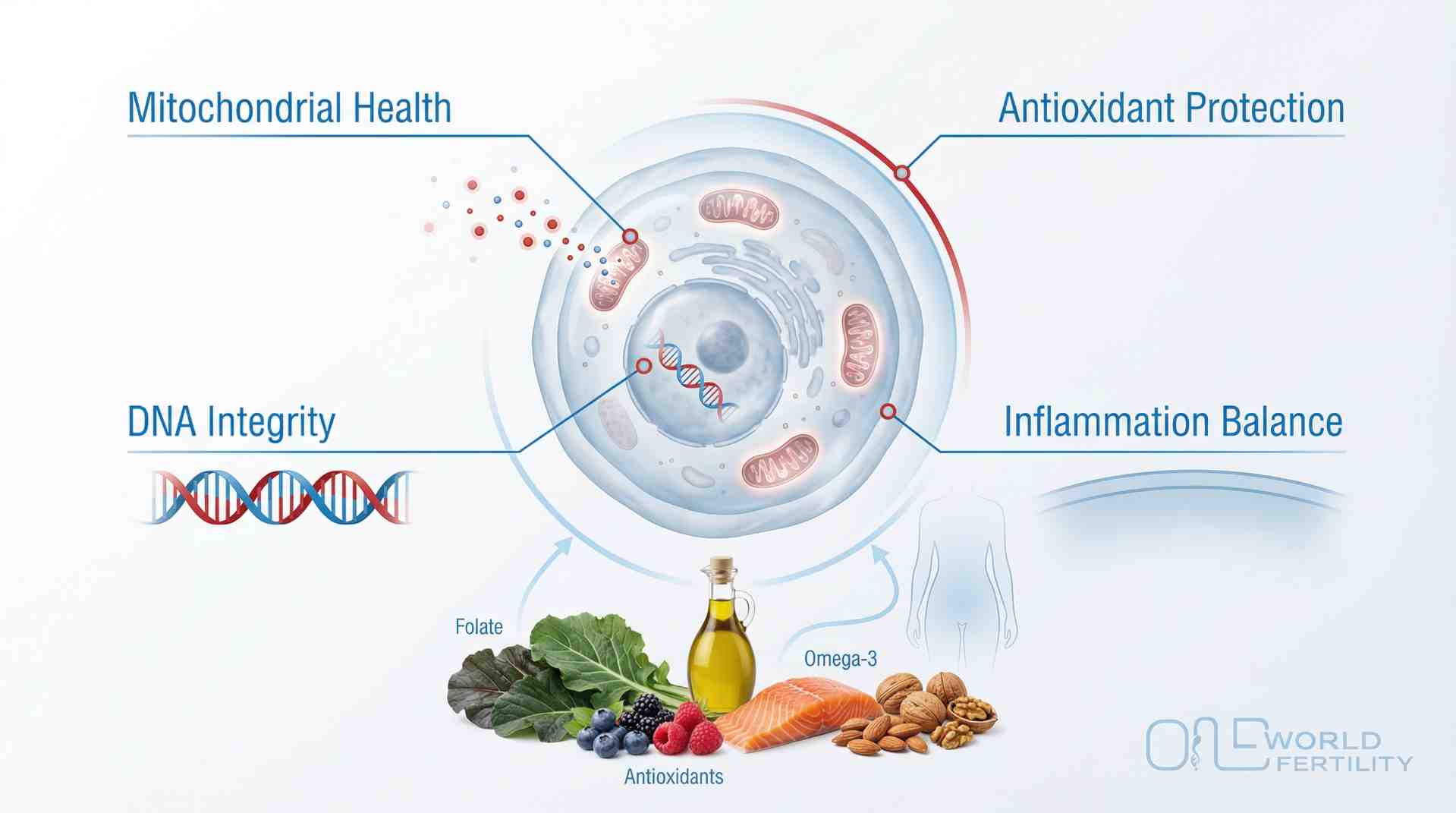
Here's the good news: diet and fertility are closely linked beyond 35, and you can really change things here. Think of your eggs as little batteries that need the appropriate kind of fuel. After 35, the quality and Nutrition of your eggs are linked because your diet affects: To keep hormones in balance:
| Cell Function |
What It Does How |
How Nutrition Helps |
| Mitochondrial Health |
Your egg's energy factories |
Better nutrition = more energy = healthier eggs |
| Antioxidant Protection |
Shields eggs from damage |
The right foods prevent cellular aging |
| DNA Integrity |
Protects genetic material |
Nutrients like folate support egg DNA quality |
| Inflammation Control |
Reduces cellular stress |
Anti-inflammatory diet slows egg aging |
Your diet for Nutrition for conception after 35 has a direct effect on estrogen, progesterone, insulin, and thyroid hormones, all of which are important for egg quality and ovulation. Do refined carbs make your blood sugar go up? They tamper with your hormones. Olive oil and salmon have healthy fats. They are the building blocks for making hormones. What makes age-related fertility and nutrition so great? Your body is quite sensitive. It responds fast, most of the time, when you feed it.
Science-Backed Ways to Naturally Improve Egg Quality
Understanding how to improve egg quality starts with: it takes 90 to 120 days for eggs to mature before ovulation. The egg that will come out in three months is growing right now. What you eat now will help that future egg grow.
What really works:
- Antioxidant-rich foods (proven to improve egg quality)
- Healthy fats (better for ovulation than low-fat diets)
- Stable blood sugar (linked to better conception rates)
- Key supplements like CoQ10 (strong research backing)
Set aside three to four months, which is the time it takes for an egg to develop fully. During this time, a lot of women notice that their cycles are more regular and they have more energy. You have power. Every healthy choice you make today supports the eggs developing right now.
The Complete Fertility Diet Plan for Women Over 35
You don't require a strict or hard-to-follow diet. You need a fertility diet for conception that works in real life, one that feeds your eggs, keeps your hormones in check, and doesn't make you feel stressed every time you open the fridge. This part tells you what to eat, why it's important, and how to make it easy. No complicated meal prep or pricey speciality ingredients, just genuine food that will help you get pregnant.
Key Nutrients Your Fertility Diet Needs After 35
When it comes to pregnancy, not all nutrients are the same. These are the most important nutrients that a woman's fertility diet should have. They have a direct effect on egg development, ovulation, and getting pregnant.
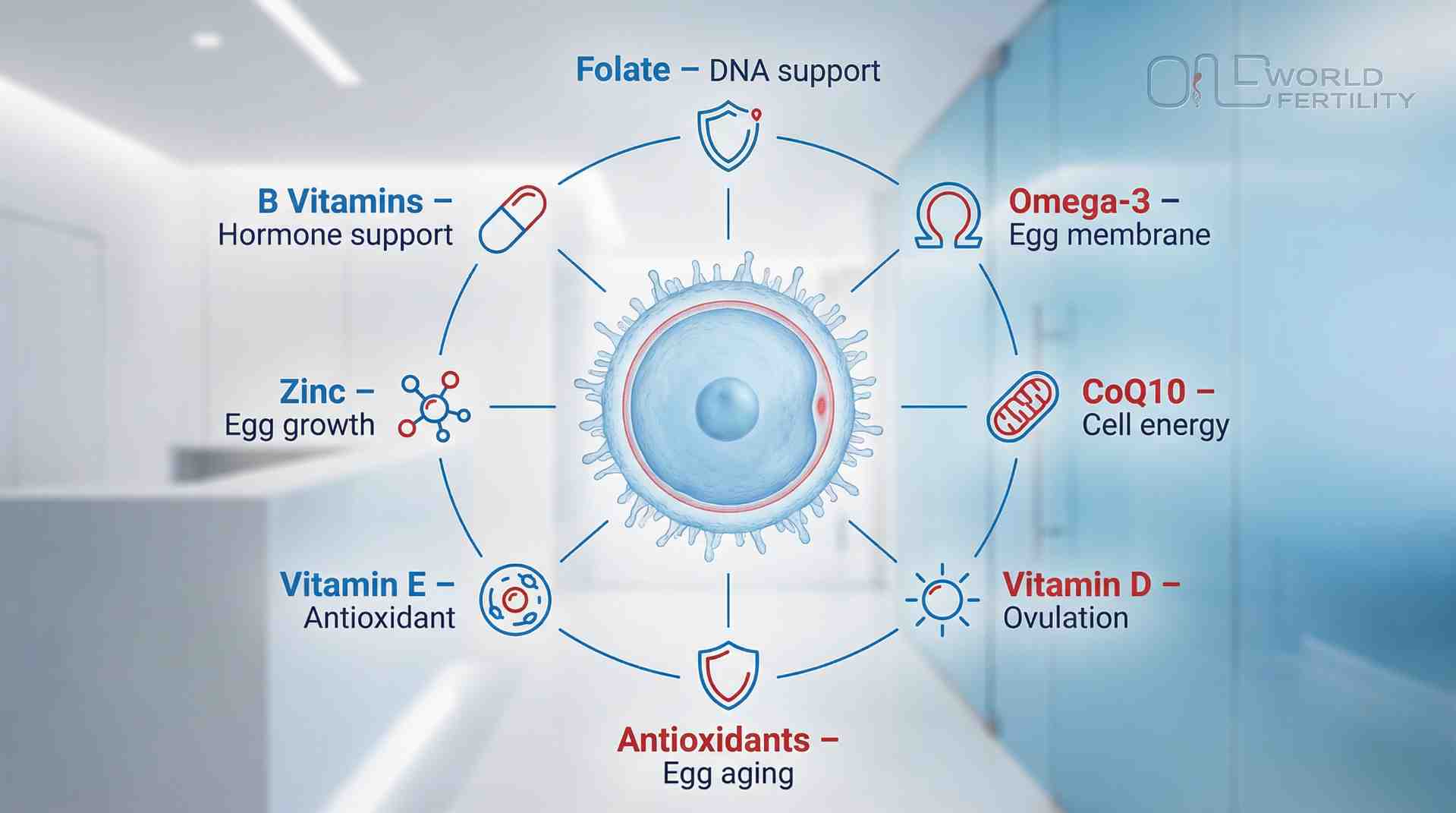
Essential Fertility Nutrients and Why They Matter
| Nutrient |
Why It's Critical After 35 |
Daily Target |
| Folate (Methylated) |
Prevents chromosomal abnormalities, supports DNA in eggs |
400-800mcg |
| Omega-3 (DHA/EPA) |
Reduces inflammation, improves egg membrane quality |
1000-2000mg |
| CoQ10 |
Boosts mitochondrial energy in aging eggs |
200-600mg |
| Vitamin D |
Supports ovulation, improves egg quality markers |
2000-4000 IU |
| Vitamin E |
Powerful antioxidant protection for eggs |
400 IU |
| Zinc |
Essential for egg development and maturation |
15-30mg |
| Selenium |
Protects eggs from oxidative damage, supports thyroid |
200mcg |
| Iron |
Supports ovulation and prevents anemia |
18-27mg |
| B Vitamins (B6, B12) |
Support progesterone production and ovulation |
B6: 50mg, B12: 2.4mcg |
| Antioxidants |
Combat oxidative stress that ages eggs |
5+ servings daily |
The simple truth is that most of these nutrients can be easily found in whole foods on a fertility-focused diet. Some nutrients you can't get from food, like CoQ10 after age 35, can be supplemented with pills.
This information is meant to teach you, not to give you medical advice. Always talk to your doctor or a fertility expert for advice specific to your health situation.
Best Foods to Eat When Trying to Conceive After 35
These are the best foods for women for fertility to eat every day. If you have these in your kitchen, you're already ahead.
| Food Category |
Top Foods |
Key Benefits |
Serving Size |
| Leafy Greens |
Spinach, kale, arugula |
Folate for DNA health, antioxidants |
2-3 cups daily |
| Fatty Fish |
Wild salmon, sardines, mackerel |
Omega-3s reduce inflammation, improve egg membranes |
2-3 times/week |
| Berries |
Blueberries, strawberries, raspberries |
Antioxidants protect eggs from oxidative damage |
1 cup daily |
| Nuts & Seeds |
Walnuts, almonds, pumpkin seeds |
Vitamin E, selenium, zinc for egg quality |
1/4 cup daily |
| Eggs (Organic) |
Pasture-raised eggs |
Complete protein, choline for egg development |
1-2 daily |
| Avocado |
Fresh avocado |
Healthy fats, folate, vitamin E |
1/2-1 daily |
| Legumes |
Lentils, chickpeas, black beans |
Plant protein, iron, folate for ovulation |
1 cup daily |
| Full-Fat Dairy |
Greek yogurt, kefir, cheese |
Calcium, vitamin D, probiotics for hormones |
1-2 servings daily |
These foods you can eat while trying to get pregnant aren't strange or pricey. You can find them at any grocery shop. If you make them a regular part of your diet, you're already helping your fertility without even realising it.
Essential Foods That Help Ovulation and Conception
For healthy eggs to meet sperm, ovulation must be strong. These ovulation-boosting foods help keep your hormones in balance so that your cycles are normal and predictable. What makes foods that boost ovulation work:
- They keep blood sugar steady (insulin spikes stop ovulation).
- They help the body make progesterone, which is needed to release eggs.
- They lower inflammation, which stops menstruation when it's long-lasting.
- They give you ingredients that build hormones.
Best ovulation-supporting foods:
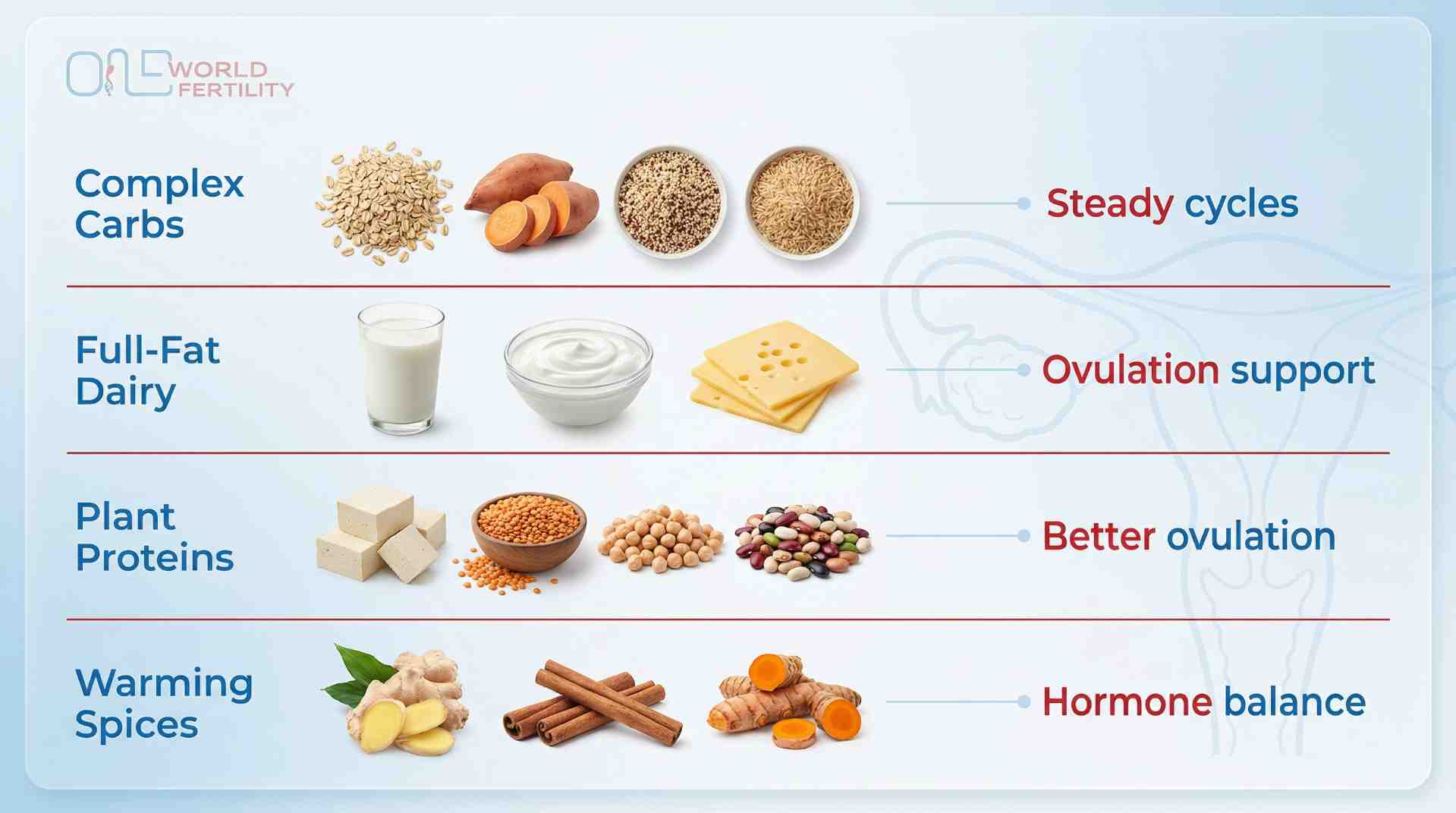
- Complex carbs: Oats, sweet potatoes, quinoa, and brown rice. What they do to help: To keep regular cycles going, keep insulin steady.
- Dairy with full fat: Milk, yoghurt, and cheese that are full of fat. What they do to help: Low-fat dairy has been shown to boost ovulation rates.
- Plant proteins: Tofu, chickpeas, lentils, and beans. What they do to help: Improve the frequency and quality of ovulation
- Spices that warm: Ginger, cinnamon, and turmeric. What they do to help: Lower inflammation and make insulin work better.
If you want a diet for ovulation, the best diet is one that keeps your hormones and blood sugar in check. These naturally tasty foods that help conception do just that.
Essential Vitamins and Supplements for Fertility After 35
Even with the healthiest diet, it's tough to get all the nutrients your eggs need from food alone. That's where supplements for fertility after 35 come in, not as replacements, but as your fertility backup plan.
Key Vitamins That Boost Egg Quality and Fertility
Can I just eat better instead of taking supplements? Honestly, both matter. Still, it's hard to get some vitamins for fertility after 35 in amounts that are clinically effective. One tablet of CoQ10 is the same as eating pounds of sardines every day.
Taking vitamins after age 35: As you get older, your eggs are exposed to more reactive stress and may produce less energy. Food can't provide the therapeutic amounts of antioxidants that Supplements for good egg quality can.
Easier ways to supplement:
- Commence with the basics (CoQ10, modified folate, omega-3)
- As needed, add special nutrients
- Choose premium names that a third party has checked
- Give it 3–4 months, one complete cycle of egg growth
It should take about 90 to 120 days for the fundamental changes in egg quality to show, but you should have more energy and regular cycles within a few weeks.
Why CoQ10 Is Critical for Egg Quality After 35
CoQ10 is the supplement for egg quality after 40 that has been studied the most, so it gets extra attention. This is why it's important. What's wrong: Microorganisms in your eggs that make energy slow down after age 35. They hurt more and give off less energy. This is THE biggest reason why egg quality goes down after age 40: the eggs run out of fuel.
How CoQ10 can help:
- boosts the energy production of egg cells
- Protects eggs from oxidative harm as they age
- Better the health of chromosomes
- Keeps egg DNA safe
It has been shown that women aged 35 to 43 who take CoQ10 have better eggs, stronger embryos, and a higher chance of getting pregnant.
Why just eating isn't enough: Even the best sources have only 3–5 mg of magnesium per serving. It takes 200 to 600 mg every day to work. That's why taking supplements is so important.
Choose ubiquinol; this is the type that your body can use right away. When you turn 35, it gets harder for your body to change regular CoQ10 (ubiquinone) to ubiquinol. For women over 40, CoQ10 is the best supplement to improve egg health after age 40. Start at least three to four months before you try to get pregnant or do IVF.
This information is meant to teach you, not to give you medical advice. Always talk to your doctor or a fertility expert before taking any supplements to better guide you.
Lifestyle and Nutrition Strategies for Boosting Fertility After 35
It's true that your fertility diet works, but it's not the only thing that matters. Your surroundings, how much you move, how stressed you are, and how much sleep you get all affect the quality of your eggs.
Natural Methods to Enhance Fertility in Your 30s and Beyond
Let's look at the real dietary and lifestyle changes that can help you get pregnant after age 35. These natural ways to improve fertility after 35 are free and surprisingly powerful.
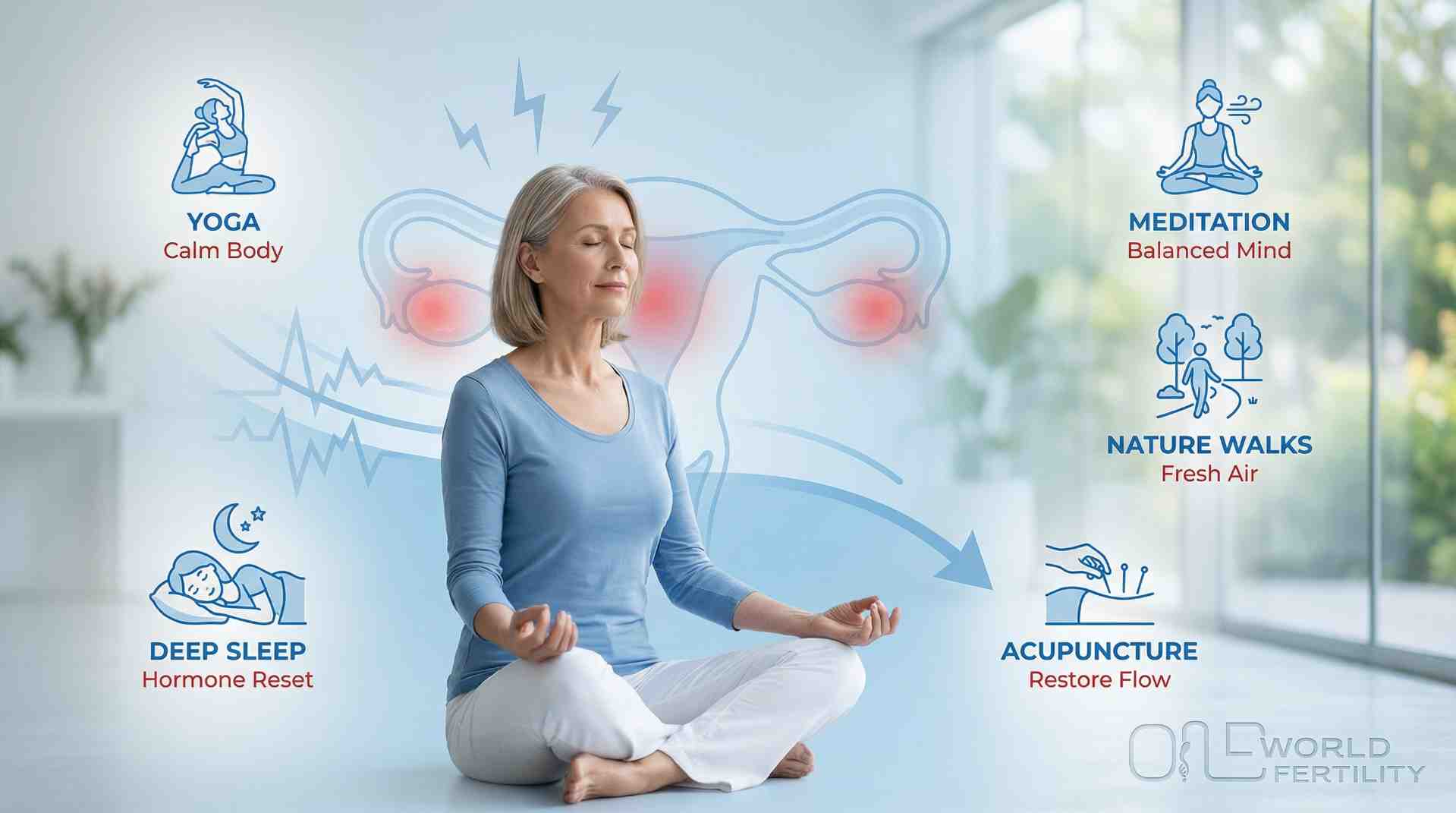
Stress that lasts for a long time fills your body with cortisol, which affects ovulation and the quality of your eggs. Getting rid of stress every day isn't a privilege; it's medicine for fertility:
- Yoga - 15-20 minutes daily reduces cortisol and improves blood flow to your ovaries
- Meditation - Even 10 minutes helps regulate stress hormones
- Walking in nature - Studies prove it lowers cortisol naturally
- Acupuncture - Strong research backing for improving fertility over 35
- Put sleep first - Deep sleep is when your body makes the most hormones that help you get pregnant.
Try to sleep for 7 to 9 hours in a cool, dark room. If you can, try to go to sleep between 10 and 11 p.m.; it's good for your hormones. Move around moderately (not too much).
Cycle-Syncing Your Fertility Diet for Better Results
During different parts of your cycle, your body needs different foods. Fertility cycles diet means eating in a way that helps your body do what it's doing at the moment.
| Cycle Phase |
Days |
Focus Nutrients |
Best Foods |
Why It Matters |
| Menstrual |
1-5 |
Iron, B-vitamins |
Red meat, leafy greens, beets, bone broth |
Replenish iron lost during bleeding |
| Follicular |
6-12 |
Protein, antioxidants, healthy fats |
Eggs, avocado, berries, salmon, nuts |
Support developing follicles and eggs |
| Ovulatory |
13-15 |
Anti-inflammatory, omega-3s |
Wild salmon, flax seeds, cruciferous veggies |
Support ovulation, reduce inflammation |
| Luteal |
16-28 |
B-vitamins, magnesium, complex carbs |
Sweet potato, dark chocolate, pumpkin seeds |
Support progesterone, prepare for implantation |
How to use this: Pay attention to the phase you're in and pick things that will help it. It's not necessary to be perfect; just be aware. It works better for your body if you eat during your cycle instead of against it.
Proven Tips for Getting Pregnant Naturally After 35
Now you know what to eat and why it's important. Now, let's make it easy by giving you skills you can start right away. These natural ways to get pregnant between the ages of 30 and 35 are based on study and are made to work in real life.
Daily Nutrition Habits That Increase Your Chances of Conception
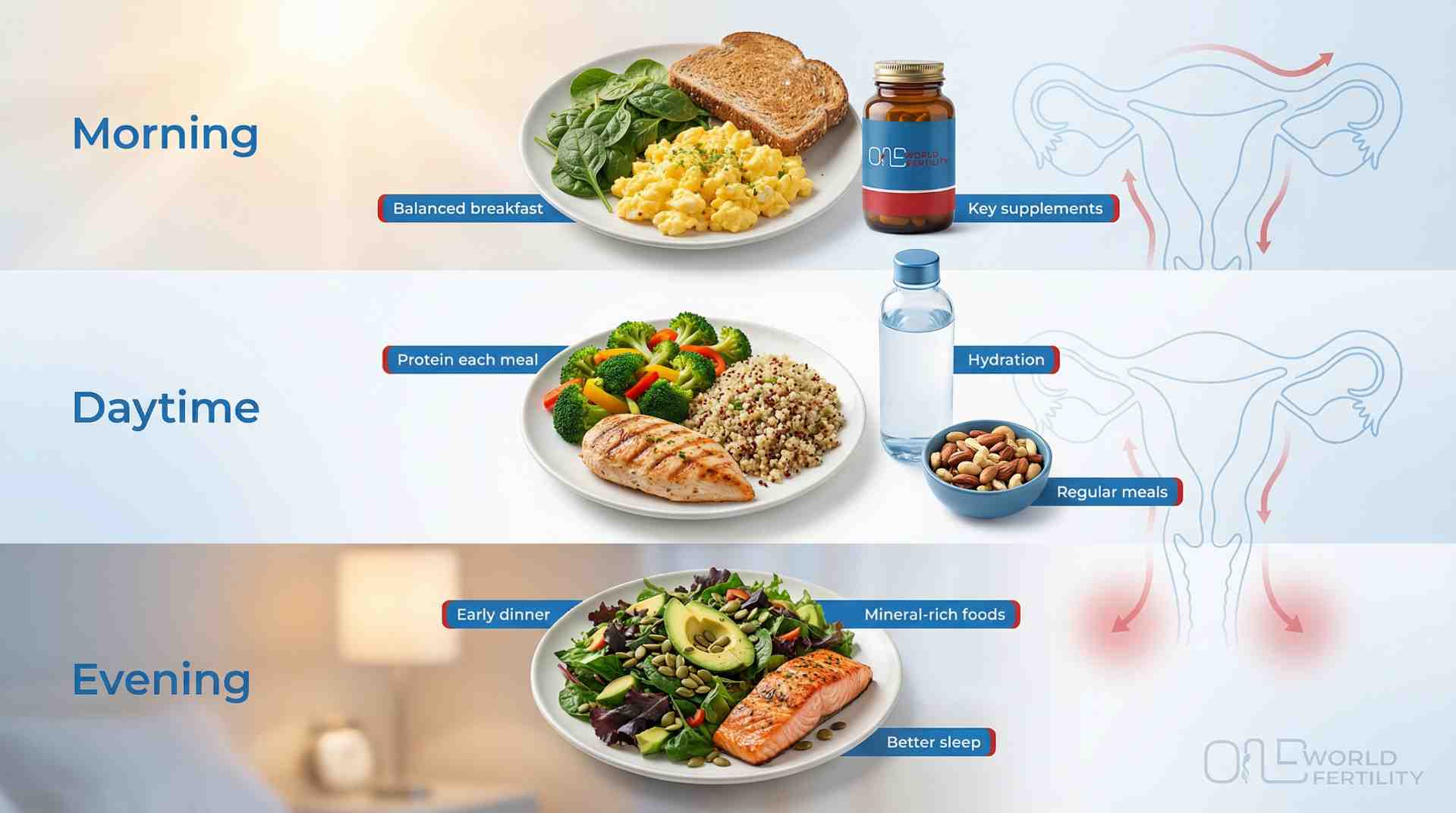
If you're 35 and trying to get pregnant, you don't have to be perfect; you just have to stick to the proper habits. These small changes and daily habits will make a big difference.
Things to do in the morning:
- Eat breakfast before the first hour of waking up (keeps hormones and blood sugar stable).
- Eat a protein- and healthy-fat-rich breakfast, like eggs with avocado or Greek yoghurt with nuts.
- Take your multivitamin and CoQ10 with your breakfast.
As the day goes on:
- Eat protein at all of your meals and snacks (it helps keep insulin levels steady)
- Include colourful veggies at lunch and dinner (they have antioxidants that help eggs stay healthy)
- Drink 8–10 glasses of water every day (helps the cervical mucus and egg development)
- Don't skip meals for more than 4 hours at a time (keeps your blood sugar from dropping)
What to do in the evening:
- Eating dinner between 7 and 8 p.m. will help you sleep better and boost hormone production.
- At dinner, eat foods that are high in magnesium, like leafy greens and pumpkin seeds.
- Keep your eyes off screens an hour before bed (this helps protect melatonin, which supports healthy egg development).
Your Fertility Journey Starts With What You Eat Today
Getting pregnant beyond 35 isn't about being perfect; it's about making good decisions that help your body make healthy eggs. Every meal is a chance to improve your fertility. Begin where you are. This week, add 3 to 5 foods that are good for fertility. Start taking your supplements. Be patient with yourself; those eggs need 90 to 120 days to grow. The work you're doing today will show up in the eggs you release in three months.
Don't go through this alone if you're feeling overwhelmed or unsure about your fertility condition. You might want to make an appointment with reproductive experts at One World Fertility. They can give you specific advice based on your health history, hormone levels, and fertility objectives. You deserve professional help, healthy food, and kind support on your journey. You're not only eating for yourself; you're also feeding the potential baby you might have in the future. That's strong, and you're doing a wonderful job.