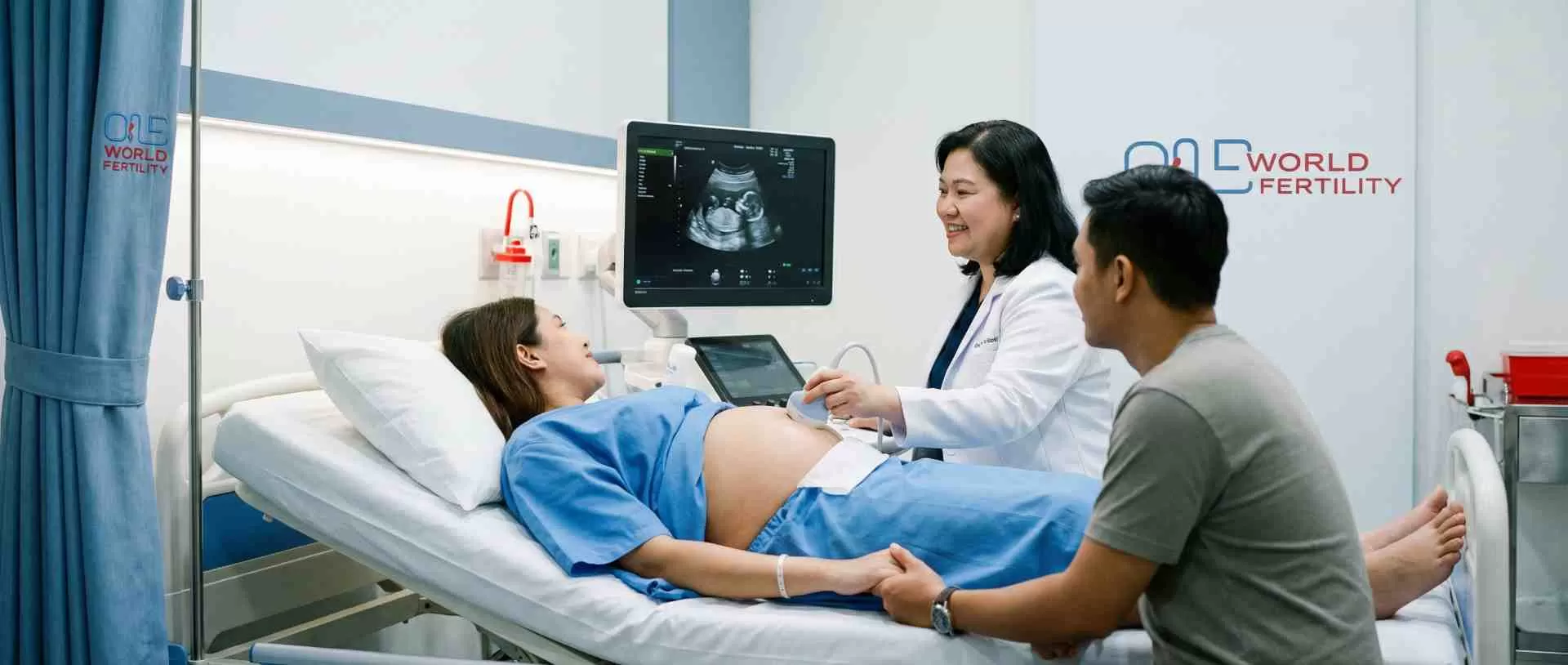


When someone says a cesarean delivery may be needed, the questions start. Is it safe? Will it hurt? The advice around you rarely agrees. At One World Fertility, a c-section delivery is planned calmly and early wherever possible, with your team explaining why it is right for you.
You may be carrying one question above all the others. Is a cesarean delivery as safe as a normal delivery? When it is planned properly, carried out by an experienced obstetric team, and followed by close care afterwards, a cesarean is a very safe way to bring your baby into the world. It is not a lesser birth. It is simply a different route to the same moment.
If you have been searching for cesarean section care near you, start with what a safe c-section involves.
What Is a Cesarean Delivery and When Is It Advised?
At One World Fertility, we explain what a C-section delivery is before we ever ask you to agree to one. A cesarean is a surgical birth. Your baby is delivered through a small cut that is made in your lower abdomen and womb (uterus), while you stay awake and comfortable under spinal anaesthesia.
Doctors advise it when reaching your baby safely through labour is not the better option. That decision may come weeks ahead of your due date, or within minutes during labour.
What is the difference between an elective and emergency cesarean?
For an elective C-section, a date is set, and everything is ready ahead of time. An emergency cesarean happens when something changes during labour, and your baby needs to arrive quickly. Both use the same cesarean section procedure. The difference is time, not safety.
The table below shows the types of cesarean delivery we carry out and how we support you through each one.
| Type of Cesarean | When It's Advised | How One World Fertility Helps You |
|---|---|---|
| Planned (elective) | Decided before labour begins | We plan your date, tests and theatre slot in advance |
| Emergency | Complication during labour | We move fast and keep your baby monitored throughout |
| Repeat cesarean | Previous C-section birth | We check your old scar and plan the safest approach |
| Cesarean with tubal ligation | Family complete | We discuss your options fully before surgery |
Whichever type applies to you, the plan is made with you, not handed to you. Which one you need depends on what your pregnancy shows, so it helps to know the conditions that commonly lead to a cesarean.
Medical Conditions That May Require a Cesarean Section
Most women who need a surgical birth are not unwell. Something in the pregnancy makes a normal delivery riskier, and our specialists pick that up during your routine scans.
Can a cesarean be avoided if the baby is in breech position? Sometimes yes. Many babies turn on their own by the final weeks, and a doctor may try to turn the baby manually in selected cases. When the baby stays breech close to your due date, a planned breech baby delivery by cesarean is usually safer.
These are the most common cesarean indications we see:
- Breech or transverse position: baby is bottom-down or lying sideways.
- Placenta previa: with this type of birth, the placenta covers the cervix, so surgery is needed.
- Preterm labour: your baby's heartbeat shows they are not able to handle labour.
- Multiples or twins: more than one baby or a tricky situation for the first twin.
- Previous cesarean scar: the old scar may not hold through labour.
- Not moving forward: contractions slow down, and the cervix stops opening.
- Maternal health conditions: high blood pressure, diabetes or heart conditions.
Your reasons for a C-section may be one of these or a combination, and we talk each one through with you. Recognising these signs in your own body is the next step.
Signs You Need Expert Cesarean Delivery Care
Often, your body tells you something is wrong before a scan confirms it. As soon as you notice that your baby is moving less or not as strongly as normal, you should take action right away. In the last few months, bleeding is also very important because it can mean that there is a problem with the placenta.
Severe swelling in your face and hands, a headache that will not settle, or blurred vision can all suggest rising blood pressure, which turns a normal pregnancy into a high-risk one. Waters breaking early raises the risk of infection, and contractions that start but stop progressing begin to strain your baby.
How do doctors decide you need a C-section during labour?
The decision comes from watching, not guessing. Your baby's heartbeat is monitored continuously, and foetal distress signs such as a falling heart rate tell us they are struggling with contractions. We also track how far your cervix has opened. When the monitor shows distress, or hours pass without progress, waiting stops being safer. That is when a C-section is necessary, and we explain the decision to you clearly.
Symptoms tell you when to seek help. Certain situations make planned cesarean care the right choice from the start.
Who Should Book Cesarean Delivery Care at One World Fertility?
Some pregnancies benefit from planning long before labour begins. If you already know your delivery may be surgical, choosing your cesarean delivery hospital early gives you time to ask questions, meet your team, and settle your mind instead of deciding under pressure.
The table below shows who gains most from planned cesarean care with us.
| Your Situation | Why Planning Matters | How One World Fertility Helps You |
|---|---|---|
| First pregnancy, baby in breech | Position may not correct on its own | We scan you late-term and plan the safest route |
| Previous cesarean birth | Scar strength needs checking | We assess your scar and guide you on repeat delivery |
| Twin or multiple pregnancy | Higher chance of surgical birth | We prepare a delivery plan early in your pregnancy |
| Pregnancy after IVF | Precious pregnancy, close monitoring | We watch every stage and step in when needed |
| Pre-existing medical condition | Labour may carry added risk | We coordinate with specialists and plan around you |
If any of these describe you, maternity care for high-risk pregnancy is worth arranging early rather than late. Finding the best c-section doctor is only the beginning. What follows is the preparation that makes your delivery day calm.
How One World Fertility Prepares You for a Cesarean Delivery
Good c-section preparation starts weeks before your date, not the night before. You will talk about what to expect, who will be in the operating room, and whether your husband or mother can stay with you.
What tests are done before a planned cesarean delivery?
A final scan checks your baby's position, size and the placenta. Your blood is tested for haemoglobin, blood group and infection. These pre-operative tests for cesarean are quick, and we arrange them in one visit.
You will also meet the anaesthetist. Anaesthesia for a C-section is usually spinal, keeping you awake and numb from the waist down so you can hear your baby's first cry.
The checklist below shows what happens before surgery and how we support you.
| Before Surgery | What It Involves | How One World Fertility Helps You |
|---|---|---|
| Consultation and scan | Baby's position, size and placenta | We confirm the safest delivery date with you |
| Blood tests | Haemoglobin, blood group, infection screen | We arrange everything in one visit |
| Anaesthesia review | Choosing spinal or general anaesthesia | We explain your options in simple words |
| Fasting instructions | Empty stomach before the operation theatre | We confirm exactly when to stop eating and drinking |
| Consent and counselling | Understanding the procedure | We answer every question before you sign |
By the time your date arrives, you should feel prepared rather than nervous. Here is what actually happens in the operating theatre.
What Happens During a Cesarean Delivery
Knowing the C-section procedure step by step takes away most of the fear. You are brought into the operating theatre, and a fine needle is used to place spinal anaesthesia in your lower back. Within minutes, your legs feel heavy, and a screen is raised so you do not have to watch.
Will you feel pain during a cesarean delivery? No, you should not feel pain. With spinal anaesthesia, C-section patients stay awake but feel only pressure and tugging, never the cut itself. If anything feels sharp, tell the anaesthetist, and it is corrected.
A small cut is made across the middle of your stomach, between your breasts, and through the womb. Usually within the first ten minutes, your baby is taken out and put on your chest so that they can be close to your skin.
How long does a cesarean delivery take from start to finish?
Around forty-five minutes to an hour. Your baby usually arrives in the first ten to fifteen minutes, and the rest is spent closing the womb and skin layer by layer. That closing stage protects your scar for future pregnancies.
Throughout all of it, someone from your One World Fertility team stays beside you, telling you what is happening and when to expect your baby's first cry.
Recovery After a Cesarean Section
Your c-section recovery time is longer than a normal birth, but shorter than most women fear. The first day is the hardest, and it improves steadily from there.
How many days do you stay in hospital after a cesarean?
Usually three to four days. You will be encouraged to sit up and take a few steps within the first day, which sounds daunting but genuinely speeds healing and prevents clots. If you are wondering when you can walk after a cesarean, the answer is sooner than you expect, with support beside you.
Breastfeeding after a C-section is entirely possible and often starts within the first few hours. A side-lying position or a pillow across your lap keeps pressure off your wound while you feed.
When can you lift your baby and do daily work again?
Lifting your baby is fine almost immediately. Anything heavier should wait around six weeks, including heavy vessels, water buckets and older children. Light housework can restart from the third week if you feel ready.
The timeline below shows what to expect at each stage.
| Recovery Stage | What to Expect | How One World Fertility Helps You |
|---|---|---|
| First 24 hours | Rest, pain relief, first feed | We monitor you closely and start feeding support |
| Days 2–4 | Walking, wound check, discharge | We guide you through movement and dressing care |
| Weeks 1–2 | Stitch check, home recovery | We review your wound and answer your worries |
| Weeks 3–6 | Slowly resuming routine | We check healing and clear you for light activity |
| After 6 weeks | Full review and family planning | We plan contraception and talk through future pregnancies |
Everyone heals at a slightly different pace, and yours is nothing to compare against anyone else's. Good cesarean wound care at home makes the biggest difference to how smoothly you heal:
- Clean and dry the wound, and pat it dry after taking a bath instead of rubbing it.
- Wear loose cotton clothes that won't press on the scar.
- If you see any redness, swelling, fluid, or fever, please call us. If you can, try to stay away from heavy lifting, stretching, and stairs.
- Don't forget to take your painkillers and medications on time.
Call us with anything that worries you rather than waiting for your next visit. Many women recover well, then ask how a cesarean compares with a normal delivery, and whether the next birth could be different.
Cesarean vs Normal Delivery: Understanding Your Options
When women weigh c-section vs normal delivery, the honest answer is that neither is universally better. A normal birth usually means a shorter stay and quicker recovery, which is why it remains the first choice when a pregnancy allows it. A cesarean becomes the safer option when it does not.
Can you have a normal delivery after a previous cesarean?
Often yes. A vaginal birth after c-section is possible for many women, provided your scar has healed well, your pregnancy is otherwise uncomplicated, and labour begins on its own near your due date. VBAC after cesarean needs continuous monitoring and a hospital equipped to move quickly if anything changes, which is why it should never be attempted at home or in a small setup.
The table below sets out what a cesarean delivery involves and how we support you through each part of it.
| Factor | With a Cesarean Delivery | How One World Fertility Guides You |
|---|---|---|
| Delivery time | Usually completed within about an hour | We keep your family updated at every stage |
| Hospital stay | A little longer than a normal birth | We plan your stay and discharge around your recovery |
| Recovery pace | Gradual, over some weeks | We review your healing and pace your return to routine |
| When it is advised | Medical or safety reasons | We explain why it is being recommended for you |
| Planning ahead | The date can usually be planned | We fix a date that suits your health and your family |
| Future births | Normal delivery may still be possible | We assess your scar and discuss VBAC openly with you |
The right choice is the one that matches your pregnancy, not the one that sounds better in conversation. That decision is only as good as the team making it with you.
Why Choose One World Fertility for Your Cesarean Delivery
What makes a cesarean delivery safer at a specialised centre? It comes down to who is present and what is ready before your surgery begins. A cesarean is straightforward when everything goes to plan, and the difference shows in the rare moments when it does not.
Here is what stands behind every delivery we carry out:
- Your surgery will be led by an experienced obstetrician and supported by a team that works together every day, not just for the operation.
- A clean, fully-equipped operating room that is kept up to date with modern surgical standards.
- A dedicated anaesthetist who is there the whole time and isn't used for other procedures.
- Neonatal support is ready to help, so if your baby needs it, they can get care right away.
- Follow-up care after surgery that is planned, from the first check of your stitches to the review after six weeks.
If you have been looking for maternity care near me and weighing which is the best hospital for cesarean delivery, look past the marketing and ask who will be in the room with you. That is the answer that matters.
Key Takeaways
- A cesarean delivery is a safe, planned surgical birth, not a failed normal delivery.
- Most cesareans are advised for clear medical reasons such as breech position, placenta previa, foetal distress or a previous scar.
- Spinal anaesthesia keeps you awake and comfortable, and your baby usually arrives within the first ten to fifteen minutes.
- Hospital stay is around three to four days, with most women walking within the first day and back to routine by six weeks.
- A normal delivery may still be possible in a future pregnancy, depending on how your scar has healed.
- Planning your delivery early gives you time to prepare, ask questions and meet the team who will be with you.
Bringing Your Baby Into the World, Safely
A cesarean delivery is not the birth story most women picture, and that is worth acknowledging rather than brushing past. But a planned, well-managed cesarean is a safe way to meet your baby, and the women who feel calmest on the day are usually the ones who understood the reasons behind it well in advance.
What matters now is preparation. Know why a cesarean is being suggested for you, ask what will happen at each stage, and choose a team that answers those questions properly rather than quickly. Your delivery day should feel planned, not rushed.
At One World Fertility, that is the standard we hold ourselves to for every cesarean birth we carry out.
Questions people ask about this treatment
10 answeredhere