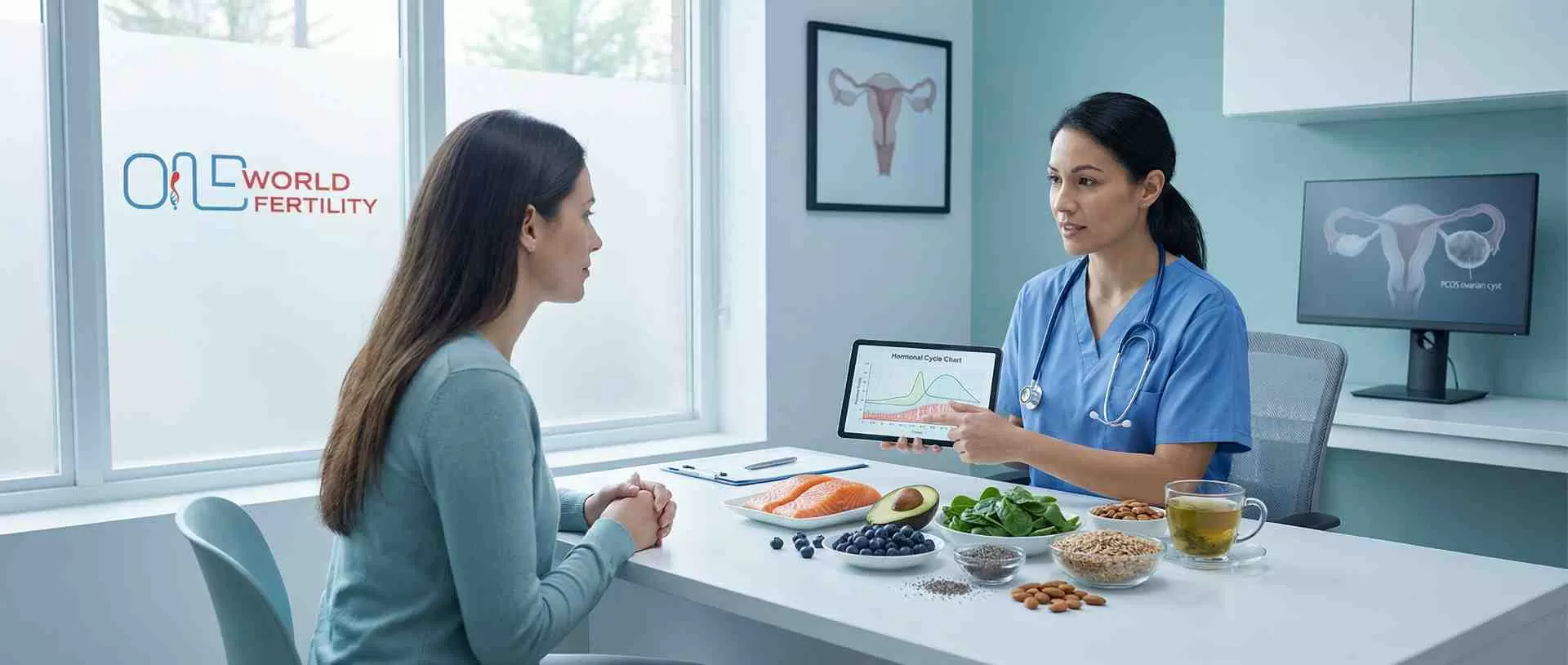
We know how much this journey means to you. And while fertility treatments play an important role, what you eat every day matters more than most people realise. The right nutrition can support your hormone balance, improve egg quality, strengthen sperm health, and help your body prepare for a healthy pregnancy.
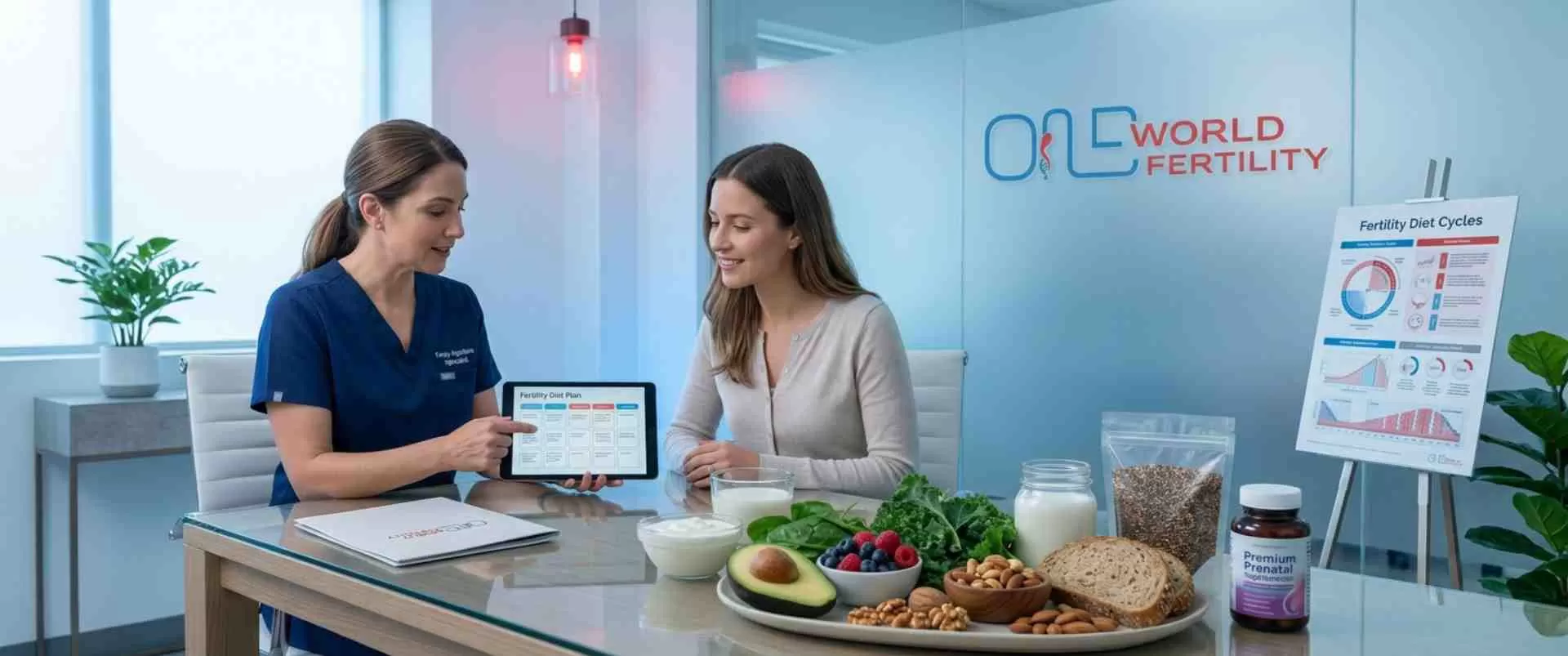
At One World Fertility, we are with you every step of the way. Our specialists design personalised fertility diet plans that work gently alongside your natural conception journey or IVF treatment - nourishing your body from the inside out.
Every plan is built around you - your medical history, your fertility diagnosis, and your lifestyle. As you get ready for IVF, work to improve the quality of your eggs, or deal with a condition like PCOS or a thyroid problem, we are here to make sure your body has everything it needs to give you the best chance at becoming a parent.
Why Nutrition Matters for Fertility
For every step of the process, your body needs the right food, and that starts a long time before you get pregnant. To be fertile, hormones, reproductive system health, and metabolism must all be in balance.
If that balance is thrown off by a bad diet, inflammation, or an imbalance in your metabolism, it can quietly lower your chances of getting pregnant, whether you do IVF or try to get pregnant naturally. The good news is that eating right can really make a difference. It has been shown over and over again that what you eat has important effects on your sexual health.
| Fertility Factor |
How Nutrition Helps |
Key Nutrients |
| Hormone balance |
Stabilises reproductive hormones |
Healthy fats, magnesium |
| Egg quality |
Protects eggs from oxidative stress |
Antioxidants, folate |
| Sperm health |
Supports sperm production and motility |
Zinc, selenium |
| Ovulation |
Regulates insulin and hormonal cycles |
Complex carbohydrates |
| Implantation |
Improves uterine lining health |
Omega-3 fatty acids |
When Nutrition Goes Wrong - How It Affects Fertility
A lot of couples are shocked to learn that the foods they eat every day can quietly hurt their ability to get pregnant. When you eat a lot of processed foods, refined sugars, and unhealthy fats, your body can become inflamed. Inflammation is one of the most common silent problems that can affect your reproductive health.
This might look like this:
- Hormonal issues that make ovulation impossible
- Oxidative stress hurts the health of eggs and sperm
- Insulin resistance that throws off hormone cycles
- Lack of nutrients that affect the health of the walls of the uterus
Just a few months of making the right changes to your diet can start to really make a difference, which is good news. It's important to take small steps over time.
Who Should Consider a Personalised Fertility Diet Plan?
The right diet plan can really help you get pregnant, whether you are trying naturally or with IVF. You can help your body at any point in this journey, whether you are just starting or have been going for a while.
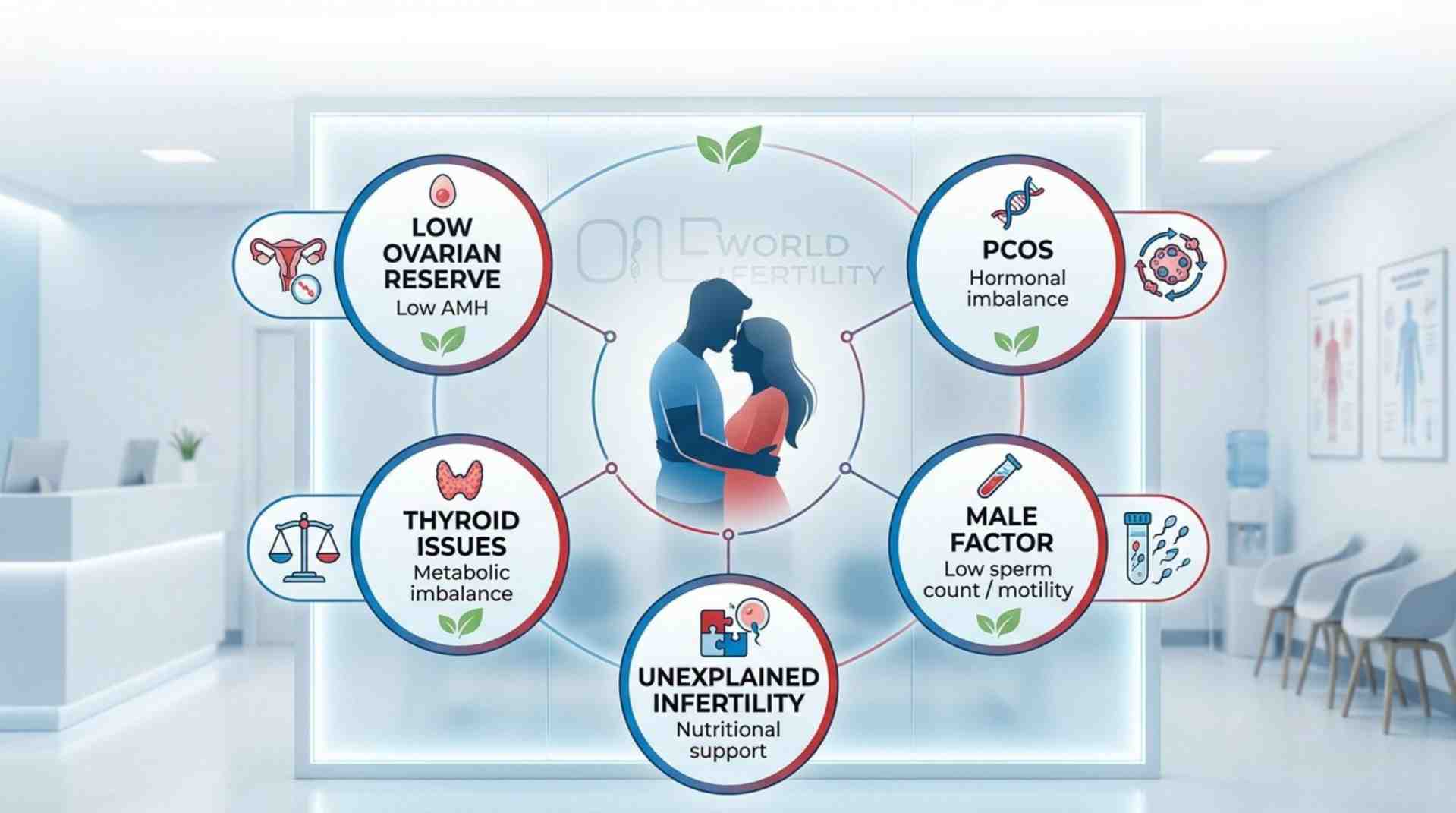
A pregnancy diet can help you a lot if you have any of these symptoms:
- Not enough eggs or low AMH
- PCOS or not enough hormones
- Low number of sperm or sperm that can't move
- Problems with the thyroid or metabolism
- Unknown reasons for infertility
Can Diet Really Improve Your Fertility Chances?
Of course. Inflammation, lack of nutrition, and hormonal imbalance are all directly linked to many fertility problems, such as irregular ovulation, bad egg quality, and sperm health problems. A focused fertility nutrition plan takes care of these underlying issues in a natural and gentle way.
What Makes Our Fertility Diet Plans Different?
There are different kinds of food plans, and a general one won't work for fertility. At One World Fertility, our fertility nutrition programs are based on medical data, are led by doctors, and are designed to fit your needs.
Because everyone's fertility journey is different, each plan is tailored to your fertility diagnosis, reproductive hormone levels, IVF treatment stage, digestive health, and lifestyle. Of course. Inflammation, nutritional deficits, and hormonal imbalance are all directly linked to many fertility problems, such as irregular ovulation, bad egg quality, and sperm health problems. A focused fertility nutrition plan addresses these underlying issues in a natural, gentle way.
| Generic Diet Plan |
Personalised Fertility Diet Plan |
| Designed for general weight loss |
Designed for reproductive health |
| Same plan for everyone |
Customised for each patient |
| No fertility focus |
Focus on egg and sperm quality |
| No medical integration |
Aligned with fertility treatments |
Why One-Size-Fits-All Diets Don't Work for Fertility
A normal diet plan is designed for overall health, not to help you ovulate, improve your eggs, or get your body ready for IVF. That's not even close to what a fertility diet is all about.
Your hormone levels, your fertility diagnosis, and where you are in your treatment period should all be taken into account when planning a diet for reproductive health. Someone else's ideas might not work for them. That's why a customised fertility diet plan-one that is based on your medical background and your goals for getting pregnant-works better than a standard plan.
Our experts use both reproductive medicine and food science to make plans that are good for your body, whether you are trying to get pregnant naturally or getting ready for IVF.
What Your Personalised Fertility Diet Plan Includes
That's not all that One World Fertility's fertility eating plans are. The program is carefully planned around your health, your childbearing goals, and your treatment path. This is what it has:
Fertility Nutrition Assessment
Everything starts with getting to know you. Before making any plans, our experts carefully review your overall health and fertility profile.
In this are:
- Health history with reproduction
- Patterns and amounts of hormones
- How people live and what they do every day
- Signs of metabolism and nutrient gaps
Custom Fertility Meal Plan
You get a structured meal plan that is made to help your fertility based on your review, not a generic template. Every meal on your plan is designed to improve the quality of your eggs, support ovulation, and enhance sperm growth.
| Meal |
Example Foods |
| Breakfast |
Whole grains, eggs, berries |
| Lunch |
Leafy greens, lean protein, healthy fats |
| Snack |
Nuts, seeds, yogurt |
| Dinner |
Vegetables, fish, whole grains |
Fertility Nutrients and Superfoods
Certain nutrients play a particularly powerful role in reproductive health. Your plan is built around these fertility superfoods to ensure your body gets exactly what it needs.
| Nutrient |
Fertility Role |
Food Sources |
| Folate |
Supports egg development |
Spinach, lentils |
| Omega-3 |
Improves embryo implantation |
Salmon, flaxseeds |
| Zinc |
Supports sperm production |
Pumpkin seeds |
| Vitamin D |
Regulates reproductive hormones |
Sunlight, fortified foods |
| Antioxidants |
Protect egg and sperm DNA |
Berries |
Fertility Diet Plan for Women
Food is more important than most people think for a woman's ability to have children. If you want to get pregnant naturally or through IVF, the foods you eat are very important because they help your hormones, protect your eggs, and get your uterus lining ready for implantation. We understand that it can be hard to know where to begin. We make it easier for you by creating a plan that works with your body, not against it.
Some important foods that help women get pregnant are:
- Iron: helps pregnancy happen normally
- Healthy fats: help keep chemicals for reproduction in check.
- Antioxidants: they keep eggs fresh.
- Folate: helps eggs mature and early growth
A fertility-focused diet can help keep your hormones in check, improve the quality of your eggs, and gradually prepare your body for pregnancy.
Foods That Improve Egg Quality Naturally
Egg quality is one of the most important parts of getting pregnant, and eating the right foods can really help. Folate is found in lots of leafy veggies, like spinach and kale. Folate protects eggs while they grow. Powerful antioxidants in berries and colourful veggies help protect eggs from oxidation damage. Avocado, peanut, and olive oil are all good sources of healthy fats that help your body make hormones and keep your reproductive system working well. Fish that are high in fat, like salmon, contain omega-3 fatty acids that help keep egg cells healthy and reduce swelling.
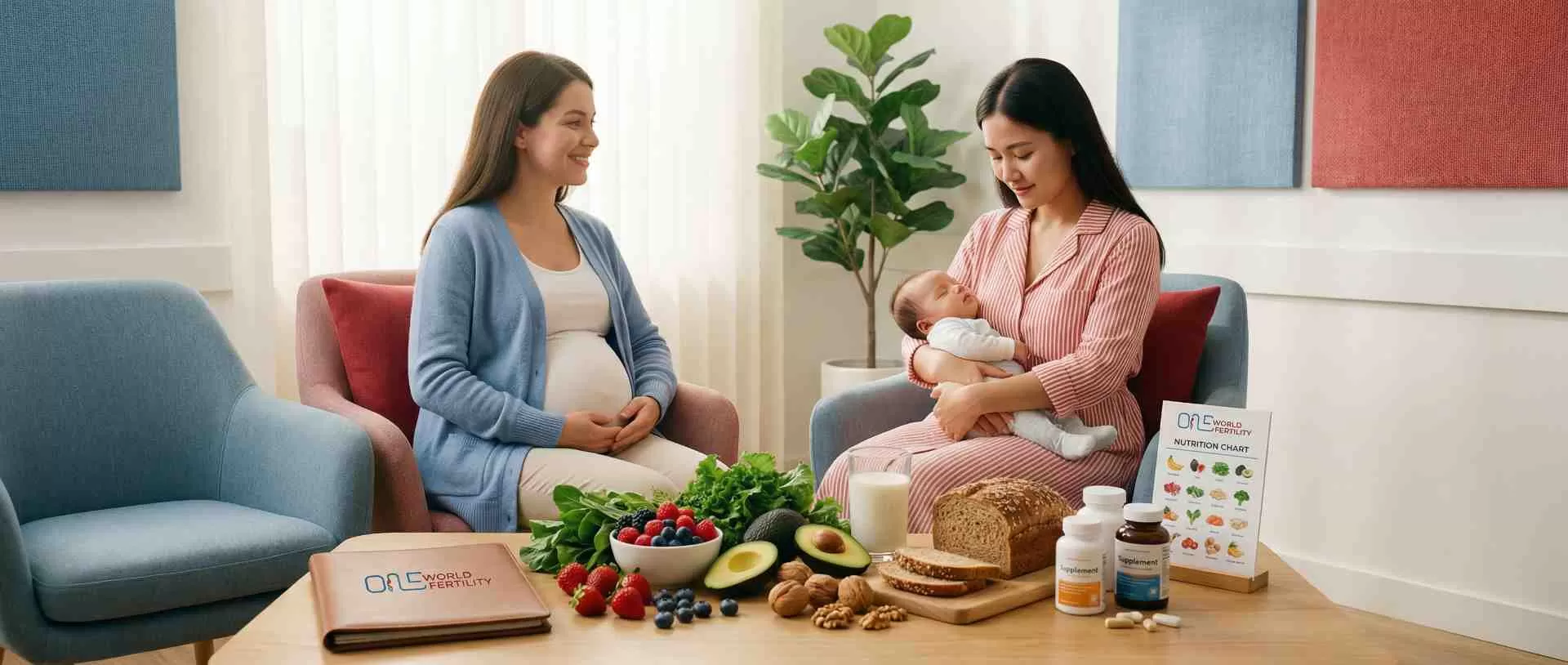
Making these changes is easy; just keep taking small, steady steps, and your body will thank you. And healthy eating doesn't end when you give birth. Our Pregnancy and Post-Pregnancy Nutrition program makes sure that your body stays fed and supported the whole time.
Fertility Diet Plan for Men
Men's diet is often forgotten when people talk about fertility, even though it affects almost half of all infertility cases. In reality, what a man eats has a direct effect on the number of sperm, how well they move, and the quality of their DNA. You're not the only one going through this, and even small changes to your diet can make a big difference.
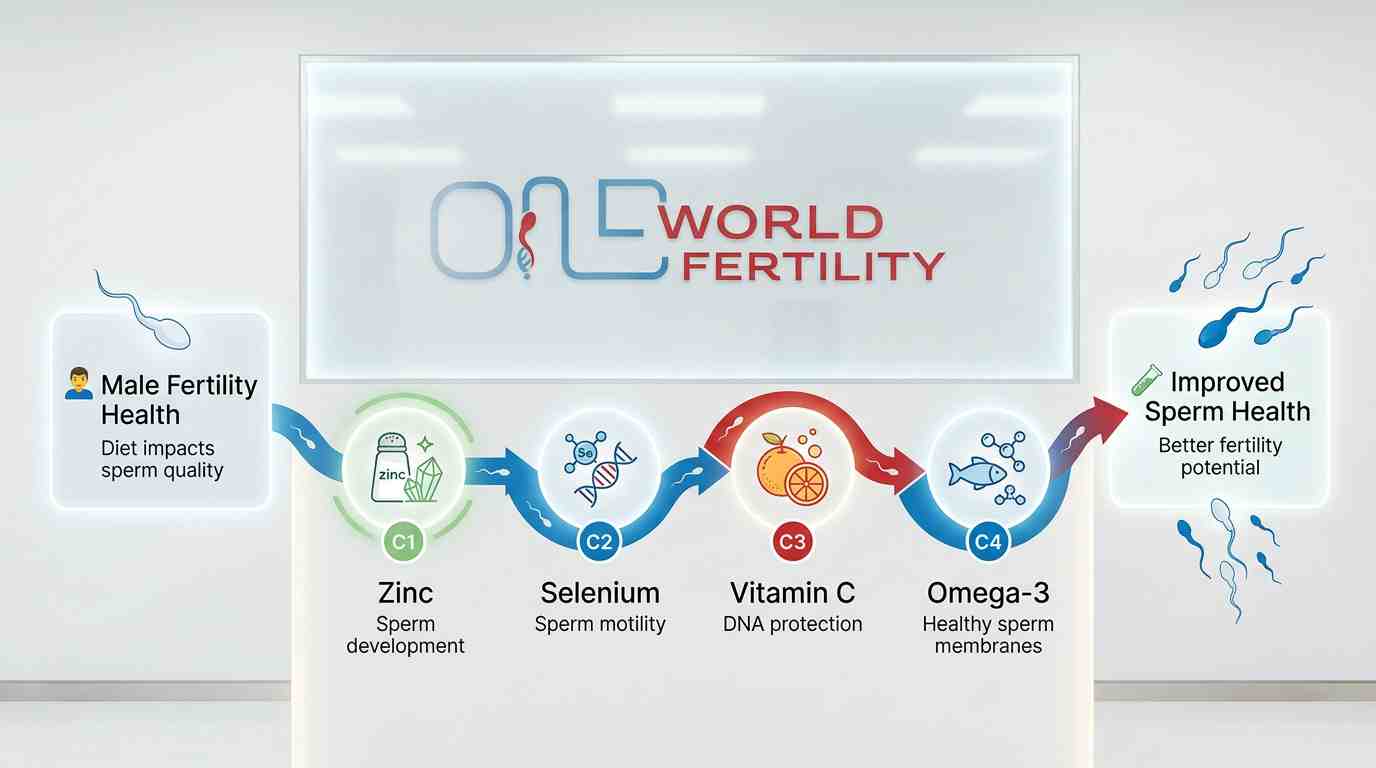
Some important foods that help men get pregnant are:
- Zinc: makes sperm development better.
- Selenium: helps sperm move around
- Vitamin C: keeps sperm DNA safe.
- Omega-3: helps keep sperm membranes healthy
A well-balanced male fertility diet plan can make sperm health much better and help your partner get pregnant.
Know Your Numbers - Then Improve Them With Nutrition
If you want to make changes to your diet, it's helpful to know how healthy your sperm are. A Semen Analysis tells you exactly how many sperm you have, how fast they move, and how good your DNA is. This way, your fertility nutrition plan is based on your needs, not on guesswork.
Targeted changes to your food work much better once you know your numbers. Sperm factors get better over time, and often in just 3 months, when you eat foods high in zinc, antioxidants, and omega-3 fatty acids.
A well-balanced male fertility diet plan can make sperm health much better and help your partner get pregnant.
Fertility Diet for IVF Patients
If you are going through IVF, nutrition becomes one of your most powerful tools. The right foods at the right time can support your body through every stage of treatment - from preparation all the way through to embryo transfer and recovery.
We understand that IVF is already a lot to manage. That is why our specialists take the nutrition side off your plate - so you can focus on what matters most.
| IVF Stage |
Nutrition Focus |
| Pre-IVF preparation |
Anti-inflammatory foods |
| Ovarian stimulation |
Protein and micronutrients |
| Egg retrieval recovery |
Hydration and healing foods |
| Embryo transfer |
Nutrients supporting implantation |
Supporting your body nutritionally during IVF can improve treatment readiness, support recovery, and give your embryo the best possible environment to thrive.
How Nutrition Supports Embryo Implantation
Implantation is one of the most important parts of the IVF process, and diet helps it in a way that you might not expect. Omega-3 fatty acids help the lining of the uterus stay healthy, which makes it easier for a baby to implant. Vitamin D helps the immune system, which is important for implants to work. During this fragile stage, foods that are high in antioxidants protect the baby from oxidative stress.
These are not small things; they are the nutritional building blocks that give your baby the best chance of implanting properly. At every stage of your IVF treatment, our doctors make sure that these things are taken into account in your food plan.
Fertility Conditions That Benefit from Nutritional Support
Many reproductive health conditions are deeply connected to inflammation, hormonal imbalance, and metabolic health - all of which can be supported through targeted nutrition. Here is how diet helps with common fertility conditions:
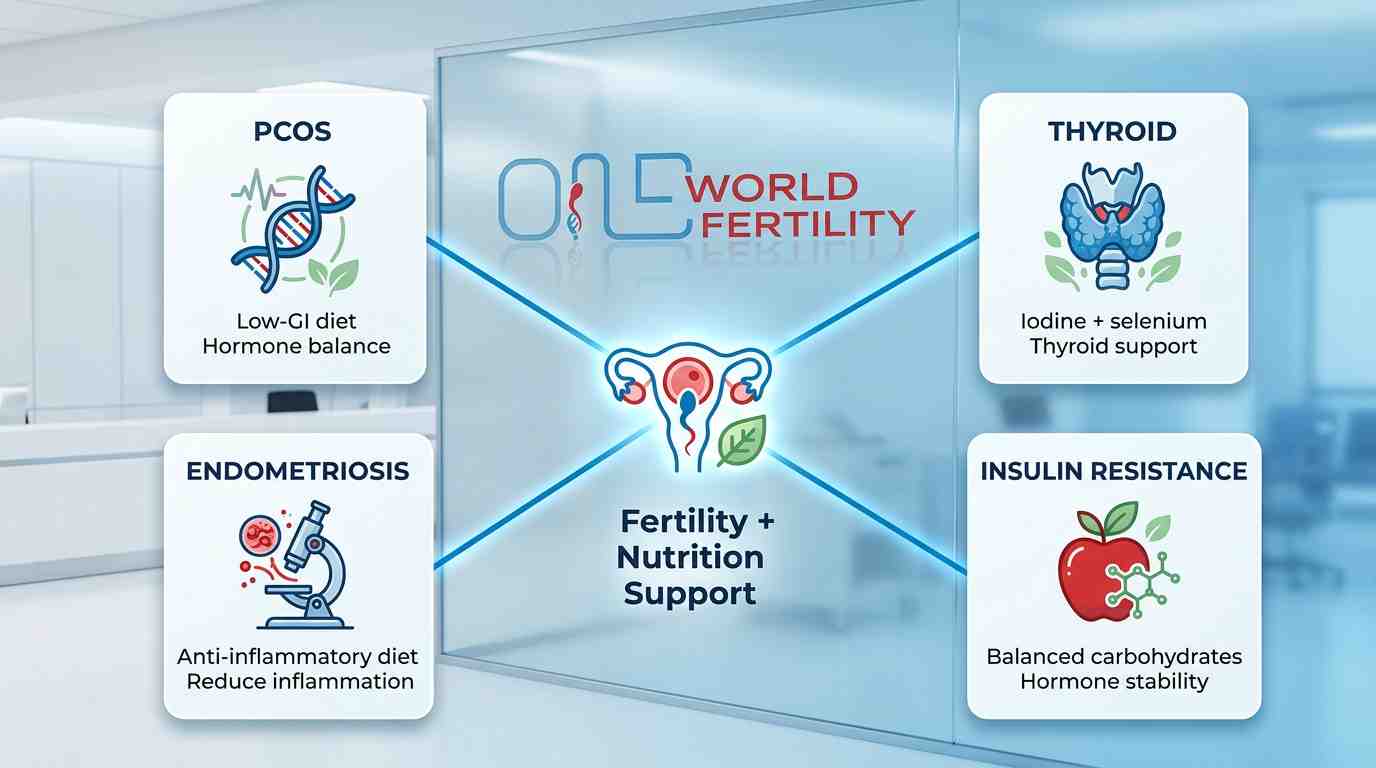
- PCOS: a low-glycemic diet helps regulate insulin levels and restore hormonal balance
- Thyroid imbalance: the right balance of iodine and selenium supports healthy thyroid function
- Endometriosis: an anti-inflammatory diet reduces inflammation and supports conception
- Insulin resistance: balanced carbohydrate intake helps stabilise hormones and improve fertility
How an Anti-Inflammatory Diet Supports Reproductive Health
One thing that all of these conditions have in common is chronic inflammation, and one of the best ways to treat it is to change your food. Whole foods, healthy fats, and antioxidant-rich foods are what make up an anti-inflammatory fertility diet. These foods reduce inflammation and make the body more fertile.
Together, foods like nuts, berries, leafy greens, and fatty fish can lower inflammatory markers, help keep hormones in check, and improve general reproductive health in a natural and long-lasting way. The right food is not a replacement for medical care, but it works very well with it.
How the Personalised Fertility Nutrition Program Works
It's easier than you think to start. You will always know what to expect from our fertility diet program because it is clear, helpful, and based on your specific needs.
| Step |
Description |
| Step 1 |
Fertility nutrition consultation |
| Step 2 |
Health and fertility assessment |
| Step 3 |
Personalised fertility meal plan |
| Step 4 |
Follow-up monitoring and support |
You never have to work things out by yourself. Our experts are with you every step of the way and will keep giving you advice to help you make changes that will help you reach your long-term fertility goals.
How Long Does the Program Take?
Every fertility journey is different - and so is every nutrition program. Most patients begin to notice positive changes within 8 to 12 weeks of following their personalised fertility meal plan.
However, for those preparing for IVF or working to improve egg and sperm quality, our specialists generally recommend following the program for at least 3 to 6 months for the best results. The good news is that you do not have to wait long to get started - and every step you take today brings you closer to your goal.
Why Choose One World Fertility?
At One World Fertility, we understand that fertility is deeply personal. That is why we go beyond standard medical care - combining reproductive expertise with personalised nutrition guidance to support your whole journey, not just your treatment.
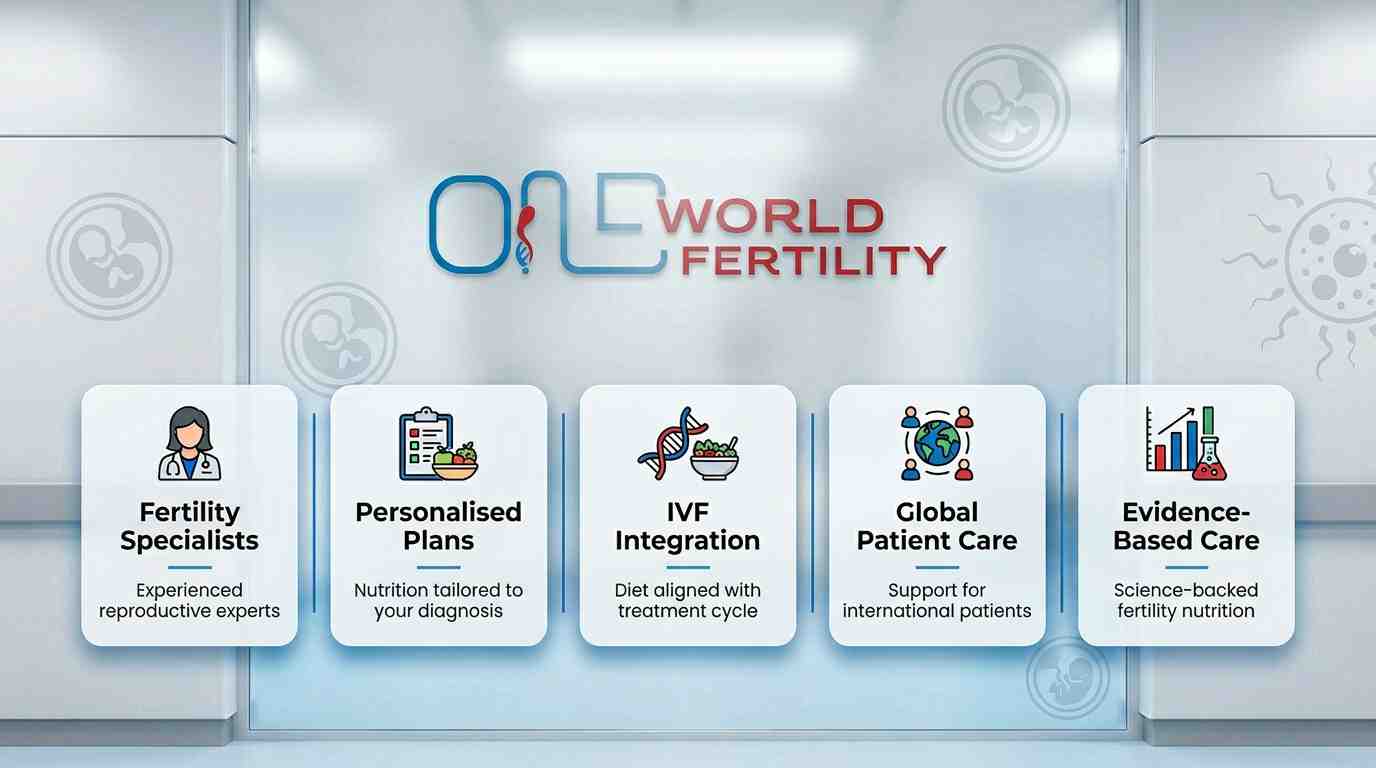
- Fertility specialists : experienced reproductive experts who understand your unique needs
- Personalised plans: every nutrition program is tailored to your diagnosis and lifestyle
- IVF integration: nutrition aligned with your treatment cycle at every stage
- Global patient care: dedicated support for international patients wherever you are
- Evidence-based care: protocols built on the latest reproductive nutrition research
Our Approach - Where Medicine Meets Nutrition
We think that reproductive health and nutrition science should never be separate fields of study. When both your diet plan and your fertility treatment are based on the same diagnosis, goals, and time frame, the results are much better than one or the other alone.
The experts at our One World Fertility use the newest findings in both reproductive medicine and diet to make a plan that helps your body in every way. From your first appointment to your last follow-up, every choice is based on evidence, tailored to your needs, and made with real care.
Book Your Personalised Fertility Nutrition Consultation
Your fertility journey deserves the right support from the very beginning. A personalised fertility diet plan can improve egg and sperm quality, support hormone balance, and prepare your body for conception or IVF treatment. At One World Fertility, our specialists are ready to build a nutrition program designed entirely around you and your fertility goals.
Book a Fertility Nutrition Consultation with us now.
Questions people ask about this treatment
10 answeredhere