

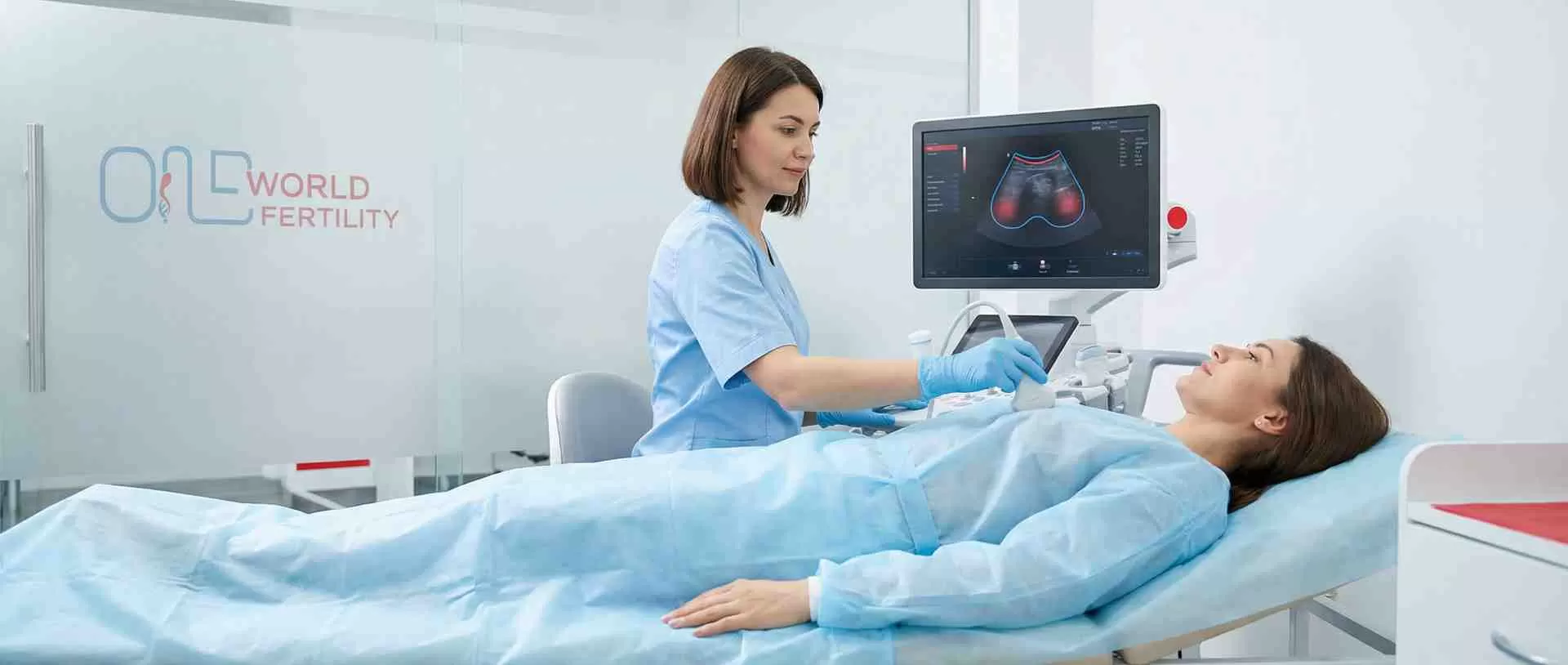

You need to get professional treatment and attention for your breast health. We make breast screening easy, comfortable, and stress-free at One World Fertility. We know you might have questions, whether this is your first mammogram or your yearly Breast screening. That's totally okay. How do you get ready for a mammogram? What should you look forward to throughout the visit? How much time does it really take? We get these inquiries all the time, and we're here to help you with everything.
Our staff uses the most up-to-date digital mammography and 3D imaging to find problems early when they are easiest to fix. We made a cosy, welcoming place where you can relax and not feel pressured. Because the truth is that early detection does save lives. We want to assist you in taking this critical step to protect your health because you deserve to feel safe.
What Is Breast Screening?
Breast screening is an easy approach to examining the health of your breasts before any problems happen. It's basically a mammography procedure, which is a specific type of X-ray that looks for breast cancer screening and finds anything strange early, typically years before you would feel it yourself. There are two major types of breast imaging. A screening mammography is your yearly checkup when everything seems great. A diagnostic mammography is when your doctor wants to look at anything in more detail, such as a lump or pain you've seen.
We use digital and 3D mammography at One World Fertility to capture the highest-quality images possible. Most women start talking to their doctor about screening vs diagnostic mammograms when they are about 40 years old.
Why Breast Screening Matters?
You might be surprised to learn that breast cancer early detection helps; the chances of survival go up to about 99%. That's a lot. Regular mammograms can find tiny tumours, often as little as a grain of rice, long before you or your doctor might feel them during an exam. The stats definitely highlight mammogram importance. Studies show that women who are checked for breast cancer regularly have a 20-40% lower risk of dying from the disease. It's not enough to just find cancer; you have to find it when it's easiest to treat.
And to be honest? Being sure you're taking care of your breast health gives you great peace of mind. When you think about the benefits of screening, you should think of it this way: you're giving yourself the best chance to discover any problems early, when treatment is easier, and the results are better. That's the best kind of preventive treatment, and it might really save your life.
| Age Group | Screening Recommendation | Frequency | Notes |
| 20-39 | Clinical breast exam | Every 1-3 years | Start earlier if you have high risk factors |
| 40-44 | Screening mammogram (your choice) | Annually | Talk with your doctor about when to start |
| 45-54 | Screening mammogram | Annually | This is the standard recommendation |
| 55+ | Screening mammogram | Every 1-2 years | Keep screening as long as you're healthy |
| High Risk | Screening + possible MRI | Annually | If you have family history or genetic factors |
Key for patients: These are only broad rules. Depending on your health history, family history, or breast density, your doctor may suggest a different schedule.
How to Prepare for Your Mammogram Appointment
We understand that you might be a little nervous if this is your first mammogram. That's totally typical! The good news? Getting ready for a mammography appointment is very easy, and a little planning can make you feel more comfortable and confident. This is your helpful guide to getting a mammogram and how to prepare without any stress.
What you will learn here:
- When to schedule for maximum comfort
- What to skip the morning of your appointment
- The best outfit choices (yes, it matters!)
- What to bring with you
Let's go through everything together, step by step.
Before Your Appointment - Mammogram Preparation Tips
You don't have to worry about getting ready for your mammogram. Here's how to get ready for a mammography appointment so that everything goes well. First, the time is important. Plan your visit for around a week or two after your period starts. Why? This is because your breasts are typically less sensitive at that time, making mammogram preparation easier. If you're worried about being uncomfortable, don't drink coffee for a day or two. You should also avoid caffeine for 24 to 48 hours before preparing for a mammogram exam because it can make your breasts more sensitive.
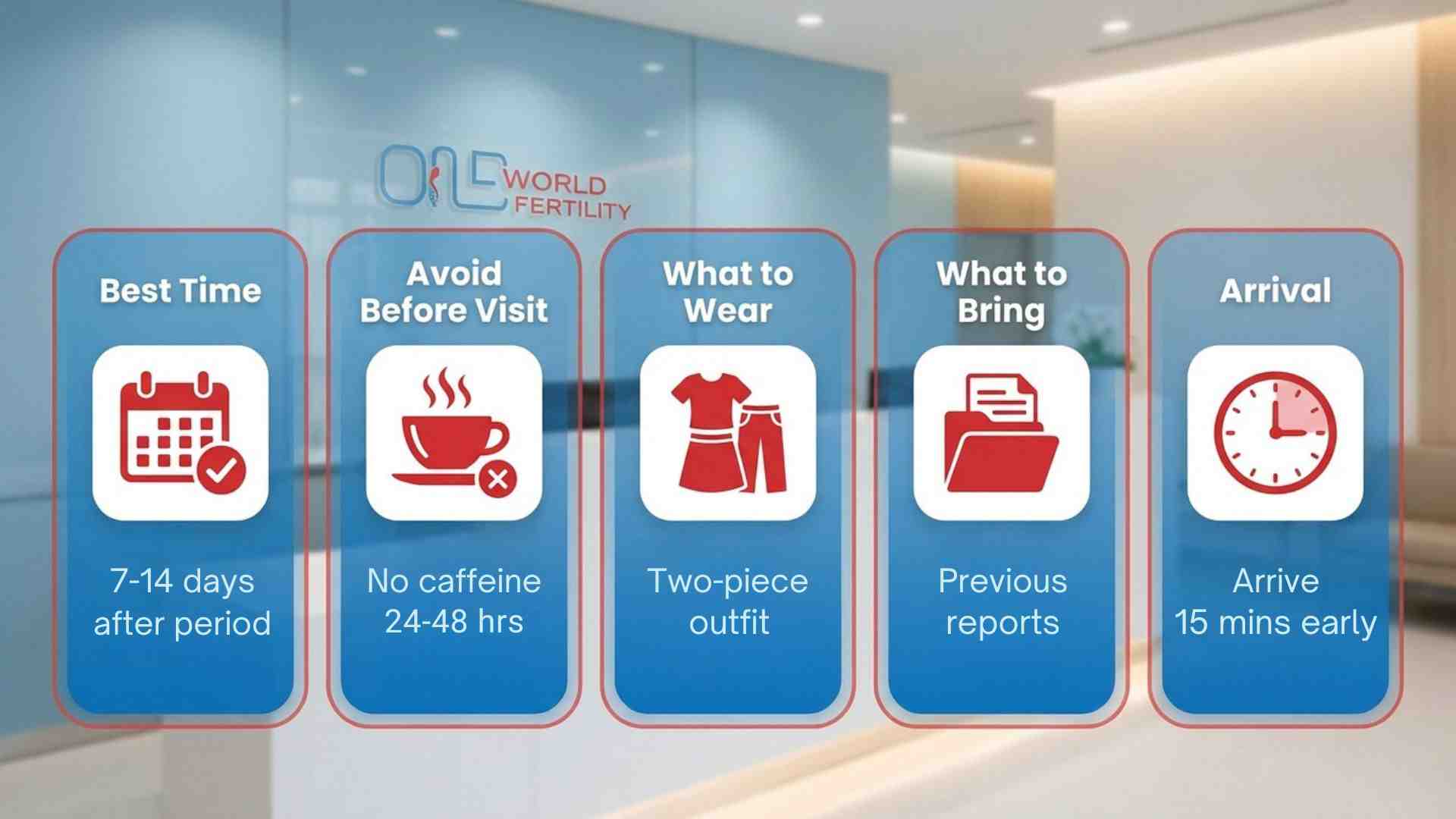
"Can I take Tylenol before a mammogram?" is something we hear all the time. Yes, of course! It's quite safe to take an over-the-counter painkiller an hour before if you're worried about pain, but you should consult your doctor first before taking it. Here is a mammogram appointment prep checklist:
- If you have any past mammograms or results from other places, please bring them. This helps us compare and find any changes.
- If you have breast implants, are pregnant, are breastfeeding, or have noticed any changes in your breasts, such as lumps or soreness, please let us know when you make your appointment.
- Get there approximately 15 minutes early so you can fill out any paperwork you need without feeling rushed.
Our technologists can provide you with the finest possible care with this information.
What to Wear to Your Mammogram
It's easier than you think to figure out what to wear to a mammogram. Pick a comfortable two-piece outfit. For example, a shirt and slacks or a skirt. This makes it easier to change because you have to take off your top. This is the most important thing to do to get prepared for a mammogram appointment: That morning, don't put deodorant, powder, lotion, or perfume on your chest or underarms. If you have these things in your body, they could show up as white spots on an X-ray, which could lead to more imaging that isn't needed. Your list for the morning:
- No deodorant or antiperspirant
- No talc or body powder
- No lotion or moisturiser on the chest area
- No perfume on or near the breasts
- Don't bring jewellery, necklaces, or other metal things with you.
And here's a hint from a pro: don't wear an underwire bra to your visit. If you want to wear one while you wait, a soft sports bra or bralette is great.
Mammogram Preparation Do's and Don'ts
| Do's | Don'ts | Why It Matters |
| Wear two-piece clothing | Avoid deodorant/powder on chest area | Prevents white spots that interfere with imaging |
| Schedule 1-2 weeks after your period | Don't wear jewelry or metallic accessories | Reduces breast tenderness and discomfort |
| Bring previous mammogram records | Avoid caffeine 48 hours before | Helps radiologist compare and track changes |
| Arrive 15 minutes early | Don't apply lotion or perfume on breasts | Gives you time for paperwork without rushing |
| Tell us if you're pregnant/breastfeeding | Skip the underwire bra | Ensures your safety and comfort during exam |
Types of Mammography at One World Fertility
It's a good thing that not all mammograms are the same! Depending on why you're getting screened, we use different types of mammography to give you the most accurate results. Wondering which one you need? Let's make it easy to understand.
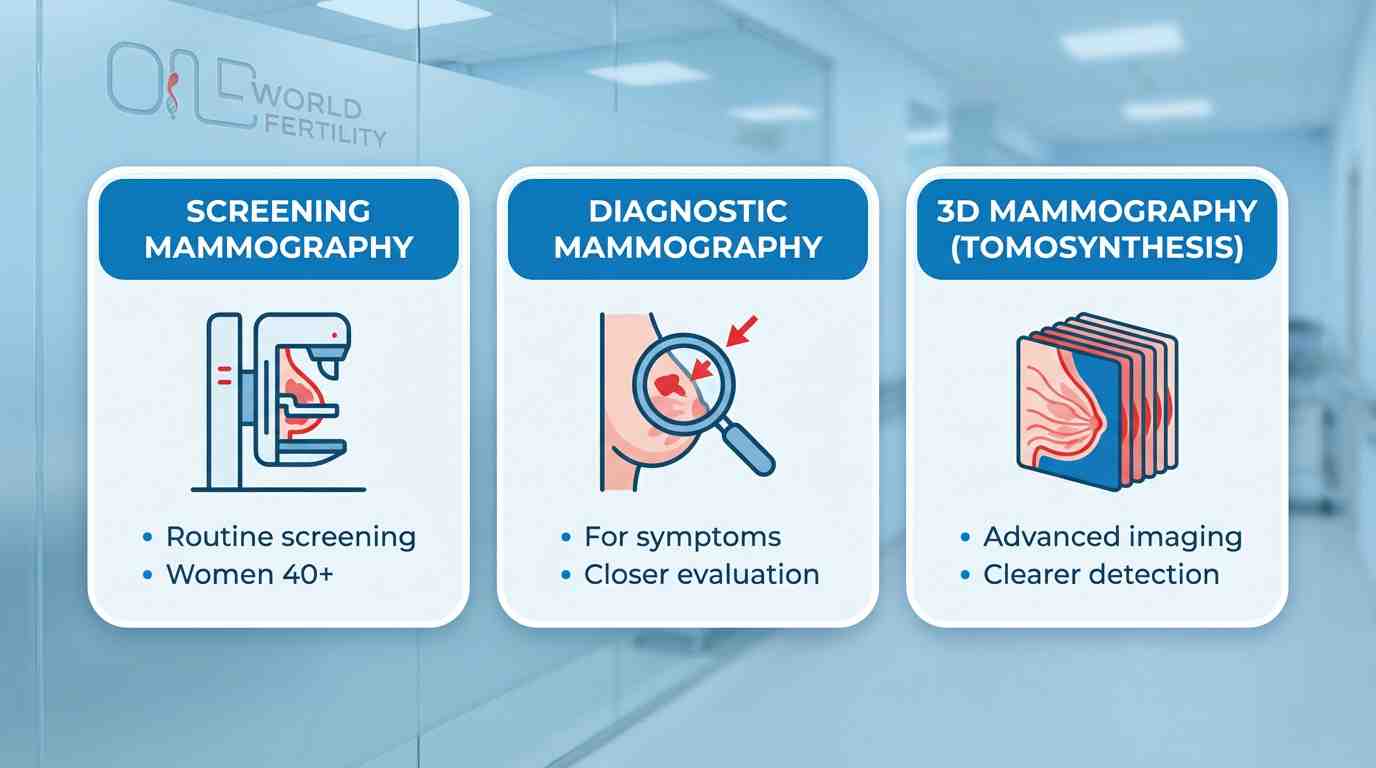
Screening Mammography - Your Annual Checkup
A screening mammogram is like a yearly health check for your breasts. It's for women who aren't having any problems; you're just being smart about your health. Most health insurance plans offer screening mammograms for women 40 and older, although the amount of coverage varies by insurer. Look over the details of your policy.
Who needs it?
- Women aged 40 and above
- Women with family history of breast cancer (start earlier)
- No symptoms, just being smart about your health
Diagnostic Mammography - Taking a Closer Look
What if your doctor finds something during an exam, or your screening mammogram shows something that has to be looked at again? That's when you need a Diagnostic mammogram to find out what's wrong. Diagnostic mammography is more specific and thorough. We take additional pictures from different perspectives and focus on specific regions. You use it when you have symptoms like:
- A hole you can touch
- Pain in the breast that won't go away
- Discharge from the nipple
- Abnormal results from a screening mammogram
Insurance: Usually covered, but you may pay a co-payment.
3D Mammography (Tomosynthesis) - Our Advanced Option
Want the clearest pictures you can get? Digital breast tomosynthesis, or 3D mammography, is like going from normal photographs to HD. We take several photographs from different angles rather than just one flat picture to create a 3D depiction of your breast tissue.
Why choose 3D?
- Very useful if you have thick breast tissue
- Finds malignancies that regular 2D mammograms might not see
- About 40% fewer false alarms and callbacks
Insurance: Some plans include it, while others require extra payment.
Mammography Types & Costs in India
| Procedure Type | Cost Range | What It's For | Typical Insurance Coverage |
| Screening Mammogram (both breasts) | ₹1,000 - ₹3,500 | Routine yearly checkup | Often covered as preventive care |
| Diagnostic Mammogram (one breast) | ₹1,500 - ₹3,000 | Investigating specific concern | Usually covered with co-pay |
| Diagnostic Mammogram (both breasts) | ₹2,000 - ₹5,000 | Investigating concerns in both breasts | Usually covered with co-pay |
| 3D Mammography (add-on) | ₹5,000 - ₹6,000 | Enhanced imaging technology | Varies by insurer; may need additional payment |
Do you know what kind you need? When you call to make an appointment, our team will ask a few simple questions and help you find the perfect mammography for you. And if you're anxious about how much it will cost, we'll check your insurance coverage before your visit so you won't be surprised.
Ultrasound Screening of Breast - A Radiation-Free Alternative
Are you worried about the radiation from mammograms? You're not the only one. A lot of women are worried about the possible hazards of getting X-rays too often, especially if they need to get them often. That's why breast ultrasound screening becomes a useful choice.
What Is Breast Ultrasound?
Breast ultrasonography makes pictures of your breast tissue using sound waves instead of radiation. There is no risk of radiation, and it is absolutely safe and painless. It's like the ultrasound that pregnant women get to see their kids, but for your breast health.
Who Should Consider Ultrasound Instead of Mammography?
Ultrasound screening of the breast is especially useful for:
- Young women under 40 who desire to stay away from radiation exposure too soon
- Women who are pregnant or breastfeeding and can't undergo X-rays
- Women have dense breast tissue, which makes mammograms less useful
- Women who need frequent monitoring and want to minimise cumulative radiation
- Anyone worried about the risks of radiation from mammograms
Yes, mammograms do use a small amount of radiation. Most women don't have much of a risk, and the benefits of finding cancer early far exceed the hazards, but some women would rather not have any radiation at all if they can help it. That's a good choice, and ultrasonography lets you do that.
Benefits of Breast Ultrasound:
- No radiation exposure: safe to use over and over again
- No need to press on: your breasts to be comfortable
- Great for thick breasts: see through dense tissue better than mammograms
- Real-time imaging: lets us look at suspicious areas right away
- Safe to use: while pregnant or breastfeeding
What to Expect at Your First Mammogram
It's very normal to feel a little nervous if you've never had a mammogram before. What will it be like? Will it hurt? How long will you be there? Let's go over the whole breast screening process so you know what to expect. Knowing what to expect at the first mammogram can really help calm those nerves.
The Mammogram Procedure - Step by Step
Step-by-step, this is what you can expect at your first mammogram:
- Check-in and paperwork: You'll need to give some basic medical information. We'll question you about any problems with your breasts, your family's history, and any mammograms you've had in the past.
- Changing time: You'll go to a private room and put on a comfy gown. You only take off clothes from the waist up. The changing room is a safe place for your things.
- Meeting your technologist: A professional technologist (typically a woman) will walk you through everything. Don't be afraid to ask questions!
- The imaging itself: This is how the mammogram procedure works. You'll be standing in front of the mammogram machine. The technologist puts one breast at a time on a flat plate. Then, for a few seconds, another plate softly presses down on your breast.
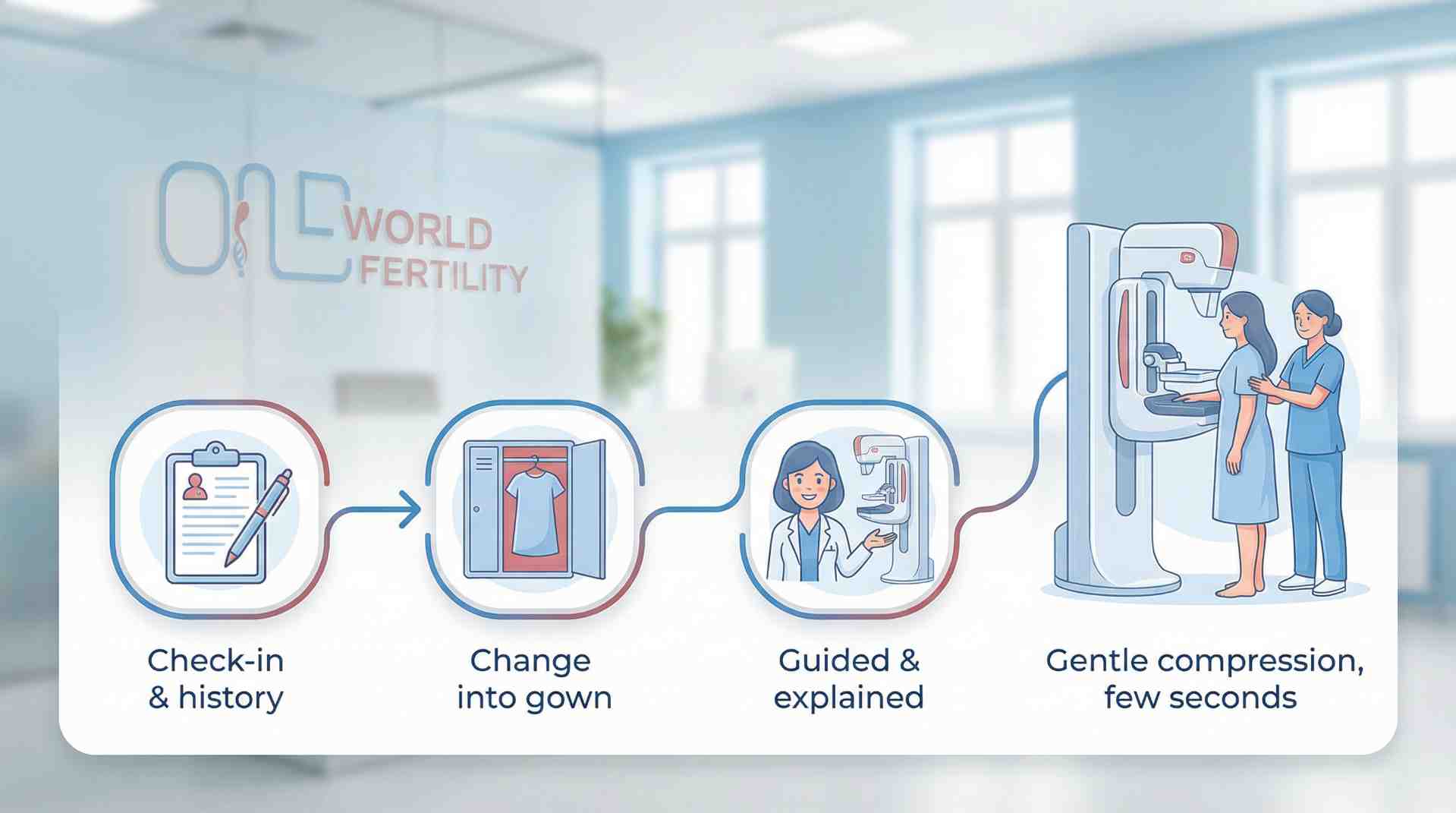
This spreads the tissue so we can see everything well. We take four standard pictures, two of each breast. Does compression hurt? Most women say it feels like pressure or a little discomfort, not pain. It just lasts a few seconds for each picture. If something really hurts, say something! Your technician can adjust.
Getting Your Mammogram Results - What They Mean
What do you do now that you've had your mammogram? You might feel anxious while you wait for your mammogram results, but knowing what they mean will help you calm down. Let's talk about the breast scan report in simple terms. When will I get my grade? Within 24 to 48 hours, most mammogram results are ready. We'll call you or send you a letter if we need to talk about something. No news isn't bad news; it just means we're taking our time.
What do BIRADS categories mean? To make sure that all of their results are the same, doctors use something called BIRADS categories (Breast Imaging Reporting and Data System). It's kind of like a range from 0 to 6 that tells you what was found and what will happen next. What if the test results show something that isn't right? First, take a deep breath. If your mammogram isn't normal, it doesn't always mean you have cancer. Most of the time, callbacks are to get better pictures or to double-check something that wasn't there. Every screening mammogram needs an extra picture or two, but only 0.5% of those images show cancer.
The BIRADS breakdown:
Categories 0-2: Usually good news, either normal or benign findings
Category 3: Probably nothing, but we'll recheck in 6 months to be sure
Categories 4-5: Need further testing (biopsy) to know for sure
Category 6: Already diagnosed with cancer, monitoring treatment progress
| Category | What It Says | What It Actually Means | What Happens Next |
| 0 - Incomplete | Need more images | Not enough information yet, need clearer pictures | Come back for additional views (very common!) |
| 1 - Negative | All clear | Nothing concerning found | Regular screening next year, you're good! |
| 2 - Benign | Non-cancerous finding | Something there but definitely not cancer | Continue regular screening, no worries |
| 3 - Probably Benign | 98% likely benign | Something to watch but probably nothing | Follow-up mammogram in 6 months |
| 4-5 - Suspicious | Needs closer look | Could be cancer, needs testing | Biopsy recommended to know for sure |
| 6 - Known Cancer | Already diagnosed | Monitoring known cancer | Tracking treatment response |
Note that this information is only meant to teach and should not be used instead of medical advice. Talk to your doctor about your mammogram results. They know your whole health history and can answer your particular questions. Your doctor should look over the results from the breast imaging to figure out what you should do next.
Who Should Get Breast Screening?
Not sure if you need a mammogram yet? Based on your age and risk level, here is a simple list of breast cancer screening guidelines. How old should you be to start getting mammograms? Age varies depending on a lot of factors. As you get older, here's when to start:
- 40-44: You decide! Your choice! Some women start annual screening, others wait. Have a conversation with your doctor.
- 45-54: Time to start annual mammograms; this is the standard recommendation.
- 55+: Keep doing it once a year or change it to twice a year. Whatever is best for your health.
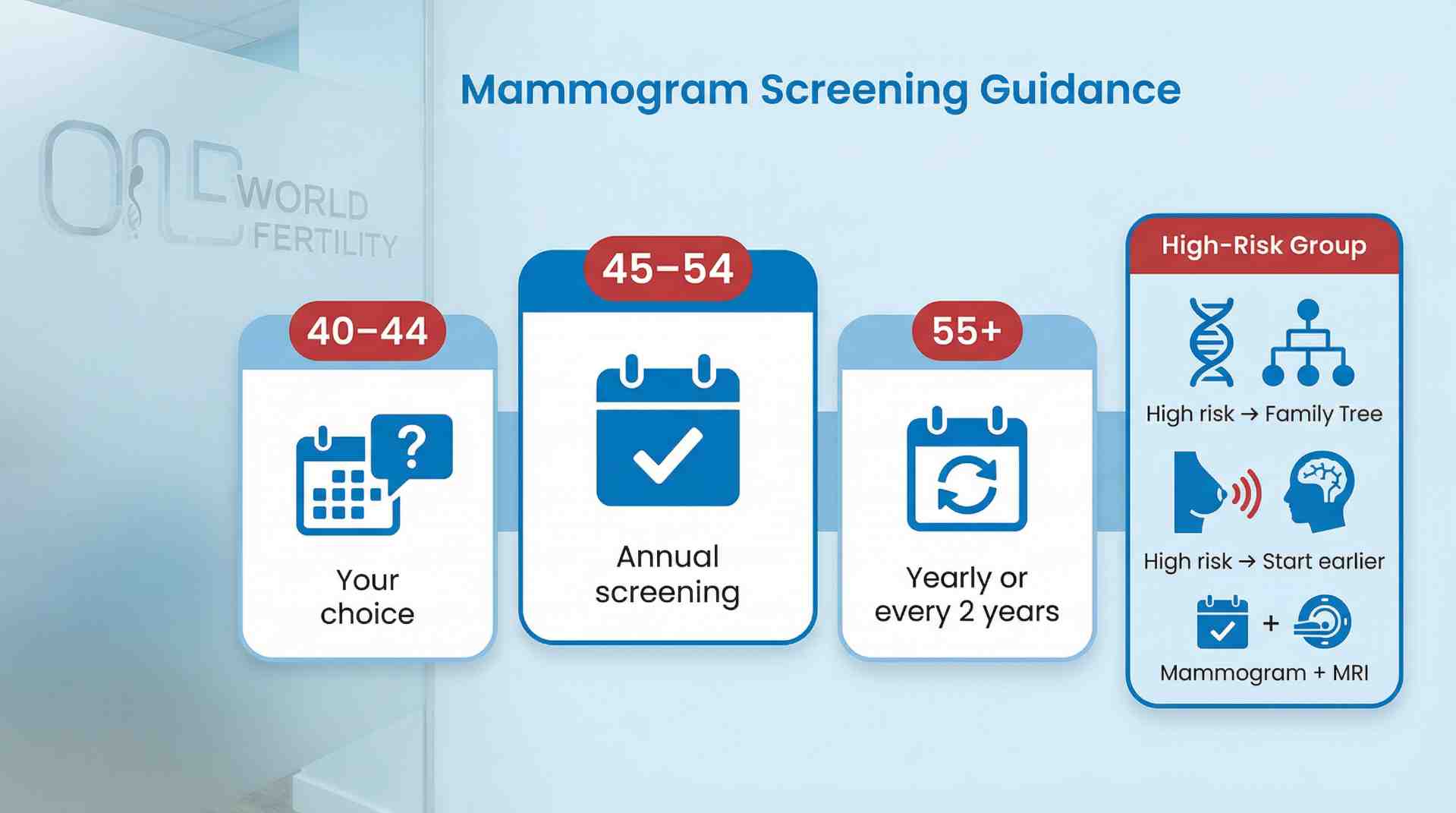
If you have a lot of risk factors, start earlier: You may need to get screened in your 20s or 30s if you
- Family history of breast cancer (mom, sister, daughter diagnosed)
- BRCA1/BRCA2 gene mutations Dense breast tissue
- Previous breast cancer
- Chest radiation before age 30
High-risk women usually need both a mammogram and an MRI of their breasts once a year. Your doctor is going to make a plan just for you.
Why Choose One World Fertility for Your Breast Screening
Are you looking for the best mammography center that makes you feel welcome? That's us. We've built our name as a reliable place for breast imaging at One World Fertility by putting you first. Our highly trained doctors are experts in breast health and carefully look over every scan. We use the newest digital and 3D imaging equipment not because it's cool, but because it finds problems faster and cuts down on calls that need to be made again. What sets us apart:
- Tech experts who are women and understand your worries
- Results in 24 to 48 hours, not weeks
- Private, comfortable space (nothing cold or sterile about it)
- Appointments are often available the same day
- We take most insurance plans
When you look for "breast screening near me," you want more than just a place to go. You want care that feels like it's being given to you personally. That's exactly what we give you. Are you ready to put your health first? Make an appointment for a mammogram today. Get in touch with us or quickly book online. You can get peace of mind with just one visit. Let's make it happen.
Questions people ask about this treatment
10 answeredhere