

Can't get pregnant because of a male factor? You may find the answer you've been looking for in ICSI (Intracytoplasmic Sperm Injection). For couples whose sperm quality or quantity makes natural fertilisation hard, this advanced IVF method was made just for them.
Our embryologists carefully pick out one healthy sperm and inject it straight into your egg. Helping fertilisation grow when it needs it most is like that. Getting ICSI treatment can greatly increase your chances of getting pregnant, even if you have a low sperm count, sperm that don't move well, or failed IVF tries in the past.
At One World Fertility, ICSI is used to treat male factor infertility by directly assisting fertilisation in the lab. This advanced technique allows successful fertilisation even with low sperm count or poor sperm movement.
Intracytoplasmic Sperm Injection (ICSI)
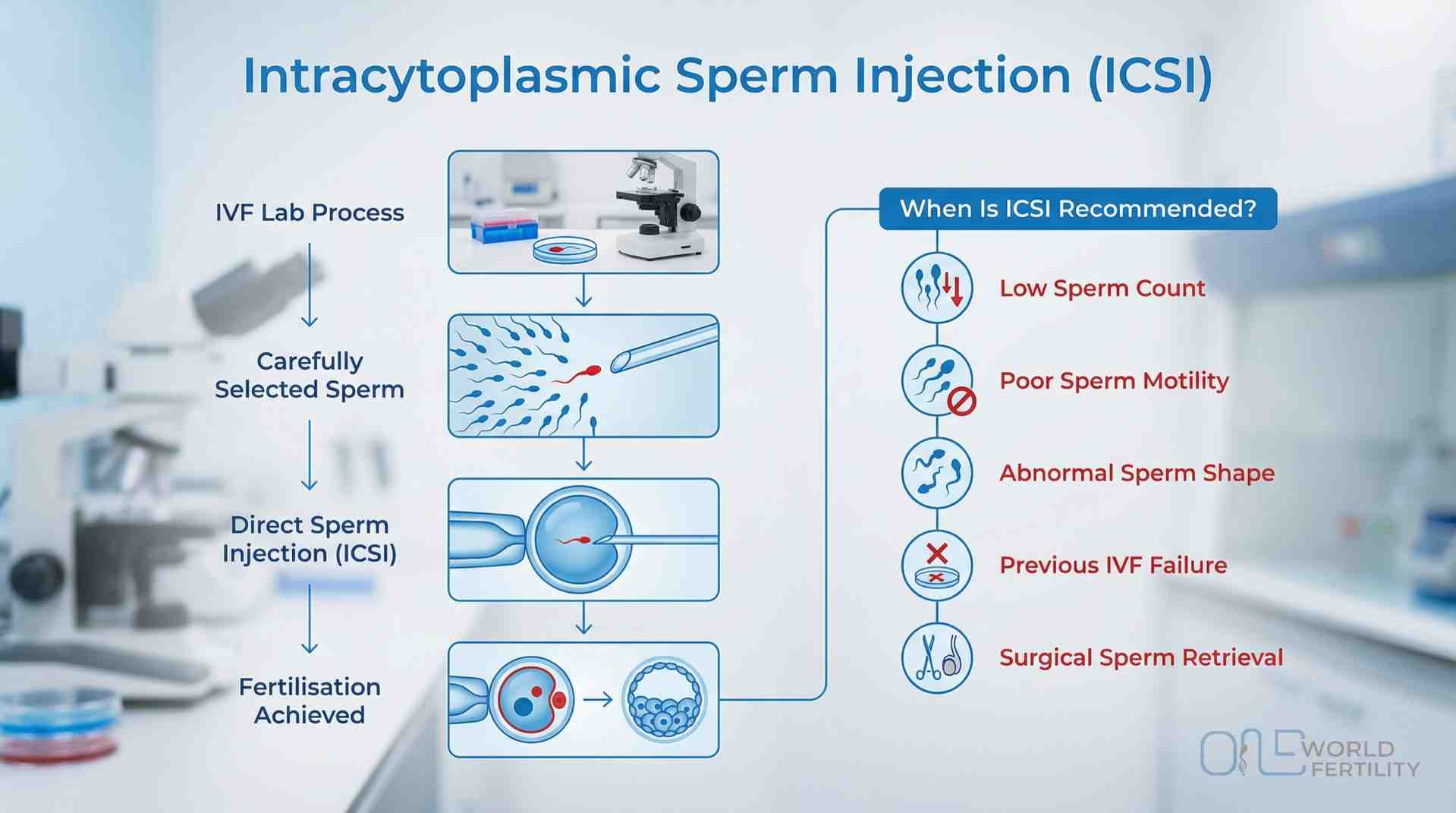
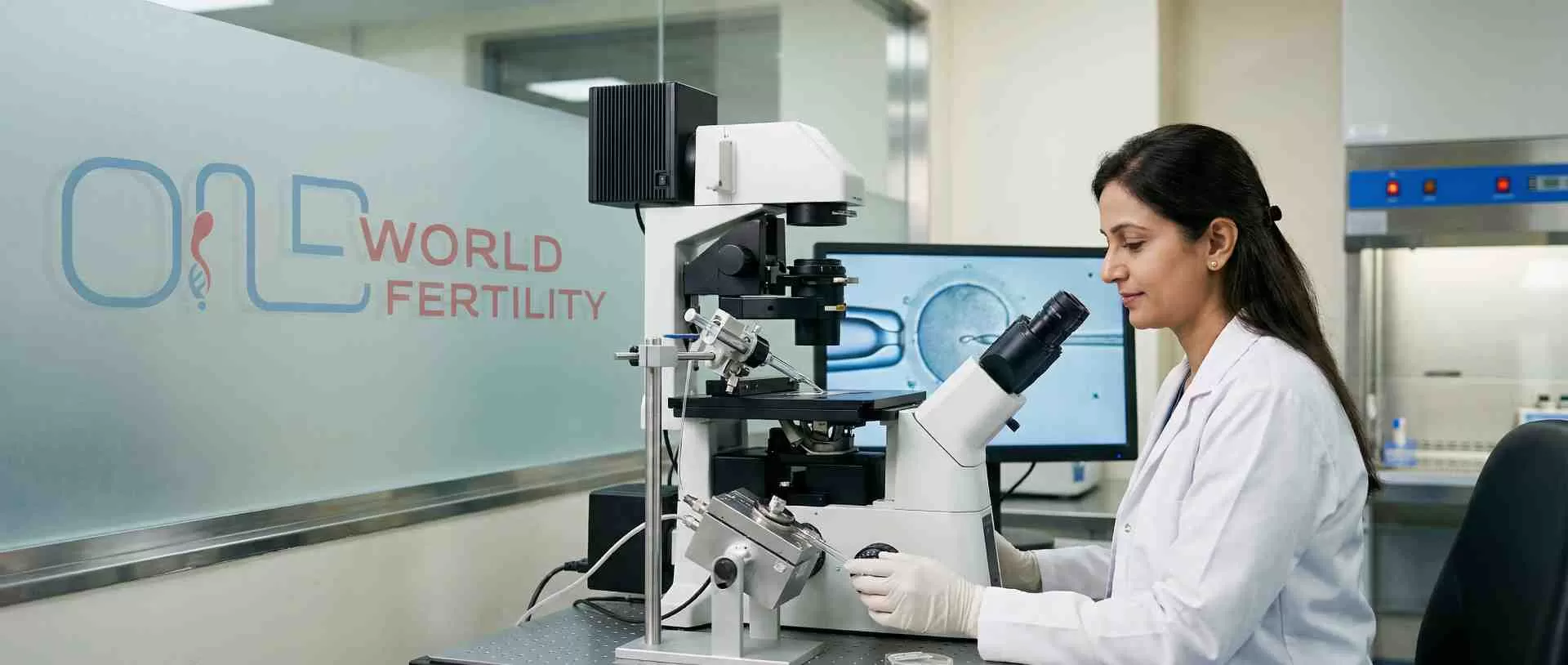
ICSI is a specialized process done in a lab that goes one step further than IVF. Instead of letting sperm and egg meet naturally in a dish, our skilled embryologists use sperm injection IVF techniques to place a single, carefully selected sperm directly inside the egg. This intracytoplasmic sperm injection method is particularly helpful when sperm quality or quantity makes natural fertilisation unlikely. It's a precise, controlled approach that gives your eggs the best chance of fertilising-even when the odds seem challenging.
When Is ICSI Recommended?
If you have problems with male factor infertility, such as a low sperm count, low sperm movement, or sperm that don't have the right shape, you may be told to try ICSI. For those who have had unsuccessful IVF rounds in the past or need to retrieve sperm surgically, this is also a good idea. The fertility expert you see will help you figure out if ICSI is the best option for you.
ICSI Meaning & Medical Full Form
What does ICSI mean? The ICSI stands for Intracytoplasmic Sperm Injection! But the concept is actually straightforward.
The ICSI complete form medical term breaks down simply: "intracytoplasmic" means inside the cytoplasm (the egg's inner fluid), and "sperm injection" is exactly what it sounds like-placing a sperm directly into the egg. In everyday language, ICSI refers to a surgical technique used to help sperm and egg join together when they might not be able to do it on their own. Targeted assisted reproduction is a method of reproduction that is meant to help couples who are having trouble getting pregnant naturally.
Why the Technical Name Matters Less Than What It Does
You don't need to remember the complete medical terminology. What matters is this: ICSI is a proven way to overcome fertilisation barriers and help create the embryo that could become your baby.
ICSI vs. Traditional IVF: What's the Difference?
When you get traditional IVF, we put thousands of sperm around your eggs in a dish and let the process happen on its own in the lab. We are much more direct with ICSI. Our embryologists choose one healthy sperm by hand and put it right into the egg. This is the difference between making the right conditions for fertilisation and forcing it to happen, even if the sperm need extra help getting there.
| Aspect |
Traditional IVF |
ICSI |
| Fertilisation Method |
Sperm meets egg naturally in lab |
Single sperm injected directly into egg |
| Best For |
Normal sperm parameters |
Male factor infertility, low sperm count |
| Sperm Required |
Thousands of sperm |
Just one healthy sperm per egg |
| Success Rate |
Good for unexplained infertility |
Higher fertilisation rates for male issues |
Disclaimer: Treatment recommendations vary based on individual diagnosis. Your fertility specialist will assess your specific situation and suggest the most appropriate approach whether traditional IVF, ICSI, or a combination based on your medical history, test results, and fertility goals.
ICSI for Male Infertility
ICSI for fertility is a great way to get pregnant when male factor infertility is stopping you. This ICSI method for treating male infertility has helped tens of thousands of couples get pregnant when other methods have failed. ICSI is specifically designed to address problems that make natural reproduction difficult.
It works especially well when you're dealing with:
- Low sperm count: Even if there aren't many sperm, each egg only needs one healthy one.
- Poor sperm motility: ICSI can get past this problem even if the sperm have trouble swimming or moving properly.
- Sperm with an abnormal shape: Our embryologists choose the best-formed sperm to inject, which increases the chances of fertilization.
- Use of frozen or surgically extracted sperm: ICSI can fertilise eggs whether the sperm is fresh, frozen, or extracted manually (like TESA or PESA).
Before IVF failed to fertilise, ICSI can help if your eggs didn't fertilise during previous IVF rounds.
Why ICSI Works for Male Factor Issues
ICSI, a method for male infertility, is beautiful because it works so well. We do the hard job for the sperm instead of leaving it up to them to get inside the egg. What it takes is just one good sperm, and our team knows how to find it and use it well. With this method, what might seem like an impossible situation can become a real chance to get pregnant. It's still possible to use ICSI for fertility even if your semen study shows very low counts or bad quality.
Among thousands of weaker sperm, our embryologists are trained to pick out even one healthy one. Often, that's enough. ICSI gives people a lot of hope because it gets to the root of the problem. Not moving much? It won't be a problem when we move. A shape that isn't normal, preventing penetration? We totally get around that barrier. It's fertility medicine that meets you where you are at and gives your sperm the best chance to start a family.
How Does the ICSI Procedure Work Step by Step
If you know how ICSI works, you can feel more ready and sure of yourself when you start treatment. To give your eggs the best chance of being fertilised, the process is precise and done with care at every step.
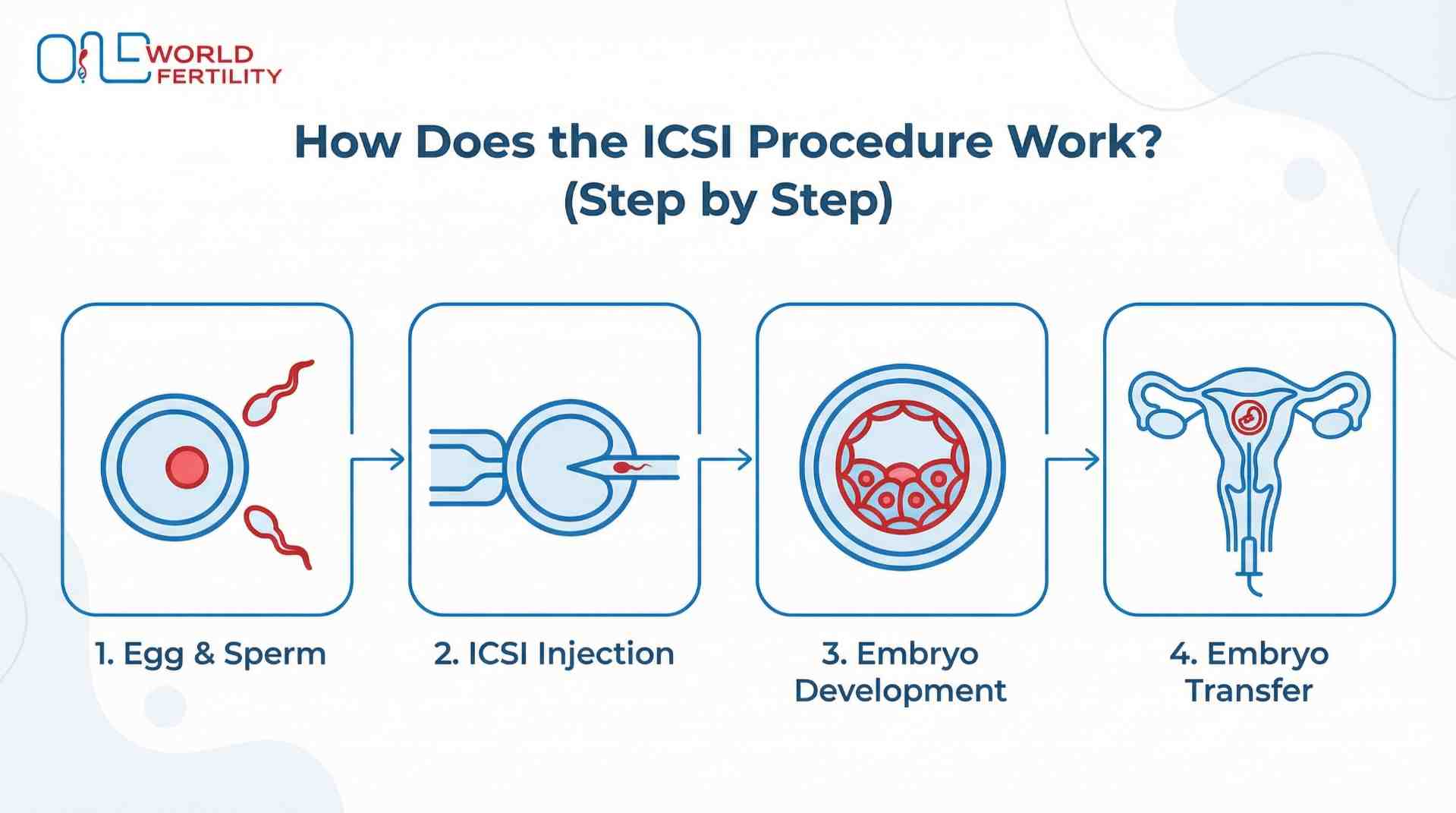
Intracytoplasmic Sperm Injection Procedure
The intracytoplasmic sperm injection process is performed in steps, each leading up to the moment of fertilisation. This is what you can expect:
- Using fertility drugs: To get your ovaries to make more mature eggs is called ovarian stimulation and egg retrieval. We then collect these eggs through a simple process.
- Getting the sperm ready for injection: Our embryologist looks at the sample of sperm carefully to pick out the healthiest, best-formed sperm for injection.
- Direct insertion of the sperm into the egg: For each egg, a single sperm is carefully put in with fine, specialised tools.
In the lab, the eggs are growing: We will see the fertilised eggs develop into babies over the next few days. - Transfer of an embryo to the uterus: Your uterus is where the best embryo or embryos are put so they can grow into a baby.
| Step |
What Happens |
Timeline |
| Ovarian Stimulation |
Hormone injections to produce multiple eggs |
10-14 days |
| Egg Retrieval |
Eggs collected under light sedation |
1 day (30-minute procedure) |
| Sperm Collection & Selection |
Fresh or frozen sperm prepared; best sperm identified |
Same day as egg retrieval |
| ICSI Fertilisation |
Individual sperm injected into each egg |
Same day as retrieval |
| Embryo Culture |
Embryos monitored as they develop |
3-5 days |
| Embryo Transfer |
1-2 embryos placed in uterus |
Day 3 or Day 5 after retrieval |
| Pregnancy Test |
Blood test to confirm pregnancy |
10-14 days after transfer |
Note: Individual timelines may change depending on your treatment plan and how well you respond to medicines. Every step of the way, your fertility team will help you and give you expert advice.
What Is the Success Rate of ICSI Treatment?
"What are my chances?" is probably one of the first things that comes to mind when you think about ICSI. How often ICSI works depends on a number of factors working together. Knowing these factors can help you keep your hopes up while also being realistic.
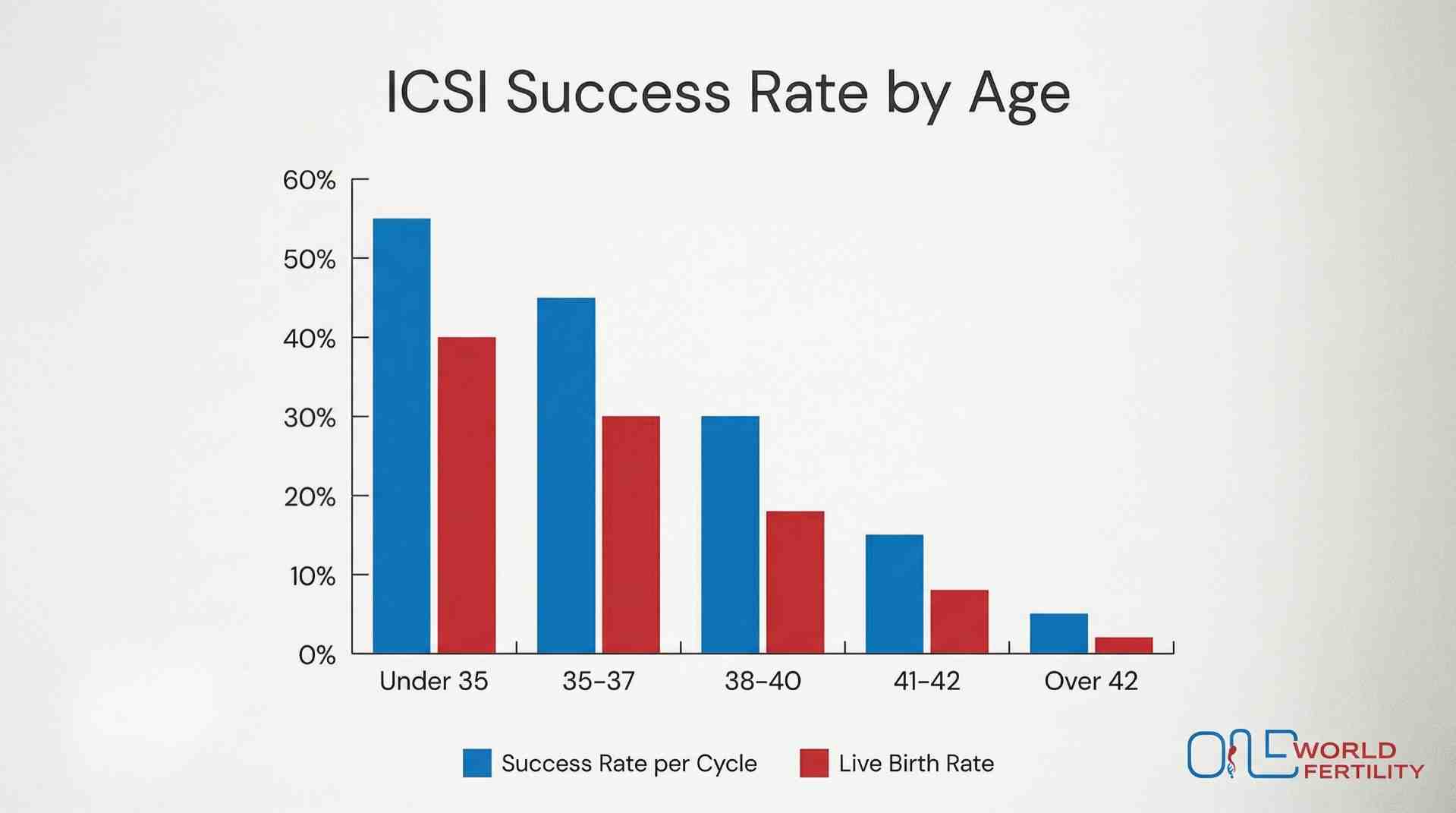
Intracytoplasmic Sperm Injection Success Rate
There is no one success rate for intracytoplasmic sperm transfer. Your chances rely on your age, the quality of your eggs and sperm, and how skilled the lab staff at your fertility clinic is. The success rate is usually higher for younger women because their eggs are usually better. A lot depends on how skilled the embryologist is who gives the shot; accuracy is important when working at a microscopic level. ICSI helps get rid of problems caused by the male partner, but the health of both partners still affects the result.
The good news? ICSI regularly increases the chance of fertilisation compared to situations where poor sperm quality would otherwise make it impossible to get pregnant.
ICSI Success Rate by Age
| Age Group |
Success Rate per Cycle |
Live Birth Rate |
| Under 35 |
40-50% |
35-45% |
| 35-37 |
35-40% |
30-35% |
| 38-40 |
25-35% |
20-28% |
| 41-42 |
15-25% |
12-20% |
| Over 42 |
5-15% |
5-12% |
How Much Does ICSI Treatment Cost?
You can make better plans if you know how much fertility treatment will cost. It depends on your individual needs how much ICSI treatment costs. Knowing what factors affect ICSI cost can help you get ready for the investment.
Cost of Intracytoplasmic Sperm Injection
Intracytoplasmic sperm injection doesn't have a set price; it's part of the total cost of your IVF process. The price of an intracytoplasmic sperm injection varies on a number of things that happen during your cycle. Your total cost usually includes the base cost of the IVF cycle, fertility drugs (which change based on how well they work), the ICSI procedure, lab fees, and any extra procedures like sperm retrieval that may be needed. You can get ICSI as part of some centres' IVF packages, or you can pay extra for it.
How does your end cost change? How much medicine you need, how many eggs were collected, whether sperm was also collected, and how much your clinic charges all play a part. While ICSI does add to the total cost, for couples dealing with male infertility, it's often the only way to ensure fertilisation, so it's an important investment on the way to parenthood.
Understanding What You're Paying For
The ICSI treatment price usually falls between ₹1,70,000 to ₹3,25,000 for a full cycle, depending on where you're located and which clinic you choose. This covers everything-your medications, monitoring, the ICSI procedure, and embryo transfer.
ICSI itself adds about ₹20,000 to ₹40,000 to what you'd pay for standard IVF. Yes, it's an additional cost, but for many couples dealing with male infertility, it's what makes fertilisation possible in the first place.
The good news? Many fertility centres, including One World Fertility, are upfront about their pricing and offer payment plans to ease the financial load. Don't hesitate to ask about package deals or financing during your first visit-it's completely normal, and they're there to help you find a way forward.
Availability of ICSI Treatment
We offer ICSI treatment as part of our IVF services at One World Fertility. If you are a man who is having trouble getting pregnant, you don't need to look any further. We have the knowledge and tools to help you right here. Our embryologists have been trained to carefully and precisely do ICSI using cutting-edge lab tools that let them work at the tiny level. From picking out the best sperm to carefully putting it into your egg, every step is done with care.
What Makes Our ICSI Service Different
ICSI is not just an extra service at One World Fertility; it is an important part of helping couples have children. Our team has years of experience helping men with all kinds of fertility problems, from low numbers to slow motility. You'll have a team that truly cares about your journey, from your first visit to the day of organ transfer. Please feel free to ask any questions you may have. We want to help you succeed as much as possible.
Questions people ask about this treatment
10 answeredhere