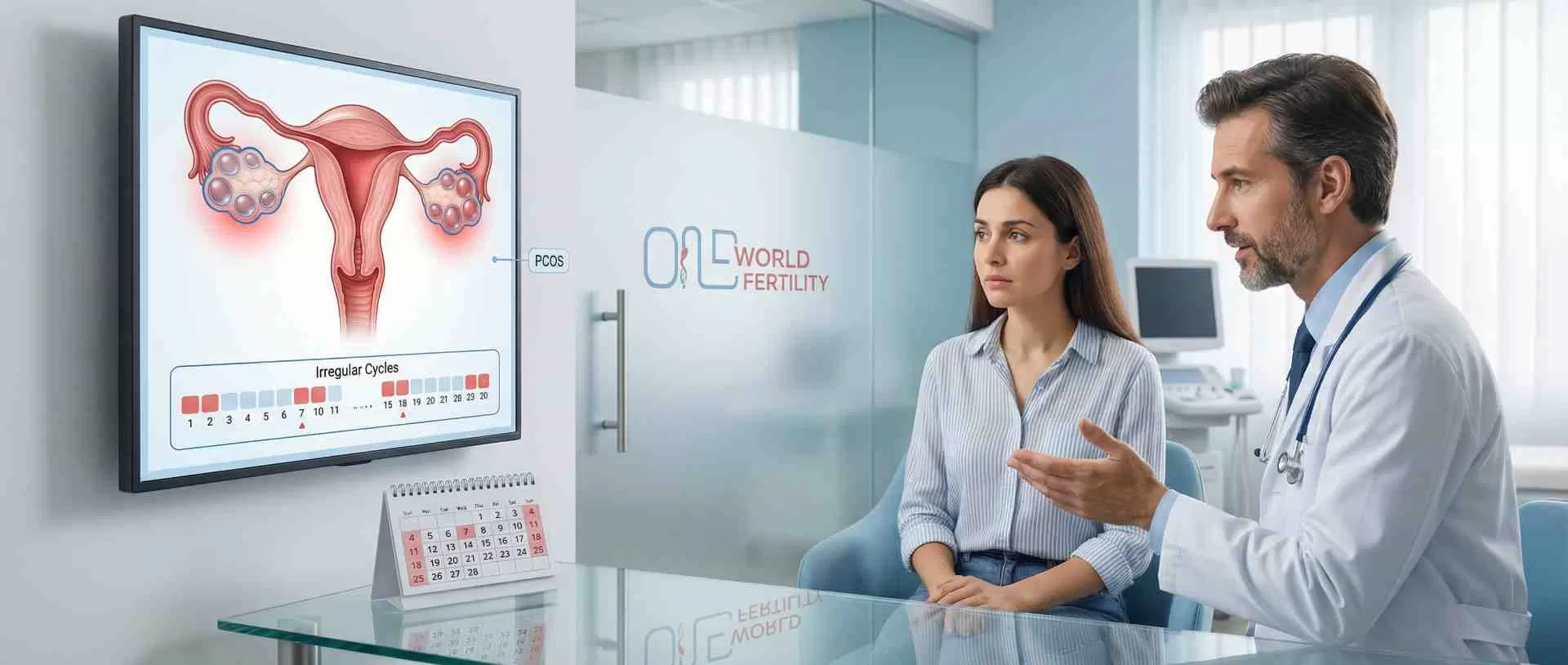
Periods that come and go when they choose or not at all? You may have polycystic ovarian syndrome (PCOS), a hormone imbalance that affects 1 in 10 women and makes ovulation unpredictable and periods come and go.But here's the good news: 75–80% of women get their periods back to normal within 3–6 months with the right mix of polycystic ovarian syndrome therapy and natural PCOS treatment.
There are proven ways to control periods in people with PCOS, such as following a PCOS diet, working out, or getting medical help.For people with PCOS and periods that don't come on time, we know how frustrating and scary it is. There is help out there for you; you are not stuck. If you get personalised care for your PCOS symptoms and ovulation issues, you can get back to having regular cycles. Let's work together to solve this issue.
What is PCOS and How Does It Cause Irregular Periods?
PCOS is a hormone imbalance that happens when your ovaries make too many male hormones (androgens), which throws off your regular cycle. Why does PCOS cause irregular periods? A follicle matures, releases an egg (ovulation), and progesterone is released 14 days later. This is how a normal cycle works. But if you have polycystic ovaries, those follicles never develop because of an imbalance of hormones that causes high testosterone, high LH, and insulin resistance. Instead, they make little lumps. There is no ovulation, no progesterone, and no period.How does PCOS affect periods?
If you're a woman with PCOS, your periods not coming or coming at odd times are linked to the disease directly through ovulation problems. When we know what PCOS means, we can treat both issues at the same time instead of separately.
PCOS Hormonal Imbalance and Menstrual Cycle Disruption
Your irregular periods aren't just random; they happen because of specific hormonal abnormalities in your polycystic ovaries. Knowing what hormones induce polycystic ovaries will help you understand why your PCOS menstrual cycle seems so random.
This is what's going on within your body: Follicles can't grow when testosterone levels are 2–3 times higher than usual. High LH keeps producing more androgens rather than triggering ovulation. If your FSH is low, your eggs can't grow properly. Your LH: FSH ratio could be 2:1 or 3:1 instead of the standard 1:1. And if you have PCOS insulin resistance (which affects 70% of women), those elevated insulin levels tell your ovaries to make even more testosterone. You don't get your period if you don't ovulate, since progesterone doesn't happen. PCOS causes an imbalance of hormones that sets off a chain reaction. Each imbalance sets off the next, completely stopping your periods and ovulation. Let's look at what each hormone does in more detail.
| Hormone |
Normal Function |
What Happens in PCOS |
Effect on Your Cycle |
| Testosterone (Androgens) |
15-70 ng/dL |
Elevated >70 ng/dL (2-3x higher) |
Blocks follicle maturation, prevents ovulation = no periods |
| LH (Luteinizing Hormone) |
5-25 mIU/ml |
Chronically elevated 15-40 mIU/ml |
Stimulates excess testosterone, prevents ovulation = PCOS period delay |
| FSH (Follicle Stimulating Hormone) |
5-20 mIU/ml |
Low 3-10 mIU/ml (insufficient) |
Not enough to develop dominant follicle = multiple immature follicles (cysts) |
| LH:FSH Ratio |
1:1 (balanced) |
2:1 or 3:1 (imbalanced) |
Confirms ovarian dysfunction preventing ovulation |
| Progesterone |
10-25 ng/ml after ovulation |
<3 ng/ml (very low/absent) |
No ovulation = no progesterone = no period trigger |
| Estrogen |
Varies through cycle |
Normal or high (unopposed) |
Keeps building uterine lining without shedding = heavy bleeding when it finally comes |
| Insulin |
100 μIU/ml fasting |
Elevated 100-150+ μIU/ml |
High insulin signals ovaries to make MORE testosterone |
How Irregular Periods and Hormonal Signs Show Up
Are you not sure if you have PCOS? You might be wondering what's going on with your body if your periods are all over the place, you're gaining weight that won't go away, you're getting hair where you don't want it, or you have Acne that won't go away. Let's go over the symptoms of PCOS in women so you can see them and receive the help you need.
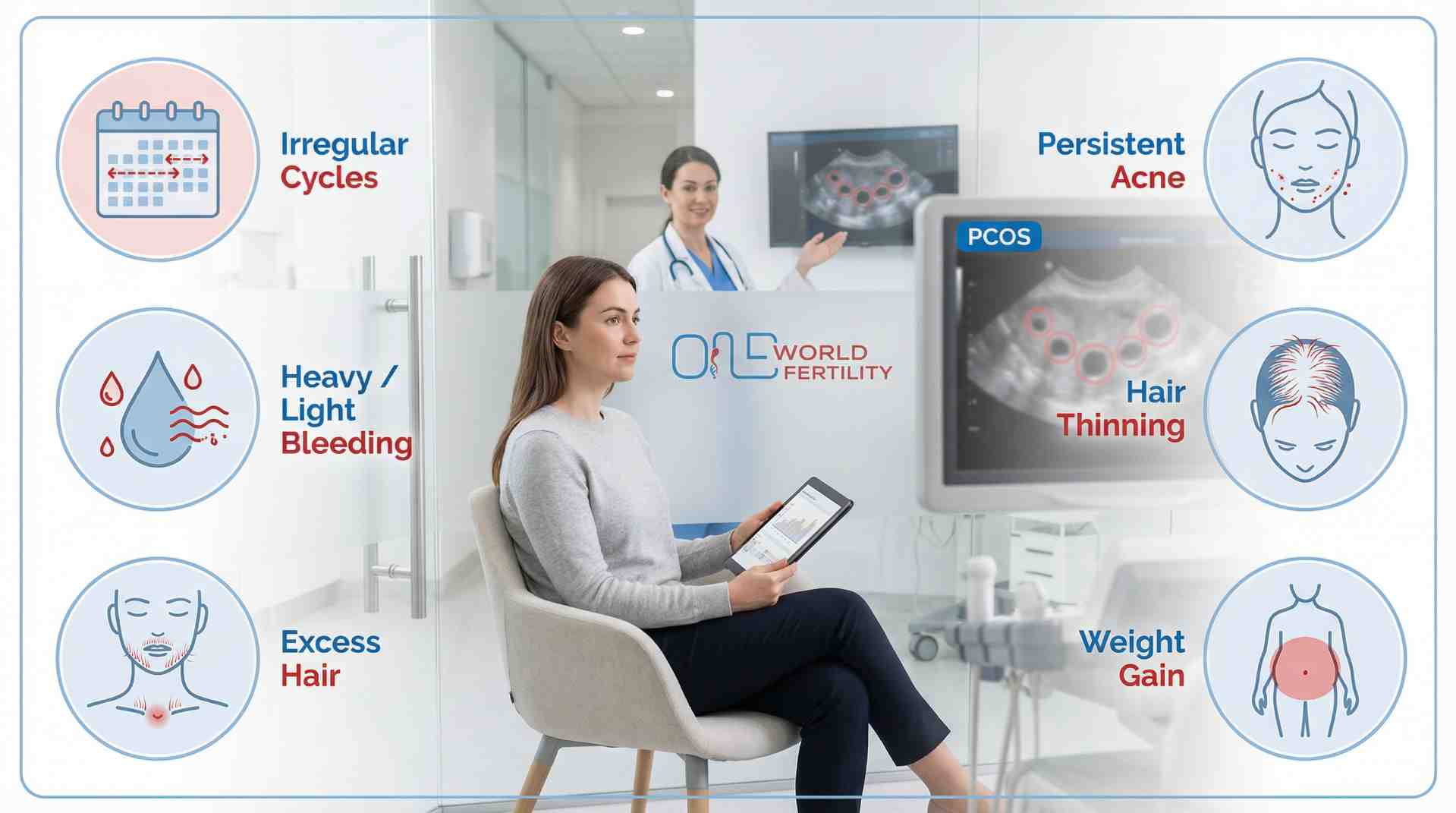
1. Irregular or Missing Cycles: PCOS irregular periods mean cycles longer than 35 days, or you may not have any periods for 3 to 6 months or more. Your period can stop totally (PCOS no periods) or show up at random times with a persistent PCOS period delay.
2. Abnormal Bleeding Patterns: When your period finally comes, you could have PCOS severe bleeding for days or PCOS light cycles that are merely spotting. Some women have PCOS, with lengthy periods that last 10 to 21 days and hurt a lot.
3. Excess Hair Growth (Hirsutism): affects 60–70% of women with PCOS symptoms. This includes unwanted hair on the face, chest, or back.
4. Stubborn Acne: hormone-driven; it doesn't react to regular treatments and is mostly on your jawline.
5. Hair Loss: If you have PCOS, your hair will thin on your scalp in a way that looks like a man's pattern, while it will grow back everywhere else.
Weight Gain for No Reason: PCOS weight gain happens around your abdomen (PCOS belly) because your body is resistant to insulin, which makes it very hard to lose.
Most of the early signs of PCOS show up as problems with your period when you're a teenager. If some of them seem familiar, an ultrasound can confirm evidence of polycystic ovaries for a correct diagnosis.
Common Causes Behind Irregular Menstrual Cycles
You need answers because your periods are not regular. You have a right to know what's going on in your body, whether your periods come every few months, go away for six months, or come with severe bleeding that lasts for weeks. If your periods are irregular because of PCOS, the first step toward getting them back on track is to acquire a correct diagnosis. Let's go over exactly how PCOS testing works and how to tell if PCOS is the reason for your period troubles.
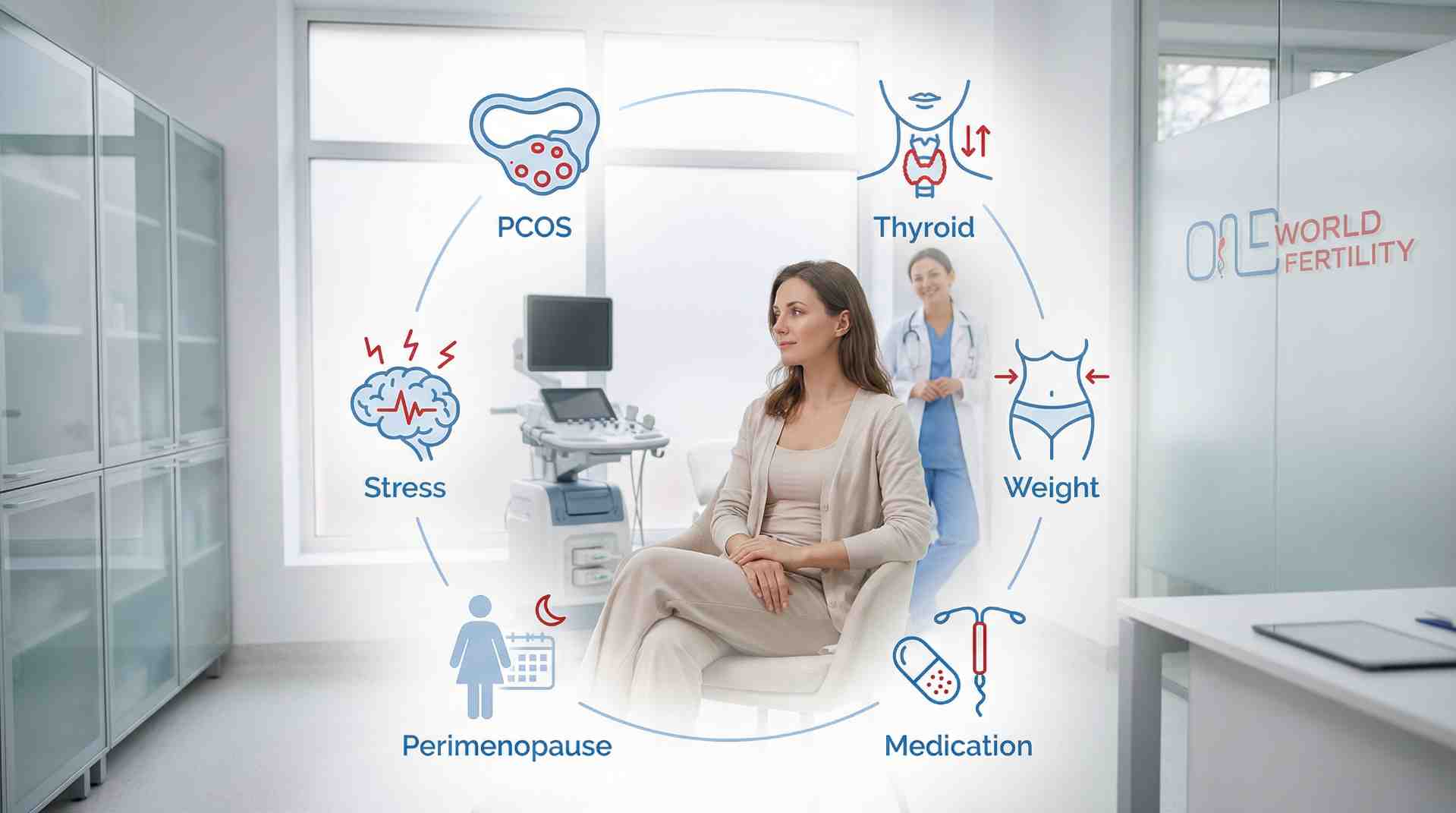
Common Causes of Irregular Periods
- PCOS: PCOS, which is caused by an imbalance of hormones, hinders regular ovulation. This can lead to missed periods, delayed periods, or cycles lasting longer than 35 days. One out of every ten women is affected.
- Thyroid Issues: Low thyroid slows cycles, while high thyroid speeds them up. Both cause bleeding that isn't normal.
- Stress and Lifestyle: Ovulation is slowed down by long-term worry, intense exercise, or rapid weight changes. This makes periods come later.
- Weight Changes: Being very overweight or underweight messes up hormone production and ovulation.
- Perimenopause: When you are in your 40s, your periods become less frequent because your ovaries aren't working as well.
- Medications: Hormonal IUDs, birth control, and drugs can all change the timing of your periods. Problems with the thyroid, high prolactin levels, or fibroids in the uterus can all cause irregular periods.
Is PCOS Causing Your Irregular Periods? People with PCOS often have other symptoms along with their period issues, such as too much hair growth, acne that won't go away, weight gain (particularly in the belly), and evidence of insulin resistance. If you have irregular periods and any of these other symptoms, you probably have PCOS. A complete set of PCOS tests and an ultrasound of the ovaries confirm the diagnosis.
Types of PCOS Irregular Periods
| Period Pattern |
What You Experience |
Why It Happens |
Frequency |
| Oligomenorrhea |
Cycles 35-90 days apart |
Irregular ovulation |
4-8 periods/year |
| Amenorrhea |
PCOS no periods for 3-6+ months |
Complete anovulation |
Missed periods PCOS indefinitely |
| Menorrhagia |
PCOS heavy bleeding 7-14+ days |
Thick lining from prolonged buildup |
When period finally arrives |
| Hypomenorrhea |
PCOS light periods, barely spotting |
Hormonal imbalance |
Variable |
| Prolonged Bleeding |
PCOS long periods 10-21 days |
Unstable endometrial shedding |
When period occurs |
| Dysmenorrhea |
PCOS period pain, severe cramps |
Hormonal fluctuations |
During delayed periods PCOS |
Are irregular periods dangerous in PCOS? Yes, having PCOS and not having periods for months at a time raises health concerns. That's why it's essential to get the correct diagnosis and treatment for PCOS.
The Link Between PCOS and Fertility Challenges
Are you afraid that PCOS will keep you from having kids? Here's the truth: PCOS is the most common cause of ovulatory infertility. However, 70–80% of women with PCOS can get pregnant with treatment. Let's be honest about your chances of getting pregnant with PCOS.
The main problem is that PCOS ovulation problems cause irregular periods, and getting pregnant is hard to predict when ovulation is irregular. In a regular cycle, ovulation releases an egg and progesterone, which causes your period to come 14 days later. If you have PCOS and don't ovulate, you don't release an egg, your period doesn't start, and you have no chance of getting pregnant that time.
Can women with PCOS ovulate? Yes, but not all the time. Some months, yes; some months, no. Because of this, PCOS and infertility are linked; you're not unable to have children, you ovulate at odd times or not at all.
Pregnancy Success Rates Of PCOS
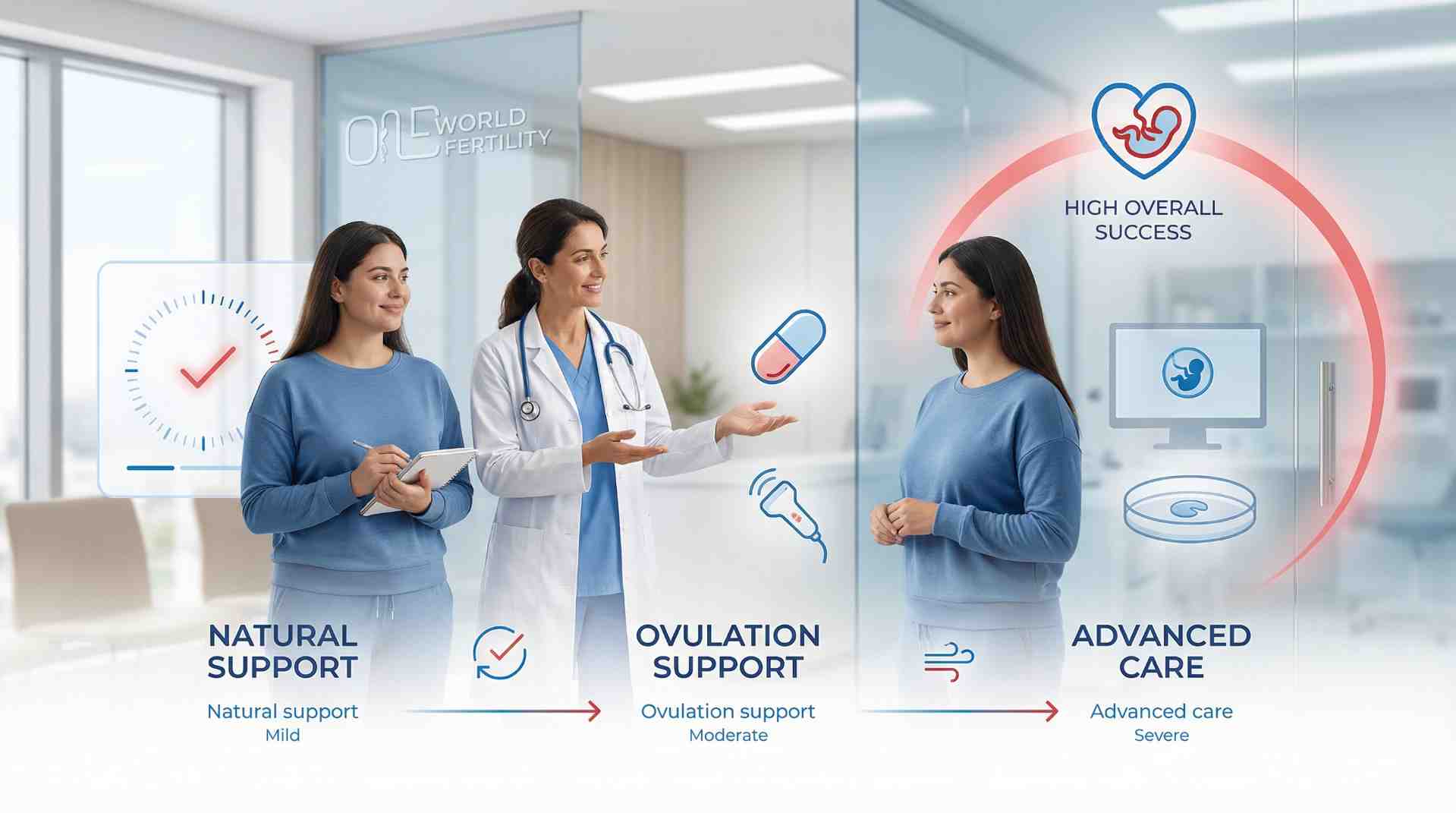
This is what really happens during treatment: Natural conception (20–30%) within 6 months for mild PCOS when tracking is used, and lifestyle changes are made.
With ovulation medications like Clomid and Letrozole, 60–70% of women with mild PCOS get pregnant within six cycles. If you need IVF, 50–60% of cycles work, even if you have severe PCOS.
Overall Success: With the proper care, 70–80% of women with PCOS are able to get pregnant within one to two years. Getting pregnant with PCOS depends on how bad it is, but medication does work:
- Mild PCOS: Often get pregnant on their own with ovulation tracking.
- Moderate PCOS: Ovulation drugs work very well.
- Severe PCOS: There are advanced methods that work very well.
Medical Treatment for PCOS and Irregular Periods
"One pill for everyone" isn't a good way to treat PCOS. You need to know what your body needs at this moment. Are you trying to control your periods? Lessen the symptoms? Or hope to get pregnant? The right medical help can make a big difference once that's clear.
PCOS Medication for Periods and Hormone Balance
If you are worried about missing or having periods that don't come on time, doctors will generally focus on balancing your hormones and protecting your health in the long term.
- Birth control pills are often the first choice for people with PCOS who want to avoid periods. They help keep cycles predictable, lower too much testosterone (which can help with acne and hair growth), and protect the uterus. However, they don't treat insulin resistance or help with fertility.
- In many women, metformin gets to the root cause of their metabolic problems. It can easily restore ovulation in about half of women by making insulin more sensitive. It is also a good way to treat PCOS for irregular periods, especially in cases where insulin resistance is present.
- When a woman hasn't had a period in months, cyclic progesterone is used to safely start bleeding and protect the uterus.
- When pimples or too much hair are bothering you, anti-androgens may be added.
Your symptoms, habits, and plans for the future will determine the best PCOS hormone treatment for you. But you should always consult with your doctor before taking any medication.
Fertility Treatment Options For PCOS
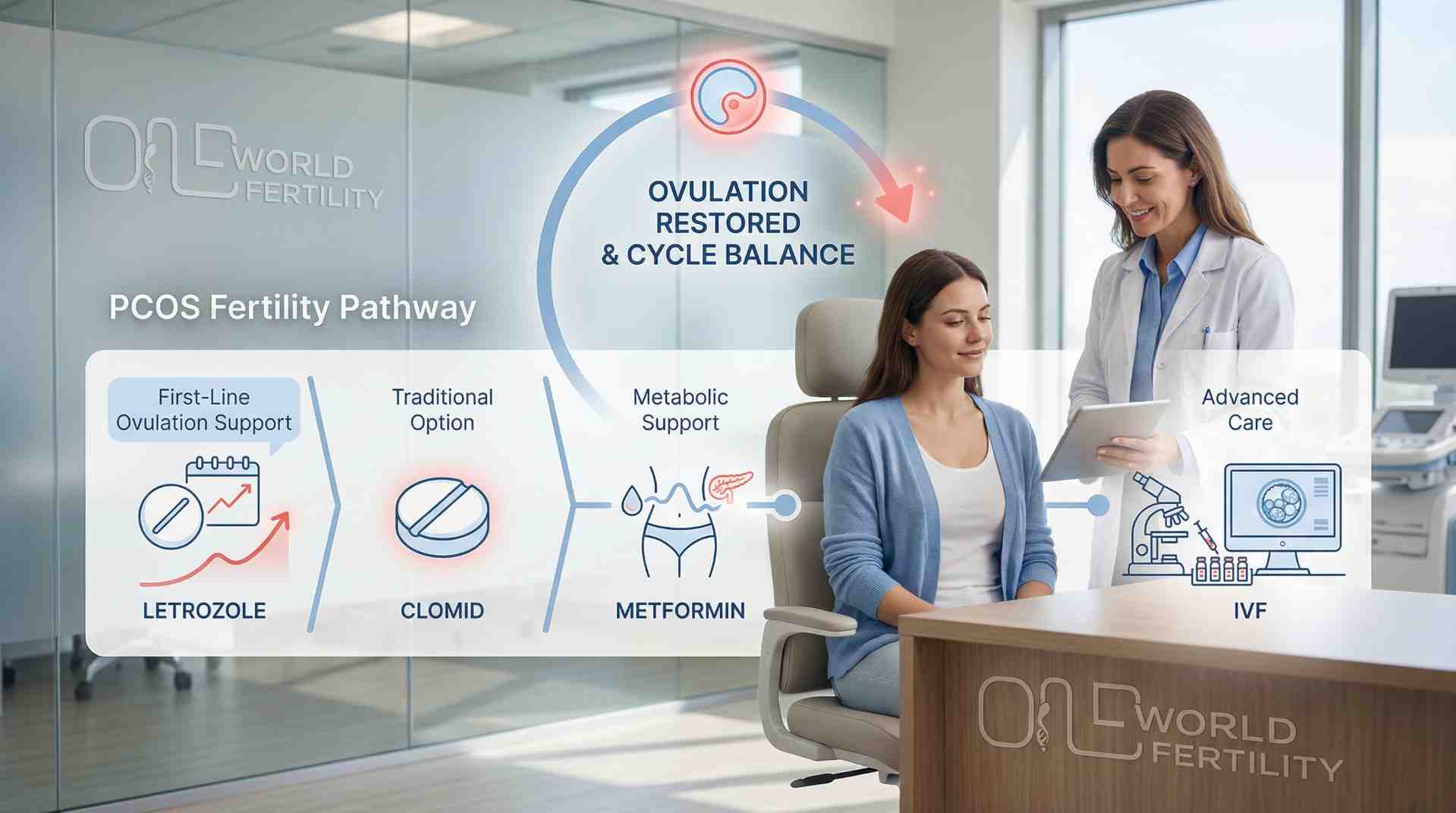
Trying to get pregnant but have PCOS? That changes how things are done, but hope is still strong.
- Letrozole: Letrozole is now the first choice because it helps most women cycle and has fewer side effects.
- Clomid (Traditional Option): Clomiphene has helped women for many years and continues to do so.
- Metformin: When taken with ovulation drugs, metformin improves fertility and lowers the risk of miscarriage.
- IVF: When easier methods don't work, injectable hormones or IVF are thought about.
PCOS fertility treatment has a simple goal: to get ovulation going again and keep the cycle healthy.
Why Choose Us for Your PCOS and Irregular Periods Treatment
You should get answers and regular cycles. We know how frustrating it is to have PCOS and periods that don't come on time, how unpredictable, how worried, and how like your body isn't working. This is why our method is different.
We mix advanced PCOS diagnosis with personalised polycystic ovarian syndrome treatment that gets rid of the main cause of your symptoms instead of just covering them up. We make a plan for you that fits your life and your goals, from natural ways to treat PCOS to medical help when it's needed. If you're having trouble getting pregnant, having periods that don't come on time, or you think you might have PCOS, we can help. Seventy to eighty per cent of our patients get regular cycles in three to six months. Your body can get better. Your cycles can get back to normal. Let's get you there. Book your appointment now.
Questions people ask about this treatment
10 answeredhere