
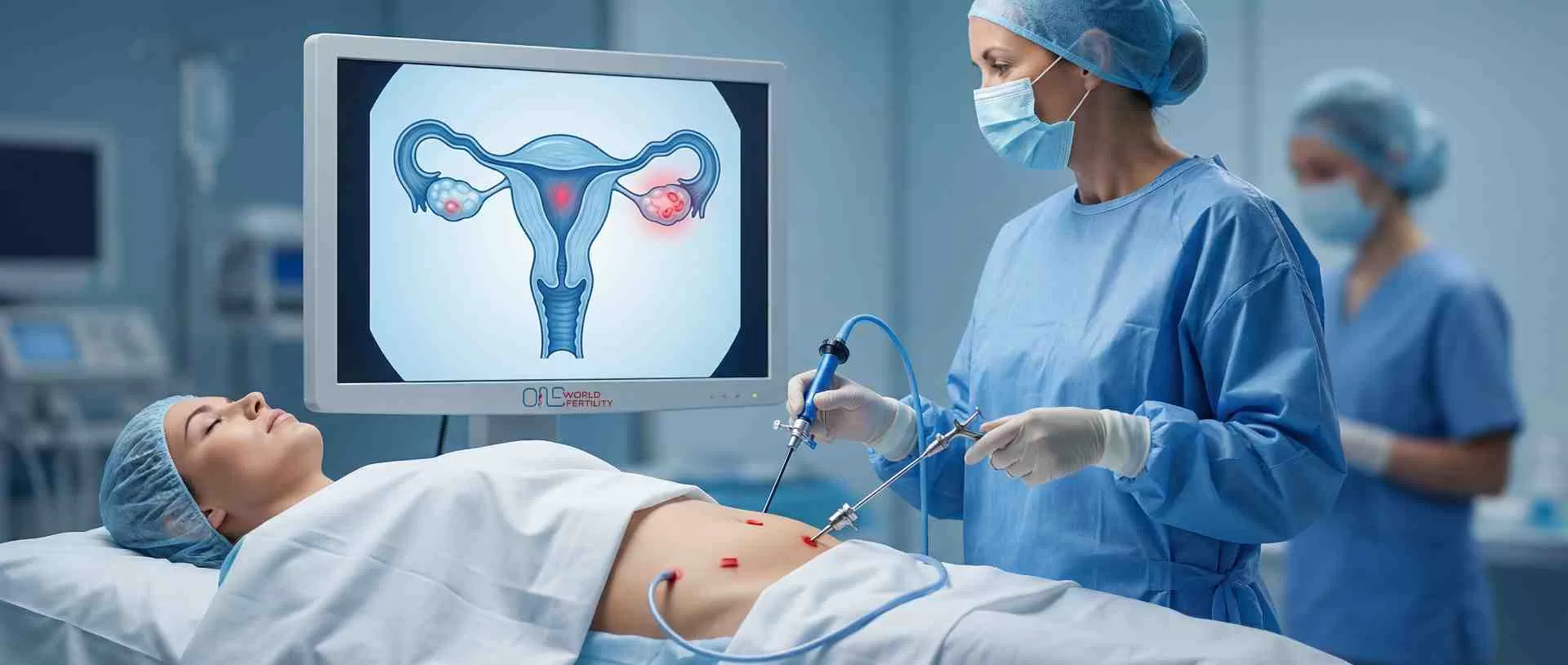

We understand if you're scared about getting surgery. That's why we want to tell you about laparoscopy, which is a kinder way to treat you. Think of it this way: instead of making one large cut, we make just a few tiny openings (smaller than your fingernail); then we fix the problem with special tools and a small camera that lets us see inside. People call it keyhole surgery because it's like having surgery through keyholes. What this means for you is that you'll have a lot less discomfort, small scars that fade rapidly, and you'll heal in days or weeks instead of months. A lot of our patients are astonished by how quickly they feel better.
At OneWorld Fertility, we've helped countless patients through laparoscopic surgery safely. We'll explain everything in simple terms, no medical jargon. Got questions? Ask us anything. Feeling nervous? That's okay, we'll be right there with you through the whole thing.
What is Laparoscopy and How Does Keyhole Surgery Work?
So, what does laparoscopy really mean? In simple terms, it's a kind of surgery where little cuts are used instead of big ones. Officially, the laparoscopy definition is "minimally invasive surgery," but what does that mean for you? In your belly, we make a few small holes. Finally, we put in a laparoscope, which is a thin tube that ends in a camera and a light. We can clearly see what's going on inside thanks to this camera's screen.
What makes this different from other kinds of surgery? In open surgery, we'd make one big cut to get to your innards and see them. These minor cuts are all that's needed for laparoscopy. If they cut you less, you'll feel less pain and heal faster.
Understanding Laparoscopic Medical Terms and Definitions
Here's how to understand the medical jargon. Common Phrases You'll Hear:
- Laparoscope: Our doctors put the thin camera tool called a laparoscope through your belly button or small cuts.
- Laparoscopically: Laparoscopically means "with a laparoscope." If your doctor says, "we'll do this laparoscopically," they probably mean "keyhole surgery."
- Laparoscopic procedure: any surgery done this way.
Imagine that regular surgery is like opening a door to get into a room, and laparoscopy is like looking through a doorway with a camera, but we can also fix things from there!
Diagnostic vs Therapeutic Laparoscopy Procedures
Want to know why you might need a laparoscopy? This is because of two critical things:
| Type |
What It Means |
Why We Do It |
| Diagnostic Laparoscopy |
Looking inside to investigate |
Find cause of unexplained symptoms |
| Therapeutic Laparoscopy |
Treating the problem |
Remove cysts, repair organs, treat conditions |
The good news is this: We sometimes start by diagnosing, which means we look. If we see a problem, we can treat it right away. When you wake up, you have both answers and plans. You may also hear the word "exploratory laparoscopy." This is used when we need to find out what's causing your symptoms. It's kind of like being a detective, but inside your body.
Why is Laparoscopy Performed and What Conditions Does It Treat?
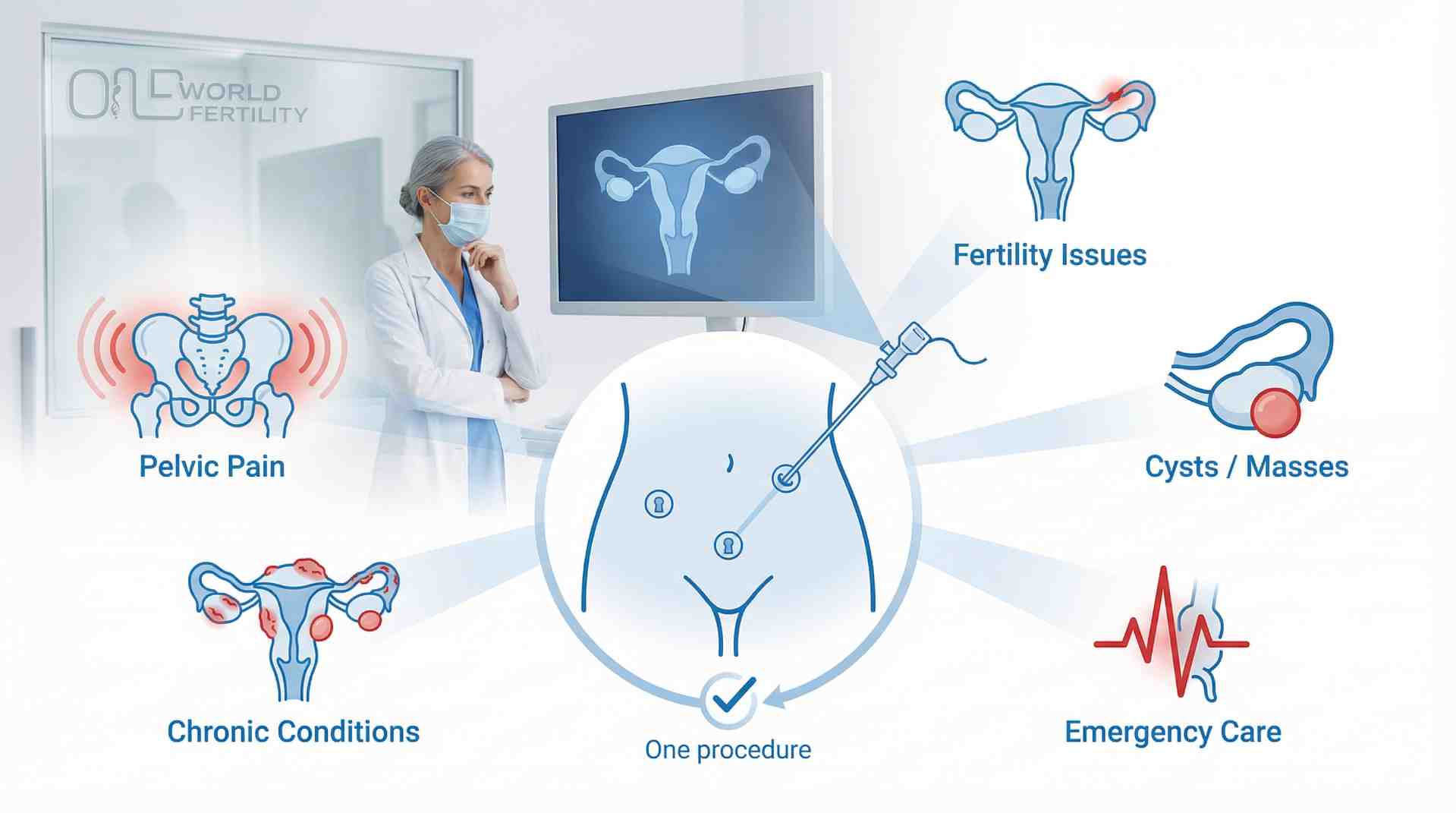
Have you ever thought about when a laparoscopy is a good idea? In reality, Laparoscopy procedures can help with many different health problems, from finding out what's hurting you to fixing it. For the most part, these are the reasons:
- Unexplained abdominal or pelvic pain: Laparoscopy lets us see directly what's wrong when tests don't.
- Fertility issues: We can check your fallopian tubes for blocks and look for other conditions that could make it hard for you to get pregnant.
- Large or suspicious masses or lumps: Sometimes we need to take a closer look or take a tissue sample (biopsy).
- Emergencies: In cases of emergency that need quick care, like appendicitis or an ectopic pregnancy.
- Long-term diseases: like endometriosis, ovarian cysts, or fibroids that cause symptoms to happen over and over again.
The most enjoyable part? Usually, we can treat something that we find during the study at the same time as the surgery. You don't have to come back for a second step.
Gynecological Conditions Treated with Pelvic Laparoscopy
Laparoscopy is a game-changer for women who have problems with their pelvis. Pelvic laparoscopy can help find and cure problems with your reproductive organs. What can we help with?
- Endometriosis: Get rid of uncomfortable tissue that is growing outside your uterus.
- Ovarian cysts: Get rid of or drain cysts that are causing pain or problems with getting pregnant.
- Uterine fibroids: Get rid of non-cancerous growths.
- Ectopic pregnancy: How to safely deal with pregnancies that happen outside the uterus.
- Tubal ligation: If you've decided your family is whole, tubal ligation is a permanent way to prevent pregnancy.
- Fertility test: Make sure your tubes are open and healthy.
- Pelvic adhesions: Remove scar tissue that causes pain or infertility.
Having trouble getting pregnant? When other tests come back normal, but you're still not becoming pregnant, diagnostic laparoscopy is generally the best way to find out what's wrong.
Common Laparoscopic Surgery Types and Procedures
Laparoscopy isn't only used in gynecology. Surgeons employ this method for a lot of different types of surgery, from taking out an emergency appendix to scheduled weight loss surgeries.
| Procedure Type |
Duration |
Hospital Stay |
Recovery |
| Diagnostic Laparoscopy |
30-60 min |
Same day |
1-2 weeks |
| Laparoscopic Appendectomy |
30-60 min |
Same day to overnight |
1-2 weeks |
| Ovarian Cyst Removal |
30-90 min |
Same day to overnight |
1-2 weeks |
| Tubal Ligation |
20-40 min |
Same day |
3-7 days |
| Endometriosis Surgery |
45-120 min |
Same day to overnight |
2-3 weeks |
| Gallbladder Removal |
60-90 min |
Same day to overnight |
1-2 weeks |
| Hernia Repair |
30-90 min |
Same day to overnight |
2-3 weeks |
| Laparoscopic Hysterectomy |
1-3 hours |
1-2 days |
2-4 weeks |
| Bariatric Surgery |
1-3 hours |
1-3 days |
3-6 weeks |
Are you unsure if laparoscopic surgery can help your condition? Just ask us. More and more surgeries are being done this way because it makes it easier for patients to get better.
Notice something? Most procedures are done in under 2 hours, and you're usually home the same day or next morning. That's the beauty of laparoscopy!
Laparoscopy Procedure: How Does Keyhole Surgery Actually Work?
What really happens during your surgery is this: Your surgeon will make a small cut near your belly button while you're asleep and then insert the laparoscope, which is a thin tube with a small camera. A laparoscope is the primary tool used in laparoscopic surgery. Knowing what it is will help you understand how laparoscopy works. But before the camera goes in, carbon dioxide gas is pumped into your belly to make room. It feels a bit like slowly blowing up a bubble.
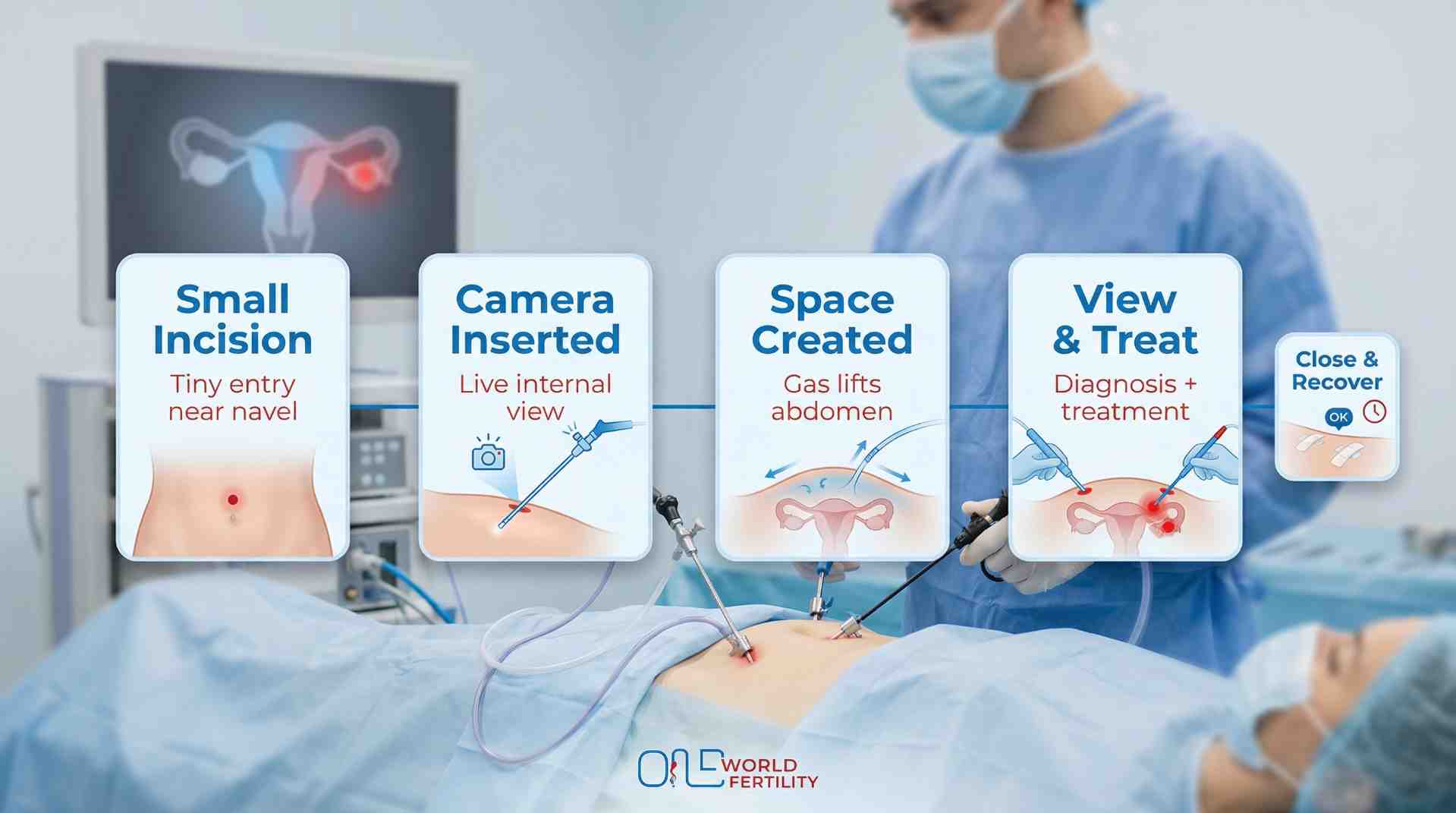
In the same way that laparoscopy works, this lifts your abdominal wall off of your innards so the surgeon can see clearly. When the camera sends live video to a screen, your operator can see everything inside at a larger size. They make one to three more small cuts for surgery tools if you need treatment. When they're done, the tools are taken away, the gas is let out, and the cuts are closed.
The whole laparoscopy procedure usually takes 30 minutes to 2 hours, depending on what's being done. The essential laparoscopy process is the same whether it's to find out what's wrong with you or to fix it.
Where Are Laparoscopic Incisions Made During Surgery?
Main cut: Basically, you make a cut in or around your belly button. The positioning of this laparoscopic incision is intentional; your belly button is the best place to make it.
Other cuts: Usually, there are 1 to 3 more laparoscopic incisions in your lower belly, and the number and location of these laparoscopic incision sites depends entirely on which organs your surgeon needs to get to.
| Typical Laparoscopic Incision Sites |
Size |
| Belly button (for camera) |
0.5-1 cm |
| Lower right abdomen |
0.5-1 cm |
| Lower left abdomen |
0.5-1 cm |
| Above pubic area |
0.5-1.5 cm |
That's all there is to it: two to four small incisions instead of one big one. Most laparoscopic incision scars fade to barely noticeable lines in a few months, and the scar on your belly button usually goes away completely. Before surgery, a lot of patients question, "Where are laparoscopic incisions made?" The answer is simple: at places that allow the best access with the least visible scarring.
How to Prepare for Laparoscopy Surgery: Pre-Op Guidelines
The steps to getting ready for surgery are pretty easy. You should know these things about getting ready for a laparoscopy. Want to know what happens at a pre op appointment for laparoscopy? It's basically a meeting to make plans where you:
- Check your blood and maybe even see if you're pregnant
- Check your medicines (some of them need to be stopped)
- Sign consent forms
- Get to know the medical team
- You can ask anything
Bring your questions, a list of all the medicines you take, and your medical background.

Pre-Operative Tests You'll Need
Before laparoscopy surgery, most people get these:
- Checks your general health and how well your blood is clotting
- If needed, a pregnancy test
- A review of your medical background
- Anesthesia consultation
Based on their health, some people may also need an EKG or a lung X-ray.
The Big Rules for Preparing for Laparoscopy
- No food or drinks after midnight (or your given time). This includes water, coffee, everything.
- Stop taking blood thinners one week before. If you aren't told otherwise, keep taking your heart and blood pressure medicines.
- Never stop taking your medication by yourself; talk to your doctor first.
- Transportation: You cannot drive after anaesthesia. Someone must take you home and stay with you for 24 hours.
What to bring:
- ID and insurance
- Loose clothing and slip-on shoes
- Phone charger
- Your ride home
Key Advantages of Laparoscopic Surgery Over Open Surgery
Why do doctors choose laparoscopy over other types of surgery? In short, it's better for your body in almost every way. Smaller cuts mean less damage, and less damage means faster repair. This is the main benefit of laparoscopic surgery. What that really means for you is this:
What Makes Keyhole Surgery Better?
| Benefit |
What It Means for You |
| Minimal Scarring |
0.5-1 cm incisions that fade to faint lines |
| Less Pain |
Lower pain levels, less medication needed |
| Faster Recovery |
Back to work in 1-2 weeks vs 4-6 weeks |
| Shorter Hospital Stay |
Often same-day discharge |
| Lower Infection Risk |
Smaller wounds = less infection chance |
| Quicker Healing |
Return to exercise and activities sooner |
| Better Cosmetic Results |
Scars barely visible after healing |
In the end, laparoscopic surgery is generally the best way to treat your condition. Your body goes through less, so it recovers faster.
Laparoscopy vs Laparotomy: Comparing Keyhole and Open Surgery
What's the real difference between a laparoscope and a midline cut? Let's break it down.
- Laparoscopy = minimally invasive surgery with tiny cuts and a camera.
- Laparotomy = open surgery in the traditional sense, with one big cut. Both do the job, but people have very different experiences with each.
| Factor |
Laparoscopy (Keyhole Surgery) | Laparotomy (Open Surgery) |
| Incision Size |
0.5-1 cm (small keyhole cuts) | 10-20 cm (large open incision) |
| Hospital Stay |
Same day or 1-2 days | 3-7 days |
| Recovery Time |
1-2 weeks | 4-6 weeks |
| Scarring |
Minimal, barely visible | Significant visible scar |
| Pain Level |
Minimal to moderate | Moderate to severe |
| Infection Risk |
Lower | Higher |
| Return to Work |
1-2 weeks | 4-6 weeks |
| Return to Exercise |
2-3 weeks | 6-8 weeks |
Here's the comparison: The good news? Laparoscopic surgery can now be used for about 80% to 90% of stomach surgeries. It's likely that you should choose the easier choice.
Laparoscopy Risks and Possible Complications to Be Aware Of
Let's be honest about the risks. You have the right to know what might happen. Laparoscopy: Is it safe? In fact, it's one of the best ways to do surgery. But there are some risks, just like with any surgery. The good news? Serious laparoscopy complications are very rare, especially if the surgeon has a lot of experience.
Know this: The risks of laparoscopic surgery are mostly short-term and easy to handle. Most people only have gas pain that goes away on its own, which isn't even a problem.
How Safe Is Laparoscopy Really?
The numbers tell a comforting story:
- Overall complication rate: less than 5% for most procedures
- Serious complications: Not even 1%
- Most patients: Don't have any problems other than brief pain
Your expert's experience is essential. Studies have shown that the risks of laparoscopy are much lower when the surgeon is experienced and does these operations often. That's why it's so important to pick the right medical team.
Common Side Effects After Laparoscopy Surgery

It's typical to feel a little "off" for a few days after a laparoscopy. These are not problems; they are part of the healing process.
- Gas and shoulder discomfort: That strange soreness in your shoulder is from gas. Heat and walking help a lot. It usually goes away in a day or two.
- Sore throat: From the tube that helps you breathe. It feels scratchy and fades away on its own. Drinks that are warm assist.
- Nausea: Anaesthesia can make you sick. Drink water and eat light meals.
- Tiredness: Your body needs to rest. It's normal to feel tired or sleepy.
- Bloating: Your stomach may feel tight or full for a brief time. It helps to move slowly.
- Constipation: Common following surgery and taking painkillers. Water and fibre make a big difference.
- Bruising: Small marks around the cuts are normal and fade with time.
Why Choose One World Fertility for Your Laparoscopic Surgery?
Most people only want one thing before surgery: to feel safe and understood. Doctor at One World Fertility take the time to listen first. They clearly explain the steps, carefully answer your questions, and walk you through each one. The surgical team has done many laparoscopic procedures before and uses modern tools to help patients heal faster. A lot of the time, patients say they didn't feel rushed and that they were kept informed.
Make an appointment for your laparoscopy today. A meeting is the first step if you're not sure laparoscopy is right for you. It's just a chance to talk to the doctor, find out what your choices are, and calm your fears. Details about insurance and treatment are discussed openly, so there are no surprises later. You can make an appointment today if you want clear, calm advice.
Questions people ask about this treatment
10 answeredhere