
What does low AMH really mean for fertility
 Written by
One World Fertility
Jan 9, 2026 17 min read
Written by
One World Fertility
Jan 9, 2026 17 min read
Low AMH doesn’t mean infertility. Understand what low AMH levels mean for fertility, pregnancy chances, and available treatment options.

People who are told they have low AMH levels often have more questions than answers. For many women, it comes out of the blue, sometimes when they are young and sometimes even though they have normal periods and feel fine. This phrase sounds very scientific, but the fear we have is very personal.
It's important to know that a low AMH level does not mean you cannot get pregnant. It's only one part of your story about getting pregnant. Some women with low AMH conceive naturally. Others need support. What matters is understanding what this number means for you.
So at One World Fertility, we believe decisions should come from clarity, not fear. This guide explains what low AMH truly indicates, how it might affect your fertility planning, and why personalised care can make a real difference-even when AMH levels are low.
You deserve answers that make sense and support that feels right for your journey.
What Is Anti-Mullerian Hormone and Why Is It Important for Fertility?
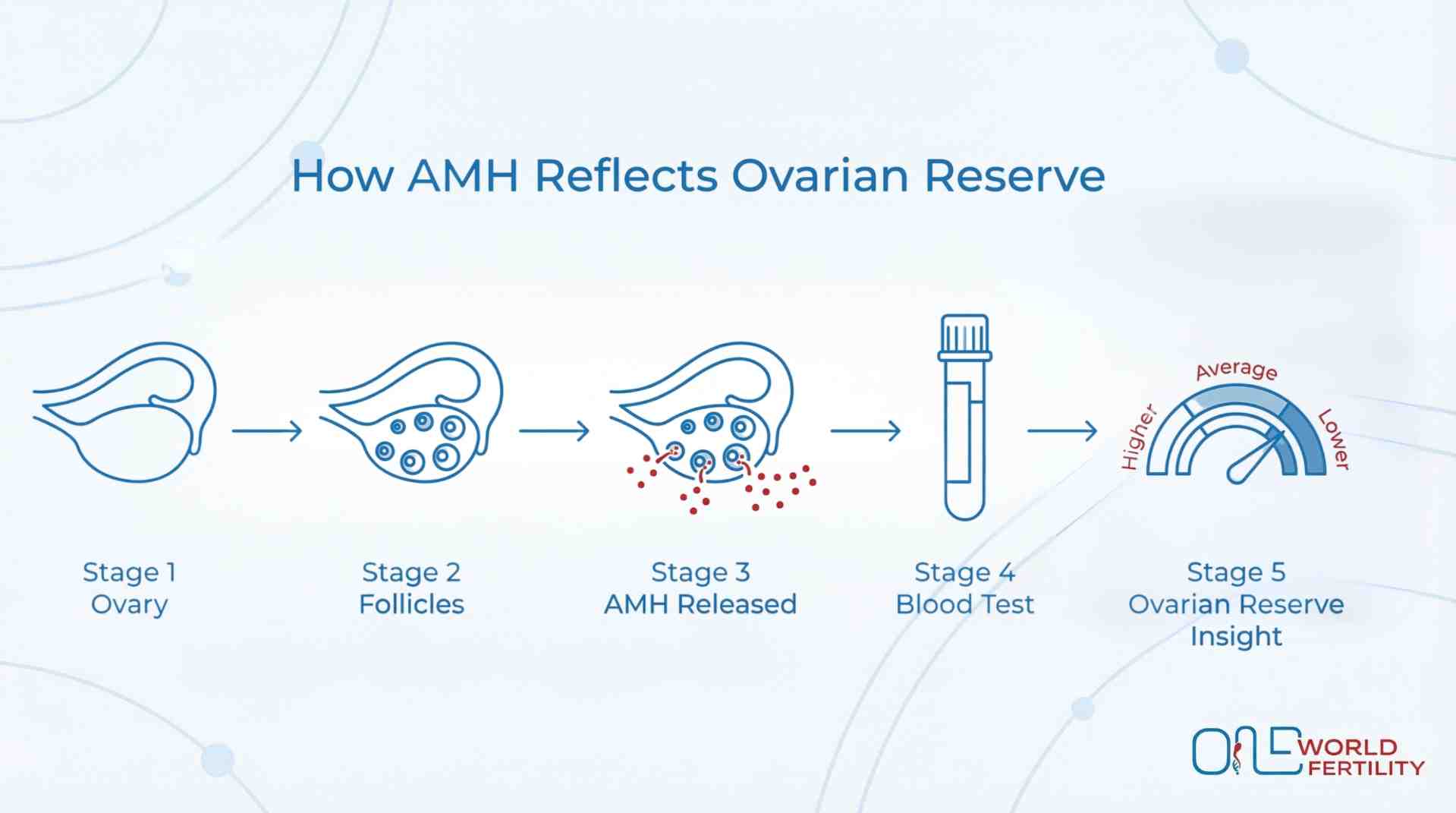
AMH is a hormone that is made by the small follicles in your ovaries. These are the sacs that hold your eggs. From this, doctors can get an idea of your ovarian reserve, or how many eggs you still have. Fertility experts look at your AMH levels to figure out if you can have children and to plan treatments like IVF. Something good about AMH tests? It's not like other hormone tests that need to be done at a certain time; you can do it any day of your cycle.
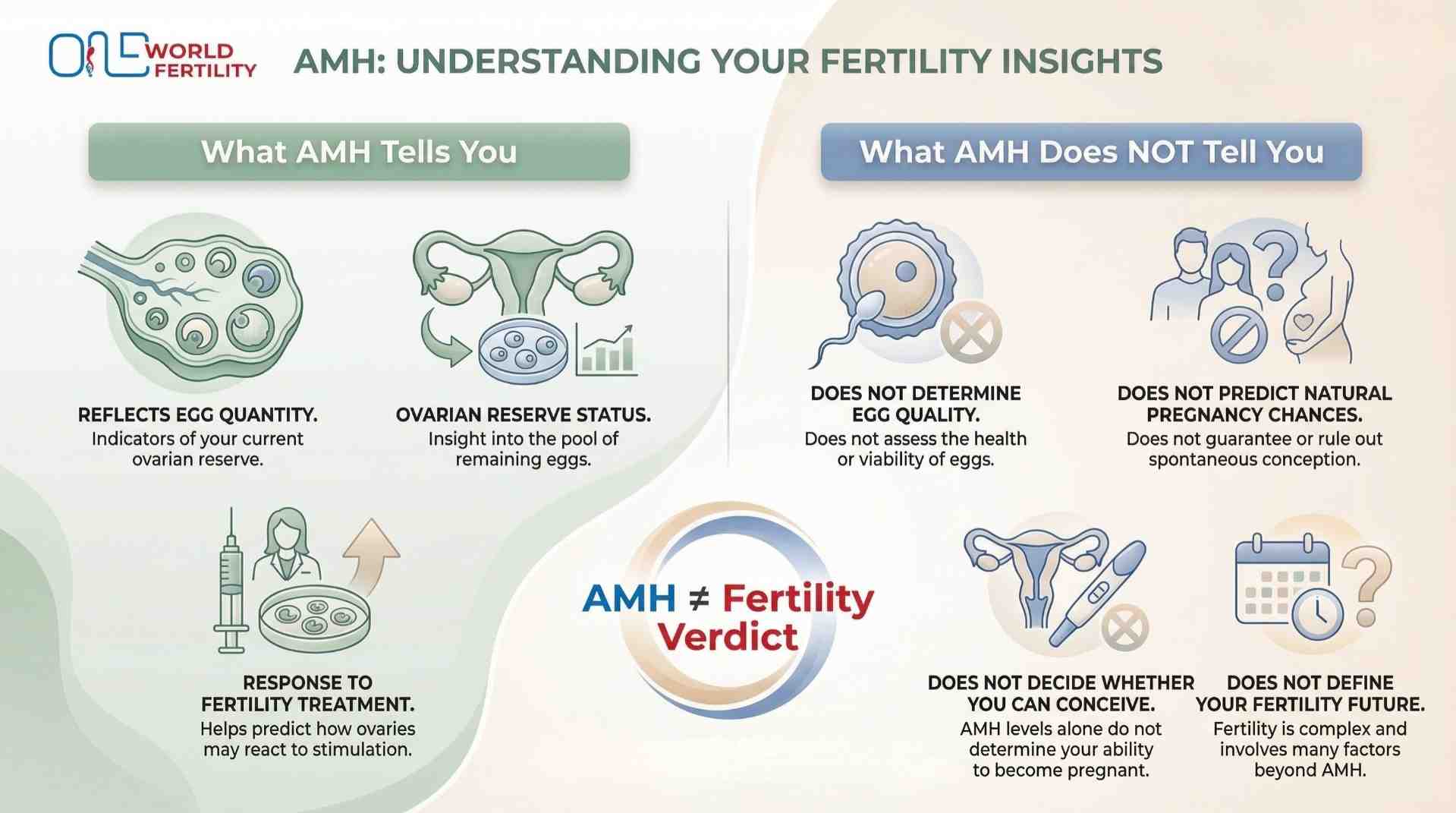
The important part is that AMH tells us how many eggs there are, not how good they are. Any number below that doesn't say for sure if you'll get pregnant or if your eggs are safe; it's just the number itself. To understand what low AMH numbers really mean for your chances of getting pregnant, you need to know this important difference.
You can think of it as a key tip, but not the whole answer.
Anti-Mullerian Hormone Meaning in Simple Terms
So, what does the phrase "Anti-Mullerian hormone" mean in everyday language? AMH can be thought of as a scale for your egg supply. The eggs you'll ever have are in your ovaries, and AMH tells us about how many are still there. And when doctors talk about AMH in terms of fertility, they're really talking about your ovarian reserve, or how many eggs you have .The same way you check your car's gas tank. The number doesn't tell you how well your car runs or how far you can still go; it just tells you how much gas is left.
The most important thing to remember? AMH checks for numbers, not quality. Even if your numbers are smaller, you could still have healthy eggs that can become babies. Because of this, this amount is not the only thing you need to know about your fertility.
What Is AMH in Females and How It Reflects Ovarian Reserve
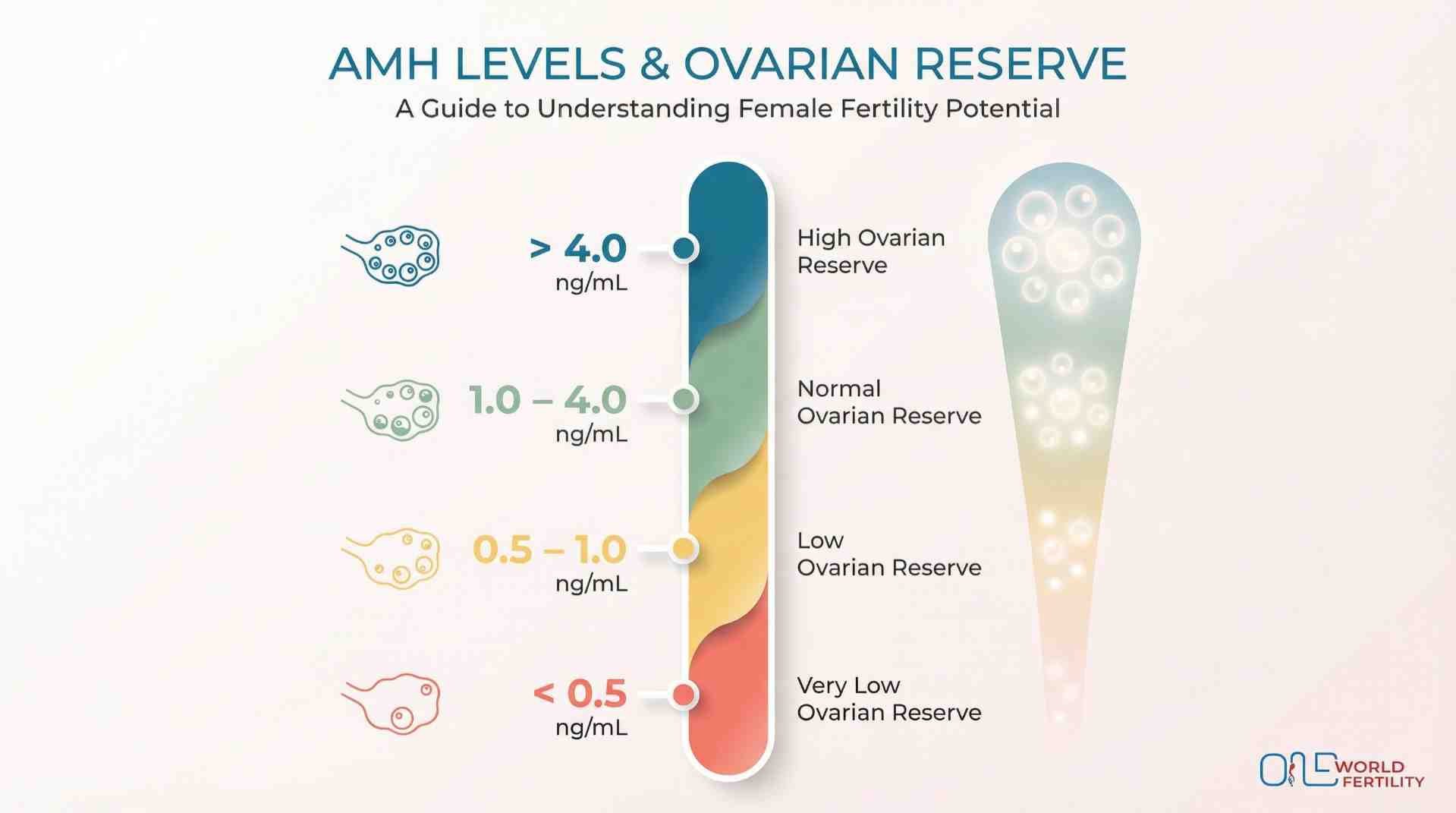
What is AMH in tests for female fertility? One of the things that this blood test does is measure how much Anti-Mullerian hormone (serum AMH) is in your body. Since the follicles in your ovaries release this hormone, it's a pretty good indicator of how many follicles you have right now. That's important because, as you age, your ovarian reserve naturally goes down. When you are born, you have all the eggs you'll ever have. Serum AMH levels help show where you are on that timeline-whether you have a higher reserve, average reserve, or lower reserve for your age.
Think of it as a reflection of your egg bank balance. Higher AMH usually means more eggs remaining. Lower AMH suggests fewer eggs in reserve. Remember, though, that fewer eggs don't mean none, and it doesn't mean that the eggs you have aren't good.
This test tells your doctor where you are now and helps them figure out the best way to help you get pregnant.
| AMH Level (ng/mL) |
What It Indicates |
| Above 3.0 |
High ovarian reserve |
| 1.0 - 3.0 |
Normal ovarian reserve |
| 0.5 - 1.0 |
Low ovarian reserve |
| Below 0.5 |
Very low ovarian reserve |
What Are Normal AMH Levels by Age?
Levels of AMH don't stay the same over time; they change as you age. At age 25, what's normal looks different from what's normal at age 35 or 40. Knowing where you rank among people your age helps you understand how your results fit into the picture.
Let's look at what normal amounts of the anti-Mullerian hormone are for people of different ages and what those numbers mean for your fertility.
Normal AMH Levels by Age Chart and What They Indicate
As you age, your AMH levels naturally drop. This is a normal part of life and not something you did wrong. You can use this table to get an idea of where your AMH levels should be based on your age:
| Age Range |
Normal AMH Level (ng/mL) |
What This Means |
| Under 30 |
2.5 - 6.0 |
Strong ovarian reserve, plenty of eggs available |
| 30-35 |
1.5 - 4.0 |
Good reserve for your age |
| 35-40 |
1.0 - 2.5 |
Moderate reserve, still good options |
| 40-45 |
0.5 - 1.5 |
Lower reserve, but pregnancy still possible |
| Over 45 |
Below 0.5 |
Very low reserve |
Remember that these are just rough numbers. If your AMH level is average for your age, it might be outside of these ranges. This doesn't always mean there is a problem. Some women with smaller numbers get pregnant on their own, but others might do better with fertility help sooner rather than later. Looking at your whole picture, not just this number, is what matters most.
What Is a Healthy AMH Level for Fertility and Pregnancy?
So what are healthy AMH levels when you're trying to conceive? Here's what you need to know:
- AMH between 1.0 and 3.0 ng/mL is generally considered a good range for fertility. It suggests you have enough eggs for natural conception or fertility treatments to work well.
- There's no single "normal AMH level for pregnancy." Women with AMH below 1.0 still get pregnant-sometimes naturally, sometimes with help. What really matters is whether your ovaries can respond to your body's natural signals or to fertility medications.
- Higher AMH (above 3.0) usually means more eggs, which sounds great, but it can sometimes indicate conditions like PCOS.
- Lower AMH means fewer eggs in reserve, but those eggs can still be perfectly healthy and capable of creating a baby.
Note: AMH shows egg quantity, not quality. Lower numbers don't mean you can't conceive.
What Does Low AMH Mean for Fertility and Pregnancy?
It can be scary to learn that your anti-Mullerian hormone levels are low, but let's talk about what that means. Low AMH means you have fewer eggs stored, but it doesn't tell us everything we need to know about your fertility. What matters most is figuring out what AMH numbers mean in the bigger picture. There are different ways for women with low AMH to become pregnant, and many of them do.
Does Low AMH Mean You Cannot Get Pregnant Naturally?
It's not true that you can't get pregnant spontaneously if your AMH level is low. A lot of women who have low AMH and normal periods get pregnant without any medical help.
There are not as many eggs available when AMH is low, but all you need is one good egg to get pregnant. Quality is more important than number. Some women with smaller egg banks still have eggs that are perfectly healthy and can get pregnant. The most important thing? Because your time may be smaller, timing is more important. If you're trying to get pregnant, don't wait too long to get help if it's not happening quickly.
Note: Having regular periods when your AMH level is low is a good sign because it means your body is still cycling regularly.
Can You Get Pregnant with Very Low AMH Levels?
Yes, you can get pregnant even if your AMH level is very low, but you might need more help. Women with AMH 0.1 can get pregnant, either naturally or through treatment.
Most of the time, having very low AMH (below 0.5 ng/mL) means:
- Fewer eggs are available for IVF or getting pregnant.
- Maybe they need individualised methods like mini-IVF or natural cycle IVF.
- The quality of the eggs is more important than the AMH number for pregnancy.
- If required, donor eggs can be a good choice.
A very low AMH doesn't mean there is no chance; it just means you need a customised approach and should move quickly. Some women do better than expected, while others have better luck with other methods, such as using gift eggs. Remember that AMH only measures the number of eggs you have, not your ability to have a safe pregnancy. Women whose AMH levels are very low can still get pregnant; they just need the right help.
What Causes Low AMH at a Young Age?
If someone in their 20s or early 30s tells them they have low AMH, they might wonder why. Why does my AMH level drop at such a young age when most women your age have normal levels? Figuring out why your AMH scores are low can help you understand what's going on and plan next steps.
Let's take a look at why some women age faster than others and what might be causing this.
Age-Related Decline vs Early Low AMH Levels
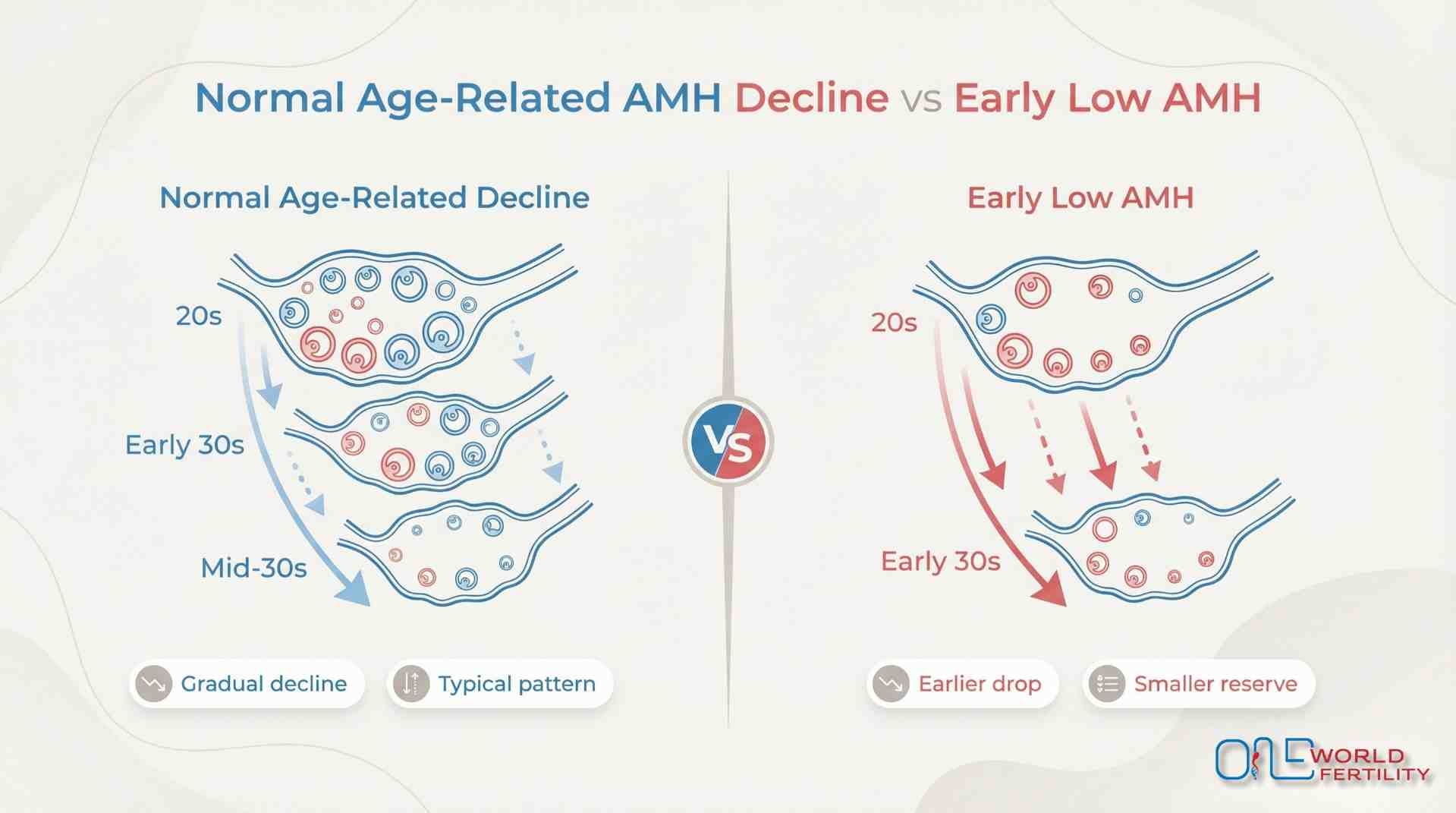
AMH levels usually decline in a predictable way with age: they are highest in your 20s, then drop slowly in your 30s, and drop even more after 35. But some women have low AMH at a young age, which means their ovarian reserve is smaller than what would be normal for women their age.
Here's the difference:
| Normal Age-Related |
Decline Early Low AMH |
| Gradual decrease starting around 30 |
Low levels in 20s or early 30s |
| Follows typical age patterns |
Declines faster than peers |
| Expected biological aging |
May indicate underlying factors |
If you're young with low AMH, it doesn't mean you're ageing faster overall- it just means your ovarian reserve is declining ahead of schedule. Your body may still be healthy in every other way.
Medical, Genetic, and Lifestyle Causes of Low AMH
So, what are the actual low AMH causes? Several factors can contribute to low anti-Mullerian hormone levels at a young age:
| Category |
Possible Causes |
| Medical Conditions |
Endometriosis, autoimmune disorders, previous ovarian surgery, chemotherapy or radiation |
| Genetic Factors |
Family history of early menopause, genetic conditions like Fragile X premutation |
| Lifestyle Factors |
Smoking, extreme stress, poor nutrition, excessive exercise |
| Unknown Reasons |
Sometimes there's no clear cause-it's simply how your body is |
The frustrating truth? Sometimes it's hard to figure out why someone has low AMH at first. It could be genetic, situational, or a mix of the two. More important than finding the "why" is figuring out what's going on and what your choices are. Remember that you can't change your AMH number, but you can use it. Figuring out the cause is helpful, but what you do next is more important.
Common Low AMH Symptoms in Women
Here's something that surprises many women: low AMH usually doesn't cause noticeable low AMH symptoms. Unlike other hormonal imbalances, you probably won't feel different or experience obvious signs that your ovarian reserve is declining. Most women discover their low AMH completely by accident-during routine fertility testing or when they're already trying to conceive. Let's talk about what you might (or might not) experience.
Can You Have Low AMH with Regular Periods?
Absolutely yes. This is one of the most common scenarios-low AMH but regular periods. Your menstrual cycle can be completely normal, arriving like clockwork every month, while your AMH levels are low.
This is the reason: AMH checks your egg store, not whether you're ovulating. Your periods will go on normally as long as your ovaries are releasing an egg every month. You could have:
- Cycles every 28 to 32 days
- Regular movement and length of the period
- An odour that can be predicted
- No pain or problems with your periods
Low AMH means you don't have as many eggs stored. But if you're still ovulating regularly, your body is still working the way it should to help you get pregnant. You just have fewer eggs to choose from. If you have low AMH and regular periods, that's good news because it means you're still ovulating.
Is Low AMH Always Associated with Infertility Symptoms?
No, low AMH doesn't come with typical infertility symptoms because it's not a disease-it's simply a measurement. Many women with low AMH levels have no symptoms at all until they try to conceive.
Here's what low AMH does and doesn't cause:
| What Low AMH Does NOT Cause |
What May Indicate Low Reserve |
| Irregular periods (not always) |
Shorter menstrual cycles (25 days or less) |
| Pain or cramping |
Lighter,shorter periods than before |
| Hot flashes or night sweats |
Difficulty getting pregnant after 6+ months |
| Mood changes |
Family history of early menopause |
| Low energy or fatigue |
Noticeable changes in cycle length over time |
The AMH levels, in terms of symptoms, mean this: low AMH itself is silent. You won't feel it. What you might notice is difficulty conceiving when you start trying, or changes in your cycle length over time. Some women do experience shorter cycles as their reserve declines, but many have completely regular periods right up until perimenopause.
How Is the AMH Test Done and When Should You Take It?
If your doctor told you to get an AMH test, you may be thinking what it is and when it is best to do it. The good news? The meaning of the AMH test is clear, and the test itself is easy to do. Knowing how the AMH test is done and when it should be done will help you feel ready and get the correct results.
Let's talk about what to expect and when testing should be done.
AMH Test Meaning and Procedure Explained
The full name for the AMH test is Anti-Mullerian Hormone test. It checks your ovarian reserve by measuring the amount of AMH serum in your blood.
This is how the test works:
- Just like any other blood test, this is a simple blood draw from your arm.
- It doesn't take long in a lab or clinic.
- No fasting needed ahead of time.
- No extra work is needed to get ready.
- Results are usually ready in a few days.
That's it. There aren't any invasive procedures, the needle prick doesn't hurt much, and getting ready isn't hard. People send blood to a lab, which tests the serum to measure how much AMH is present.
A lot of women are glad to hear that it's so simple, especially when they think about other pregnancy tests that need ultrasounds or specific times during the cycle.
Best Time to Do an AMH Test for Accurate Results
What is one of the best things about the AMH level test? It's okay to do it any day of your period. AMH levels don't change much during your cycle, unlike FSH or estrogen tests, which need to be done on certain days of your cycle.
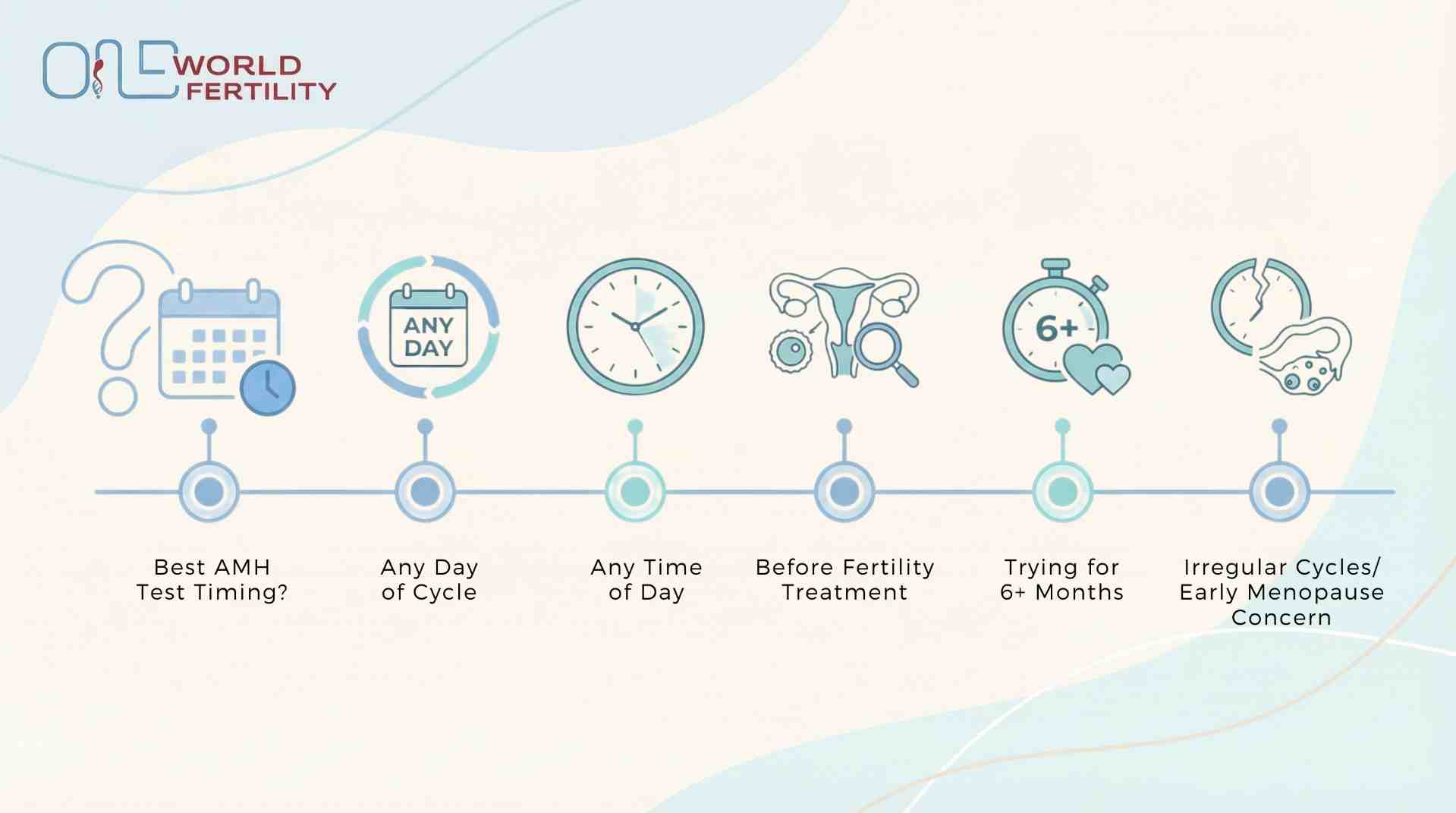
When AMH test should be done?
| Timing |
Why It Works |
| Any day of your cycle |
AMH doesn't fluctuate significantly with your menstrual cycle |
| Morning or afternoon |
Time of day doesn't significantly affect results |
| Before starting fertility treatment |
Helps plan the right treatment approach |
| If trying for 6+ months without success |
Provides important baseline information |
| If you have irregular cycles or early menopause concerns |
Helps identify potential issues early |
When it's best to think about AMH testing:
- If you want to have a baby, and want to know how long it will take.
- You can find out your ovarian reserve if you want to put off getting pregnant.
- When you've been trying to get pregnant for a while but haven't been able to.
- If someone in your family went through early menopause or had trouble getting pregnant.
You don't have to worry about keeping track of your cycle days because you can take the AMH test whenever it works best for you.
Best Fertility Treatment Options for Low AMH
You may be thinking about what to do next if you've been told that your amh level is low. The good news? There are effective ways to treat low amh, and many women with low ovarian reserve are still able to get pregnant. When you have low AMH, your fertility treatment will rely on your age, how low your AMH is, and your overall fertility picture.
Let's look at what works and when it makes sense to use a different method.
IVF Success Rates with Low AMH Levels
You can have IVF even if your AMH level is low, but it depends on more than just your AMH level. It is important to set reasonable goals.
What affects IVF outcomes with low AMH:
| Factor |
Impact on Success |
| Your age |
Younger women (under 35) have better success even with low AMH |
| Egg quality |
Quality matters more than quantity |
| AMH level |
Very low AMH (below 0.5) may mean fewer eggs retrieved |
Typical success rates:
- Under 35: 30-40% per cycle
- 35-40: 20-30% per cycle
- Over 40: 10-20% per cycle
Low AMH means fewer eggs retrieved, but you only need one good embryo for pregnancy. The key is finding a clinic experienced in treating low ovarian reserve who can tailor protocols for your AMH levels for pregnancy success.
When Should You Consider IVF or Assisted Reproductive Techniques?
When you should get treatment for low amounts of anti-mullerian hormone depends on your situation.
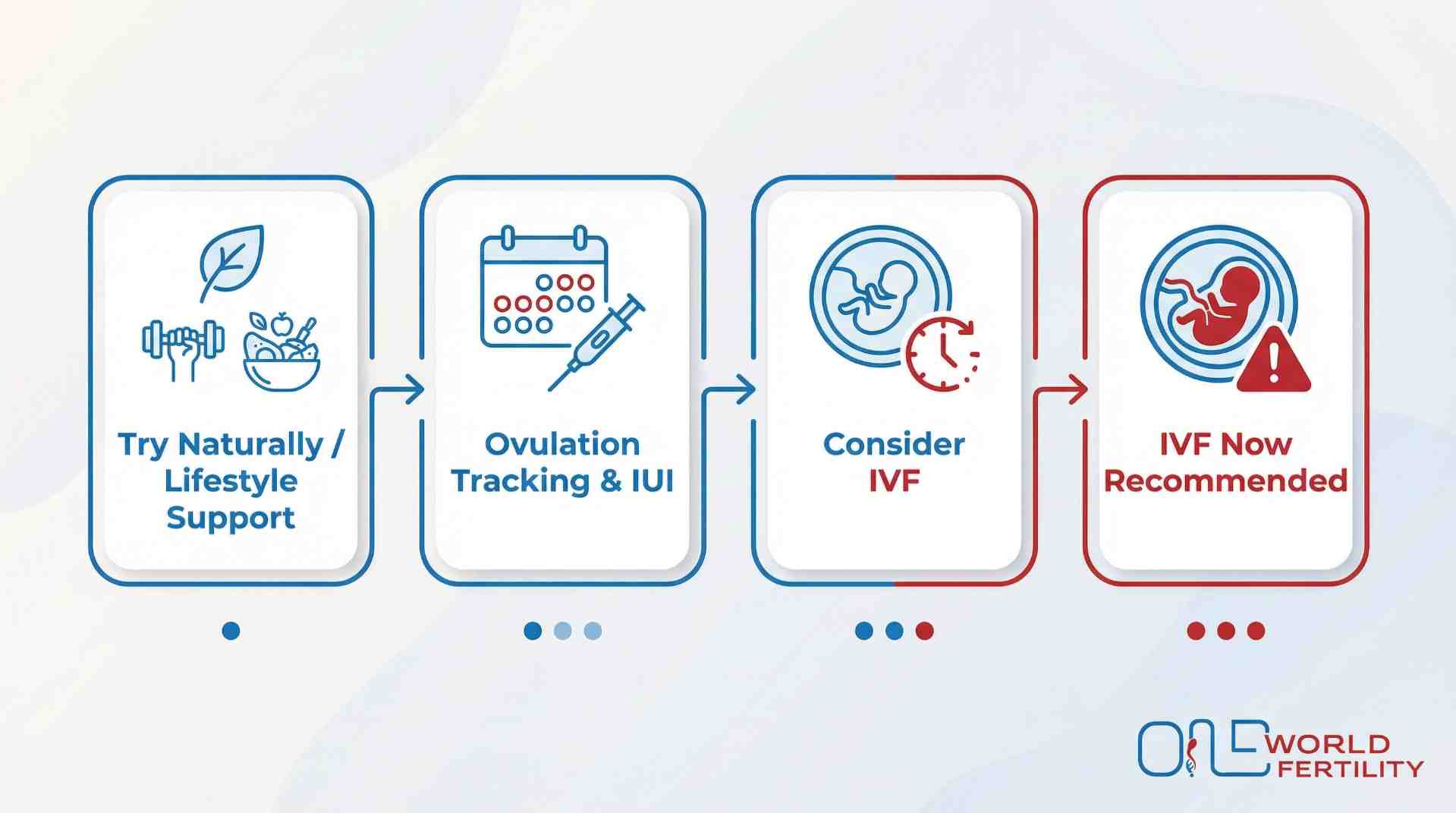
Think about IVF if:
- You have tried normally for 6 to 12 months without success (especially if you are over 35).
- Your AMH is very low (below 1.0) and going down.
- You cannot get pregnant because your tubes are blocked.
- You need to save time and choose the best choice.
Another choice to try first:
- Timed sex with tracking to see if you're ovulating regularly IUI (less invasive than IVF)
- Medications to help your natural cycles work better
- Changing how you live and taking products like CoQ10
When you should get IVF right away:
- AMH less than 0.5 and your own eggs
- You're over 38 and your AMH is low.
- Other ways haven't worked for three to six months.
Final Thoughts: What Low AMH Really Means for Your Fertility
Finding out you have low AMH can feel scary and confusing. We get it. But here's the truth you need to hear: this number doesn't decide whether you'll become a mother. Low AMH simply means you have fewer eggs in reserve. It doesn't say anything about the quality of those eggs or whether they can create a healthy pregnancy. Plenty of women with low AMH get pregnant naturally. Others need some extra help. Every journey is different, and yours matters. The most important thing? Don't wait in uncertainty. The sooner you understand your situation, the more options you'll have- whether that's trying naturally with support, exploring IVF, or finding another path that works for you.
At One World Fertility, we've been there for so many women exactly where you are right now. We know the questions keeping you up at night and the hope you're holding onto. We're here to give you honest answers, a clear plan, and caring support every step of the way. Your AMH number is just one small part of your story. Let's figure out the rest together.
Ready to talk? Reach out to One World Fertility. Let's have an honest conversation about what this means for you and find the path that feels right.