

If you've already done IVF, frozen embryo transfer (FET) gives you another chance without having to start again. With FET, we use embryos that were safely frozen during your last round. Your body gets to relax this time because there is no stress from ovarian stimulation. We can pick the optimal time when your uterine lining is most open to receiving, which gives you the most chance of success.
Many patients are surprised to learn that frozen transfers sometimes have the same or better success rates than fresh transfers. It's up to you whether we employ a natural or medicated cycle. You've already shown amazing strength. We will help you with your next step with care and confidence.
What is Frozen Embryo Transfer?
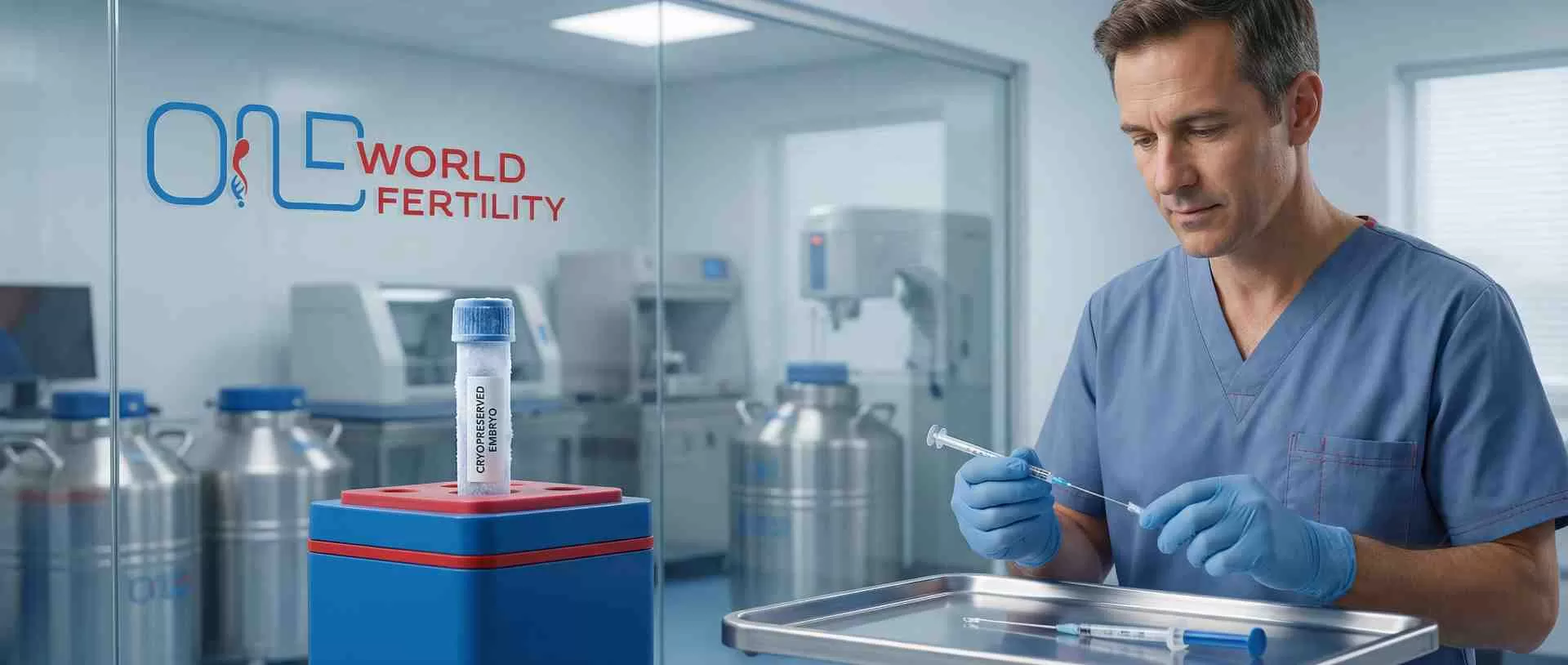
Frozen embryo transfer (FET) is an IVF process in which embryos from a previous cycle are frozen, kept, and then later transferred to the uterus. This is how the frozen embryo transfer process works: After egg retrieval and fertilisation, the best embryos are vitrified, which is freezing them very quickly, and then they are stored in liquid nitrogen at -196°C. When you're ready, we take your embryos out of the freezer and put them in your uterus, which has been prepped with hormones.
What is the main benefit? Your body has totally healed from ovarian stimulation, which has made the uterus the best place for implantation. This is what frozen embryo transfer means: giving you and your embryos the best chance of succeeding.
Why Choose FET Over Fresh Transfer?
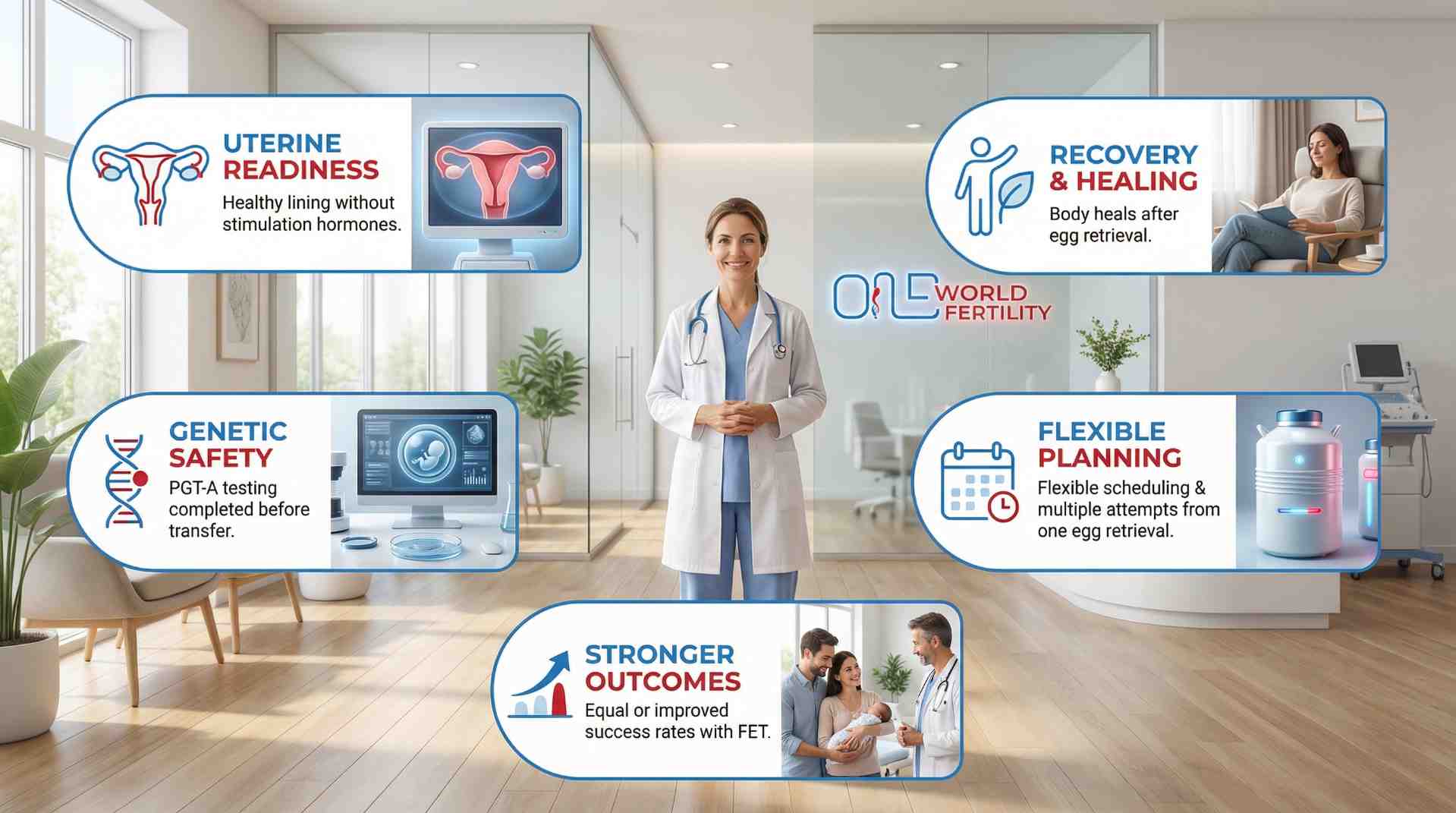
The debate about frozen vs fresh embryo transfer has changed. This is why FET has become the best option:
- Without stimulation hormones, the lining of the uterus is more open
- The body fully healed from egg retrieval
- Naturally balanced hormones
- Genetic testing (PGT-A) must be done before the transfer
- No risk of OHSS during the transfer cycle
- Schedules that work with your life
- Several tries to get pregnant from one egg retrieval
- Bank embryos for future children
- Do not repeat the stimulation methods
- Success rates for FETs now match or beat those for new transfers
Key Advantages of Frozen Embryo Transfer vs Fresh Embryo Transfer
| Advantage |
Fresh Transfer |
Frozen Transfer (FET) |
Clinical Impact |
| Uterine Receptivity |
Compromised by high hormones |
Optimal hormonal balance |
10-15% higher implantation |
| Body Recovery |
Immediate (3-5 days) |
Fully recovered |
Better endometrial quality |
| OHSS Risk |
Pregnancy can worsen it |
Zero risk |
Safer for PCOS patients |
| Genetic Testing |
Rarely possible |
PGT-A available |
Transfer healthy embryos only |
| Cycle Cancellation |
Higher rates |
Lower rates |
More predictable outcomes |
| Multiple Attempts |
New retrieval needed |
Several from one retrieval |
Cost-effective, less invasive |
| Success Rates |
40-50% |
50-60% |
Higher pregnancy rates |
Who Should Consider Frozen Embryo Transfer?
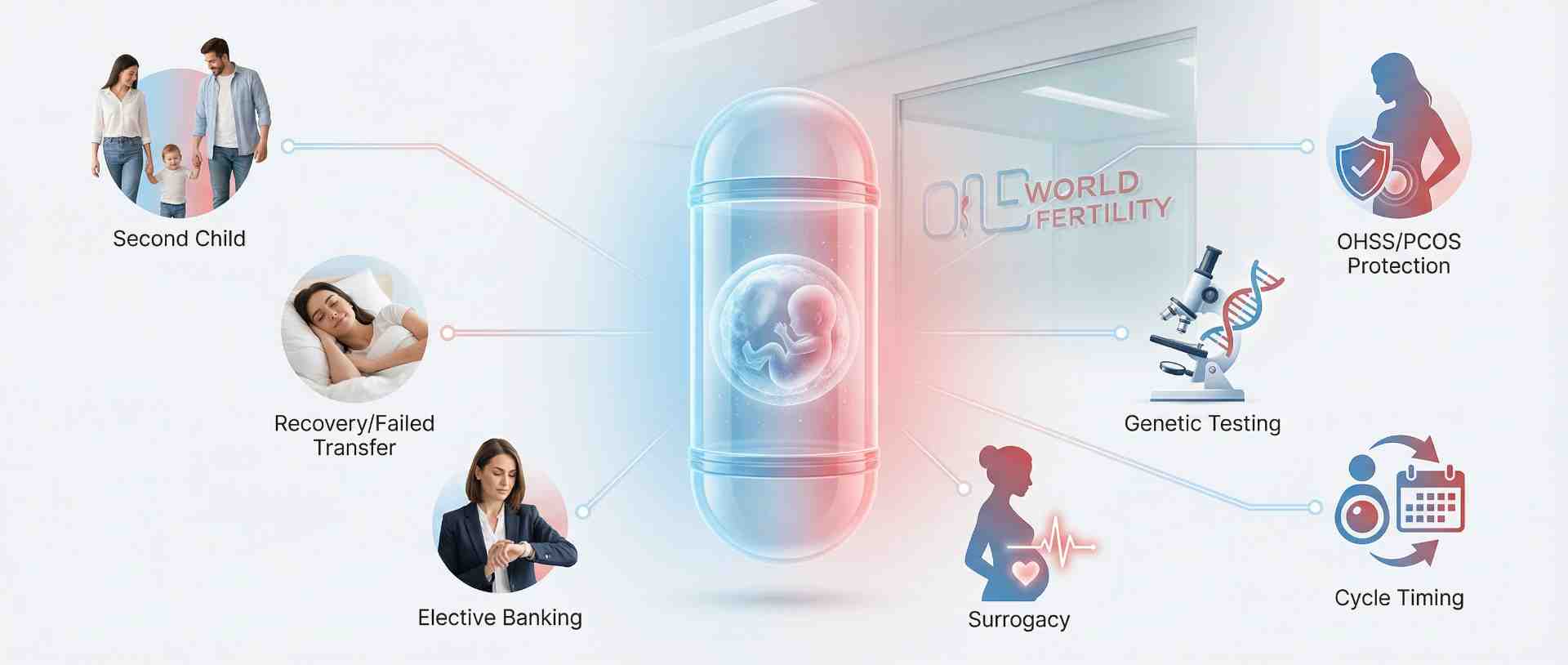
Don't think of frozen embryo transfer as a backup plan; for many people, it's their first and best option. These people would be ideal candidates for FET:
1. Parents with frozen embryos from previous IVF - Give your child a brother or sister without having to retrieve another egg using saved embryos.
2. Women at high risk for OHSS - FET gets rid of the risk of ovarian hyperstimulation, especially for those with PCOS. Patients needing uterine surgery first should get rid of polyps or cysts before a frozen embryo transfer for better results.
3. Couples wanting PGT-A screening - check the embryos for genetic problems before transferring them (results take 1-2 weeks to come back).
4. Recipients of donor eggs - Time your cycle to match the donor's for the best transfer.
5. Plan for gestational surrogacy - Time the transfer of a frozen embryo with the planned cycle of your surrogate.
6. Elective embryo banking - You can choose to freeze your embryos to keep your fertility while delaying having a child for work, health, or personal reasons.
7. Failed fresh transfer patients - Patients who failed the fresh transfer should try FET with a different procedure and a better preparation of the uterus.
Those who want time to heal - Give your body a chance to reset before the embryo transfer process is complete.
Complete Frozen Embryo Transfer Timeline
"What exactly happens during a frozen embryo transfer, and how long will it take?" is one of the questions we often get asked. Knowing when your frozen embryo transfer is scheduled can help you plan your work, travel, and other obligations. Plus, it just makes the whole process feel less stressful.
The amount of time it takes to transfer a frozen embryo depends on which procedure you choose. A medicated FET cycle usually lasts three to four weeks, from the start of your period to the day of the pregnancy test. A natural FET cycle lasts two to three weeks, and tracking starts around day 10 to 12 of your cycle.
Medicated FET Timeline Calendar
| Cycle Day |
Phase |
What's Happening | Appointments |
| Day 1-2 |
Cycle Start |
Your period begins | Baseline ultrasound & bloodwork |
| Day 3-10 |
Lining Building |
Your uterine lining is thickening | None, just take meds consistently |
| Day 10-12 |
Mid-Cycle Check |
See how your lining is developing | Ultrasound to measure lining thickness |
| Day 12-14 |
Decision Point |
Are we ready for progesterone? | Ultrasound & bloodwork (lining must be ≥7mm) |
| Day 14-16 |
Progesterone Start |
Beginning luteal support phase | None, but learn injection technique if needed |
| Day 19-20 |
Transfer Day! |
Your embryo comes home | The transfer procedure (5-10 minutes) |
| Day 20-29 |
Two-Week Wait |
Implantation is happening | None, rest, stay positive, be gentle with yourself |
| Day 29-31 |
Pregnancy Test |
The moment you've been waiting for | Blood test (beta hCG) |
| If Positive |
Early Pregnancy |
First ultrasound at 6-7 weeks | Weekly ultrasounds, gradual medication weaning |
Natural FET Timeline - Following Your Body's Ovulation Cycle
Let's go through each day's events in order so you know what to expect at every turn. On the other hand, a natural frozen embryo transfer schedule might work for you if you have regular cycles and ovulate on your own. Instead of changing your body's natural hormones, this method works with them.
| Cycle Day |
Phase |
What's Happening |
Appointments |
| Day 1-10 |
Early Phase |
Period and natural follicle development |
None |
| Day 10-12 |
Monitoring Begins |
Tracking your follicle growth |
Ultrasound to measure follicle |
| Day 12-15 |
Ovulation Watch |
Catching your LH surge |
Ultrasound every 1-2 days, daily LH tests |
| Day 14-16 |
Ovulation Confirmed |
Your body released the egg |
Blood test confirms ovulation |
| Day 19-21 |
Transfer Day! |
Transfer 5-7 days after ovulation |
The transfer procedure |
| Day 21-30 |
Two-Week Wait |
Implantation period |
None |
| Day 30-32 |
Pregnancy Test |
Beta hCG blood test |
Blood test |
Frozen Embryo Transfer Procedure - What Happens on Transfer Day
Are you scared about transfer day? Many are shocked at how easy and quick it really is.
Will I see my embryo first? Yes! Before anything else, your embryologist shows you images of your embryo on screen and gives you a photo to take home. While you were getting ready, they carefully thawed it, and over 95% survive beautifully. An important thing: come with a bladder that is comfortably full. It makes it easier for us to see on an ultrasound.
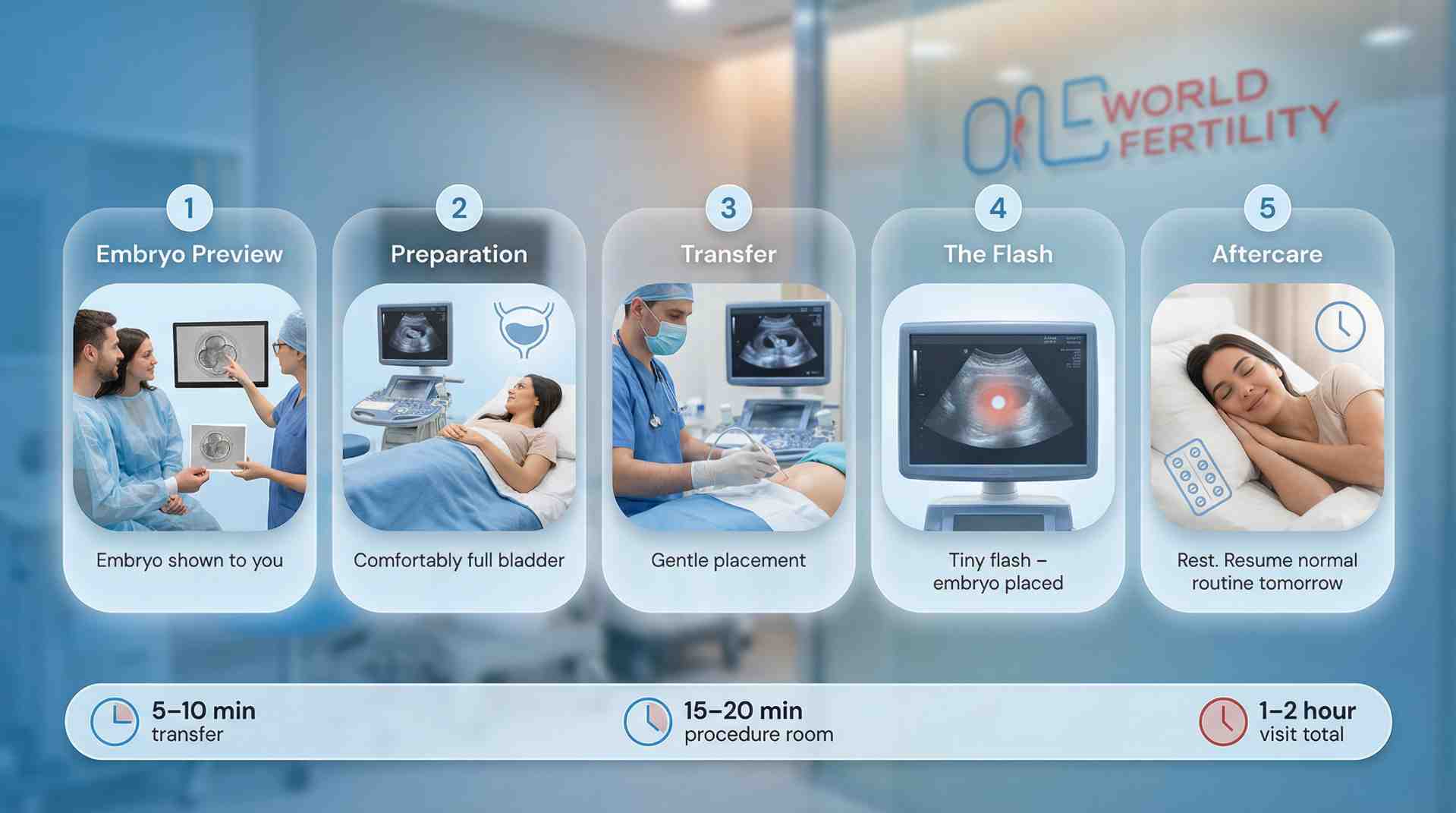
What Happens During the Transfer? Firstly, you'll lie down. This lets you see what's going on inside your body in real time with ultrasound. As the doctor moves the thin tube into your uterus, they will be very careful not to hurt you. You'll see it move into place on the screen. Then a tiny, bright flash appears. That's where your baby is going to go!
How Long Does Frozen Embryo Transfer Take?
- Five to ten minutes for the real transfer
- Total time in the process room: 15 to 20 minutes
- 1-2 hours for your entire visit, including time to get ready and rest.
What Happens After? Go home after taking a 10 to 30 minute break. Take your medicines as prescribed, rest today, and get back to normal tomorrow. No need to stay in bed. The day of your frozen embryo transfer is easy and calm. It only takes a minute, but you'll never forget the moment you saw your embryo come home. Here comes the wait, but enjoy yourself today. There is no doubt that your embryo is in the right place.
How to Prepare Your Body for Frozen Embryo Transfer Success
You have 2 to 3 months before your frozen embryo transfer to make the greatest possible conditions for success. Making little, important improvements can raise your odds by 10-15%.
Medical Optimization: Check your thyroid (TSH should be between 2.0 and 2.5), ensure your vitamin D levels are above 30 ng/mL, treat any infections, and go to the dentist. You might not think these things are really important.
Changes in Lifestyle: Try to keep your BMI between 18.5 and 25, quit smoking, cut out alcohol, limit caffeine to less than 200mg a day, get 7 to 8 hours of sleep, and exercise lightly, like walking or gentle yoga, instead of hard workouts.
Nutrition Matters: Every day, take 400-800 mcg of folic acid with your prenatal vitamins. Eat fruits and vegetables high in antioxidants, get enough protein and healthy fats like omega-3s, and drink 8 to 10 glasses of water. Stay away from seafood high in mercury and processed foods.
Uterine Preparation: To rule out polyps or fibroids, your doctor may suggest a saline ultrasonography or hysteroscopy. They may also recommend a mock transfer to ensure the catheter passes smoothly on the day of the transfer.
The Week Before: Follow your doctor's instructions for taking your prescriptions, drink enough water, keep your body warm, do some light exercise, and try to avoid hot baths, hard workouts, and stress as much as possible.
Frozen Embryo Transfer Success Rates
What are the true chances of success with frozen embryo transfer? We want to provide you with honest, evidence-based information, not false hope. We want you to have realistic expectations. Knowing how likely you are to succeed with FET lets you make smart choices and go into your journey with both hope and realism.
The good news is? In the past few years, the success rate of frozen embryo transfers has gone up a lot. In many age groups, pregnancy after FET rates now equal or even exceed fresh transfers. And with genetic testing, we can significantly improve your odds regardless of age.
Success Rates Of Frozen Embryo Transfer
| Patient Profile |
Single FET Success Rate |
PGT-A Normal Embryo |
Natural FET Success |
Medicated FET Success |
| Under 30 years |
55-65% |
70-75% |
52-60% |
55-65% |
| 30-34 years |
50-60% |
65-70% |
48-58% |
50-60% |
| 35-37 years |
45-50% |
60-70% |
42-48% |
45-52% |
| 38-40 years |
35-40% |
55-65% |
32-38% |
36-42% |
| 41-42 years |
20-25% |
50-60% |
18-23% |
22-27% |
| 43-44 years |
10-15% |
50-60% |
8-13% |
11-16% |
| Over 44 years |
<10% |
45-55% |
<8% |
<12% |
| Donor Eggs (any age) |
60-70% |
70-80% |
58-68% |
62-72% |
What Actually Affects Your FET Success Rates?
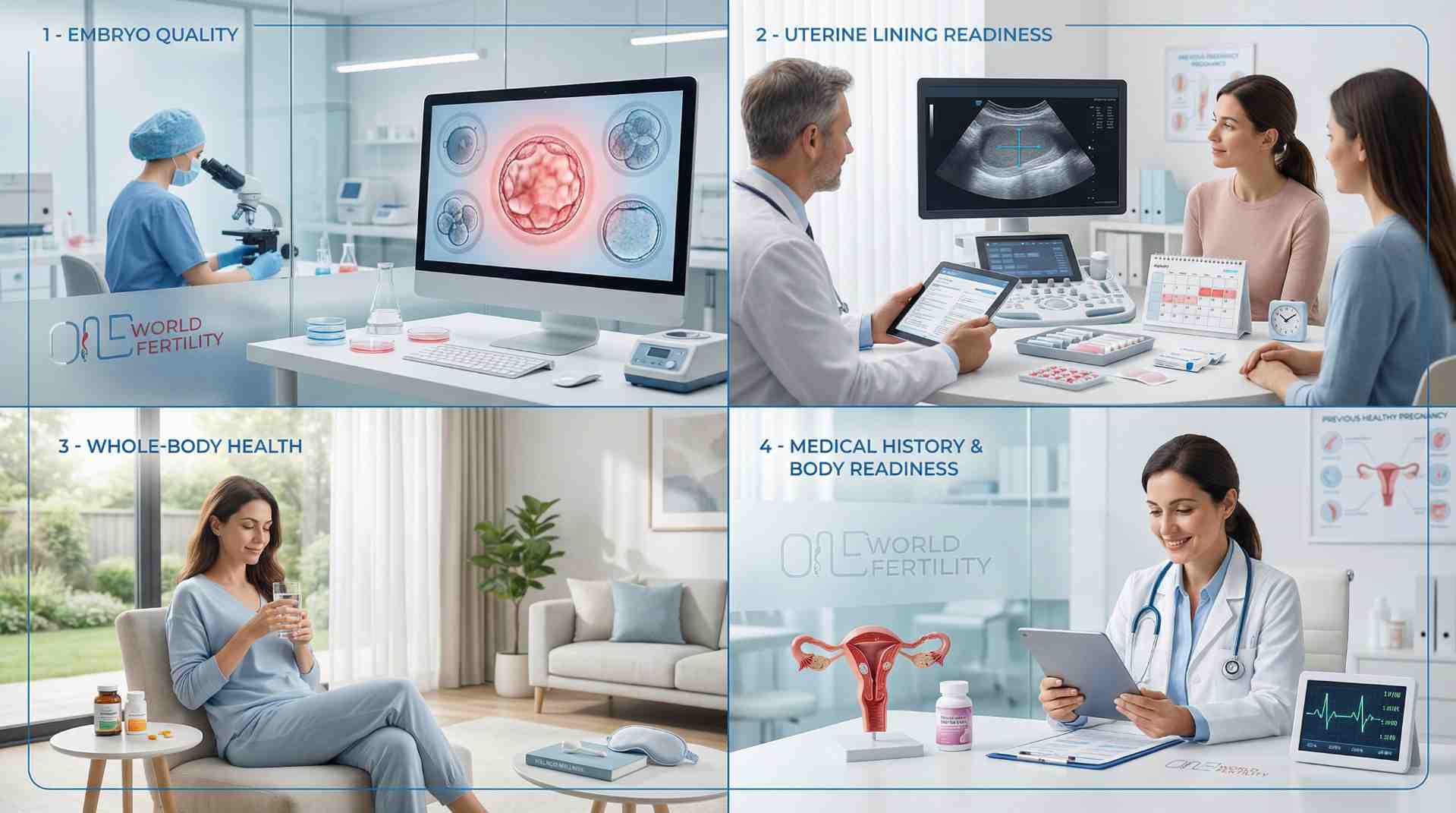
Knowing what affects the success of a frozen embryo transfer helps you focus on what you can change:
- Embryo Quality and Genetic Status: Blastocysts (day 5–6 embryos) have a higher success rate than day 3 embryos, and normal embryos tested for PGT-A have a 60–70% success rate regardless of the mother's age. It matters what grade and stage of growth your embryologist gives you; better quality means more chances.
- Your Uterine Lining: You're making a cosy bed for your baby with your uterine lining. It must be at least 8 mm thick and hormonally ready. We're very careful with time and medicines because of this. If your previous transfers didn't work, ERA testing can help you find the best time to put your fertility device.
- Your Health as a Whole: Here is where you really have power. Being at a healthy weight, not smoking, dealing with stress, getting enough sleep, and eating well can all really help FET results. Not only are these trends about health, but they also change your body's ability to support insertion.
- What You Know About History: In fact, it's a good sign if you've been pregnant before, even if it didn't last. This is how your body knows how to conceive. A healthy uterus, heart health, and vitamin D levels are some of the other things that affect how well a frozen embryo transfer works.
Why Choose One World Fertility for Your Frozen Embryo Transfer Treatment?
One World Fertility handles frozen embryo transfers with care, clarity, and years of experience. We understand you better before planning your cycle because we are the best FET clinic and known frozen embryo transfer experts. With close endometrial tracking and exact ultrasound-guided embryo transfer, each FET, whether natural or medicated, is carefully tailored to the woman's needs. Our skilled embryologists use advanced vitrification and tried-and-true thawing methods to support a FET success rate that is higher than the national average. The most important thing is that we listen, explain each step, and walk you through the process. We never rush through what's important.
Get your free appointment today and take the next step with a group that really knows what you're going through.
Questions people ask about this treatment
10 answeredhere