
Should couples pause and prepare after a failed conception attempt
 Written by
One World Fertility
Jan 27, 2026 14 min read
Written by
One World Fertility
Jan 27, 2026 14 min read
Learn whether couples should pause after a failed conception attempt and how preparing physically and emotionally can improve chances next time.

It can be quite hard to deal with the emotions that come after a failed conception attempt. Please know that you're not alone if this is where you are right now. What you're feeling is a normal reaction to a very personal trip. The truth is that pausing after a failed conception doesn't mean giving up. It's really one of the smartest things you can do. Think of it as giving your heart and body time to mend and breathe. Sometimes the best thing to do next is to take a break. If this is your first setback or you've been trying for a while, the question "Should we keep going or take a break?" is definitely too much to handle right now.
In this article, we'll talk about why taking a break might assist, how long you should wait, and how preparing after a failed conception attempt can actually make your chances better next time. We'll talk about both the physical and emotional mending your body requires. You don't have to sort everything out today.
Understanding Failed Conception and Why It Happens
Have you been trying to get pregnant but haven't been able to? You're not the only one. It's very usual for couples not get pregnant, even healthy ones. Each month, they have only a 20-25% chance. If you fail to conceive, you won't get pregnant, whether you attempt naturally or through IVF/IUI.
Unsuccessful conception feels personal, but here's the truth: it doesn't mean something is wrong with you. Many factors affect conception not happening, and most can be addressed once identified.
Common Reasons for Conception Failure
Why does conception not always work? The truth is that a successful pregnancy needs a lot of things to come together perfectly, and sometimes one or more of them don't. Let's look at the reasons why conception fails:
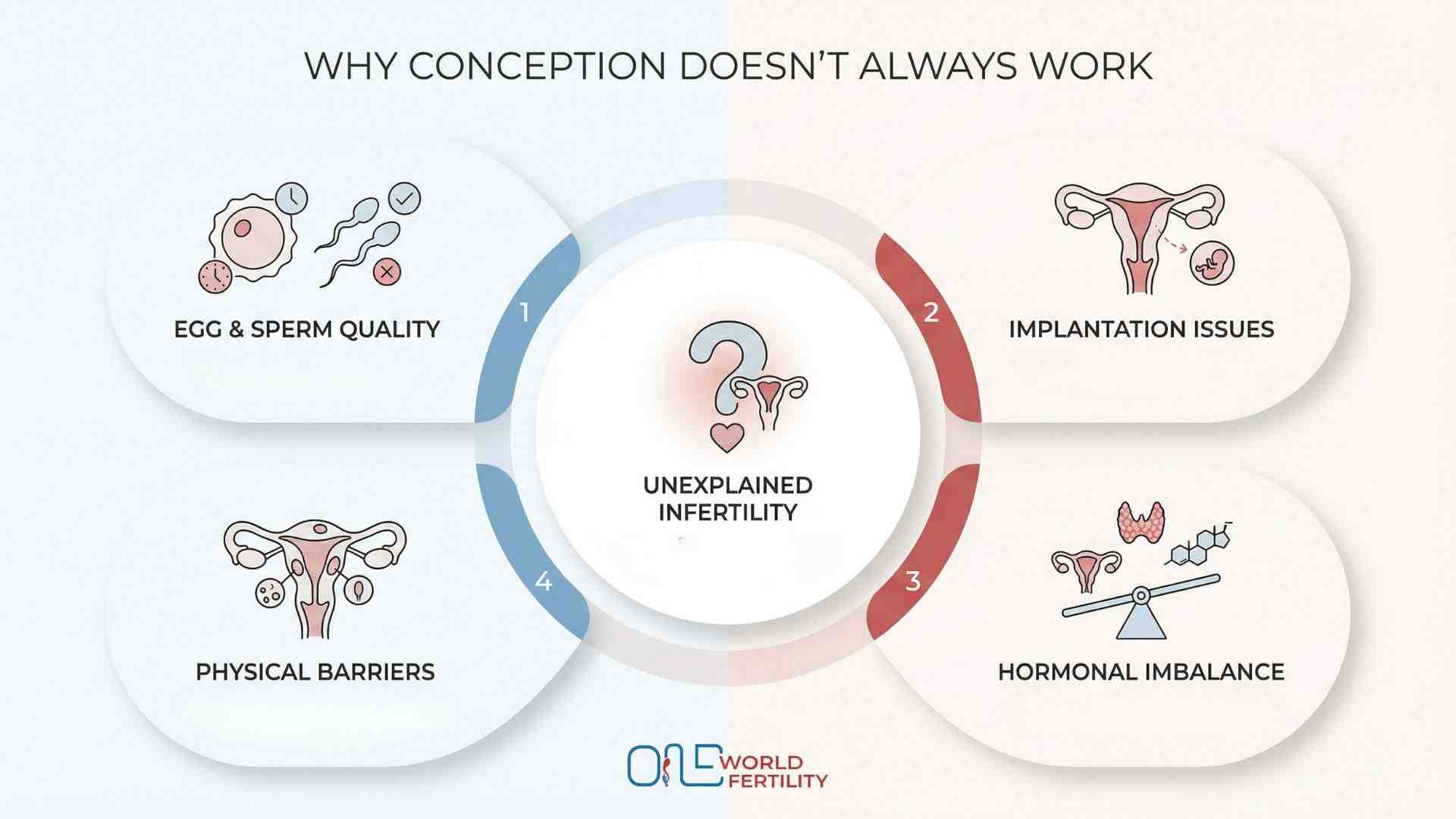
- Quality of Eggs or Sperm: Age affects egg quality, particularly after age 35. Sperm is affected by health and lifestyle. This is the most common reason why people can't get pregnant.
- Implantation Problems: Sometimes fertilisation happens, but the embryo can't stick to your uterine lining. Maybe it's too thin, or the timing's off. You'd never even know you got that far.
- Hormone Stuff: Your thyroid, progesterone levels, and PCOS run the whole show behind the scenes. When they're out of whack, conception struggles.
- Things in the Way: Fibroids, polyps, scar tissue. Even tiny ones can make implantation difficult.
- The "We Have No Idea" Category: This one's the worst. About 30% of couples get all normal test results and still can't conceive. It's called unexplained infertility, and yeah, it's as frustrating as it sounds.
Understanding IVF and Embryo Transfer Failure
You know how terrible it is when an egg transfer doesn't work out. The embryo looked great, and you did everything right. Then... nothing. It is possible for an IVF cycle or FET to fail even when everything looks good.
Why IVF fails sometimes:
- The embryo had hidden quality issues that the lab couldn't see
- Your lining wasn't actually ready (even if it measured thick enough)
- Your immune system saw the embryo as a threat
- Chromosomal problems in the embryo itself
Embryo transfer failure happens in both fresh and frozen cycles, though frozen actually works slightly better since your body's not dealing with all those stimulation meds. What's the good news? Every failed cycle tells your doctor something. They can do more tests, like an ERA, to see if your lining is open and make changes for the next time.
Should You Take a Break After Failed Conception?
Someone has probably told you to "just take a break" after another negative test. But should couples take a break from trying to conceive? There isn't a simple answer. Some couples need time to heal. Others feel like they're racing the clock. Both are correct. There are real benefits to taking a break after a failed pregnancy, but you may also feel a sense of pressure.
So when should you try again after a failed pregnancy? Let's see what makes sense for you.
Benefits of Pausing After Failed Conception Attempt
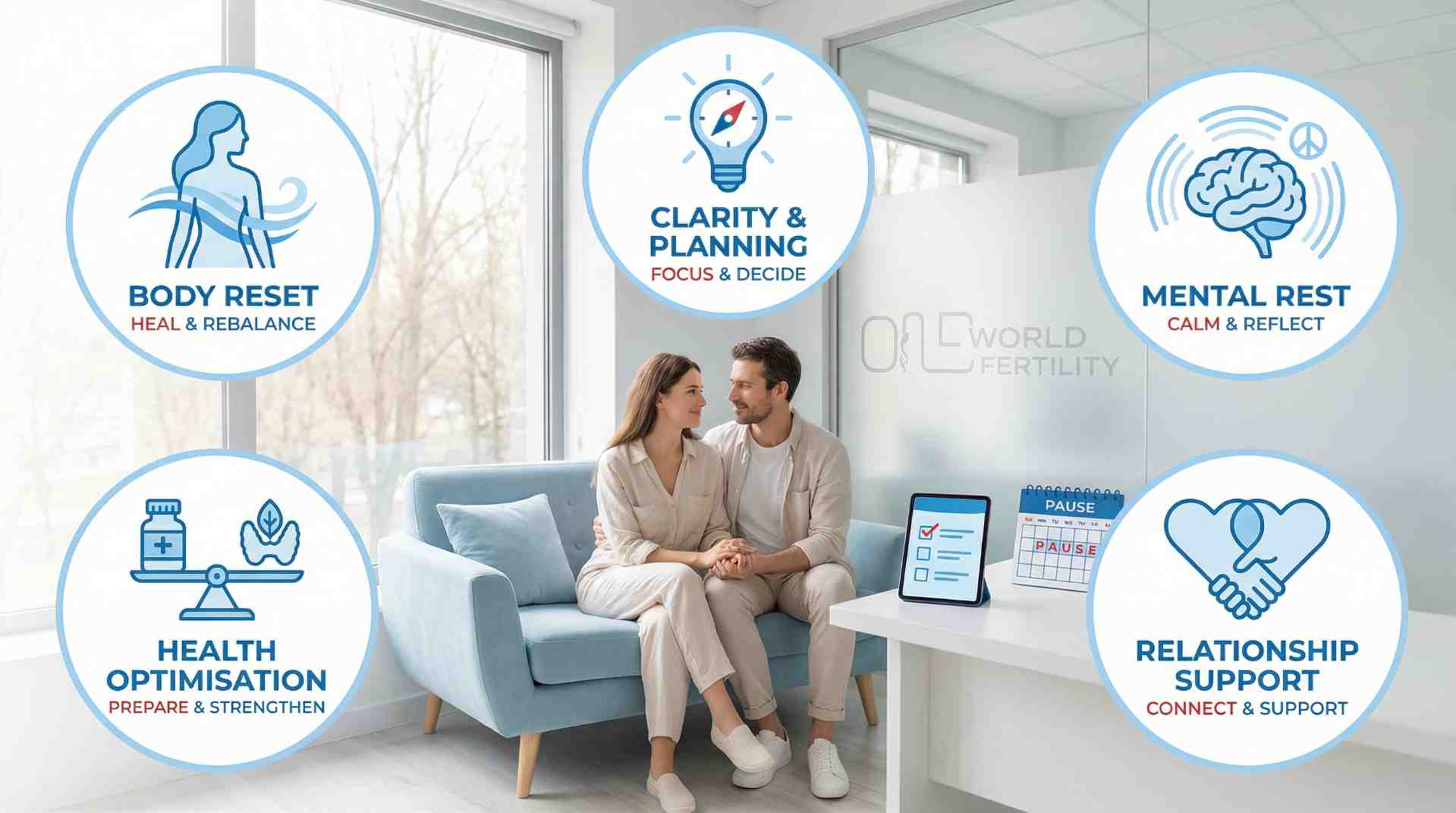
Taking a break isn't quitting; it's recharging. Here are some reasons a fertility reset after a failed attempt can be helpful:
- Your body heals - IVF hormones and treatments are hard on the body. After a failed pregnancy, your body, especially your hormones, might go back to normal.
- Your Mind Gets a Break - It is also important to emotionally recover after a failed conception. It's tiring to always be on the lookout for ovulation and live in a two-week-wait state of anxiety. A break lets you think about things other than trying to get pregnant.
- You Can Fix What's Off - Have low vitamin D? Problems with the thyroid? Worried about your weight? Pausing gives you time to optimise your health without monthly pressure.
- Your Relationship Breathes - Couples who can't have kids are under a lot of stress. Taking the strain off helps you get back together as partners, not just people who make babies.
- More Clear Thinking - Stepping back lets you make decisions from clarity, not desperation.
Should You Pause? Decision Framework
| Consider Pausing If... |
May Continue Right Away If... |
| You're emotionally exhausted |
You feel mentally ready |
| Multiple failed IVF cycles (3+) |
First or second attempt only |
| Medical issues need addressing |
Medical clearance obtained |
| High stress affecting relationship |
Strong support system in place |
| Need fertility testing/evaluation |
Recent comprehensive testing done |
| Financial strain is significant |
Finances allow continued treatment |
| Body needs physical recovery |
Minimal medical intervention was used |
| Under 35 with time flexibility |
Over 38 with time urgency |
Physical Recovery: Preparing Your Body After Failed Conception
Your body just went through a lot of stress. Whether it was months of timed sex, hormones from IVF, or the emotional rollercoaster of waiting, physical recovery after a lost pregnancy is real. Not simply "get back on the horse," but real medical recuperation. So, how do you give your body what it needs while preparing your body for the next conception attempt? And when will your hormone balance after failed conception finally feel normal again? Let's walk through what your body needs right now.
How Long to Wait Before Trying Again
Everyone wants to know how long to wait after a failed conception. Your doctor will probably say 1-3 months, but really? It depends on what your body just went through. Did you try to be natural? You may try again shortly after your next period. But how soon after a failed FET can I try again if I just did IVF? That's a separate thing.
The truth is that your period following a botched embryo transfer could be heavier, more uncomfortable, or just plain strange. That's your body getting rid of the hormones and the thicker lining it made. Wait at least one normal cycle before you start again.
Individual considerations are important:
- Your age (40 or older) may indicate a shorter wait time.
- What medications did you take?
- How many cycles have you already completed?
- What exactly is wrong with your fertility?
Physical Recovery Timeline After Failed Conception
| Type of Attempt |
Physical Recovery Time |
When You Can Try Again |
Key Recovery Signs |
| Natural Conception |
1-2 menstrual cycles |
Immediately after period |
Regular cycle returns |
| IUI Failure |
1-2 cycles |
After next period |
Hormones normalize |
| Fresh IVF/Embryo Transfer |
1-3 months |
After 1-2 cycles minimum |
Ovaries return to normal size, hormones stabilize |
| Frozen Embryo Transfer (FET) |
1-2 cycles |
After next period |
Endometrium resets, bleeding stops |
| Multiple Failed IVF Cycles |
2-3 months |
After comprehensive rest |
Full hormonal recovery, energy restored |
Lifestyle Changes After Failed Conception
So, what can you do while you wait? A lot. Lifestyle changes after failed conception aren't just busywork; they really do improve your chances of getting pregnant again. What are the key changes? These are your natural ways to improve fertility after failure:
- Move Your Body, but Don't Go Too Far: Light activity, such as 30 minutes of walking, swimming, or yoga, helps keep hormones in check. But getting ready for a marathon? That can actually make it harder to get pregnant. Find a midway ground.
- Sleep Like It's Your Job: 7-8 Hours isn't a suggestion. While you sleep, your reproductive hormones practically reset. Bedtimes that are always the same are even better than total hours.
- Get Rid of the Toxins: Replace plastic containers with glass whenever you can, and choose organic (especially for the "dirty dozen" vegetables and fruits). Now is the moment to quit if you still smoke.
- Get Your Weight in the Right Range: Being either too thin or too heavy can damage your ability to have children. The best BMI is between 18.5 and 24.9. Still not there? It can help you lose even 5–10% of your body weight.
- Manage the Stress (Yes, Really): It's so annoying when people say, "Just relax." But long-term stress really does mess with your hormones. Try therapy, acupuncture, meditation, or anything else that helps you relax.
Nutrition and Supplements After Failed Conception
Let's discuss about nutrition after failed conception. What you consume has a direct effect on the quality of your eggs and sperm, but it takes 3 to 4 months to observe benefits. So get going now. The fertility diet isn't complicated: Think of the Mediterranean. A lot of colourful vegetables, fish, olive oil, almonds, and berries. Less junk food, red meat, and sweets. That's all.
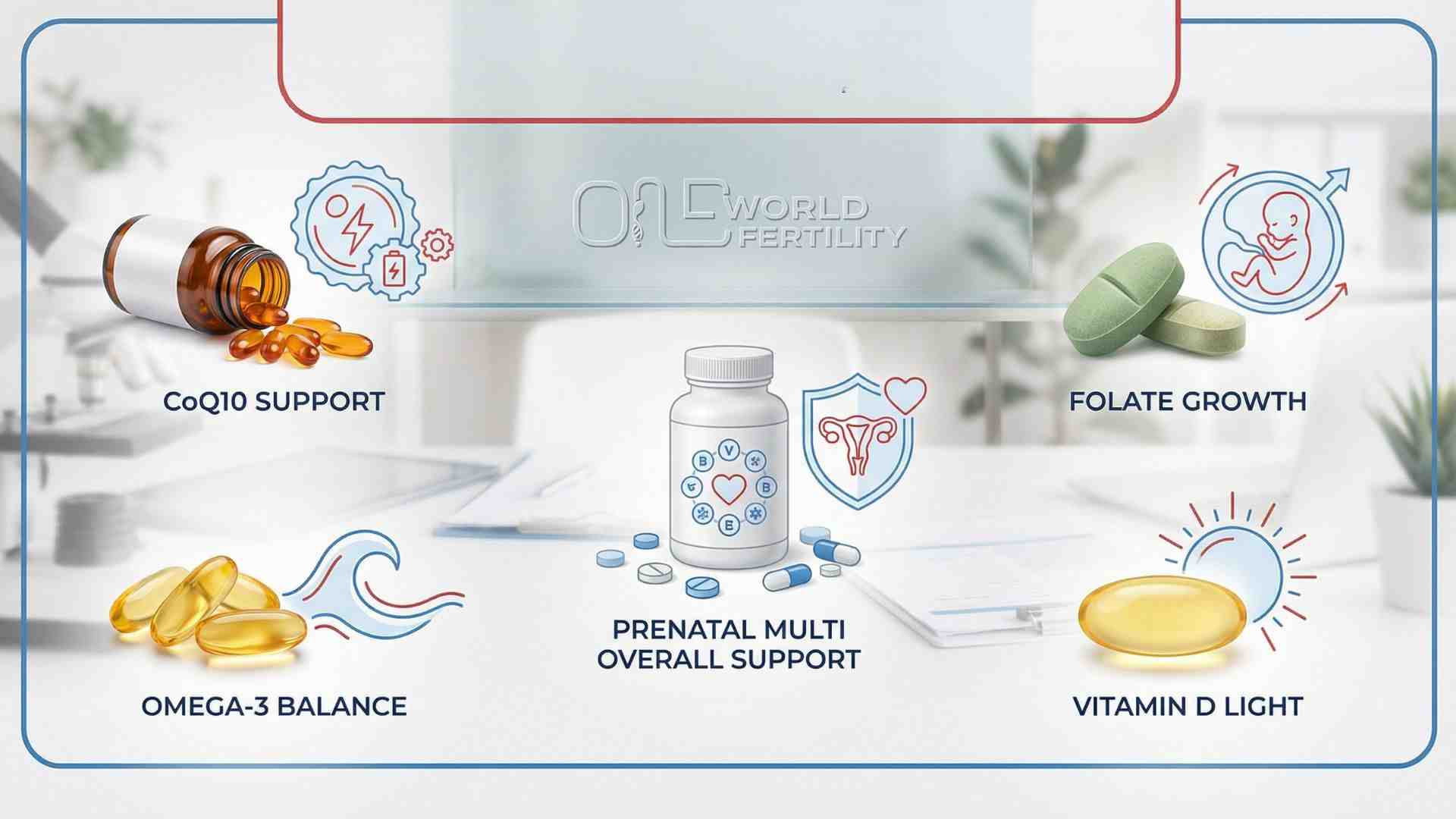
What about supplements after failed conception? These aren't magic medicines, but they can help improve chances of conception next time:
- CoQ10 (600mg/day) - improves the quality of eggs.
- Folate (not folic acid) - very important for early growth.
- Vitamin D - most people don't get enough. Get yours checked.
- Omega-3s - help with inflammation.
- Prenatal vitamin - covers all your bases.
What to cut: alcohol (yep, all of it), too much caffeine (one cup of coffee is good, four isn't), trans fats, and fish with a lot of mercury.
Fertility-Boosting Lifestyle Changes
| Category |
What to Do |
Why It Helps |
Timeline for Results |
| Nutrition |
Mediterranean diet, leafy greens, berries, fish |
Improves egg/sperm quality, reduces inflammation |
3-4 months |
| Supplements |
CoQ10 (600mg), Folate, Vitamin D, Omega-3 |
Supports cellular health, hormone production |
2-3 months |
| Exercise |
Moderate activity 30 min/day, yoga |
Balances hormones, reduces stress |
Immediate + ongoing |
| Sleep |
7-8 hours nightly, consistent schedule |
Regulates reproductive hormones |
2-4 weeks |
| Stress Reduction |
Meditation, therapy, acupuncture |
Lowers cortisol, improves fertility |
1-2 months |
| Weight Management |
Achieve BMI 18.5-24.9 |
Optimizes hormone balance |
3-6 months |
| Avoid Toxins |
Reduce plastics, organic foods, no smoking |
Protects egg/sperm quality |
3 months |
Emotional Recovery and Mental Health After Failed Conception
Most people don't understand how bad it hurts after a failed conception. It's not simply sadness when you don't become pregnant; it's grief. You lost the future you had previously planned. Stress from not being able to get pregnant ruins your life. Stress after failed conception affects your sleep, your relationships, everything. And your mental health after failed conception matters just as much as physical recovery. It's extremely tough to fail when you're emotionally depleted and try again.
Coping with the Emotional Impact of Conception Failure
There is no one "right" technique to deal with problems with fertility. Some days you're fine. Grief comes in waves. A random diaper ad will ruin your day out of the blue. Don't shove it down; let yourself feel it. Other days a pregnancy announcement destroys you. Both are normal. Many people think about giving up trying to conceive at some point.
That doesn't make you weak. Taking a break because you need one is self-care, not giving up. What you might be feeling: Sadness, resentment at your body, envy, guilt, and feeling alone. That's all normal. But if you can't get out of bed for days, feel hopeless, or think about hurting yourself, you need to get treatment. Genuine melancholy can happen when you worry about not being able to have kids.
What to Do After Failed Conception: Next Steps
It didn't work out. Again. Now that you have that negative test, you're probably asking, "What should I do after a failed conception?" When you're still hurting from a failed conception, the next steps can seem too much to handle. Let's talk about what you need to do right now and what comes next when your fertility planning doesn't work out. If you're not sure what to do if IVF doesn't work, we've got you.
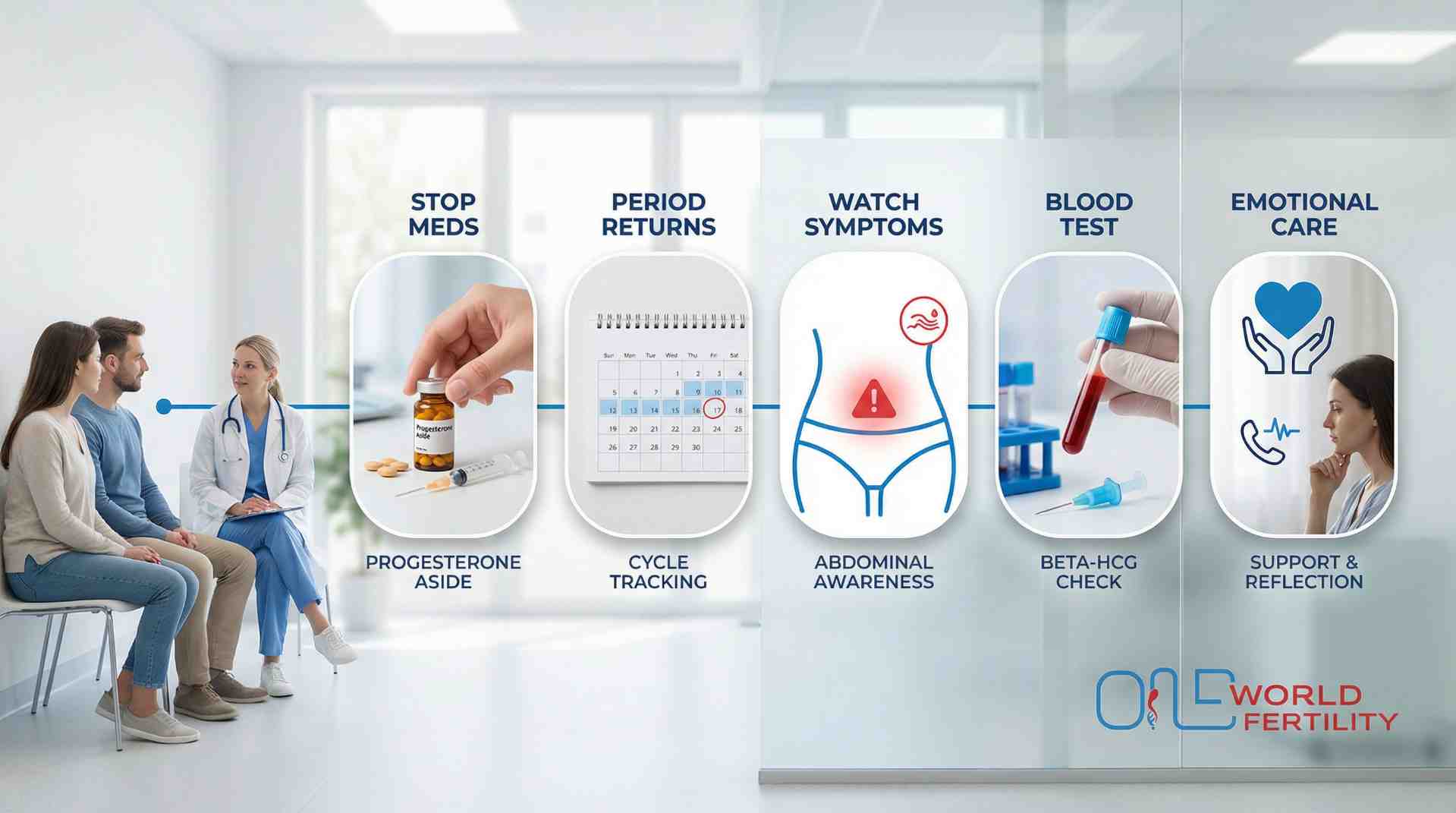
What to Do Right Away After a Failed Attempt to Get Pregnant
- Stop Meds as Directed - Follow your doctor's instructions and stop taking your meds. Your doctor will ask you when to stop using progesterone and other drugs. Usually, it's right after a negative test. Stopping progesterone makes your menstruation start.
- Expect Your Period - When to expect period after failed embryo transfer? Usually, it happens 2 to 7 days after quitting progesterone. Your menstruation after a failed embryo transfer is generally heavier and more painful than usual since your body is getting rid of that extra-thick lining.
- Watch for Warning Signs - Bleeding and cramping are symptoms of a failed embryo transfer. But changing a pad every hour or having a fever? Get in touch with your clinic right away.
- Get the Blood Test - Your clinic will set up a beta hCG test to make sure you aren't pregnant and to rule out problems like ectopic pregnancy.
- Look after your heart - If you need to, cancel your plans. Weep. Get in touch with someone who understands. It's true that the emotional crash after a failed pregnancy is real.
Medical Evaluation: What Tests to Consider After Failed Conception
What, one bad try? That's normal. Two? Still in the range. What about three or more? We need to look further. Fertility tests after failed conception aren't used to find fault; they're used to find reasons. A medical review after a failed conception can find problems that basic early tests missed. And to be honest? Getting fertility counsel from an expert who orders the correct tests after a failed attempt can make all the difference. So what should you really be testing for?
Essential Fertility Tests After Multiple Failed Attempts
If you've been trying to get pregnant but haven't been able to, or if everything seems "normal" but you're still having trouble becoming pregnant, these tests can find what conventional workups miss.
| Test Type |
When Recommended |
What It Checks |
| Comprehensive Hormone Panel |
After 2-3 failures |
FSH, LH, AMH, thyroid, prolactin |
| Advanced Semen Analysis |
After 2+ failures |
DNA fragmentation, morphology |
| HSG (X-ray) |
Before/after 1-2 IVF failures |
Tubal patency, uterine shape |
| Hysteroscopy |
After 2-3 implantation failures |
Polyps, adhesions, septum |
| ERA Test |
After 2+ failed transfers with good embryos |
Optimal implantation timing |
| PGT-A Embryo Testing |
After 2+ miscarriages or failures |
Embryo chromosomes |
| Thrombophilia Panel |
After recurrent losses |
Blood clotting disorders |
| Karyotyping (Both Partners) |
After 3+ failures |
Chromosomal abnormalities |
Making the Right Decision for Your Journey
The truth is that there is no "right" answer to whether couples should pause after failed conception. Some people need to pause. Some people need to keep going. Both are OK. This setback in your ability to get pregnant doesn't define you. You can either take a gap to recuperate emotionally before trying to get pregnant again or jump back in next month. Just believe in yourself. Your body understands what it needs. Your heart understands how much it can take. Stopping isn't the same as giving up. Going on isn't being careless. You're doing your best in a circumstance that is very hard.
At Oneworld Fertility, we've been there for thousands of people throughout these very times. We know how hard it is to get pregnant, how often you doubt yourself, and how much hope you have, even when you're tired. We don't just help bodies; we also help hearts. You're not the only one going through this. We're here for you, whether you need advanced testing, changes to your protocol, emotional support, or just someone who really understands. The way you become a parent may not be what you thought it would be, but it is still your road. And we'll help you figure out what to do next, no matter what that looks like for you.