
The five days you never get to see.
Between your egg retrieval and your transfer, everything that matters happens in a room you will never walk into. This page opens it up - what the embryologists do each day, how your embryos are graded, and the safeguards that sit around every dish.

What does the embryology lab do?
The embryology laboratory handles everything that happens to your eggs, sperm and embryos outside the body. At One World Fertility the lab is on site in Saket, New Delhi - eggs are graded within minutes of retrieval, fertilised by ICSI or conventional insemination, cultured for up to five days to blastocyst, graded at every stage, then transferred or vitrified. Every movement of gametes and embryos is double-witnessed by a second embryologist.
- Location
- On site - nothing is transported between buildings
- Fertilisation
- ICSI and conventional IVF
- Culture
- To day 5 blastocyst where the embryos allow
- Freezing
- Vitrification for embryos, eggs and sperm
- Witnessing
- 100% double-witnessed, every movement
- Monitoring
- 24/7 incubator logging with escalating alarms
Five days, step by step
What happens to your embryos between retrieval and transfer.
-
Day 0Retrieval & insemination
Eggs arrive in the lab
Within minutes of retrieval the follicular fluid is scanned under a stereo microscope and every egg is found, graded for maturity and moved into culture medium. Only mature eggs can be fertilised, which is why the number collected and the number usable are rarely the same.
-
Day 1Fertilisation check
Did they fertilise?
Roughly sixteen to eighteen hours later each egg is checked for two pronuclei - one from each parent. Two is right. None means fertilisation failed; three means it went wrong and that embryo is not used. This is the first call you get.
-
Day 2Cleavage
The first divisions
A healthy embryo is around four cells. The embryologist is watching the evenness of the cells and how much fragmentation there is, both of which track with what happens later.
-
Day 3Eight-cell stage
The embryo takes over
At about eight cells the embryo switches from running on the egg’s instructions to its own genome. Some stop here, and that is information rather than bad luck - it is often the first sign of a chromosomal problem.
-
Day 5Blastocyst
Ready to transfer or freeze
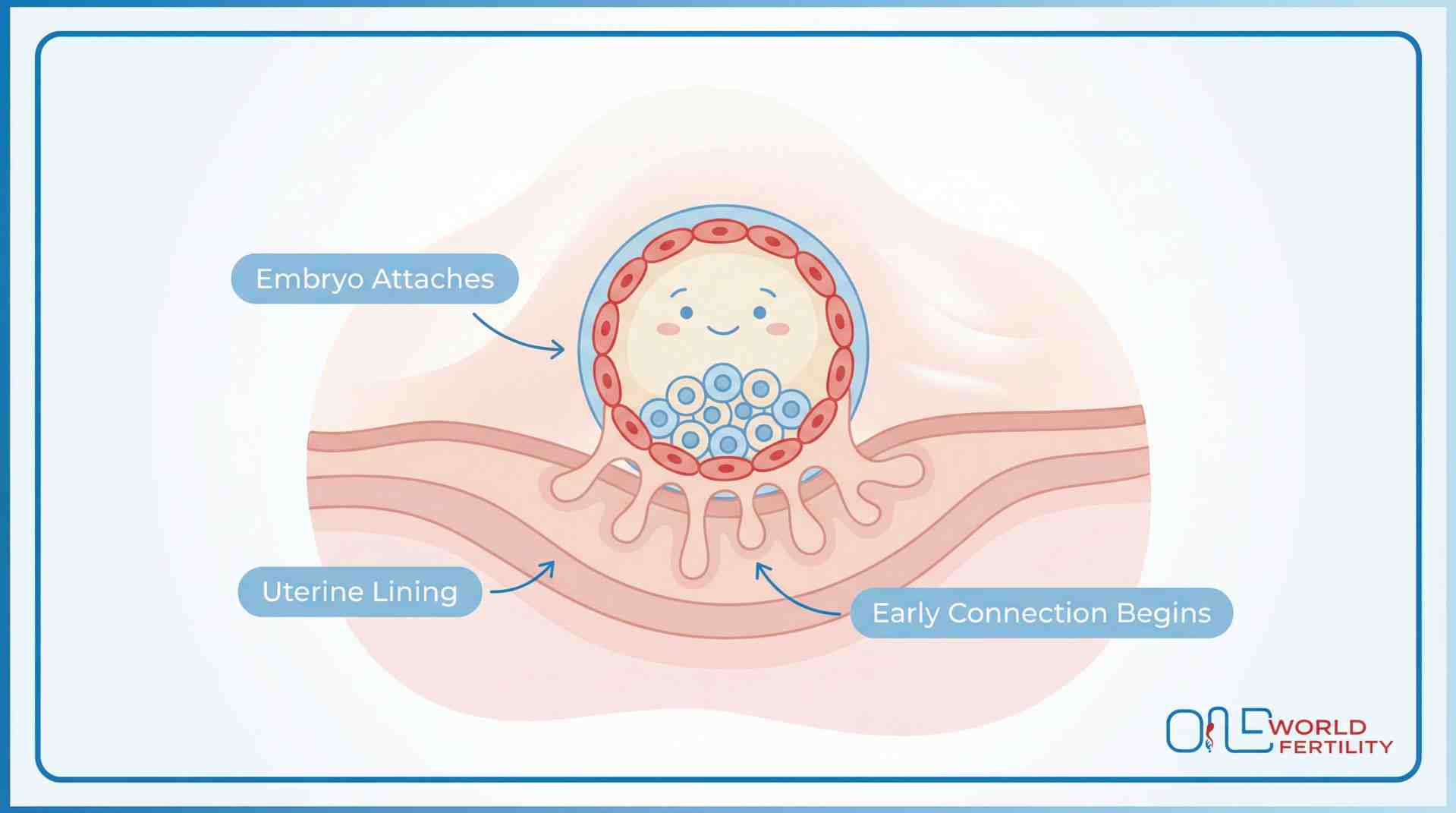
The embryo has become a blastocyst: an outer layer that will form the placenta, an inner cell mass that becomes the baby, and a fluid cavity. It is graded on expansion and on both cell types, then transferred or vitrified.
Not every embryo reaches day 5, and that is normal. A cycle that starts with ten eggs may end with two blastocysts. It is not a sign that something went wrong - it is the laboratory doing exactly what it is there to do, which is to find the embryos with a real chance.

What the lab actually does
Six pieces of work behind one transfer.
-
ICSI & conventional IVF
A single sperm injected into each mature egg under a micromanipulator, or conventional insemination where the semen parameters allow it.
-
Vitrification
Flash-freezing of embryos, eggs and sperm at a rate fast enough that no ice crystal forms. Survival on warming is the number that matters here.
-
Embryo grading
Morphological assessment at every stage, recorded and shown to you - not summarised as “good quality” and left there.
-
Semen preparation
Density-gradient and swim-up preparation, plus the surgical retrieval samples (TESA and PESA) handled the same morning they are taken.
-
Assisted hatching
Thinning of the zona in the specific cases where it is indicated. Not offered as a routine upgrade, because it is not one.
-
Biopsy for PGT
Trophectoderm biopsy at blastocyst stage where genetic testing has been agreed, with the embryo vitrified while results are pending.
The safeguards around every dish
The part of the lab that exists so nothing goes wrong.
-
100%
Double witnessing
Every movement of eggs, sperm and embryos is confirmed by a second embryologist. No exceptions, and no shortcuts under time pressure.
-
24/7
Continuous monitoring
Incubator temperature, gas and humidity are logged without a break, with alarms that escalate to a person rather than to a screen nobody is watching.
-
20+
Air changes per hour
HEPA-filtered, positive-pressure air handling in the embryology suite, because volatile organic compounds damage embryos long before anyone can smell them.
-
On site
Nothing leaves the building
Fertilisation, culture, grading and freezing all happen on site. No sample is transported between buildings, and the embryologist can speak to your specialist the same morning.
Freezing and storage
What happens to the embryos you do not transfer.
- Vitrified, not slow-frozenCooling fast enough that water has no time to form ice crystals, which is what damaged embryos under the older method.
- Labelled and double-witnessedEvery straw carries your identifiers, confirmed by a second embryologist at freezing and again at warming.
- Monitored storageLiquid nitrogen levels and dewar temperature are tracked continuously, with alarms that reach a person.
- Consent, in writingStorage duration and what happens at the end of it are agreed with you in writing before anything is frozen, under the ART Act.
People also ask
The questions patients bring to the lab.
Ask to see your embryo images.
Every patient here can see their own grading and the images behind it. If a clinic will not show you those, that is worth knowing before you choose one.