
What are the chances of getting twins with IVF
 Written by
One World Fertility
Jan 20, 2026 13 min read
Written by
One World Fertility
Jan 20, 2026 13 min read
Learn the real chances of getting twins with IVF, how embryo transfer and fertility drugs influence outcomes, and what doctors usually recommend.

If you're looking for "pregnant with twins IVF," you probably want to know, "Will I have twins?" This is a question we get asked a lot! The truth is that IVF twins were common many years ago. Clinics transferred more than one embryo, leading many couples to have two kids. That sounds fun, right? We did learn something very important, though. There are more problems when there are twins, like having trouble or giving birth early. This could be bad for both mom and the babies' health. This is also for the baby's safety and health. That's why things changed. These days, fertility doctors only care about making one safe baby.
Most good centres now only transfer one embryo, so the chance of having twins has gone down. It's better for you and your child. What are your real chances of getting twins today with IVF? We'll tell you the truth-not old stories, but up-to-date facts that will help you make plans with confidence. Let's look into this together, shall we?
How Common Is It to Get Pregnant With Twins Through IVF?
Now, let's bust some lies. If you're pregnant with twins and have had IVF, you're not alone.There are lots of old stories and pictures on the internet about IVF twins from the 1990s and early 2000s. Yes, the chances of having twins were high back then- sometimes 25-30% or more. But that was because clinics usually transferred 2 to 3 eggs.
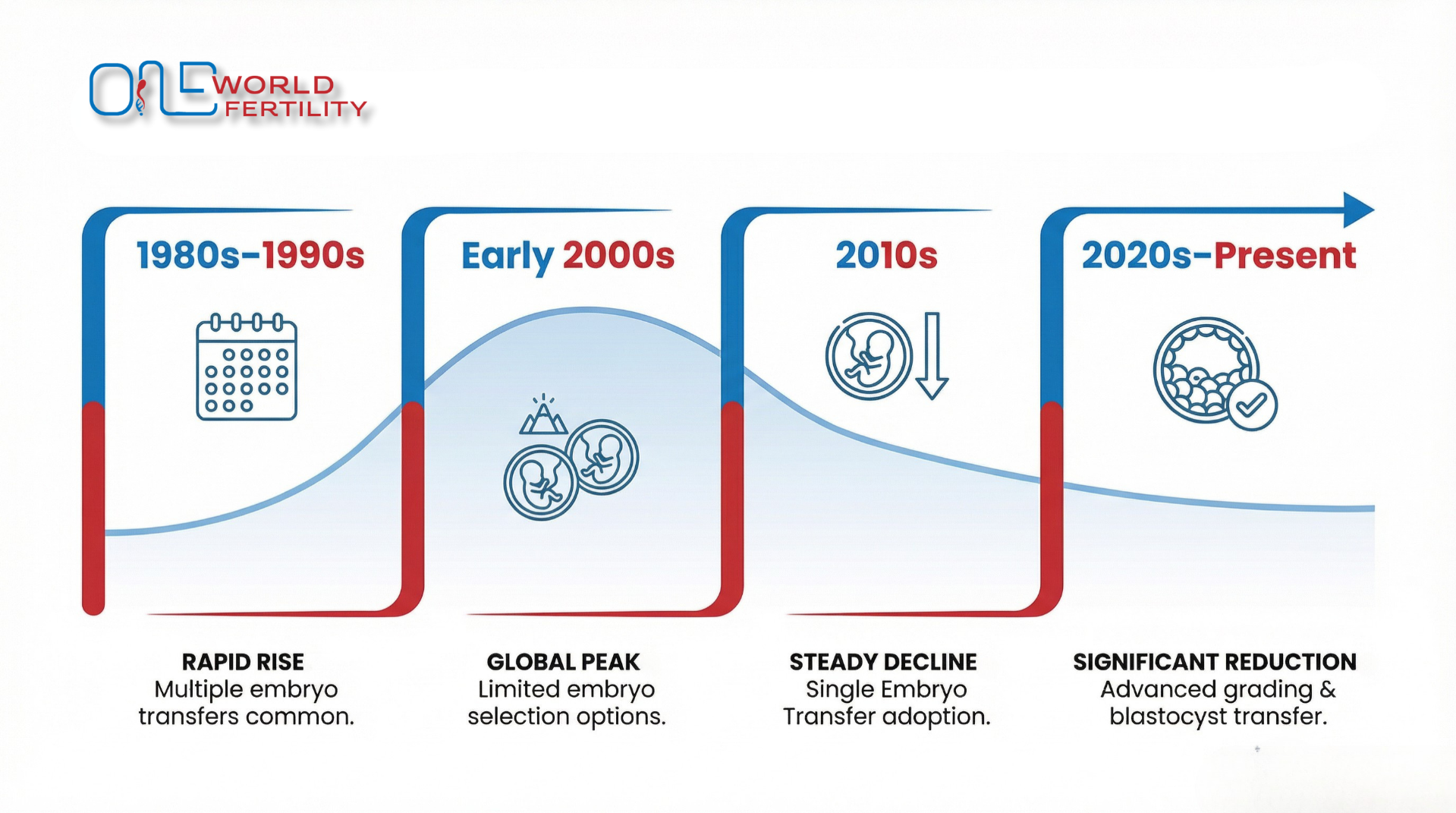
Today? With current IVF, the chance of having twins is actually pretty low most of the time. Why? There is a method called "elective Single Embryo Transfer" (eSET) that good clinics use. They pick the healthiest embryo and only transfer that one. As a result? Because of this, your chances of having twins have gone down a lot, which is good for both of your health.
What Is the Actual Likelihood of Twins With IVF Today?
You should know that how many embryos are moved affects the chance of having twins through IVF. Let's break down the real numbers:
Chances of Twins With IVF by Embryo Transfer Type
| Embryo Transfer Type |
Likelihood of Twins |
What This Means |
| Single Embryo Transfer (SET) |
1-2% |
Very rare- similar to natural conception |
| Two Embryos Transferred |
20-30% |
Significantly higher twin risk |
| Three Embryos Transferred |
30-40%+ |
Very high twin/triplet risk (rarely done now) |
Can you tell the difference? Today, most reputable clinics recommend single-embryo transfer. With this method, your chances are almost the same as if you were naturally pregnant with twins. That 1-2% likelihood of twins happens when one embryo spontaneously splits into identical twins (very rare!).
Modern IVF is designed to give you one healthy baby, not multiple
Does Transferring Two Embryos Increase Twin Pregnancy Chances?
Short answer? Yes, absolutely. Transferring two embryos dramatically increases your odds of twins by IVF. But it is important to know that it increases your health risks.
Let's be real here. When couples hear about the success rate of 2-embryo transfer, they often think, "better odds, more babies, let's do it!" We get it. After everything you've been through, you want the best chance possible. But here's what we need you to understand: transferring two embryos doesn't necessarily mean better success. It means higher twin pregnancy chances- and that's a different thing entirely.
What Is the Success Rate of 2 Embryo Transfer for Twins?
The success rate of transferring two embryos changes, but in real life, this is what happens: It's like rolling the dice: all three outcomes are possible: both could implant (twins), one could implant (singleton), or neither could implant (no pregnancy).
Two Embryo Transfer - Success vs Twin Risk
| Outcome |
Percentage |
What It Means for You |
| Pregnancy Success (overall) |
40-50% |
Slightly higher than single embryo in some cases |
| Twins by IVF |
20-30% |
1 in 4 chance of twin pregnancy |
| Singleton Pregnancy |
15-25% |
Only one embryo implants |
| No Pregnancy |
50-60% |
Neither embryo implants |
Now, let's face facts: The success rate of transferring two embryos might be slightly higher, but the risk of having twins is much higher, which can lead to early birth, C-sections, stays in the NICU, and other problems during pregnancy. Most fertility experts today will tell you that the chances of having a baby with one carefully chosen, high-quality egg are about the same as with two.
"Can I get twins?" is not the question. It's "Do I want to take that risk?".
When Might Your Doctor Still Recommend Two Embryo Transfer?
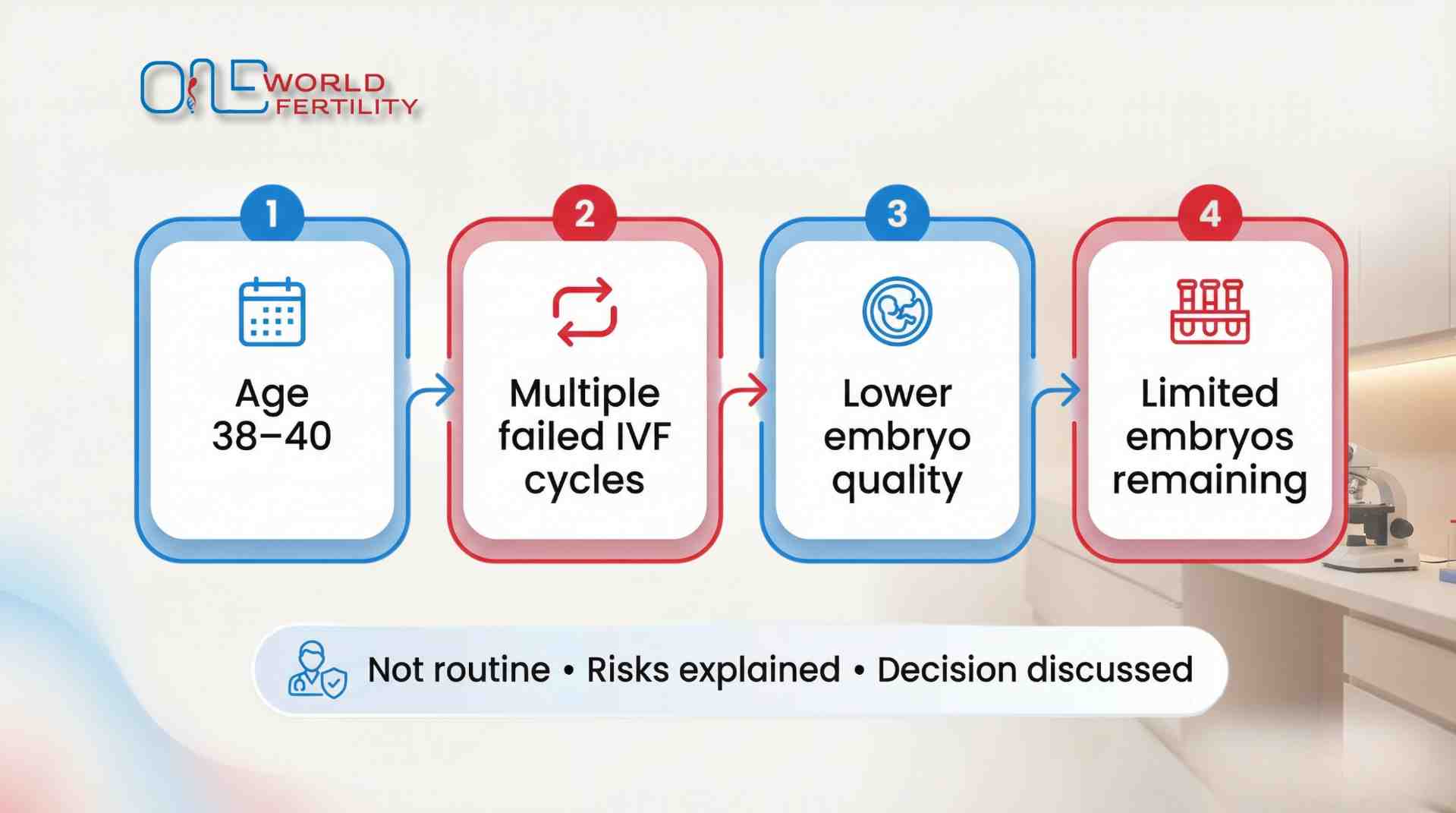
Okay, so we're not saying that transferring two embryos is always a bad idea. There are times when your doctor might tell you to do it.
When the argument about the success rates of two embryo transfers might make sense:
- You're between 38 and 40 years old: Having two embryos can sometimes increase your chances of getting pregnant because of age.
- You've had several failed IVF rounds: If single transfers haven't worked, your doctor may change his or her mind.
- Your embryo quality is lower: If your embryos aren't the best, you might talk about moving two of them.
- There aren't many embryos left: If this is your last shot, you and your doctor may look at the choices differently.
However, good doctors will still be honest with you about the risk of having twins through IVF. They will tell you what having twins means for your body, your delivery, and the health of your kids. The key? It shouldn't be a default choice; you should have thought about it.
Can a Single Embryo Transfer Still Result in Twins?
There is still a chance to have twins through IVF with just one egg transfer. This is something many couples didn't know. Did it make sense to you? We get it. "However, I only put in one egg." You should ask yourself, "How can I have twins?" Nature does do things in its own unique ways. There is a slight chance that one embryo will split into two identical babies on its own, even when a single cell is used for IVF twin pregnancies. It does happen about 1% to 2% of the time, but not very often. The good news? In order to have twins, it is much more dangerous to move two eggs from the start. Let's talk about why.
Why Do Identical Twins Occur After Single Embryo Transfer?
When only one egg is moved during IVF, how do twins come into the world? Fetal (two different eggs) or identical (one egg breaks) are the two most common ways to have twins. By "single cell transfer," we only mean twins who are exactly the same.
The embryo can divide into two on its own after it has been moved and settled in your uterus. Why does this happen? Scientists don't know, but they think it has something to do with how embryos grow or how IVF helps eggs hatch.
Single Embryo Transfer & Twin Formation
| Type of Twins |
How It Happens |
Chance With Single Embryo Transfer |
| Identical Twins |
One embryo splits into two after transfer |
1-2% (very rare) |
| Fraternal Twins |
Two separate embryos |
implant0% (impossible with single transfer) |
If you only transfer one embryo, you have the best chance of having a healthy baby. There is a very small chance that you will have twins.
Do Fertility Drugs Increase the Chances of Twins With IVF?
Okay, this confuses a lot of people, so let's make it simple. Yes, fertility drugs and twins are connected-but not the way you think with IVF! Here's the thing: With fertility drugs, twins happen more with treatments like IUI (without IVF). Those medications make you release multiple eggs naturally, and if several get fertilised, you might say hello to twins or triplets!
But with IVF? Different story. The fertility medications for twins you take are just to help produce eggs for retrieval. Your twin chances depend on how many embryos go back in, not the drugs. Still, let's talk about which medications do what, so you will be not confused.
Which Fertility Drugs Are Linked to Twin Pregnancies?
Not all fertility medicine for twins works the same way. Here's the quick breakdown:
- Clomid (Clomiphene) - Used in IUI. Twin risk: 5-10%. Makes you release multiple eggs naturally.
- Letrozole (Femara) - Used in IUI. Twin risk: 3-5%. Lower twin risk than Clomid.
- Gonadotropins (FSH/hMG) - Used in IUI and IVF. Twin risk: 20-30% with IUI only. High risk without IVF control.
- GnRH medications - IVF only. Twin risk: 1-2% with single transfer. Your twin chances depend on embryo transfer, not the drug.
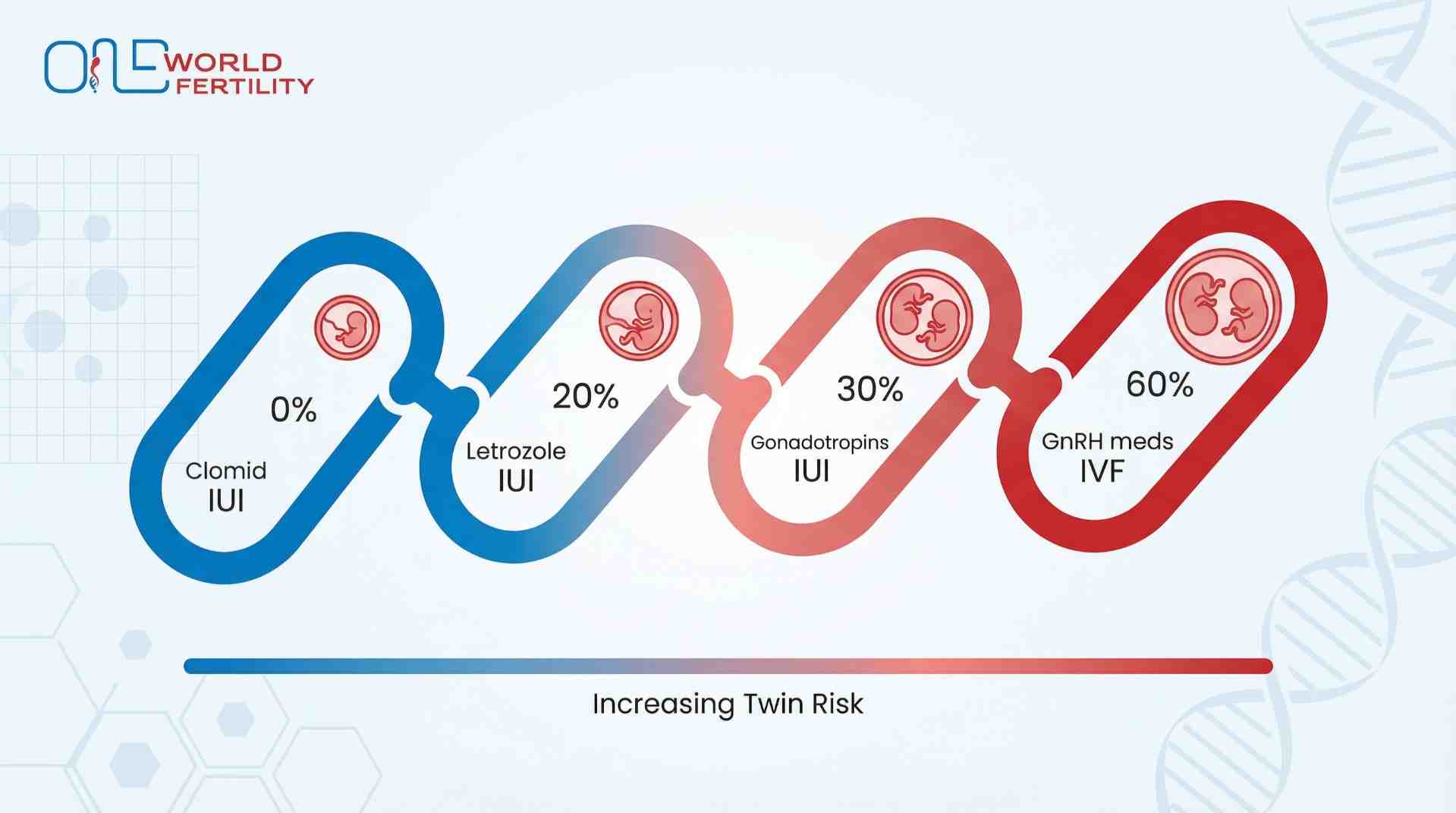
See the difference? Fertility pills for twins, like Clomid during IUI, can give you multiples because everything happens naturally. Less control. With IVF, the same fertility medicine for twins just creates eggs-they're retrieved and controlled. Your doctor chooses how many embryos to return.
Does Follicle Size Matter for Conceiving Twins?
That's a good question. Does the size of the egg matter when trying to have twins? Honestly? Not really.
For what it's worth, ovary size only tells you if your eggs are good and ready. It doesn't tell you about twin chances. The size of the follicles doesn't matter as long as many eggs are released and produced. But let's quickly go over this so you don't get lost while you're tracking your cycle.
What Follicle Size Is Associated With Multiple Ovulation?
To keep things easy, let's talk about follicle size for having twins:
If you use Natural Cycles or IUI: The mature follicles are about 18 to 24 mm long. Because you are taking fertility drugs, if you have two or three follicles that get to this size, you may release more than one egg. If more than one egg gets fertilized, that's when twins can be born. Large or small, it's not the number of eggs that are released that matters.
During IVF: When you are stimulated, your doctor watches your ovaries grow. They need a number of 16–22 mm ones to get them. The important thing is that those eggs are kept in a lab. It doesn't matter how many follicles you had; your chances of having twins rely on how many embryos go back in. So even if you have 15 eggs that are all the same size, the chance of having twins is still very low-only 1% to 2%.
Larger follicules mean eggs are ready. Chances of having twins = number of eggs or embryos in the game.
Can You Try for Twins With IVF?
We know why you're looking for "how to get pregnant with twins" or "how to get pregnant with twins. "You may have always wanted twins. It could feel more "practical." We get it. I like the idea! Telling the truth, you can increase your chances of having twins with IVF. Just move two eggs instead of one.
Based on medicine, it's way more possible. But should you? Now things really start to go bad. These days, most fertility doctors will openly tell you not to do this. Not to keep you in line, but because having twins comes with real risks that could ruin everything you've worked for.
Is It Safe to Try for Twins Intentionally With IVF?
To answer your question "how to have twins" or "how to conceive twins" through IVF, the truth is that it's not usually thought to be safe.
Twin Pregnancy Risks: What You Need to Know
| Risk Factor |
Singleton Pregnancy |
Twin Pregnancy |
| Premature birth |
10-12% |
50-60% |
| Low birth weight |
6-8% |
50-55% |
| C-section delivery |
30-35% |
75-80% |
| NICU admission |
8-10% |
25-30% |
| Preeclampsia risk |
5-8% |
12-15% |
| Gestational diabetes |
6-9% |
10-15% |
Look at those numbers. It's not just "double the joy" to be pregnant with twins; it's also double (or triple) the medical risk.
Why Doctors Say No:
A good doctor will put your safety and your baby's health first. Making a high-risk baby on purpose goes against that. Controlling your choices isn't the point; the point is to keep you safe from harm that can be avoided.
You may be looking for "how to get pregnant with twins," and we get it. But this is no longer used in medicine, and for good reason.
Never have twins. One healthy baby that you can hug and love is better than the risk of having twins. Your goal should be to have a child, not to check off a "twin" box that adds extra work.
IVF Due Date Calculator for Twins - How Is It Calculated?
Okay, so it's official: you have twins! Now you're probably looking up "IVF due date calculator for twins" to find out when your babies will be born, right? Good news: IVF due dates are very accurate because we know the exact day your egg was made. But does having twins change the date of birth? Not at all.
The IVF twins due date tool does the same math as the singletons calculator. The due date stays the same. What changes? When you're most likely to deliver. Most twins don't come at 40 weeks, but around 35 to 37 weeks. But how did you do the math? The same.
How Does an IVF Twins Due Date Calculator Work?
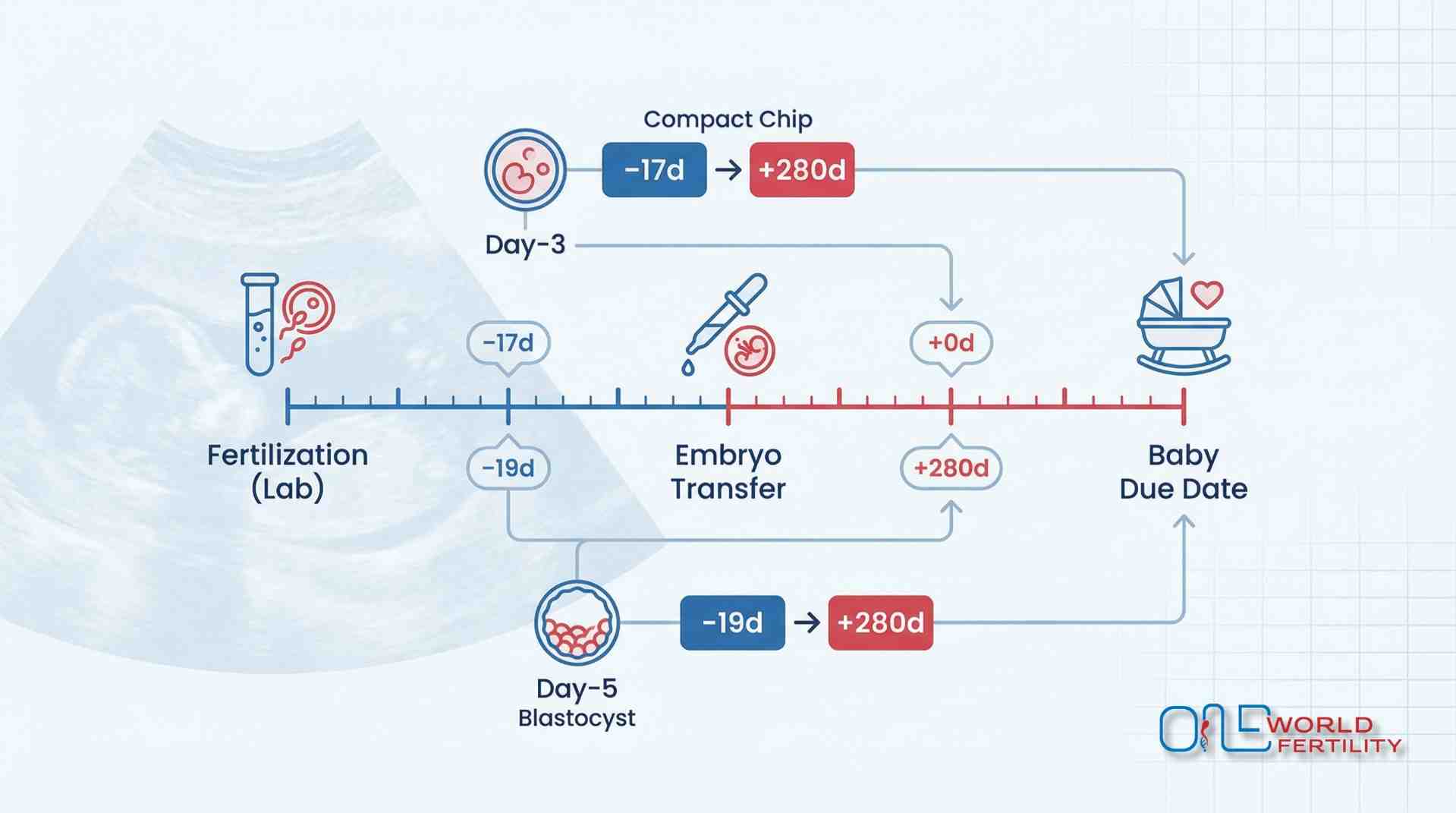
It's pretty easy to use the due date tool for ivf twins. The date of your egg transfer tells us for sure. How it works:
- For the embryo transfer on Day 3: Date of transfer minus 17 days plus 280 days equals your due date
- For the blastocyst embryo transfer on Day 5: Date of transfer minus 19 days plus 280 days equals your due date.
Very accurate, right? That's because we know for sure when fertilization took place in the lab.
Conclusion: Should You Aim for Twins With IVF?
We understand that this is a lot to take in. You likely came here looking for "pregnant with twins IVF" because you have questions, dreams, and maybe even some worries.
What's important is this: The goal of modern IVF is to help you have one healthy baby safely. The chance of having twins is smaller now, and really? That's great for your health and your baby's health. Could you try to get two eggs to increase the chance of having twins? Yes. We hope you'll listen to what your doctor says about the single egg transfer, though. It's not to stop you from having dreams; it's to keep you safe.
And if you do get IVF twins (which does happen!), you'll get the help and care you need.
In the end? It's not enough to just get pregnant; you want to bring home a healthy child that you can love and care for. That's what really matters.
Have a question? Talk to our one world fertility doctor about the process. They are with you the whole way. You can do this. We want you to do well!