
What Are the Common Causes of Male Infertility?
 Written by
One World Fertility
Mar 10, 2026 19 min read
Written by
One World Fertility
Mar 10, 2026 19 min read
Explore the common medical, environmental, and lifestyle causes of male infertility. Gain expert insights into diagnosis, sperm health, and modern treatments.

When a couple is having trouble conceiving, the man usually doesn't start the talk. But knowing the causes of male infertility is where it should start. Almost half of all infertility cases around the world are caused by Male factor infertility. Infertility affects some 186 million people around the world, and in up to half of infertile couples, the man is at least partly to blame. Almost 1 in 7 couples can't have kids, and 10-15% of men in the US have problems with male infertility.
What causes male infertility is not a reflection of who you are as a man. This is the most important thing to remember. It's a medical illness with clear, frequently treatable causes that should be talked about openly and honestly.
10 Major Categories of Male Infertility Causes
Here's a short glance at the main causes of infertility in men, all in one place. Most of these problems are easier to deal with than you might believe, from having a low sperm count to bad habits.
| Cause Category | Key Factor | Reversible? | How Common? |
| Sperm Problems (Oligospermia) | Low count, poor motility, abnormal shape | Often yes | Most common cause |
| Varicocele | Swollen scrotal veins overheat testes | Yes (surgery) | Most common reversible cause |
| Hormonal Imbalances | Low testosterone, FSH/LH disruption | Often yes | Common |
| Genetic Disorders | Klinefelter's, Y-deletion, cystic fibrosis | Usually no | Less common |
| Blockages / Obstructions | Blocked sperm delivery tubes | Yes (surgery) | Moderate |
| Infections & STIs | Damage/scarring sperm pathways | Partially | Common |
| Lifestyle Factors | Smoking, alcohol, obesity, drugs | Yes | Very common |
| Environmental / Occupational | Toxins, heat, radiation | Often yes | Increasingly common |
| Age-Related Decline | Reduced sperm DNA quality after 35–40 | Partially | Common |
| Antisperm Antibodies & Structural Causes | Immune attack on sperm, undescended testes, hypospadias | Partially | hypospadiasPartiallyOften missed |
Scroll down to explore each cause in detail, including what the research says and what you can do about it.
1. Sperm Problems - The Most Common Cause of Male Infertility
Doctors usually start by looking at sperm abnormalities when they are looking into male factor infertility, and for good reason. Most of the time, male infertility reasons are problems with the number, mobility, or form of sperm.
What Causes Low Sperm Count (Oligospermia) in Men?
There should be at least 15 million sperm per millilitre in a normal sperm count. Oligospermia is when there are fewer than that, and azoospermia is when there are none. Both of these things make it much less likely that you will get pregnant naturally. What causes this to happen? The causes of low sperm count are:
- Hormonal imbalances: low testosterone, FSH, or LH might stop sperm from being made in the testes.
- Varicocele: Swollen veins in the scrotum make the testicles too hot, which lowers sperm production.
- Infections: orchitis, epididymitis, or STIs that hurt the tissue in the testicles.
- Drugs: anabolic steroids, chemotherapy, and certain antibiotics.
- Medications: Anabolic steroids, chemotherapy, and certain antibiotics.
- Genetic diseases: Klinefelter syndrome or Y-chromosome microdeletions.
- Excessive heat: Hot tubs, saunas, laptops on the lap, or tight underwear.
- Radiation exposure: Cancer treatment or occupational radiation.
What Causes Poor Sperm Motility?
It doesn't matter how many healthy sperm you have if they can't swim. If Low sperm motility, called asthenospermia, they have a hard time reaching the egg. Several factors, including past infections, varicocele, insufficient intake of zinc, selenium, vitamin C, or vitamin E, smoking, and antisperm antibodies, can cause poor sperm motility.
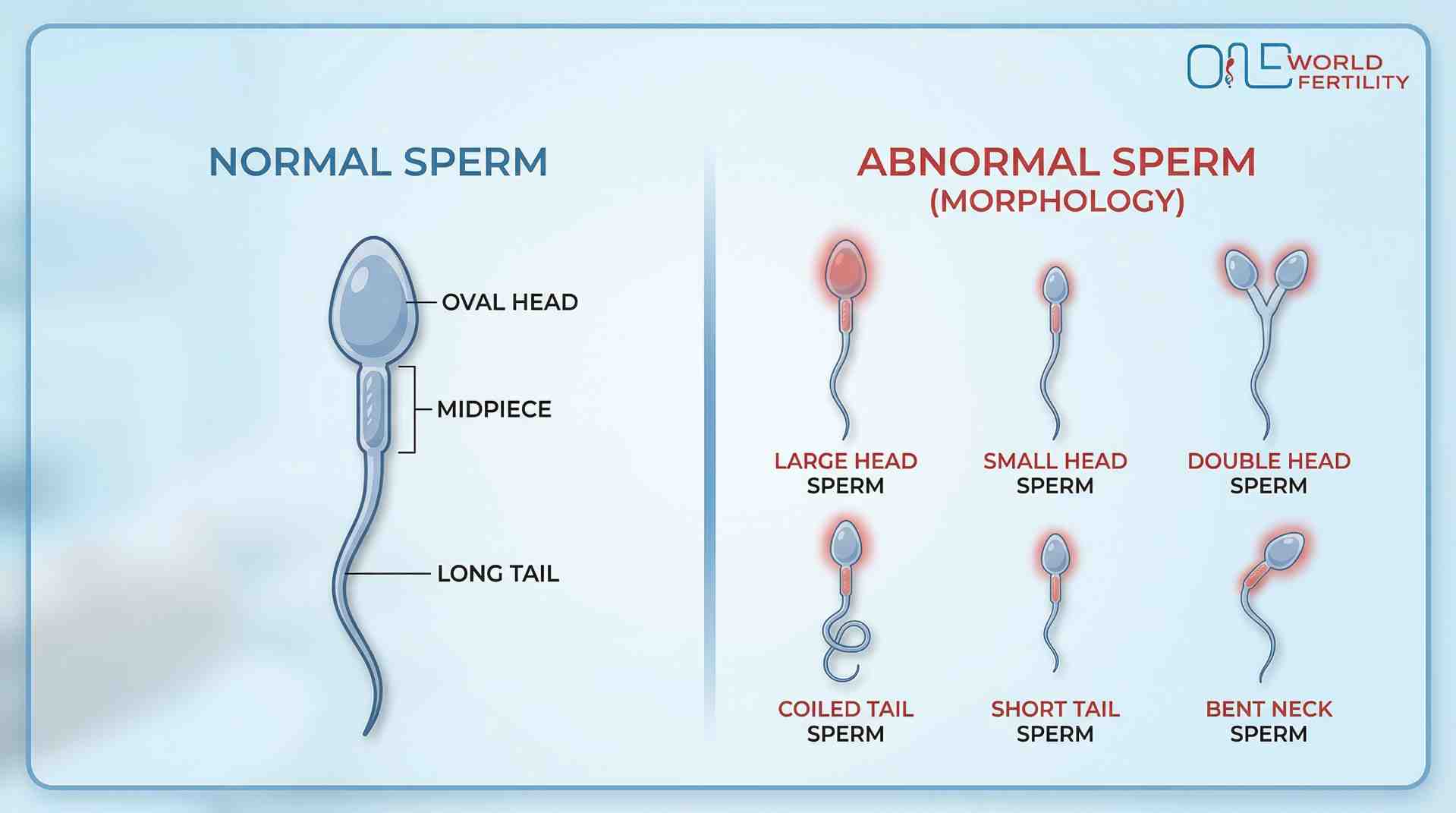
What Causes Abnormal Sperm Shape (Morphology)? The form of sperm is important. Teratospermia occurs when sperm are misshapen and have difficulty entering the egg. Genetic problems, testicular warming, oxidative damage from smoking or drinking, and DNA fragmentation that happens with ageing can cause abnormal sperm morphology.
| Sperm Parameter | Normal (WHO) | Below Normal | Effect on Fertility |
| Sperm Count | ≥15 million/mL | <15M = Oligospermia; 0 = Azoospermia | Reduced natural conception |
| Sperm Motility | ≥32% progressive | <32% = Asthenospermia | Can't reach or penetrate egg |
| Sperm Morphology | ≥4% normal forms | <4% = Teratospermia | Poor egg penetration |
| Semen Volume | 1.5–5 mL | <1.5 mL = Hypospermia | Fewer sperm delivered |
| DNA Fragmentation | <15% | >25% = High risk | Implantation failure, miscarriage |
Is it possible for sperm health to get better? Yes, in many circumstances. Making adjustments to your lifestyle, such as stopping smoking, eating a nutrient-rich diet, regulating your weight, and spending less time in the sun, can improve sperm count, motility, and morphology within 3 to 6 months.
2. Varicocele - The Most Common Reversible Cause of Male Infertility
If you've just been told you have a varicocele, take a deep breath. This is one of the most treatable causes of infertility in men, and you're not alone. About 35–40% of men have Varicocele male infertility, making it the most prevalent reversible cause of male infertility that clinicians see today.
So, What Is a Varicocele?
It's like having varicose veins inside your scrotum. A varicocele is basically an expansion of the enlarged veins in the scrotum, and the problem it causes is surprisingly simple: heat. To make healthy sperm, your testes need to be a little cooler than the rest of your body. When these veins swell, they hold in heat, and even a rise of just 1-2°C will stop sperm production.
This is how Varicocele causes infertility: it slowly lowers the varicocele sperm quality over time, reducing count, motility, and shape all at once. It's vital to know about Varicocele and low sperm count together because a lot of men are shocked to find out that one ailment can cause all three sperm difficulties at the same time. Here are some things you should know about how Varicocele affects fertility:
- The left side is more commonly affected due to the angle of the left testicular vein
- Many men have no symptoms at all, discovered only during a fertility investigation
- Risk increases with prolonged standing, heavy lifting, or long periods of sitting
- It affects both sperm quantity and quality simultaneously
Can It Be Treated? Yes, and that's what makes me feel better. Varicocele repair, also known as varicocelectomy, is a simple surgery that fixes the enlarged veins and brings the scrotum back to its normal temperature. Many men notice big changes in their sperm parameters within 3 to 6 months of surgery. For couples struggling to conceive, treating a varicocele is often one of the first and most effective steps a doctor will recommend.
3. Hormonal Imbalances - Chemistry Disrupts Sperm Production
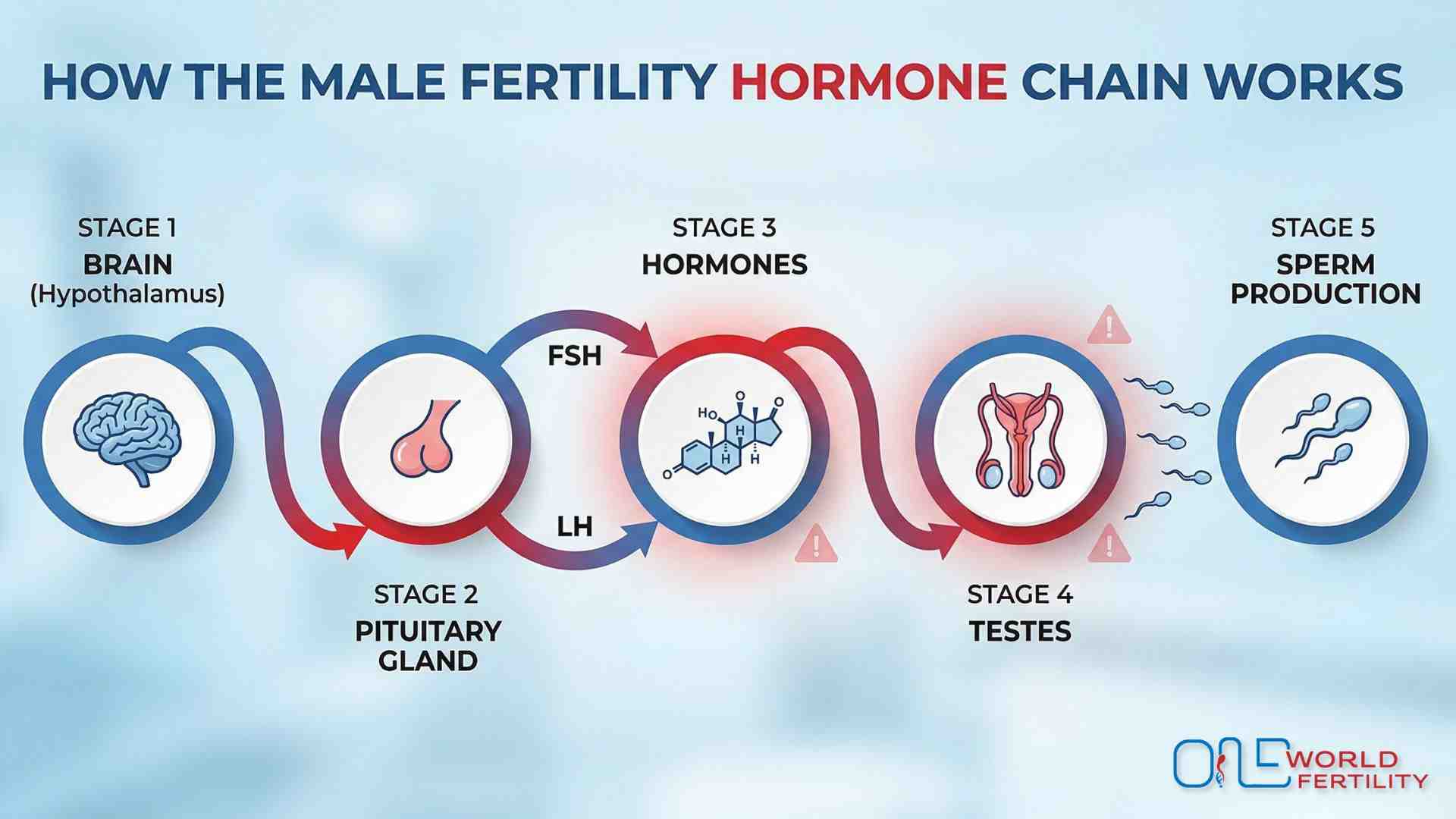
Most men don't worry about their hormones until they get an unexpected result on a fertility test. But a lot of people don't know that hormonal imbalance and male infertility are more connected than they think. A few key hormones work together to maintain sperm production. When one of these hormones becomes imbalanced, the whole system feels it. The hormones that have the most direct effect on male fertility are:
- Testosterone - makes sperm and sexual function happen.
- FSH (Follicle Stimulating Hormone) - tells the testes to make sperm.
- LH (Luteinizing Hormone) - stimulates the testes to produce testosterone.
- Prolactin - when elevated, suppresses both FSH and LH
- Thyroid hormones (T3 and T4) - regulate metabolism, including how the body supports reproduction.
- Estrogen (too much) - males also make estrogen, but too much of it lowers testosterone.
Does Low Testosterone Cause Male Infertility?
Yes, but in a way that most men don't expect. Hypogonadism, or Low testosterone and infertility in men, is linked and indicates that the testes don't get a strong enough signal to make sperm. But here's what many people don't know: using testosterone supplements actually makes infertility worse. It tells the pituitary gland to stop making FSH and LH, which drops the testosterone sperm count and stops sperm creation completely.
What Do FSH and LH Have to Do With It?
They are like messengers between your brain and your testicles. When FSH levels are low, the testes never get the signal to create sperm. Low LH means that testosterone levels go down, which also means that sperm production goes down. Pituitary tumours, head injuries, or too much prolactin can mess with both at the same time, which can sometimes lead to severe oligospermia or azoospermia and is the leading hormonal cause of male infertility. This is also why men sometimes ask, why would a man stop producing sperm? In many cases, the answer lies right here, in the pituitary gland and male infertility connection.
Can Thyroid Problems Cause Male Infertility?
Yes, and this one is often missed. An underactive thyroid gland and male infertility can stop testosterone and sperm from growing. Always ask your doctor to run a thyroid panel as part of your reproductive tests for thyroid and male infertility.
| Hormone | Role | What Disrupts It | Effect on Sperm |
| Testosterone | Drives sperm production | Obesity, steroids, pituitary issues | Reduced sperm count |
| FSH | Signals sperm production | Pituitary tumour, steroid use | Severely reduces sperm |
| LH | Triggers testosterone | Hyperprolactinaemia | Low testosterone, low sperm |
| Prolactin (excess) | Suppresses LH & FSH | Pituitary adenoma | Stops sperm production |
| Thyroid (T3/T4) | Regulates reproduction | Hypo/hyperthyroidism | Reduced motility and count |
| Estrogen (excess) | Suppresses testosterone | Obesity | Reduces sperm production |
The good news? Most hormonal causes of male infertility are diagnosable with a simple blood test, and many respond well to treatment once identified.
4. Genetic Causes of Male Infertility - When It's in the DNA
Genetic causes of male infertility don't always have to do with lifestyle; they can be there from birth. Genetic disorders and sperm production problems cause 15–30% of severe male genetic infertility cases. Most men only find this out during a fertility test.Is infertility genetic in men? In many cases, yes, and it usually comes down to three main conditions.
What Genetic Conditions Cause Male Infertility?
Klinefelter syndrome (XXY) is the most common chromosomal abnormality affecting male fertility. These males are born with an extra X chromosome instead of XY. This disrupts testicular development and often causes azoospermia. It affects 1 in 500-1,000 males, although most of them don't find out until they try to get pregnant.
Y-chromosome microdeletions are tiny missing sections in the AZF region of the Y chromosome that silently affect sperm production. A standard blood test won't catch this; a specialised Y-chromosome genetic test is needed.
| AZF Deletion | Effect on Sperm |
| AZFa | Complete absence of sperm |
| AZFb | Sperm production halted early |
| AZFc (most common) | Some sperm may still be retrieved |
Cystic fibrosis and male infertility share a connection most men don't expect. Men carrying the CF gene can be born without a vas deferens (CBAVD), sperm is produced normally, but has no way out, so semen analysis shows zero sperm.Is this always a dead end? Not at all. Sperm retrieval techniques like TESA or micro-TESE with IVF/ICSI can still offer a real path to biological parenthood. Speak to a fertility specialist to understand what's possible for you.
| Genetic Cause | Sperm Impact | How It's Detected |
| Klinefelter Syndrome (XXY) | Azoospermia | Standard karyotype test |
| Y-Chromosome Microdeletion | Low or zero sperm | Specialised Y-deletion test |
| Cystic Fibrosis / CBAVD | Zero sperm in ejaculate | CF gene mutation test |
Is this always a dead end? Not at all. Sperm retrieval techniques like TESA or micro-TESE with IVF/ICSI can still offer a real path to biological parenthood, speak to a fertility specialist to understand what's possible for you.
5. Obstructions and Blockages - When Sperm Can't Get Through
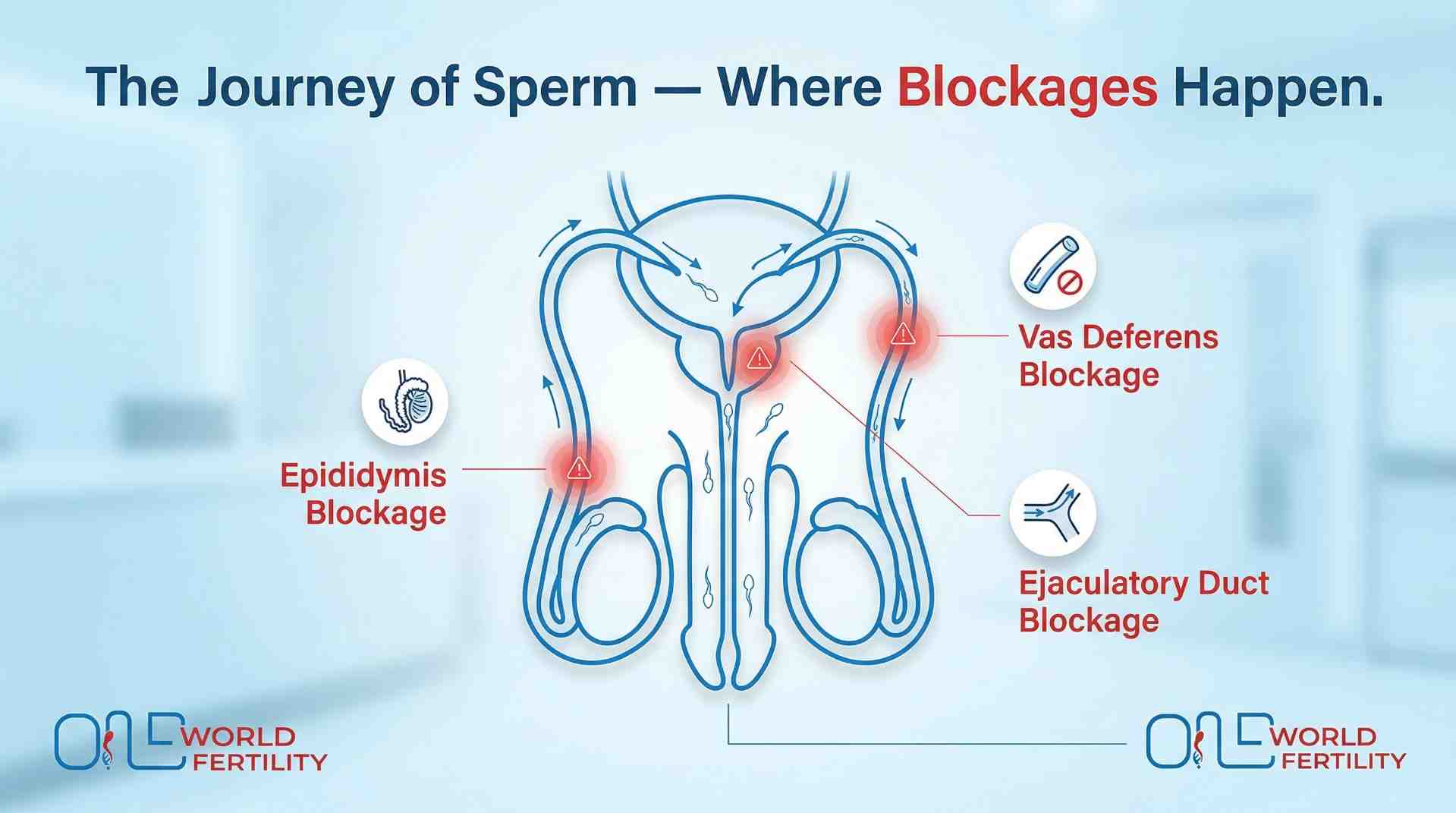
Many people think that if a man can ejaculate, his sperm is fine, but that's not always the case. A man can ejaculate normally and not have any sperm in his semen. This is called obstructive azoospermia, and it happens to about 40% of men who don't have sperm. The body is generating sperm, but it doesn't have a clear way to get it out.
What Causes Sperm Duct Blockages?
Imagine a pipe that has something stuck in it at some point along the way. The most common causes of blocked vas deferens are past infections like chlamydia or gonorrhea that leave scars, vasectomy, accidental damage from hernia or prostate surgery, ejaculatory duct blockage, and CBAVD, which is when some men are born without a vas deferens because of the cystic fibrosis gene. What makes it so frustrating? Most of the time, Vas deferens blockage symptoms don't show up until a semen test shows no sperm.
Retrograde Ejaculation - When Sperm Goes the Wrong Way
When sperm go the wrong way, it's called retrograde ejaculation. With retrograde ejaculation, the sperm isn't prevented; it's just going the wrong way. At orgasm, semen doesn't leave the body through the penis; instead, it runs backwards into the bladder. This is what many people call "shooting blanks" or "a dry orgasm." The sperm is fine; it's only that diabetes, spinal cord damage, prostate surgery, or some drugs can make it go in the wrong direction.
Can infertile men ejaculate? Yes, and this is exactly why ejaculation and fertility are two very different things. Is it possible to treat? Yes, in most circumstances. Men with blocked sperm ducts can still become biological parents through surgery or sperm retrieval with IVF/ICSI.
Is it possible to treat it? In most circumstances, yes. Men with blocked sperm duct infertility can still become biological parents through surgical repair or sperm retrieval with IVF/ICSI.
6. Infections and STIs - How Disease Damages Male Fertility
Most men don't connect a past infection to a current fertility problem, but they should. STIs and male infertility are closely linked, and the damage often happens silently, long after the infection has cleared.
How Do Infections Damage Male Fertility?
Can STIs cause male infertility? Yes, and here's how:
- Chlamydia and male infertility - causes inflammation that damages sperm and scars the sperm tubes
- Gonorrhoea and male infertility - leads to blockages that stop sperm from getting through
- Epididymitis and infertility - inflames the tube where sperm mature, disrupting sperm function
- Orchitis and infertility - testicular inflammation that can permanently reduce sperm production
- Mumps orchitis - mumps after puberty can cause testicular shrinkage and lasting fertility damage
- HIV and male fertility - both the virus and certain medications reduce sperm count and quality
The real danger? Many infections causing male infertility show no symptoms; the scarring builds quietly over time until a fertility test reveals the problem. Bottom line, if you've had an STI in the past and are now facing fertility challenges, always mention it to your doctor. Early treatment is one of the simplest ways to protect male fertility from infection damage.
7. Lifestyle Causes of Male Infertility - The Factors Men Can Change
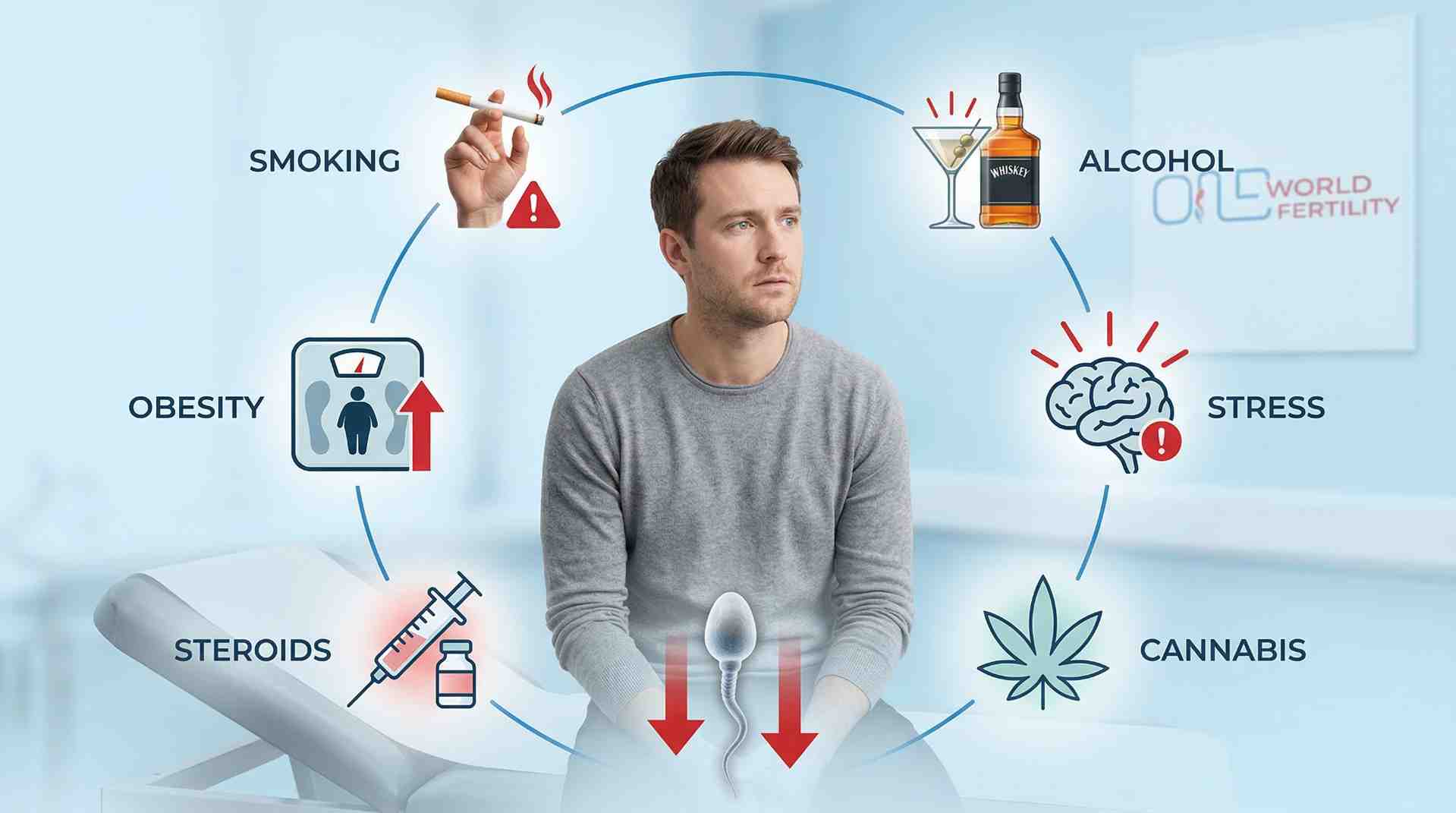
The best part about lifestyle causes of male infertility is that they are things you can truly change. These are mostly reversible, unlike genetic or structural reasons. Small, consistent changes can meaningfully improve sperm health within 3–6 months.
Does Smoking Affect Male Fertility?
Yes, a lot. One of the most studied links in reproductive medicine is between smoking and male fertility. What cigarettes really do to sperm is this: Nicotine causes oxidative stress that directly hurts sperm DNA. It also lowers sperm count, motility, and morphology simultaneously. Secondhand smoke also hurts male fertility. Cannabinoid receptors in testicular tissue interfere with sperm development and movement.
Alcohol, Obesity and Stress - Three Overlooked Fertility Killers
- Alcohol and infertility in men - Alcohol can cause men to be infertile by lowering testosterone levels, harming sperm DNA, and messing up hormone metabolism in the liver. Even consuming a little bit every day has a demonstrable effect on sperm quality.
- Obesity and male infertility - Being overweight can make men infertile because too much fat changes testosterone into oestrogen, messes with FSH and LH, and raises the temperature of the scrotum. A BMI above 30 is directly associated with fewer sperm and more sperm with damaged DNA.
- Stress and sperm production - Long-term stress raises cortisol levels, which lowers testosterone levels and inhibits the FSH and LH signals that your testes need. Can stress affect sperm quality? Yes, and it always makes every other issue that affects fertility worse.
Anabolic Steroids - A Hidden Cause Most Men Miss
One of the most underreported issues with men's fertility is Anabolic steroids and male infertility. Steroids tell the pituitary gland to cease making FSH and LH, which stops sperm production completely. Long-term use can cause testicles to shrivel, and steroid-related infertility can remain for months or even years after discontinuing, and occasionally even forever. Some gym supplements that contain secret hormones also pose the same risk.
8. Environmental and Occupational Causes of Male Infertility
Most guys don't think about how their job, everyday activities, or even their water bottle can be affecting their fertility without them knowing it. But environmental causes of male infertility are increasingly hard to ignore. Research shows sperm counts in Western men have dropped over 50% in the past 50 years, with endocrine-disrupting chemicals playing a significant role.
Does Heat Affect Sperm Production?
Sperm must remain 2 to 3 degrees Celsius below the body's core temperature; even a slight rise can harm it. Some common sources of heat that can impact sperm production are:
- Hot tubs, saunas, and hot baths
- Direct heat on the testes when using a laptop on the lap
- Underwear that is too tight traps heat in the scrotum
- Jobs like welding, baking, or driving long distances
The exposure occurs repeatedly, which makes it cumulative and harmful.
How Do Chemicals and Toxins Damage Sperm?
Pesticides, heavy metals, and BPA from plastics all work in the same way: they act like estrogen, stop testosterone from working, and mess with hormonal signals. Lead, cadmium, and mercury build up directly in the tissue of the testicles. One easy thing to do is to avoid heating food in plastic containers. This is because heat releases hormone-disrupting chemicals right into the food.
Does Radiation Cause Male Infertility? Chemotherapy and radiotherapy can permanently lower or stop sperm production. This is why sperm banking before cancer treatment is so important. There isn't enough research to say for sure how mobile does phone radiation affect sperm, but it's still a good idea to keep phones out of your pants pockets.
| Environmental Factor | How It Harms Sperm | Reversible? |
| Heat (hot tubs, laptops) | Raises scrotal temperature | Yes, with habit changes |
| Pesticides / EDCs | Suppresses testosterone | Partially |
| Heavy Metals | Damages testicular tissue | Partially |
| BPA / Phthalates | Disrupts hormonal balance | Yes, by reducing exposure |
| Chemotherapy / Radiation | Can permanently stop sperm production | Sometimes, bank sperm first |
| Mobile Phone Radiation | Inconclusive but precautionary concern | Yes, with simple changes |
Small changes matter here; switching to glass containers, wearing loose underwear, and reducing heat exposure can collectively protect sperm health from environmental damage.
9. Age and Male Infertility - The Biological Clock Men Don't Talk About
People often tell Men that age doesn't affect their fertility the way it does for women, but it's not completely true. Male age and fertility decline are real, just slower than female infertility. After age 35, sperm count, motility, and DNA quality all begin declining. Fertilization rates go down a lot around age 40, even during IVF rounds.Unlike women, men never completely stop producing sperm, but sperm quality after 40 decreases significantly.
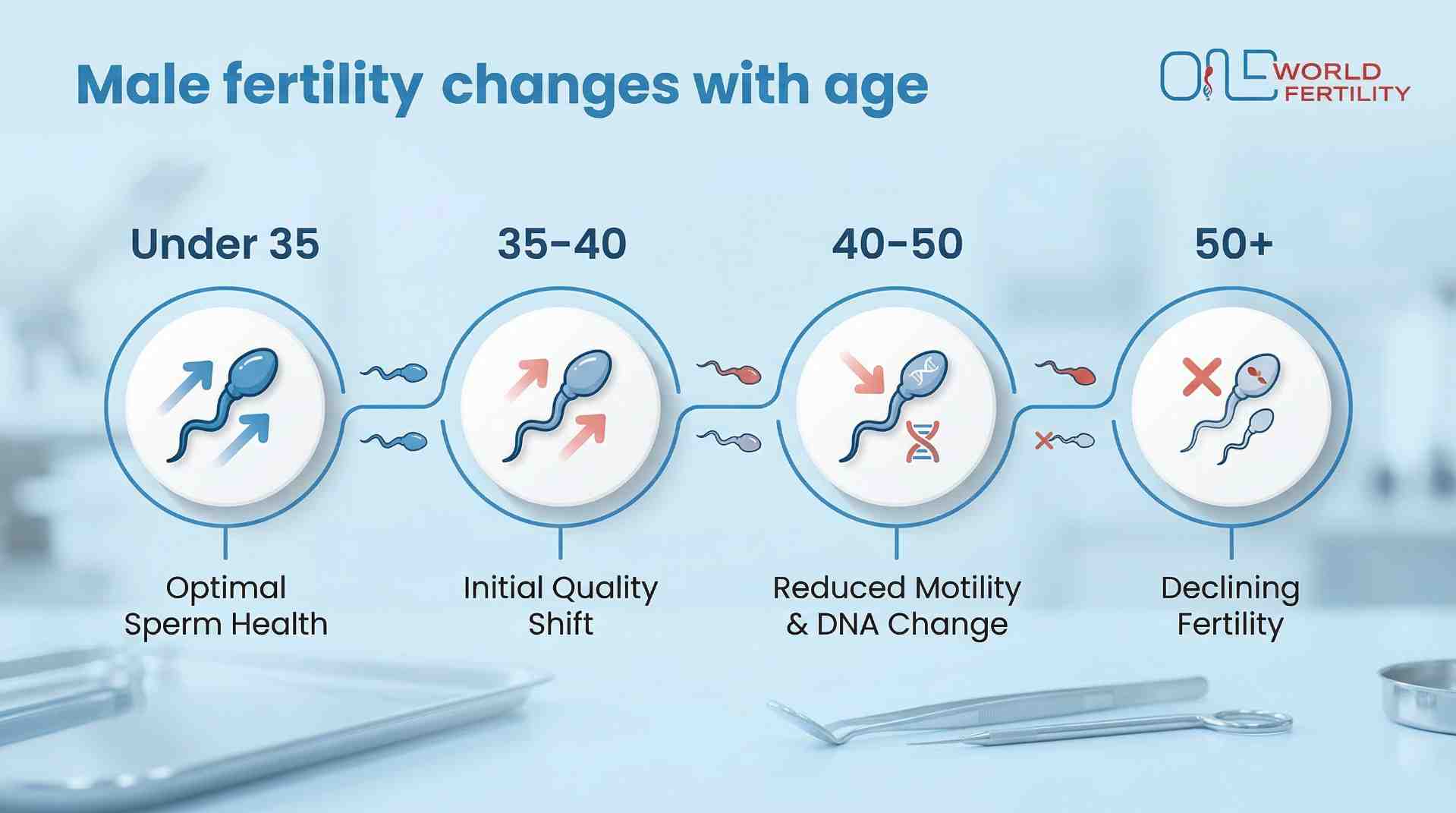
DNA fragmentation increases with age, raising miscarriage risk and reducing embryo quality. If you are in your old paternal age, it can also increase the risks of autism, schizophrenia, and Down syndrome in children.
| Age Range | Sperm Impact |
| Under 35 | Optimal sperm quality and count |
| 35 – 40 | Gradual decline in motility and DNA quality |
| 40 – 50 | Significant drop in fertilisation rates |
| Over 50 | Higher DNA fragmentation and genetic risk |
The message isn't "you're too old"; it's the earlier you act, the better your options.
10. Antisperm Antibodies and Structural Causes - Two Often Missed Reasons
Sometimes male infertility causes aren't hormonal or lifestyle-related; they're immune or structural, and both are frequently overlooked.
When the Immune System Attacks Sperm
Antisperm antibodies (ASAs) are immune cells that mistakenly identify sperm as foreign invaders and attack them. ASAs cover the sperm surface in 9-36% of infertile men, making it harder for them to move and preventing fertilization. What makes them happen? Injury to the testicles, infection, vasectomy, or any procedure that breaks the blood-testis barrier, which is the protective barrier that stops sperm from being seen by the immune system. The tricky part? ASAs can be present even when sperm count looks completely normal on a standard semen test.
Structural and Developmental Causes of Infertile man
Undescended testicles (cryptorchidism) are one of the most common structural causes of male infertility. During fetal development, the testicles should descend into the scrotum; if they don't, prolonged exposure to heat permanently damages sperm-producing cells. Even after surgical correction in childhood, some impairment may persist. Bilateral undescended testicles carry a significantly higher infertility risk.
Hypospadias is a condition in which the urethral entrance is located on the underside of the penis instead of the tip. In extreme cases, this can stop sperm from reaching the cervix during sex. Ejaculatory duct cysts or obstructions and epididymal obstructions are structural issues that prevent sperm from leaving the body, even though they are being made normally.
The bottom line across both? These causes are easy to miss on standard testing, which is exactly why a comprehensive male fertility evaluation matters more than a basic semen analysis alone.
Final Thoughts - Don't Ignore the Signs
Every cause covered in this guide, from sperm problems and hormonal imbalances to lifestyle habits and genetic factors, is your body sending a signal worth listening to. Male infertility is a medical condition, and it's not a reflection of who you are. The earlier you investigate, the better your options. And remember, fertility is always a two-person equation. Understanding female infertility causes is equally important for couples trying to conceive together.
Want to explore treatment and solutions? Read our related blogs for the next steps. If any of these causes of male infertility resonate with you, don't wait. We offer a free first consultation with our professionals at One World Fertility because you deserve to know what's going on, not be confused.
Schedule your free consultation with One World Fertility today.