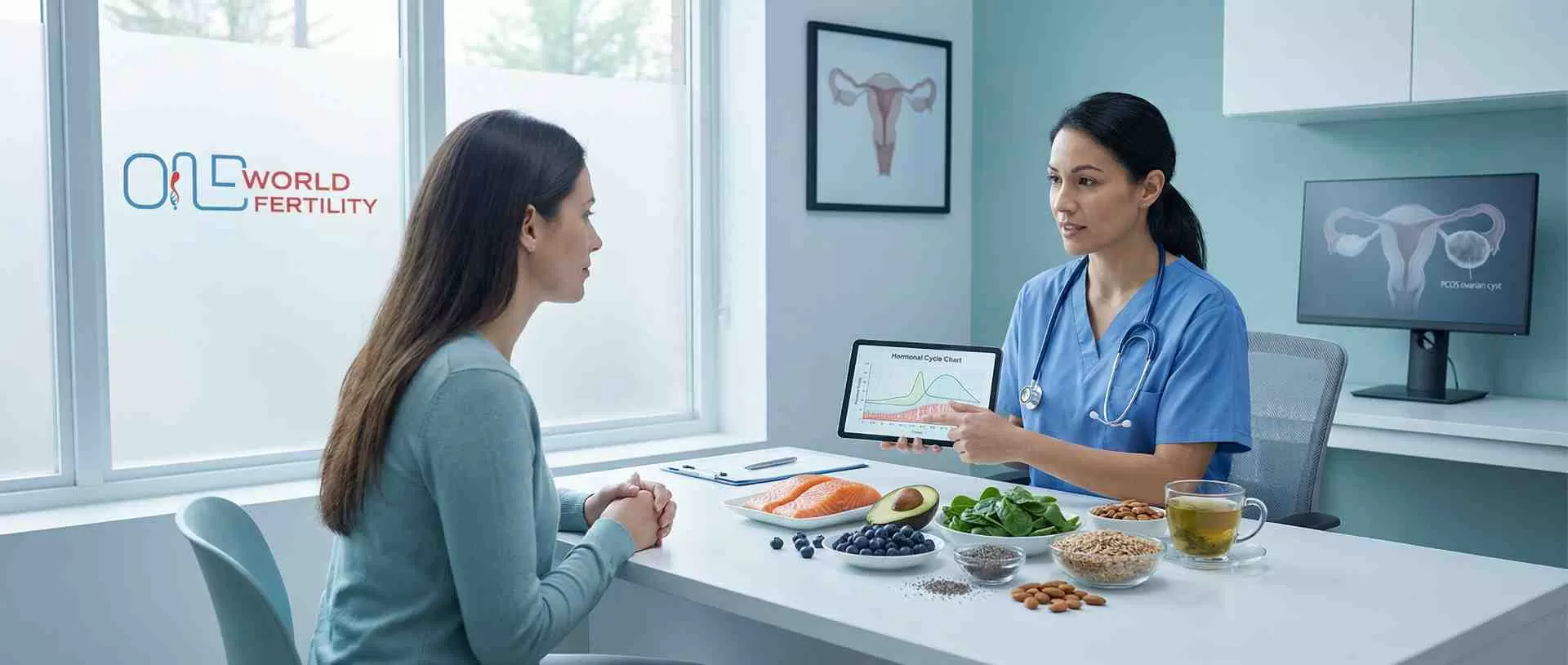
Having PCOS or endometriosis changes more than just your body. It changes your confidence, your energy, and your ability to become a mother.
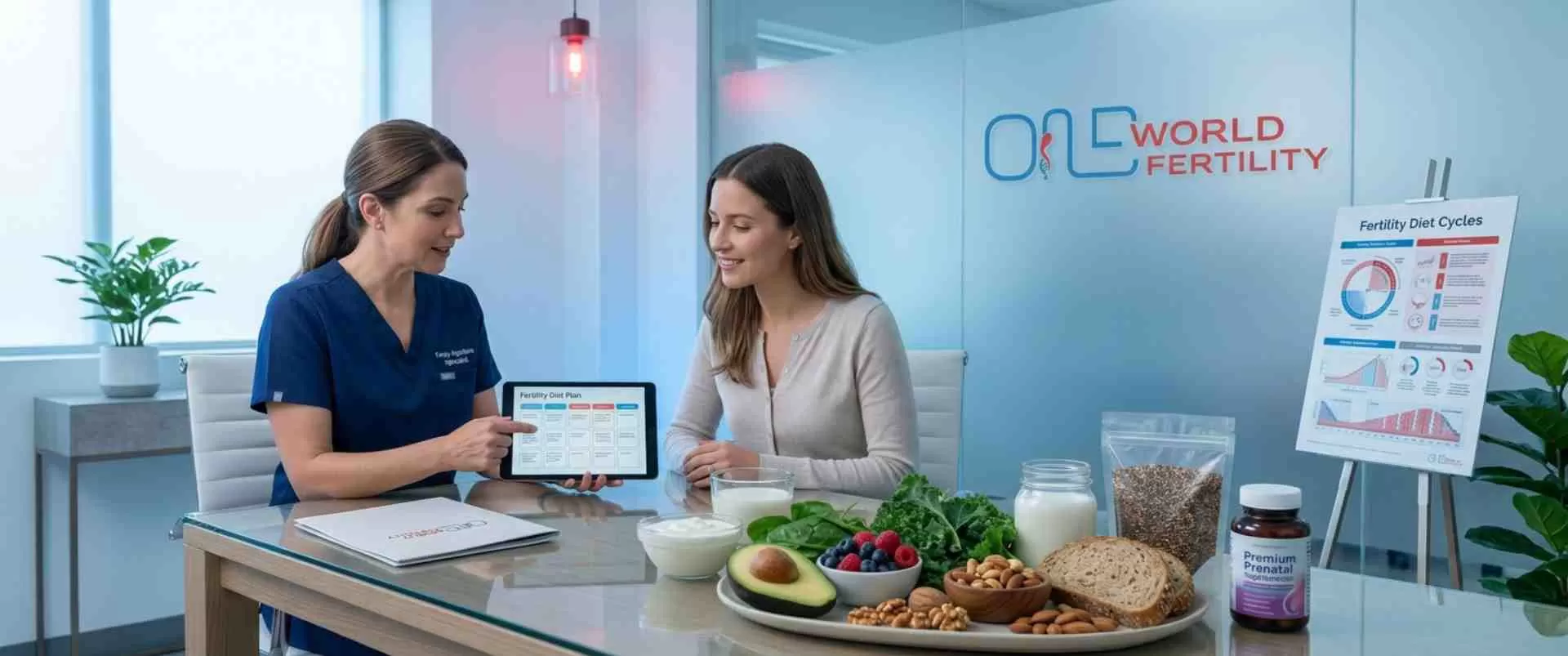
We at One World Fertility think that a good diet is one of the most important things you can do to heal. Our experts make a special PCOS and endometriosis diet plan for you based on your specific hormonal needs. This plan includes a low-GI anti-inflammatory diet, seed cycling for PCOS, and a targeted microbiome for fertility support to help reduce pain, balance hormones, and increase your chances of getting pregnant.
Don't guess. Not just any meal plans. Just a clear, kind eating plan for getting pregnant.
Why Diet Matters in PCOS and Endometriosis
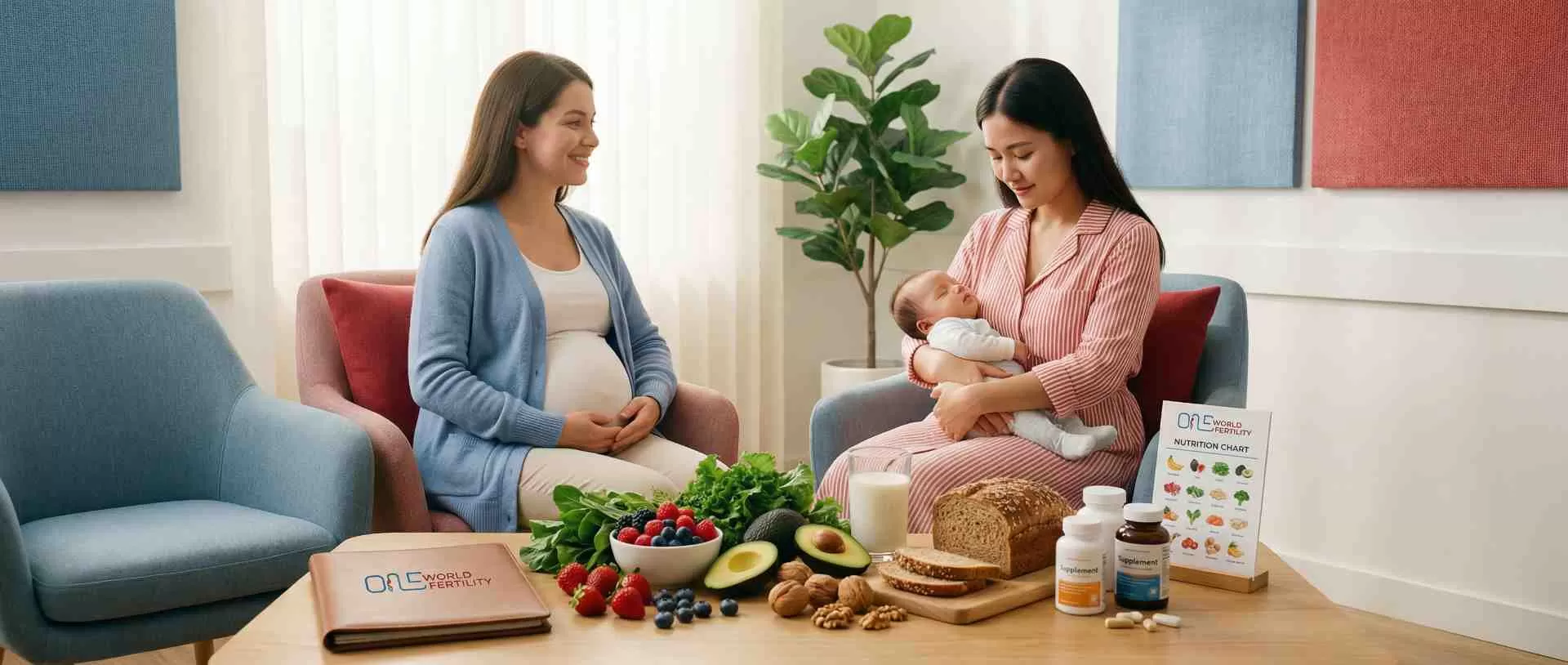
For women with PCOS or endometriosis, food is more than just fuel. It's medicine. Each meal either makes your body feel better or worse. If you plan your hormonal imbalance diet well, it can help lower inflammation, keep your cycle in check, and even increase your chances of getting pregnant. At One World Fertility, real care for pregnancy starts with what you eat.
The Link Between Hormones, Inflammation & Fertility
When you have PCOS or endometriosis and can't get pregnant, the problem isn't usually just with reproduction. It's often hormonal and inflammatory, and it has a lot to do with what you eat. This type of food targets hormonal imbalances and works at their source, not just on the surface. This gives your body a real chance to heal and conceive naturally.
Insulin Resistance and the Need for a Low GI Anti-Inflammatory Diet
Insulin resistance is likely a part of your PCOS, even if no one told you that before. When you eat foods that are high in sugar, your blood sugar rises, your body makes more insulin, and your ovaries make more androgens. These are the hormones that cause acne, menstrual problems, and fertility problems. A pregnancy diet that is low in glycemic index foods and low in inflammation helps by:
- Keeping your blood sugar level equal all day
- Getting rid of extra insulin and androgen production
- Natural ways to support regular ovulation
- Lessening common PCOS signs like acne and periods that don't come on time
Low GI Anti-Inflatory Diet for PCOS & Endometriosis
| Eat More (Low GI Foods) |
Limit These (High GI & Inflammatory Foods) |
| Oats, quinoa, brown rice |
White bread, white rice |
| Lentils, chickpeas, beans |
Sugary cereals, pastries |
| Leafy greens, broccoli |
Fizzy drinks, packaged fruit juices |
| Berries, apples, pears |
Processed snacks, cookies |
| Nuts, seeds, olive oil |
Trans fats, fried foods |
Estrogen Dominance and Inflammatory Load in Endometriosis
Some foods feed both high estrogen and inflammation, which are two things that endometriosis loves. Endometrial tissue grows where it shouldn't when progesterone isn't present to balance estrogen. This makes pain worse and can affect pregnancy. If you have endometriosis, a diet high in omega-3s, cruciferous veggies which are rich in glucosinolates, antioxidants, and vitamins, and plant-based fibre can help your body clear excess estrogen and reduce the inflammation that makes each cycle so hard.
Chronic Inflammation and Its Effect on Egg Quality
Inflammation does more than just hurt. It also changes your eggs in ways that most people don't know about. If you have PCOS and can't get pregnant, or endometriosis and can't get pregnant, you often have chronic inflammation. This causes oxidative stress right where your eggs grow. This has a subtle effect on egg growth, fertilisation, and the early development of the embryo. That can really change with the right foods.
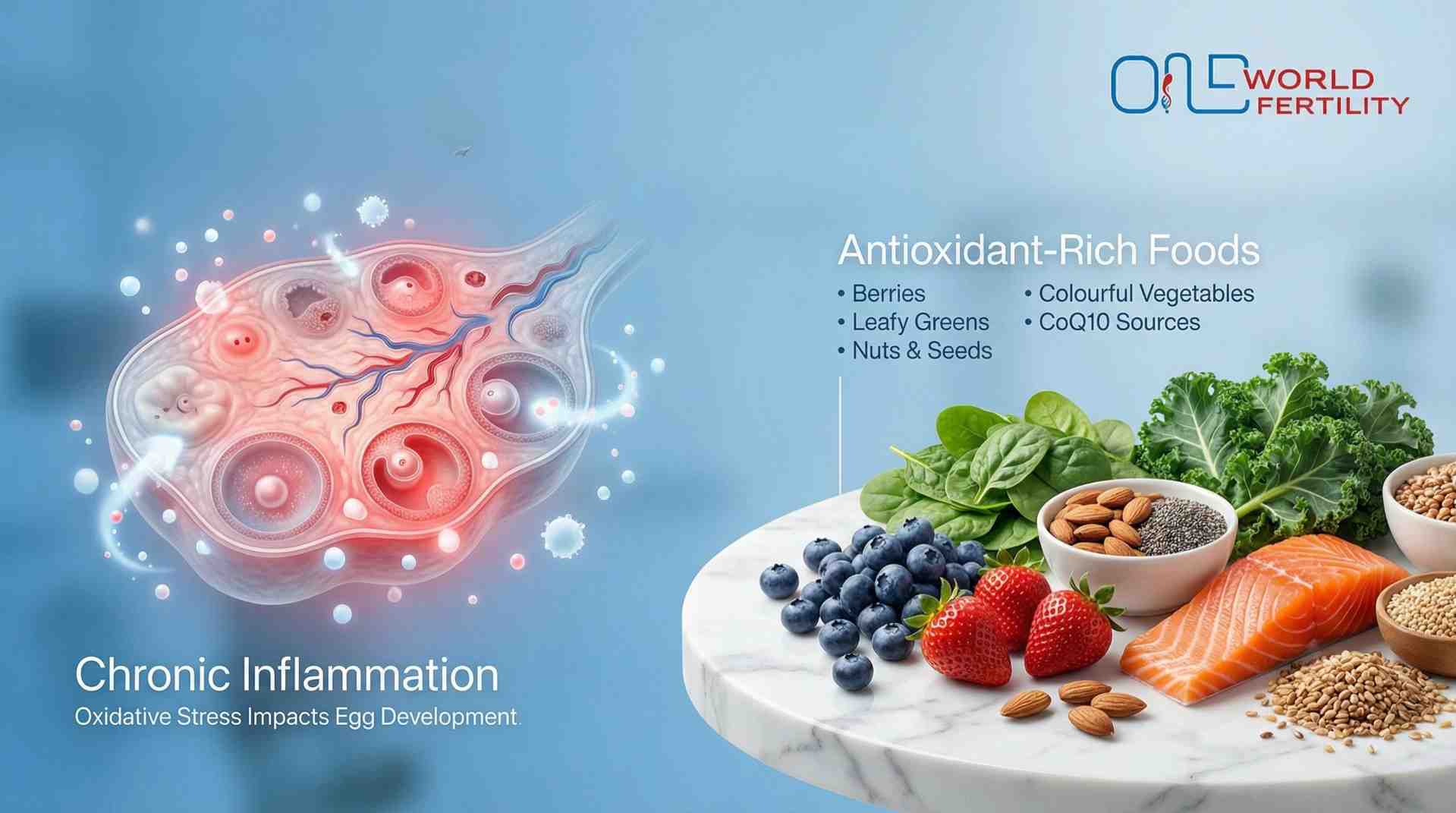
Your body's natural defence is antioxidants, which can be found in some of the healthiest foods:
- Berries - blueberries, strawberries, raspberries
- Leafy greens - spinach, kale, are rich in folate
- Nuts and seeds - a key source of vitamin E for egg health
- Colourful vegetables - the more colour on your plate, the better
- CoQ10-rich foods - fish, whole grains - support cellular energy in egg development
Not a single food works like a miracle. But regularly eating foods high in antioxidants and anti-inflammatory compounds creates a healthier environment, which is much better for your eggs.
The Gut-Uterus Axis - Microbiome for Fertility
And it starts in your gut. This is one of the most important changes in fertility care right now. The bacteria in your gut - specifically a community called the estrobolome - control how your body uses and clears estrogen. When that balance is upset, known as dysbiosis, estrogen is reabsorbed rather than flushed out. This makes both gut health and PCOS and gut health and endometriosis worse. This gut-hormone connection also drives inflammation and has been linked to poorer IVF results.
Taking care of your microbiome means:
- Eating more fibre to feed good bacteria in the gut
- Adding probiotic and fermented foods to restore balance
- Cutting back on ultra-processed foods that cause inflammation
- Creating a healthier uterine environment so that conception can happen
That's why microbiome for fertility is now a core part of care at One World Fertility - because when your estrobolome is balanced, your hormones follow.
Best Foods for PCOS & Endometriosis
You don't need a complicated meal plan - you just need to know which foods are genuinely working for your body. Here's what actually makes a difference.
Anti-Inflammatory Foods
Chronic inflammation is at the heart of both PCOS and endometriosis. The simplest way to fight it? Your fork. Foods rich in omega-3 fatty acids - salmon, flaxseeds, walnuts- actively reduce inflammatory markers in the body. Colourful vegetables, extra virgin olive oil, and green tea all work quietly in the background, calming the inflammatory response that makes symptoms so much worse.
Hormone-Balancing Nutrients
Your hormones stay in check with the help of some foods. Zinc helps the body make progesterone. Magnesium helps keep insulin and cortisol levels in check. Vitamin B6 helps the body use estrogen. These nutrients are naturally found in foods like eggs, pumpkin seeds, dark chocolate, and beans. This makes it easier to eat in a way that balances hormones.
Foods That Support a Healthy Uterus
The right nutrients are the first step to a good uterine environment. Folate-rich foods, like beans and leafy greens, help cells grow and divide healthily. Iron from plant-based foods can help make up for what your periods take away. Vitamin C from citrus fruits and bell peppers helps the body absorb iron and protects the lining of the uterus. These are small but important steps toward making the uterus a better place to get pregnant.
Nutrients for a Healthy Uterus
| Nutrient Food |
Sources |
Benefit |
| Folate |
Beans, spinach, lentils |
Supports healthy cell growth |
| Iron |
Leafy greens, chickpeas |
Maintains uterine lining strength |
| Vitamin C |
Citrus fruits, bell peppers |
Improves iron absorption |
| Omega-3 |
Flaxseeds, walnuts |
Reduces inflammation |
| Vitamin E |
Almonds, sunflower seeds |
Supports blood flow |
Low GI Anti-Inflammatory Diet for PCOS
For women with PCOS, stable blood sugar isn't optional - it's everything. A low GI anti-inflammatory diet for PCOS means choosing foods that release energy slowly, prevent insulin spikes, and reduce androgen overproduction. Think oats over cornflakes, lentils over white pasta, and whole fruit over fruit juice. Small swaps, real results.
Probiotic & Prebiotic Foods for Microbiome Balance
Your gut needs both probiotics - live beneficial bacteria - and prebiotics - the fibre that feeds them. Together they restore microbial balance, support estrogen clearance, and reduce systemic inflammation.
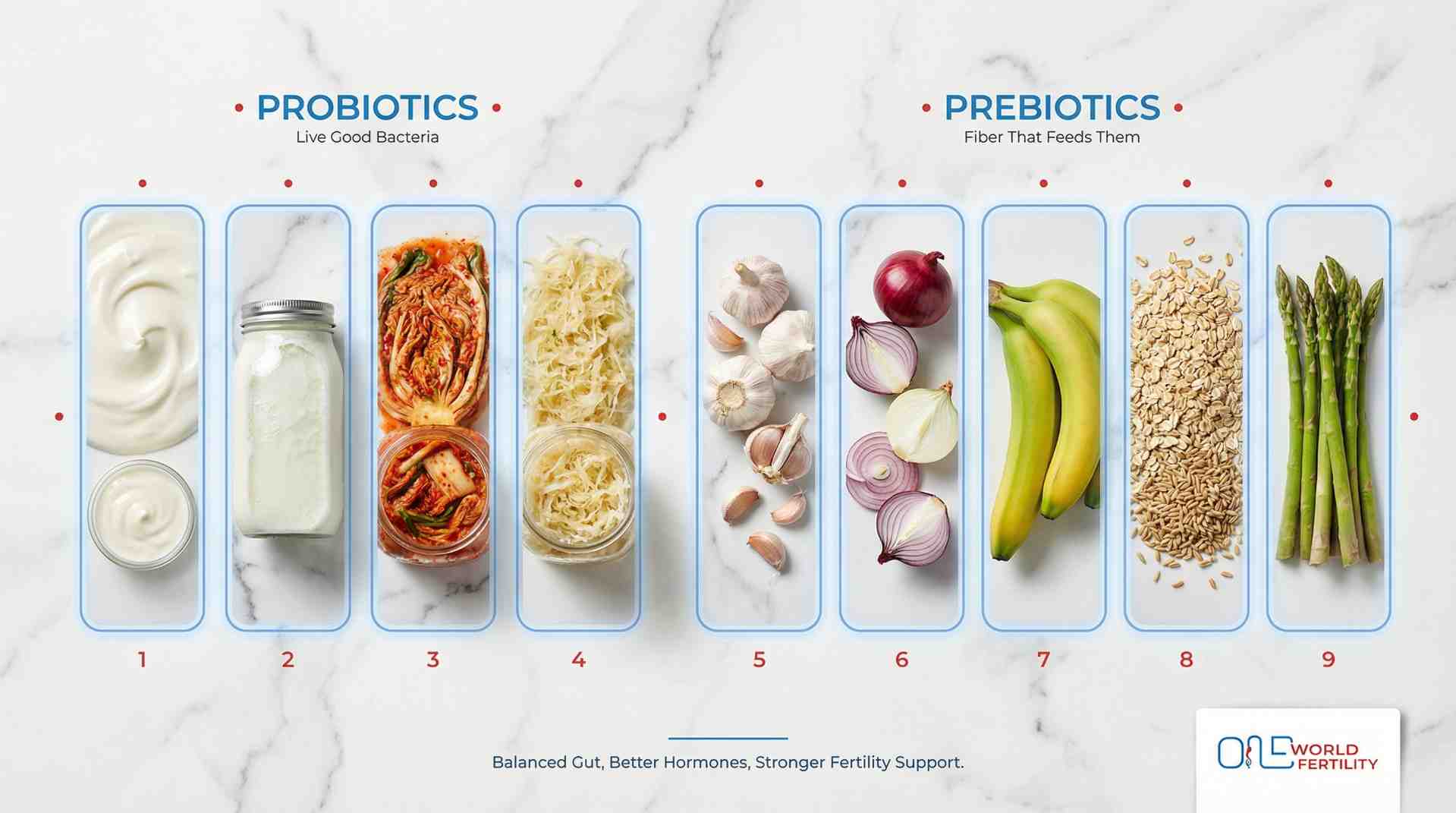
- Probiotic foods - yogurt, kefir, kimchi, sauerkraut
- Prebiotic foods - garlic, onions, bananas, oats, asparagus
A well-fed gut means better hormonal balance - and better fertility outcomes.
Best Foods for PCOS & Endometriosis at a Glance
| Food Category |
Examples |
Benefits for Fertility |
| Leafy Greens |
Spinach, Kale |
Reduces inflammation |
| Omega-3 Rich Foods |
Flaxseeds, Walnuts, Salmon |
Balances hormones |
| Whole Grains (Low GI) |
Quinoa, Brown Rice |
Improves insulin response |
| Berries |
Blueberries, Strawberries |
Antioxidant support |
| Lean Protein |
Lentils, Eggs |
Supports ovulation |
| Probiotic Foods |
Yogurt, Kefir |
Supports microbiome for fertility |
Foods to Avoid in PCOS & Endometriosis
Knowing what not to eat is just as important as knowing what to eat. Some foods quietly make your symptoms worse - and most people don't even realise it. Here's what's worth cutting back on.
Refined Sugars and Insulin Spikes
One of the things that makes women with PCOS most upset is sugar. Every time blood sugar goes up, insulin levels rise. Too much insulin raises androgens, which stop menstruation and make it harder to control symptoms. If you have PCOS, you should stay away from white bread, flavoured yoghurt, fizzy drinks, and sweets that come in a box.
Processed & Ultra-Refined Foods
When you eat ultra-processed foods, they make your body more inflamed, mess up your gut bacteria, and throw off your hormone balance. Less ready-made meals, snacks in a box, and fast food tend to make your body feel better.
Excess Red Meat and Estrogen Load
Processed meats like sausages, bacon, and deli cuts have been linked to higher estrogen levels. If you already have endometriosis pain because of estrogen dominance, this is the last thing you need. A easy but important change is to eat more fish or plant-based proteins instead of these.
Dairy Sensitivity and Inflammatory Response
Not all dairy is the same - and in 2026, the guidance is more nuanced. A1 casein found in conventional processed dairy is the main trigger for inflammation and hormonal disruption. However, A2 dairy and fermented options like kefir and yogurt are often better tolerated - and can even support gut health and estrogen clearance. It really comes down to your body's individual response.
Endometriosis Flare-Up Foods
Here are some of the most popular foods that can make endometriosis symptoms worse:
- High caffeine: increases estrogen and cortisol, which makes pelvic pain worse.
- Alcohol: hinders the liver's ability to process estrogen
- Trans fats: raise prostaglandins that cause inflammation
- Highly processed meats: make estrogens more powerful
- Excess processed soy: may make conditions more sensitive to estrogen worse (fermented soy, like tempeh, is usually better handled).
Foods That Worsen Symptoms at a Glance
| Food Type |
Why Avoid |
Impact |
| Refined Sugar |
Spikes insulin |
Worsens PCOS symptoms |
| Processed Foods |
High inflammation |
Triggers flare-ups |
| Red Meat (Excess) |
Increases estrogen |
Aggravates endometriosis |
| A1 / Processed Dairy |
Hormonal disruption |
Increases inflammation (A2 & fermented dairy better tolerated) |
| Fried Foods |
Trans fats |
Causes hormonal imbalance |
| High Caffeine |
Cortisol spikes |
May trigger endometriosis flare-ups |
| Alcohol |
Impairs estrogen clearance |
Increases hormonal load |
PCOS & Endometriosis Diet Plan (7-Day Overview)
It's not about eating less that makes a good fertility diet plan. It's about what you eat. The goal of this 7-day low GI anti-inflammatory diet is to keep your blood sugar stable, lower inflammation, help your gut, and gently balance your hormones. Easy to do, and designed for real life.
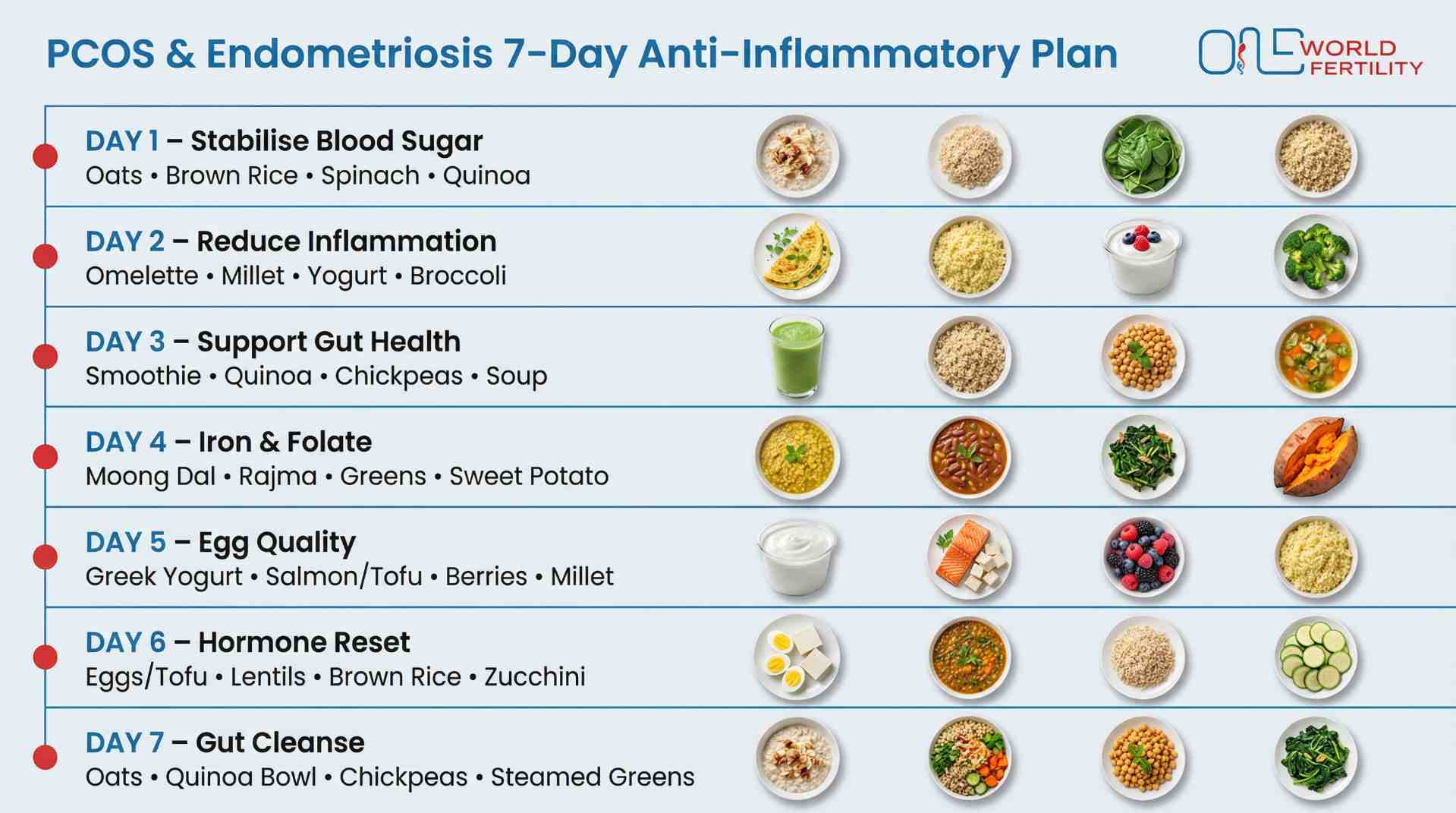
Day 1 - Blood Sugar Stabilizing Start
Focus: Stabilizing insulin and reducing inflammation
Morning: Warm lemon water + soaked almonds Breakfast: Oats with chia seeds & berries Lunch: Brown rice + dal + sautéed spinach Snack: Apple + pumpkin seeds Dinner: Grilled vegetables + quinoa + tofu
Day 2 - Anti-Inflammatory Boost
Focus: Supporting omega-3 intake and gut balance
Morning: Jeera (cumin) water Breakfast: Vegetable omelette + multigrain toast Lunch: Millet khichdi + cucumber salad Snack: Yogurt or kefir + flaxseeds Dinner: Broccoli stir-fry + lentil soup
Day 3 - Microbiome Support Day
Focus: Supporting microbiome for fertility
Morning: Warm water + chia seeds Breakfast: Spinach and berry smoothie Lunch: Quinoa + chickpea curry Snack: Pear + sunflower seeds Dinner: Vegetable soup + paneer or tofu
Day 4 - Iron & Folate Enrichment
Focus: Supporting uterine lining and iron levels
Morning: Warm lemon water Breakfast: Moong dal chilla + mint chutney Lunch: Brown rice + rajma + mixed greens Snack: Orange slices + almonds Dinner: Stir-fried beans + sweet potato
Day 5 - Omega-3 & Egg Quality Support
Focus: Nutritional support for egg quality
Morning: Flaxseed water Breakfast: Greek yogurt + walnuts + berries Lunch: Grilled salmon (or tofu) + quinoa + salad Snack: Apple + peanut butter Dinner: Vegetable curry + millet roti
Day 6 - Hormone Balance Reset
Focus: Lowering inflammatory load
Morning: Tulsi or herbal tea Breakfast: Scrambled eggs (or tofu scramble) + sautéed veggies Lunch: Lentil soup + brown rice Snack: Handful of mixed nuts Dinner: Zucchini noodles + tomato basil sauce
Day 7 - Light Detox & Fibre-Rich Day
Focus: Gut reset + estrogen clearance
Morning: Warm lemon ginger water Breakfast: Overnight oats + chia + blueberries Lunch: Vegetable quinoa bowl + chickpeas
Snack: Guava or pear Dinner: Clear vegetable soup + steamed greens.
Note: Our nutritional protocols are designed to complement medical treatments. Always consult with your One World Fertility specialist before starting new supplements or significant dietary shifts, especially during an active IVF cycle.
Seed Cycling for PCOS - Does It Work?
If you've spent any time in women's wellness spaces lately, you've probably come across seed cycling for PCOS. And honestly, it's one of the most searched topics in natural hormone balancing right now - so let's talk about it properly.
What Is Seed Cycling?
It's an easy idea. At different times in your cycle, different seeds have different nutrients that help your hormones. By eating certain seeds at specific times, you can gently help your body balance its hormones without taking any medicine.
Phase 1 (Days 1-14): Pumpkin & Flax (Estrogen Support)
During the first part of your cycle, estrogen levels rise to help eggs grow. Flaxseeds and pumpkin seeds are good to eat during this time. Flaxseeds contain lignans that help regulate estrogen levels. Pumpkin seeds, on the other hand, have a lot of zinc, which helps the body make progesterone before ovulation.
Phase 2 (Days 15-28): Sesame & Sunflower (Progesterone Support)
Progesterone takes over in the second half. This is where sunflower and sesame seeds come in. Sunflower seeds are high in vitamin E and selenium, both of which are important for supporting progesterone and reducing inflammation. Sesame seeds contain lignans, which help the body healthily eliminate estrogen.
Disclaimer: Seed cycling is more trend-informed than fully evidence-based right now. There are no large clinical trials confirming its effectiveness specifically for PCOS. However, the individual nutrients within these seeds - zinc, lignans, vitamin E, selenium, omega-3s - are well-researched and genuinely support hormonal health. Think of seed cycling less as a cure and more as a simple, low-risk nutritional habit that adds real micronutrient value to your diet.
When to Combine With Medical Treatment
Seed cycling is most useful when used along with medical care, not instead of it. If you're getting treatment at One World Fertility, adding seed cycling to your daily diet can help your body's hormones work better with the treatments they give you. If you're on hormone therapy or getting ready for IVF, you should always talk to your fertility expert before making any changes to your diet.
Why Choose One World Fertility for PCOS & Endometriosis Diet Guidance
There are plenty of diet plans online - but generic advice can only take you so far. When you're dealing with something as emotional as PCOS or endometriosis, you need help from someone who knows what you're going through.
One World Fertility is different in these ways:
- Specialists who truly understand your condition: not just diets, but also fertility experts who can look at the whole picture of hormones
- Personalised plans, not templates: Every diet suggestion is based on your hormones, gut health, and your aim for getting pregnant.
- Integrated care: Your nutrition plan is part of your medical care, not different from it.
- 2026-forward approach: using the most up-to-date studies on microbiome, seed cycling, and anti-inflammatory nutrition in your care
- Compassionate support: We know that this isn't just a medical trip, and we're with you every step of the way.
- Proven outcomes: Women with PCOS and endometriosis have been able to get pregnant naturally and with help, thanks to our approach that combines nutrition and fertility care.
Final Thoughts
It's not easy to live with PCOS or endometriosis. If you've been looking for answers and trying different foods but still feel like something isn't working, you're not alone. A huge number of women feel the same way. The truth is that there isn't a single answer that works for everyone. You can find a plan that works for your body, and it can really change how you feel, how your hormones act, and how your fertility journey goes. Food has a lot of power. If you follow the right fertility diet plan, it can help reduce inflammation, keep your hormones in balance, fix your gut, and make it possible for you to get pregnant.
At One World Fertility, every woman should be able to receive personalised, caring advice grounded in real knowledge. Not a written meal plan given to you at a desk, but a real, ongoing talk about your body, your symptoms, and your goals. Being here is the first thing you've done. We'll help you with the next one.
Questions people ask about this treatment
10 answeredhere