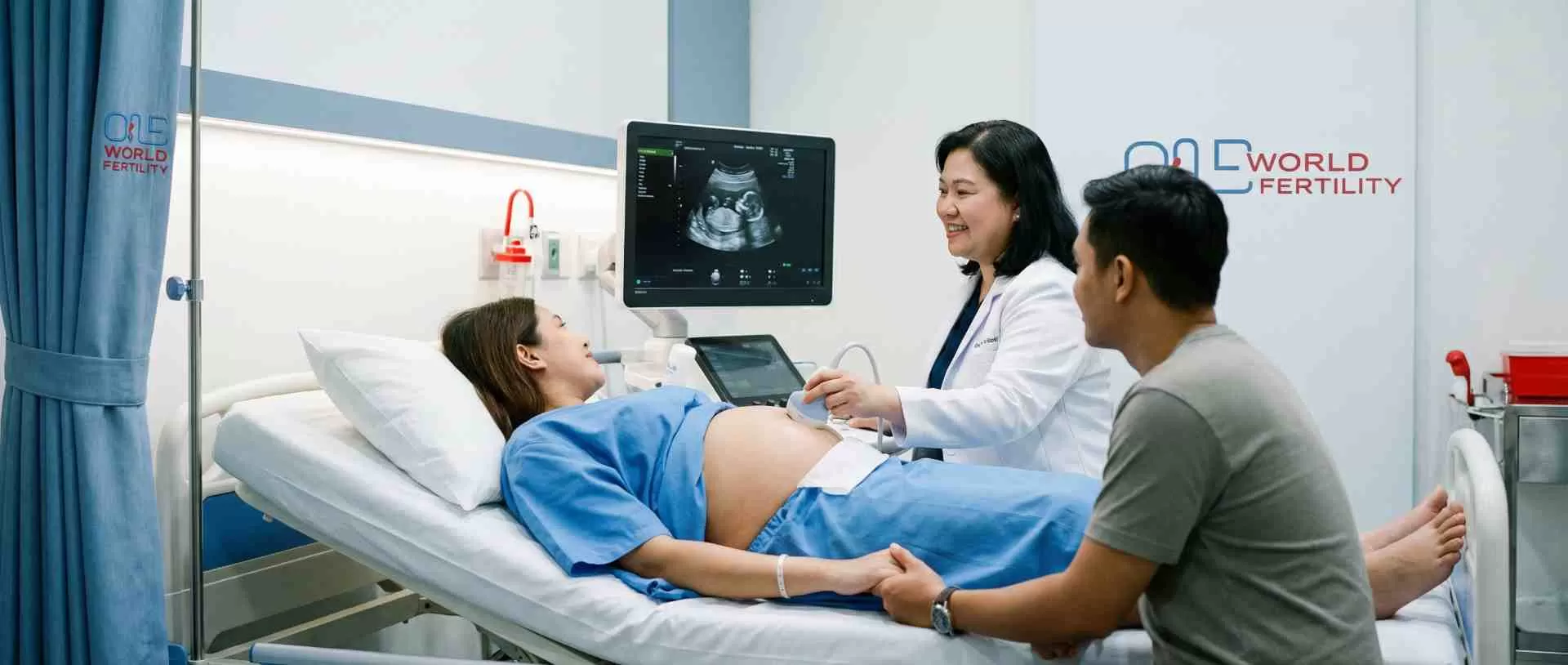

You should get expert care during your high-risk pregnancy. It might be hard to hear that your pregnancy is high-risk. We get it, and we're here for you. Our maternal fetal medicine specialists at One World Fertility realise that every diagnosis comes with a mom who just wants her baby to be healthy and safe.
High-risk pregnancy care isn't about fear; it's about having the correct help when you need it most. Our staff offers the specialist care, monitoring, and advice your pregnancy needs, all with real concern and understanding. Because your peace of mind is just as important as your medical care, you'll get more appointments, thorough ultrasounds, and access to our team 24/7. We're with you every step of the way, from handling issues to coordinating your delivery. You are not just a patient here; you are someone we really care about. Let's go on this journey together. Get in touch with us today.
Comprehensive High-Risk Pregnancy Care at One World Fertility
Did your doctor tell you that you had a "high-risk pregnancy"? Take a deep breath. That label sounds worse than it is. The truth is that you need professional help with your pregnancy. That's what high-risk pregnancy care means, and that's exactly what we do. Our team is more than just extra appointments. It's about having someone who knows your name, picks up your calls at 2 a.m., and remembers what keeps you up at night. Our maternal-fetal medicine professionals have years of advanced training, but that's not all.
They talk about topics clearly. They pay attention. They care. What sets our specialised care for high-risk pregnancy apart? You are the centre of everything. Advanced monitoring and genuine discussions come together. Your treatment plans are based on your real life. And assistance around the clock, because fears about pregnancy don't stop at the end of the workday.
Maternal fetal medicine care sounds like a medical term, yet it's really personal. We're here to help you along the way. You bring the worries and inquiries. We have the knowledge and the heart. We work together to handle high-risk pregnancy management with confidence. So what does "high-risk" mean for you in this case? Let's take it apart.
What Is High-Risk Pregnancy?
What does it mean to have a high-risk pregnancy? In short, your pregnancy needs closer medical attention than usual. That's all. It doesn't say that calamity will happen. It doesn't imply you can't have a healthy baby. It merely means we're keeping a closer eye on things. You might have high blood pressure or diabetes. You could be over 35 or have twins. Maybe anything happened throughout the pregnancy.
The high-risk pregnancy meaning is straightforward that your situation benefits from specialised monitoring. And here's the most important part: most high-risk pregnancies conclude with parents and babies who are both healthy. What's the difference? Having the proper team spot problems early and handle them well. That's when specialised care for high-risk pregnancy changes everything.
When Is Pregnancy Considered High-Risk?
It is different for each person. Sometimes it's evident right away that you have a medical condition, have had problems before, or are expecting more than one baby. Sometimes, though, your pregnancy starts fine and then something goes wrong later, such as gestational diabetes at 28 weeks, high blood pressure in the third trimester, or worries about the baby's growth. What makes a pregnancy high-risk :
- Medical issues you had before you were pregnant, like diabetes, high blood pressure, or heart problems
- Previous pregnancy difficulties (premature birth, hypertension, loss)
- Age factors or having more than one baby
- Problems that come up during pregnancy, such as troubles with the placenta or worries about growth
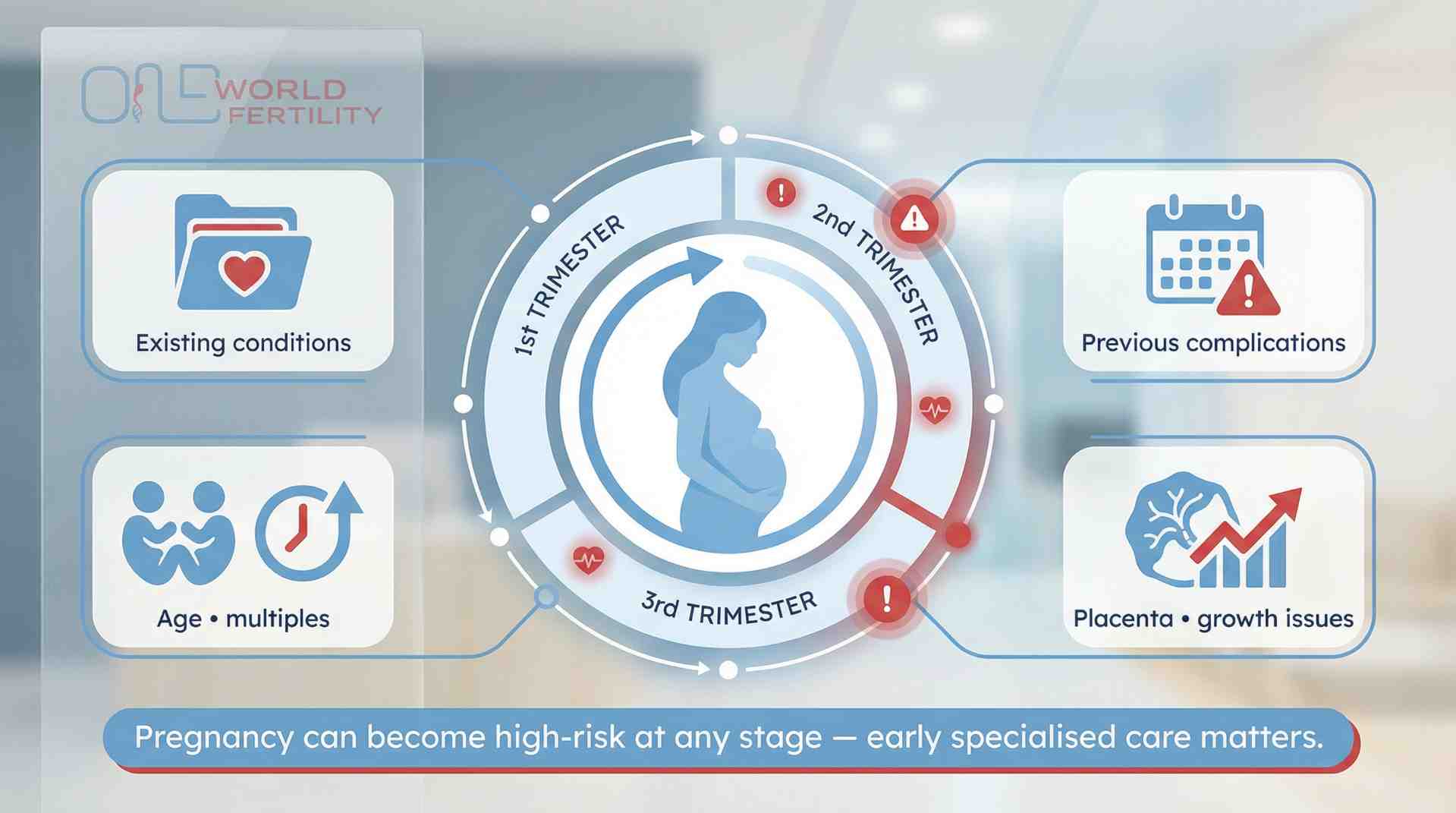
The most important thing? The high-risk label can show up at any time. When does pregnancy become high-risk? That's what's important. Specialised care should start right away because it affects outcomes.
High-Risk Pregnancy: Risks, Conditions & Warning Signs
What makes a pregnancy high-risk? And what warning signs should send you straight to the phone? Let's break it down simply.
What Are High-Risk Pregnancy Risk Factors?
What causes high-risk pregnancy? Before you ever get pregnant or early in your pregnancy, there are a number of characteristics that can raise warning flags. Your age is important. Are you under 17 or over 35? You'll need extra monitoring. If you already have diabetes, high blood pressure, or thyroid problems, you will need specific care. If you've had problems with a previous pregnancy, such as preterm birth, hypertension, or loss, you're more likely to have them again. Lifestyle decisions are also variables that affect pregnancy risk factors.
Your health during pregnancy is affected by smoking, being overweight, or using drugs. And what if you're pregnant with more than one child? Twins or triplets bring their own set of challenges requiring close attention. Having these factors doesn't guarantee problems. It just means you benefit from expert eyes watching closely. That's what qualifies as a high-risk pregnancy.
Common High-Risk Pregnancy Risk Factors
| Risk Factor |
Examples |
Why It Matters |
| Maternal Age |
Under 17 or Over 35 |
Higher risk of complications, chromosomal issues |
| Pre-existing Conditions |
Diabetes, hypertension, thyroid disease |
Can affect baby's development and your health |
| Previous Complications |
Preterm birth, preeclampsia, loss |
More likely to happen again |
| Multiple Pregnancy |
Twins, triplets |
Preterm labor risk, growth concerns |
| Lifestyle Factors |
Smoking, alcohol, weight extremes |
Impact fetal growth and health |
| Reproductive History |
C-sections, uterine surgery, IVF |
May complicate delivery |
High-Risk Pregnancy Conditions & Complications
Even perfect pregnancies can develop high-risk pregnancy conditions suddenly. That's not meant to scare you; it's why monitoring exists. Some problems during pregnancy affect you. Some affect the baby. Some will affect both. Gestational diabetes could show up at 28 weeks. Preeclampsia can make your blood pressure go up quickly. Placental difficulties or growth limitations may occur at any time. This is why people who have complicated pregnancies need to have ultrasounds and tests done often.
We're not looking for problems; we're catching them early so we can deal with them. A big difference.
Common Maternal Conditions
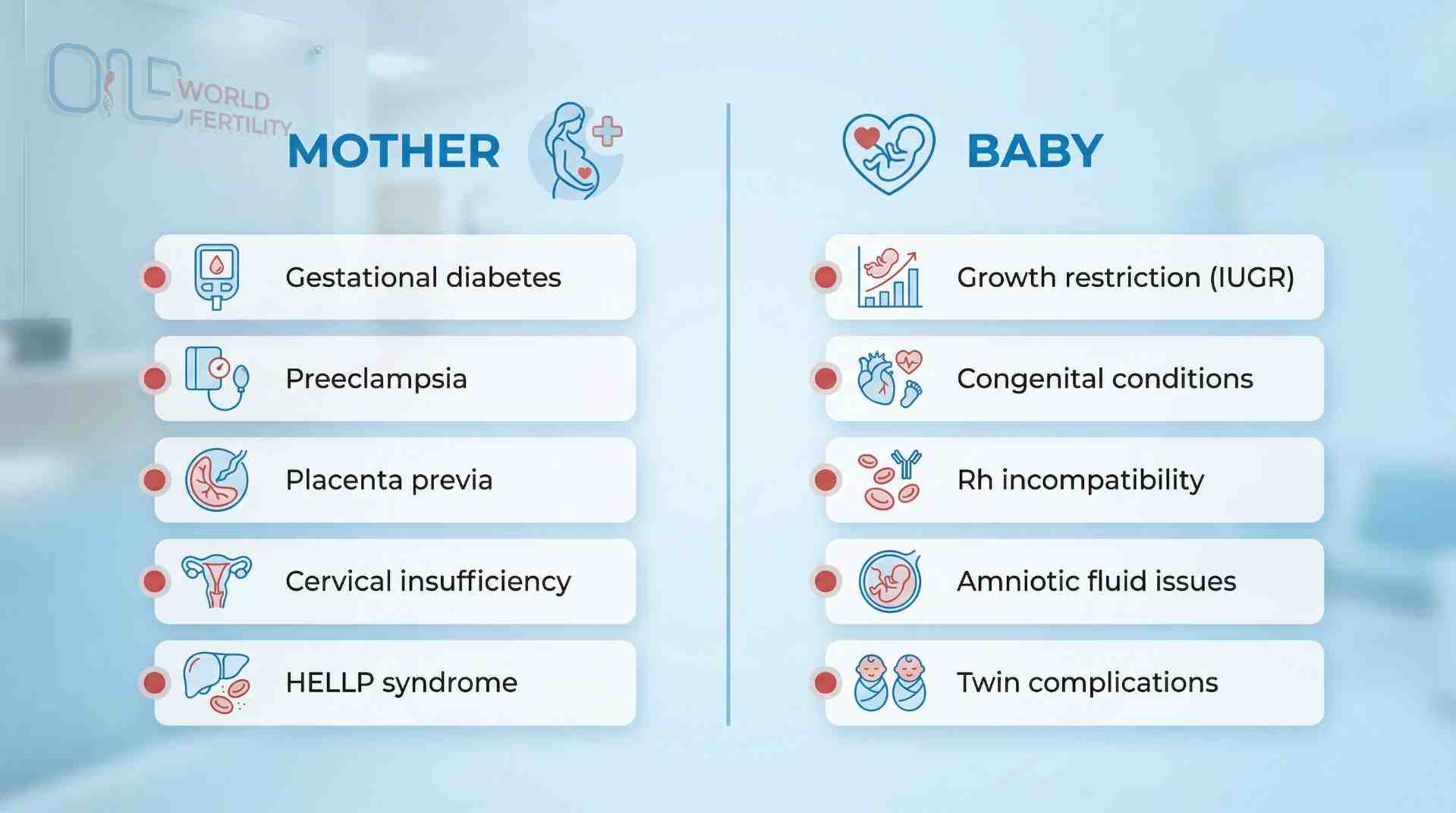
We keep an eye out for certain high-risk pregnancy problems in mothers: Gestational diabetes means that your body can't create enough insulin when you're pregnant. Preeclampsia is a severe condition that causes high blood pressure and protein in the urine. Placenta previa happens when the placenta covers the cervix, which can lead to bleeding. Cervical insufficiency means that the cervix opens too soon. HELLP syndrome severe preeclampsia needing immediate care. Each needs specific treatment. That's where specialised critical pregnancy care changes outcomes.
Fetal Complications
Fetal complications need equal attention: IUGR (growth restriction): the baby is not growing as expected. Congenital abnormalities and structural issues are present from development. Rh incompatibility blood type conflicts between you and the baby. Amniotic fluid problems, too much or too little. Twin complications like twin-to-twin transfusion syndrome. These pregnancy complications require detailed imaging and close monitoring throughout your complicated pregnancy.
High-Risk Pregnancy Conditions & Their Impact
| Condition |
What It Is |
Risks |
How We Manage It |
| Gestational Diabetes |
High blood sugar in pregnancy |
Large baby, preterm birth, C-section |
Blood sugar checks, diet changes, insulin if needed |
| Preeclampsia |
High BP + protein in urine |
Organ damage, early delivery |
BP monitoring, meds, delivery if severe |
| Placenta Previa |
Placenta covers cervix |
Bleeding, C-section needed |
Ultrasounds, rest, planned delivery |
| IUGR |
Baby not growing right |
Low birth weight, stillbirth risk |
Frequent ultrasounds, early delivery if needed |
| Cervical Insufficiency |
Cervix opens early |
Preterm birth, loss |
Cerclage, rest, progesterone |
Pregnancy Warning Signs You Should Never Ignore
Know the difference between uncomfortable and urgent? It matters.Backaches, mild swelling, occasional contractions, normal pregnancy stuff. But certain pregnancy danger signs need immediate attention. Severe headache with blurry vision? Not just a headache, possible preeclampsia. Vaginal bleeding? Don't "wait and see." Baby not moving like usual? Call now. These high-risk pregnancy symptoms aren't things to monitor at home. They're pregnancy warning signs requiring same-day or immediate care.
| Warning Sign |
Could Mean |
What to Do |
| Severe headache + vision changes |
Preeclampsia |
ER now or call provider immediately |
| Vaginal bleeding or leaking fluid |
Placenta issues, preterm labor |
Call provider immediately |
| Severe belly pain |
Placental abruption, other emergency |
Get emergency evaluation |
| Baby moving less |
Fetal distress |
Contact provider same day |
| Sudden face/hand swelling |
Preeclampsia |
Call provider within hours |
| Fever over 100.4°F |
Infection |
Contact provider same day |
| Painful urination or back pain |
UTI or kidney infection |
Call within 24 hours |
Trust your gut. Something feels off? Call us. We'd rather tell you everything's fine than have you wait when it's not.
Our Maternal Fetal Medicine Care Team
Who's actually taking care of you during a high-risk pregnancy? Let's introduce your team. Maternal-fetal medicine specialists (perinatologists) have years of additional training beyond what standard OB/GYNs receive. They know everything there is to know about pregnancy problems. But perinatologist care isn't only for one person. Your high-risk pregnancy care team comprises nurses who are experts in their field, genetic counsellors who explain tests, nutritionists who handle your nutrition, and social workers who help you with emotional and practical issues.
Everyone works together. Your MFM pregnancy team meets often to talk about your situation and make changes to your treatment plan. Your normal OB/GYN is also in the know. One group. One goal. Making sure you and your kid stay healthy.
24/7 Care Access & Emergency Support
Worried at 2 a.m.? Give us a call. We don't sleep, and neither does high-risk pregnancy care. Our help is available 24 hours a day, seven days a week, so an expert is always there. Bad headache? Are you bleeding? Less movement? Our emergency pregnancy care nurse triage can help you decide whether to go to the ER immediately or wait until morning. You get real answers right now. You're never alone in this.
Personalized High-Risk Pregnancy Care Planning
Your high-risk pregnancy care plan is made just for you, not taken from a template. What is included? Visit frequency, testing schedules, medications, activity guidelines, emergency plans, and birth planning. Your antenatal care for high-risk pregnancy covers everything. But here's the key: managing a high-risk pregnancy means flexibility. Baby doing great? We might ease monitoring. Is anything new disturbing you? We will help you with that immediately. Pregnancy management is a team effort. You have a say in every choice. We go over your options, answer your questions, and respect your decisions.
Initial High-Risk Pregnancy Care Assessment
You'll receive written instructions to use at home. And we check in often, making changes to what isn't working and keeping what is. What happens at your first consultation? Here's the rundown.
- A full evaluation of your medical and pregnancy history
- Checkup Blood work in the beginning
- First ultrasound
- Evaluation of high-risk pregnancy and determination of risk level
Then came the high-risk pregnancy examination, which included a physical exam, baseline blood tests, an initial ultrasound, and an evaluation of the risks. Most important? Question time. "Why am I high-risk?" "How often are appointments?" "Can I work?" Ask everything. You'll leave with a preliminary care plan, scheduled appointments, warning signs to watch, and our contact info.
Advanced High-Risk Pregnancy Monitoring & Surveillance Care
Weekly or twice-weekly visits are part of high-risk pregnancy monitoring. Why? Fetal monitoring during a high-risk pregnancy finds problems that we can correct. Here are some things you should do for prenatal care during a high-risk pregnancy:
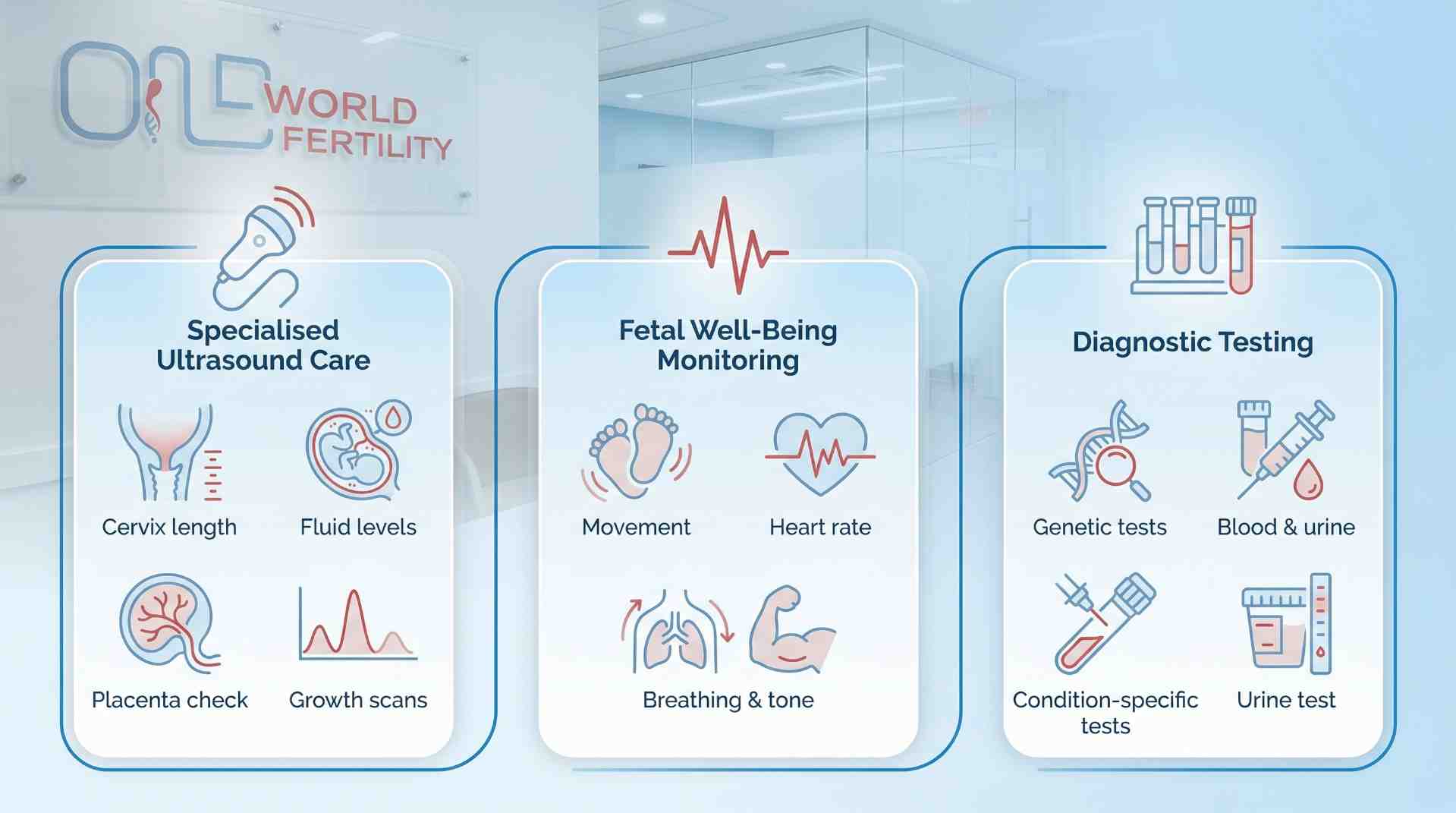
- Specialised ultrasound care: Ultrasound for high-risk pregnancies extends deeper than regular exams. Specialised ultrasound care includes assessing the length of the cervix, measuring amniotic fluid volume, and evaluating the placenta. It also includes thorough anatomy scans, serial growth scans every 2–4 weeks, and Doppler blood flow tests. MFM doctors look at high-risk pregnancies' frequent ultrasounds right away, not after days.
- Fetal Well-Being Monitoring: It includes Non-stress tests (NSTs) that track heart rate for 20 to 40 minutes, biophysical profiles that score respiration, movement, tone, and fluid, and kick counting at home are all part of pregnancy monitoring. Fetal surveillance care lets you know when everything is normal and when you need to pay attention.
- Full Diagnostic Testing: What kinds of tests are done on women who are at high risk of becoming pregnant? Checking for Group B Strep, genetic screening (cell-free DNA), glucose testing, blood tests to examine kidney, liver, and thyroid function, urinalysis, and more. Amniocentesis, CVS, and tests for specific conditions are all part of diagnostic testing and treatment.
Before each test, we tell you what it is and why. In between visits? Home monitoring: BP cuffs, glucose meters, kick counts. All data is reviewed immediately. This is your safety net.
High-Risk Pregnancy Care & Monitoring Schedule
| Stage |
Visit Frequency |
Monitoring |
Focus |
| Early (6-13 weeks) |
Every 2-3 weeks |
Dating scan, genetic screening, labs |
Identify risks, optimize health |
| Mid (14-27 weeks) |
Every 2-4 weeks |
Anatomy scan, glucose test, growth scans |
Detect issues, prevent complications |
| Late (28-36 weeks) |
Weekly or more |
Growth scans, NSTs, Doppler studies |
Intensive surveillance, delivery planning |
| Near Term (37+ weeks) |
2-3 times weekly |
NSTs, fluid checks, kick counts |
Safe delivery timing |
Why Choose One World Fertility for Your High-Risk Pregnancy Care
Why should you trust us with your care during a high-risk pregnancy? It's easy: we mix great medical care with real compassion. From our maternal-fetal medicine specialist at One World Fertility:
"We encounter a lot of women who freak out when they hear 'high-risk pregnancy.' I want you to know something important: high risk doesn't mean great danger. Most of the time, when a woman has a high-risk pregnancy, she ends up with a healthy baby and a healthy mother. What makes it different? Early specialised treatment, regular checkups, and a team that really listens. When you are labelled as "high-risk," it only means that you need expert help with your pregnancy, and that's precisely what we do. Don't allow fear stop you from seeking the care you need. The sooner we start, the more help we can give you."
Our expert maternal fetal medicine care team brings:
- Board-certified perinatologists with advanced training
- State-of-the-art monitoring technology
- 24/7 access: real people, not recordings
- Personalised care plans fitting your actual life
- Complete support: nutrition, counselling, genetic guidance
- Strong NICU partnerships for delivery
- Proven healthy outcomes
The best care for a high-risk pregnancy is provided by a doctor who is both knowledgeable and caring. You get both here. Schedule up a free consultation with our maternal-fetal medicine experts. No stress. Just honest answers to your questions and a clear way to move forward.
Questions people ask about this treatment
10 answeredhere