


Pelvic infections are bacterial infections that occur in the pelvic cavity and damage the reproductive organs and the tissue surrounding them. In women, the most frequent kind is pelvic inflammatory disease, or PID. It happens when germs move up from the vagina and reach the uterus, fallopian tubes and ovaries.
This page explains how each type of pelvic infection is classified, what causes it, and how it is diagnosed at One World Fertility. You will also see the medical and surgical lines of treatment that we follow and the fertility workup that is done when the infection is cleared. Treatment is never one set protocol. What you get depends on what organ is involved and how far the illness has travelled.
What Are Pelvic Infections? Definition of PID and Related Conditions
A pelvic infection is any bacterial infection of the pelvic organs or the connective tissue that supports them. It’s a simple reason why the category is large. An infection can start in any of these systems and yet show up as the same lower pelvic pain. Your pelvic cavity contains the reproductive organs, the bladder, and the lower bowel.
Pelvic Infection vs Pelvic Inflammatory Disease: The Clinical Difference
PID full form is Pelvic Inflammatory Disease. It is a small category of illnesses localised to the upper female genital system. Each case of PID is a pelvic infection but not vice versa, post-surgical collections, bowel-origin abscesses and urine infections all fall outside the definition of PID.
The meaning of PID is also a spectrum of meaning and not one circumstance. CDC guidelines group together endometritis, salpingitis, tubo-ovarian abscess, and pelvic peritonitis as a single diagnostic entity, whether they occur alone or in combination.
Which Organs Pelvic Infections Affect: Cervix, Uterus, Tubes and Ovaries
The infection normally has a predictable course: vulva and perineum, then vagina, cervix, endometrium, fallopian tubes, ovaries and lastly the pelvic peritoneum.
This is important since the lower tract is not the usual location of PID. The vagina and vulva are access sites, not the seat of the illness. Each organ along the line has its own clinical terminology once inflamed:
- Cervicitis: inflammation of the cervix
- Endometritis: inflammation of the uterus lining
- Salpingitis: Inflammation of the fallopian tubes
- Oophoritis: inflammation of the ovary
Every name has a distinct way of dealing with it.
Types of Pelvic Infections Treated at One World Fertility
Treatment depends on where the infection is. Higher-up infections need medications that act throughout the body, and fertility tests afterwards. Lower down infections are often local and clear with specific treatment. But when pus has gathered and closed itself up, it may need draining even as antibiotics do their job elsewhere.
Upper Genital Tract Infections: PID, Endometritis and Salpingitis
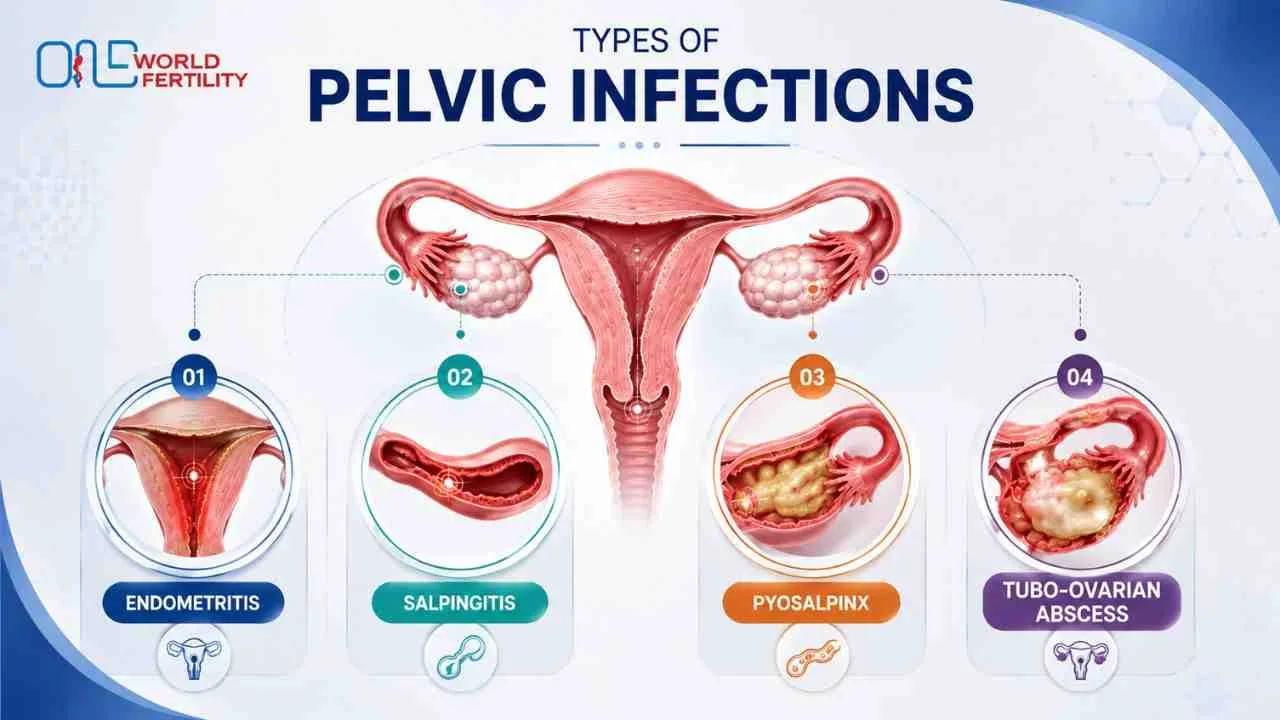
- Endometritis is an infection caused by bacteria of the uterine lining. It’s not from sexual contact but generally from delivery, a miscarriage or a surgery within the womb.
- Salpingitis is medical term for inflammation of a fallopian tube. This is the point where fertility starts to drop as the delicate lining within the tube is destroyed a long time before the discomfort gets bad.
- Sexually transmitted PID is still the most prevalent kind we find in women of reproductive age. These diseases rarely occur alone, so treatment is of the complete tract.
Pelvic Abscess, Pyosalpinx and Tubo-Ovarian Abscess
Pyosalpinx is a fallopian tube with pus inside. A tubo-ovarian abscess is larger and affects both the tube and ovary. Pus can also build up lower down, below the uterus.
A pelvic abscess is not like an infection that is spreading. Antibiotics don't work well in a sealed pocket, and that's the only thing that makes treatment at One World Fertility surgery rather than medicine.
Lower Tract, Peritonitis and Non-Gynaecological Pelvic Infections
Not all pelvic infections are high up. In females, localised conditions include inflammation of the cervix, bacterial vaginosis, a Bartholin's abscess, and perineal infection in females, although any of these might provide an ascending route for germs. The other extreme is peritonitis of the pelvis, where infection penetrates the lining of the abdomen. Infection may also be from beyond the reproductive system:
- Broken appendix
- Diverticulitis
- Infected areas following surgery
Men cannot get PID because they don't have a uterus, tubes or ovaries. They can still acquire prostatitis or epididymitis, and can pass on the same germs to a partner. These are the types of pelvic infections. Now we will learn about what causes them.
Pelvic Infection Types, Affected Structures and Fertility Impact
| Infection Type | Structure Involved | Usual Origin | Fertility Impact |
|---|---|---|---|
| Cervicitis | Cervix | Sexually transmitted organisms; disrupted vaginal flora | Minimal if treated early; acts as the gateway to upper-tract spread |
| Endometritis | Uterine lining | Post-delivery, post-miscarriage, intrauterine procedures | May affect implantation if scarring develops inside the cavity |
| Salpingitis | Fallopian tube | Ascending infection from cervix | Damage to tubal lining and cilia; where infertility risk begins |
| Pyosalpinx | Fallopian tube, pus-filled | Untreated or recurrent salpingitis | Tube often blocked; may need removal, IVF then bypasses the tube |
| Tubo-ovarian abscess | Fallopian tube and ovary | Advanced untreated PID | Highest risk of permanent tubal loss and adhesion formation |
What Causes Pelvic Infections: Bacteria, Procedures and Risk Factors
Almost all of these infections occur in the same way, with germs passing the cervix and travelling up. Normally, the cervix acts as a barrier to keep the germs from the vagina out of the uterus. Once that barrier is broken by illness, delivery or surgery, the door is opened. The others come from surgery or spread from a nearby organ.
What STDs Cause PID: Gonorrhoea, Chlamydia and Mixed Bacterial Flora
Mostly it is caused by two bacteria:
- Neisseria gonorrhoeae - the gonorrhoea bacterium
- Chlamydia trachomatis – the chlamydia bacterium
Others include Mycoplasma genitalium and Gardnerella vaginalis. That is why treatment is not narrow but broad. PID is passed on during unprotected intercourse, and the bacterium climbs up over days or weeks.
Uterus Infection Causes After Childbirth, Miscarriage and Pelvic Procedures
Not all cases are sex-related. The primary non-sexual pathway is infection of the lining of the womb after childbirth or miscarriage, with the cervix remaining open. Any opening of the cervix has the same minimal risk:
- Medical termination
- Hysteroscopy or D&C
- IUD implantation, danger only in first three weeks
Bacterial vaginosis, douching, and poor period hygiene itself do not directly cause infection. They throw off the normal balance of the vagina, making it easier to capture.
Can UTI Cause PID? Pelvic Infection From UTI and Bowel Sources
No. UTI does not become PID. They are two different illnesses with similar symptoms, which is why the urine test is done in the first place, to rule out the UTI.
The confusion is anatomically understandable. The urethra, bladder and cervix are in proximity to each other, so when the cervix becomes inflamed, it can generate a burning sensation when you urinate, which might be misinterpreted for a bladder condition.
Infection can also come from the colon, a ruptured appendix, or a pocket of infection left after surgery. The thing is, the symptoms overlap like this, so it becomes less about what a patient feels and more about what a doctor discovers.
Symptoms of Pelvic Infection: Clinical Findings and Red Flags
The signs of pelvic inflammatory disease range from nothing at all to severe illness. The problem with this illness is that severity is an insufficient sign of harm. Clinicians examine rather than adopt a watch-and-wait approach since scarring of the tubes may be present even in a woman with few symptoms.
Lower Abdominal Pain and Spotting: How Pelvic Infection Pain Presents
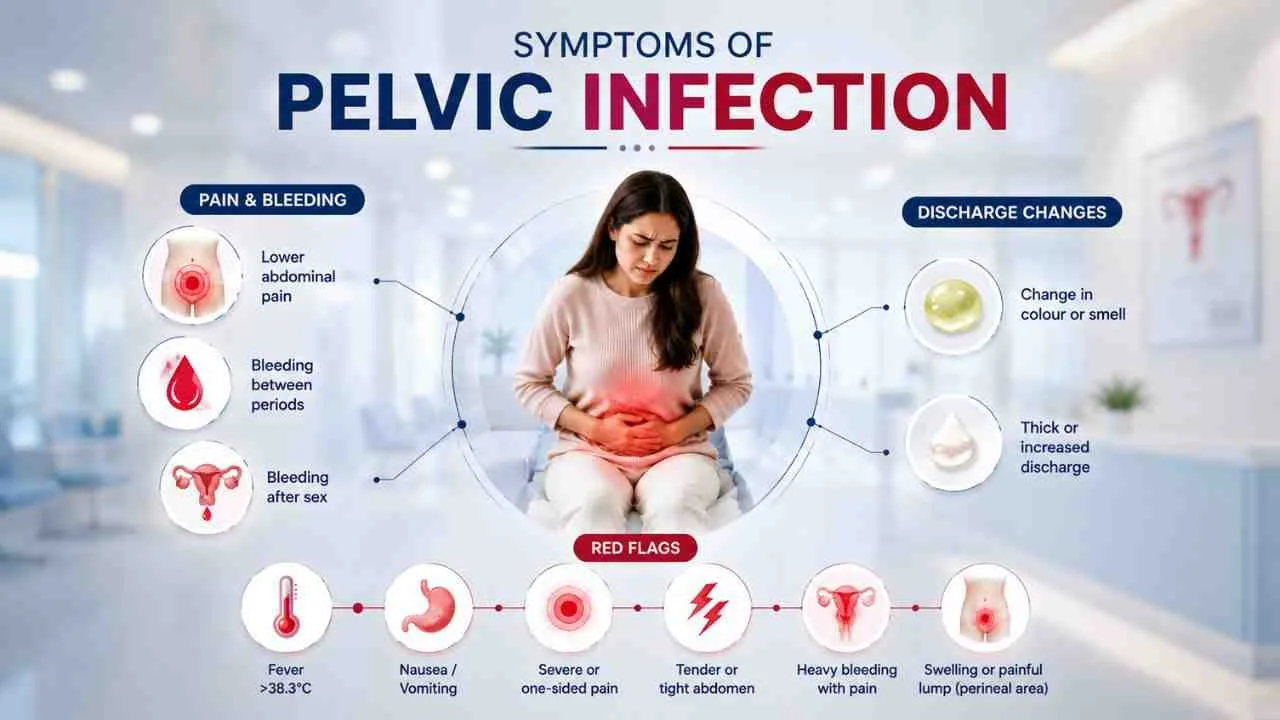
Clinicians are looking for a certain sort of pain. It is more likely to be a slow discomfort over the lower abdomen on both sides, rather than a sudden pain in one location, and deep pelvic pain during sex. Often the earlier sign is bleeding. Any of these changes or lower abdominal pain and spotting combined indicate evaluation:
- Bleeding Between Periods
- Bleeding after sex
- Heavier or more painful than typical periods
Bleeding is important because it typically involves the lining of the uterus before the discomfort is apparent. Even if the pain comes and goes, it is still being examined and does not suggest the infection is resolving.
Discharge Changes and Uterine Infection Signs
Discharge is one of the most important signs of a bacterial infection in women, but it is readily confused. The clinician may notice a shift to a yellow or green colour, a thicker, pus-like appearance, a change in smell, or a significant rise in volume.
PID discharge colour by itself is not conclusive. White discharge with lower belly ache is more likely to be an illness deeper down. Only a sample can tell you what bacteria are there. Normal-seeming discharge does not rule out infection further up.
Severe Pelvic Infection: Findings That Require Urgent Assessment
Some results show that the infection has progressed and cannot wait for a regular appointment:
- Chills with temperature >38.3°C
- Severe or one-sided discomfort in the lower abdomen
- Continuous nausea and vomiting
- A tight, sensitive stomach
- Heavy vaginal bleeding and pelvic discomfort
- Swelling or painful lump around the perineum
These need assessing on the same day, but evaluation isn’t one test, and that’s where diagnosis gets trickier.
Stages of Pelvic Infection and the Level of Care Each Requires
| Stage | What Clinicians Typically Find | Where It Is Treated | How Urgent |
|---|---|---|---|
| Silent or very mild | No symptoms, or vague discomfort noticed only on examination; often found during fertility or STI screening | Outpatient clinic | Treat once identified, damage can occur without symptoms |
| Mild to moderate | Lower abdominal ache, altered discharge, tenderness on examination, spotting between periods | Outpatient clinic, oral treatment | Start treatment the same day it is suspected |
| Severe | Fever, marked tenderness, vomiting, unwell on presentation | Hospital admission, treatment through a drip | Immediate assessment |
| Abscess or peritonitis | Pus collection on scan, one-sided severe pain, rigid abdomen | Hospital, with surgery available | Emergency |
How to Find Pelvic Inflammatory Disease: Diagnosis at One World Fertility
There is no single test to confirm a pelvic infection. Diagnosis is clinical, based on examination findings and backed by lab results and imaging. The threshold is purposely set low since the cost of waiting is lasting tubal damage, not a needless prescription. Assessment here is based on the minimal clinical criteria of the CDC.
Pelvic Examination and CDC Minimum Diagnostic Criteria
In a woman with pelvic or lower abdominal discomfort, three findings on exam are sufficient to start treatment: of the cervix, tenderness over the uterus, and soreness in the area of the tubes and ovaries.
Other signs make the diagnosis more sure, pus-like discharge from the cervix, a cervix that bleeds easily on touch or increased inflammatory markers in blood. There is a chaperone for every examination, a female clinician can be asked for and the examination is halted the instant a patient requests.
Swabs, Blood Tests and Urine Tests Used to Confirm Infection
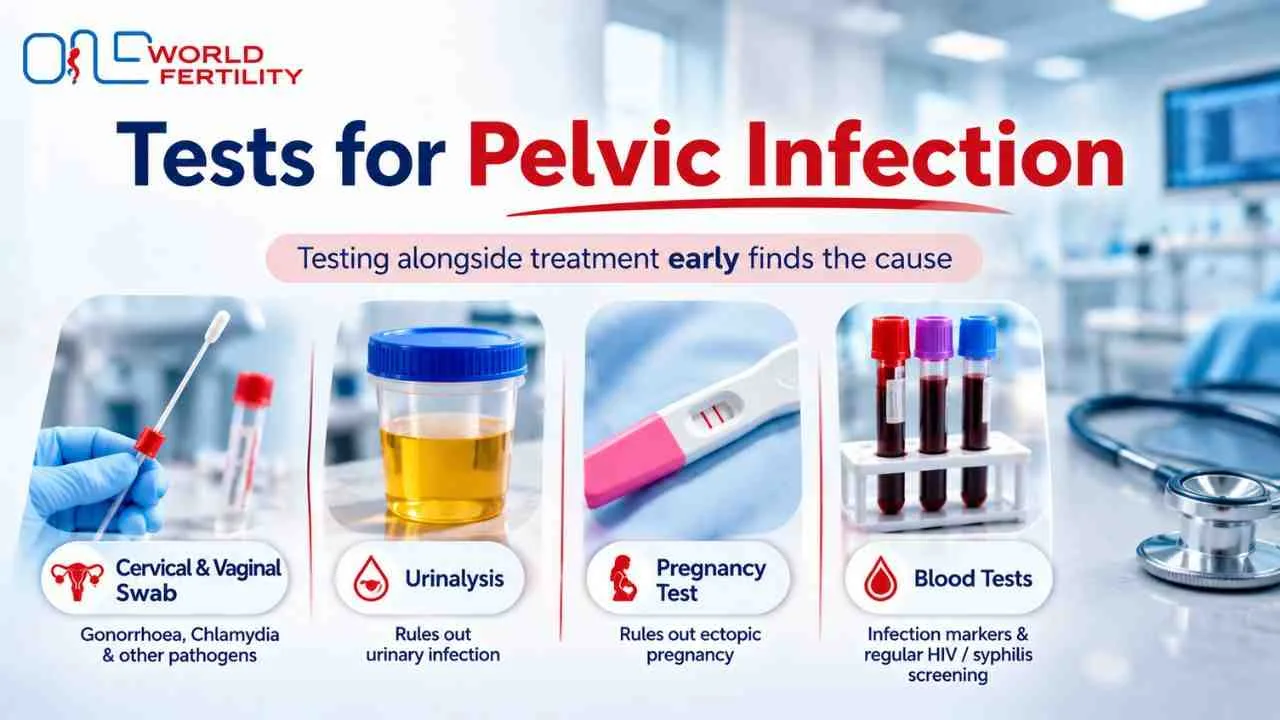
Treatment is done in parallel with testing, not after testing:
- Swabs from the cervix and vagina for gonorrhoea, chlamydia and other pathogens
- Urinalysis to rule out urinary infection. PID and UTI have similar symptoms
- Do a pregnancy test to rule out ectopic pregnancy before doing anything else.
- Blood tests for infection markers, including regular HIV and syphilis screening
Ultrasound, Diagnostic Laparoscopy and Hysteroscopy for Tubal Assessment
A transvaginal ultrasound shows what an exam cannot: thickened tubes filled with fluid, abscesses in the fallopian tubes or free fluid in the pelvis. Diagnostic laparoscopy is a direct look at the tubes and ovaries. It is used where the picture is ambiguous or if one suspects an abscess in the pelvic area.
It also allows drainage to be done at the same time, so diagnosis and therapy are done jointly. When the issue seems to be inside the uterine cavity, hysteroscopy is indicated. Confirmation typically comes after treatment has already begun, since waiting for clarity costs tubes.
One World Fertility does not perform or allow sex determination of a fetus. The PCPNDT Act, 1994 prohibits prenatal sex determination.
Pelvic Infection Treatment: Antibiotics, Drainage and Surgery
If you suspect a pelvic infection, you should start treatment, you shouldn’t wait for test findings. Early antibiotic treatment can prevent fallopian tube damage, and each day of delay increases the chance of permanent damage. Medicines utilised cover a large spectrum of microorganisms right from the outset.
Outpatient Antibiotic Treatment for Mild to Moderate Pelvic Infection
Most cases are managed at home. PID medicine is given as a combination rather than one antibiotic, so it covers several bacteria at once. Finishing the whole course is important.
Symptoms usually quiet down before the infection is entirely cleared. Stopping treatment early is a typical cause of relapse. A few days later she has a review visit and finds it is functioning. Sex should be avoided until therapy is completed and partners treated.
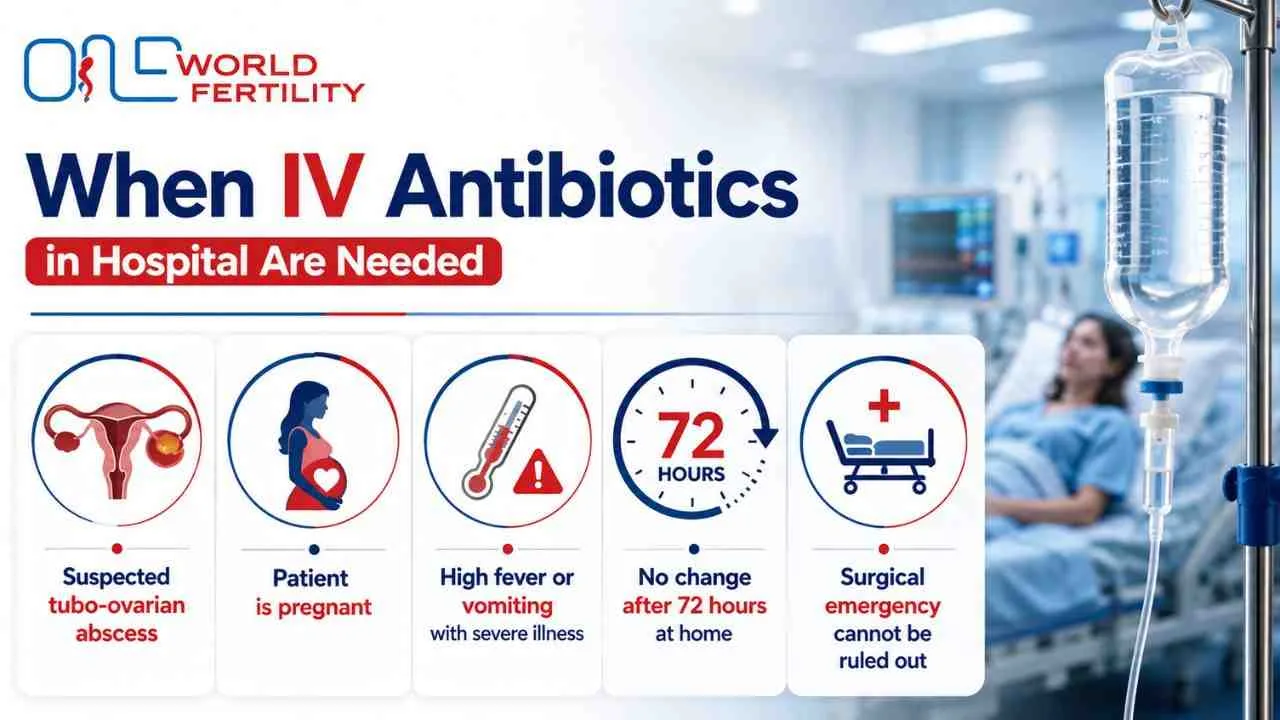
When Hospital Admission and Intravenous Antibiotics Are Needed
Some circumstances require hospital treatment by drip:
- Suspected tubo-ovarian abscess
- Patient is pregnant
- High fever or vomiting with severe illness
- No change after 72 hours at home
- Surgical emergency cannot be ruled out
When definite improvement is seen, the treatment is reverted to medication.
Pelvic Infection Surgery: Abscess Drainage and Pyosalpinx Treatment
PID surgery is not the initial step. It is required if a pelvic abscess is not responding to antibiotics or if symptoms are still present after finishing a course of antibiotics.
Laparoscopy is the conventional Pyosalpinx treatment, draining pus from the fallopian tube, eliminating adhesions, or removing an unsalvageable tube. Partners within the last 60 days are grouped since untreated partners are the main reason the illness comes back. This brings us to the most often asked question: How long does all this take?
Treatment Route for Each Type of Pelvic Infection
| Infection Type | Where It Is Treated | What Treatment Involves | Follow-Up |
|---|---|---|---|
| Cervicitis / lower tract | Outpatient | Targeted antibiotics once the bacteria is identified by swab | Recheck after the course; partner testing if sexually transmitted |
| Mild to moderate PID | Outpatient | Combination antibiotics covering several bacteria at once | Review within a few days; retesting at three months |
| Severe acute PID | Hospital admission | Antibiotics through a drip, switching to tablets on improvement | Observation until stable, then outpatient follow-up |
| Tubo-ovarian abscess or pyosalpinx | Hospital, with surgery available | Antibiotics first; laparoscopic drainage or tube removal if there is no response | Tubal assessment afterwards to check fertility impact |
| Recurrent pelvic infection | Outpatient, with specialist review | Repeat treatment plus partner testing and a search for the underlying cause | Fertility workup; adhesion assessment if pain persist |
Pregnant With Pelvic Infection and Fertility Care Afterwards
Pregnancy with pelvic inflammatory disease impacts the management of the illness. It increases the risk of difficulties for the mother and premature birth, and hence treatment is given in hospital under the care of a professional.
First, anyone with pelvic pain and a positive pregnancy test has to be screened for an ectopic pregnancy, because the two appear remarkably identical. The antibiotics used for PID and pregnancy are different; thus, an old prescription should never be repeated.
Conceiving After Pelvic Infection: Tubal Assessment and IVF at One World Fertility
The question, after the infection is over, is what it has left. A fertility check is to see if the tubes are open and if the uterine cavity was impacted. If one tube is healthy, a natural birth may still be feasible.
If both tubes are blocked or removed, IVF can bypass the tubes entirely. If there is pus in the fallopian tubes or fluid is still trapped, it might limit implantation; thus, treatment of pyosalpinx should be done before embryo transfer. Here, the same staff manages the virus itself and its effect on fertility.
Pelvic Infection and PID Treatment at One World Fertility
This service is based around that single team. Assessment, swabs, scans and the first dosage of treatment are all done in one visit, with no referral chain to wait through.
Our pelvic inflammatory disease gynaecology service is in the same facility as our fertility service, so the infection is treated and its effect on the tubes examined by the same physicians. Where treatment is not adequate, we undertake in-house PID surgery involving abscess drainage and tubal operations.
Partner testing and follow-up are built into every plan, not left to arrange later. Pelvic infections are treatable, and the earlier they are caught, the more is preserved. Book a consultation with our team today.
Questions people ask about this treatment
10 answeredhere