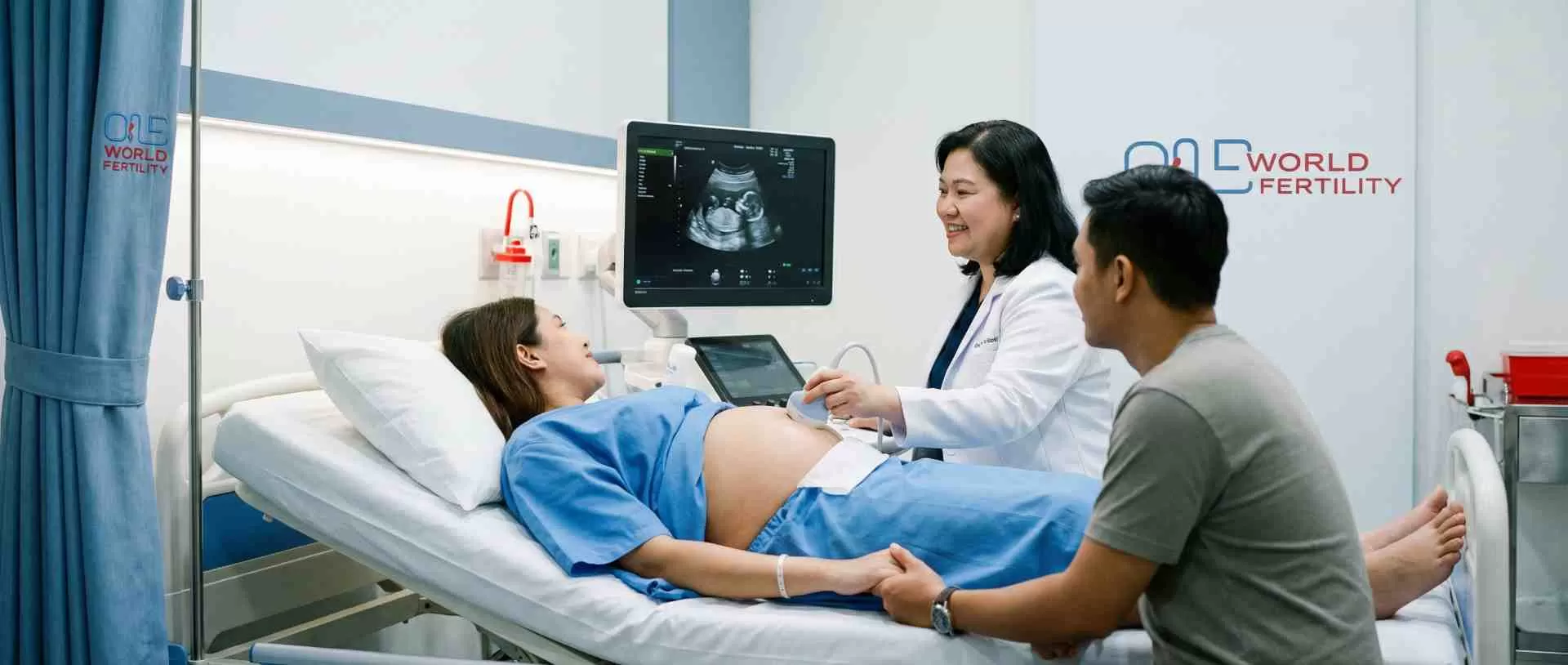



Post-delivery care is supervised clinical care that supports you as you heal in the weeks after birth. At every visit, we check your healing, monitor your bleeding, help you eat, and ask you directly about your mood. This way, we can make sure that no part of your recovery is missed.
After delivery, mother's care isn't just a single appointment. It runs from the first hours after birth through your sixth week, and longer when your recovery calls for it. Our team reviews your progress at each stage, so we pick up changes early rather than after they become a problem.
Good post-delivery care for mother and baby means you are not left to figure out what's normal on your own, or to wait until something feels wrong before asking. Here is what post-delivery care covers, and what we look at from your very first day.
What Does Post-Delivery Care Include?
Post-delivery care services cover far more than a single check-up before you are sent home. The care runs across your whole recovery: how your body heals, how much you are bleeding, whether feeding is working, and how you are coping day to day.
How much of your recovery is actually watched by someone clinical? More than most mothers expect, when the care is structured properly. Bleeding, wound healing, blood pressure, feeding and mood are all reviewed at set points rather than left for you to raise. That is the difference between advice given once at discharge and post-delivery care that follows you through the full six weeks.
The table below sets out what each area involves and how we support it.
| Area of Care | Why It Matters | How One World Fertility Helps You |
|---|---|---|
| Physical recovery | Healing follows a pattern that can be tracked | We monitor your healing at each scheduled check |
| Bleeding and discharge | Volume and colour show whether recovery is on track | We check bleeding patterns and flag anything unusual |
| Infection watch | Early signs are easy to miss without clinical review | We examine wound sites and screen for early infection |
| Feeding support | Feeding difficulty is the most common early concern | We guide you through latch, positioning and supply |
| Emotional wellbeing | Mood changes are common and treatable when caught early | We ask about mood at every visit, not only at the end |
| Contraception planning | Timing depends on feeding and delivery type | We plan contraception around your recovery |
What Happens During the First 48 Hours After Delivery?
The first 48 hours after delivery are the most closely watched stretch of your recovery. Bleeding is heaviest now, blood pressure can shift, and the uterus is contracting back down. Checks come frequently because problems that develop here move quickly, while the same problems caught early are usually straightforward to treat.
Feeding begins in these two days as well. We review latch and positioning while you still have help beside you, rather than after you are home and managing alone.
What we find in these first hours shapes the care plan for the weeks ahead, and that plan starts with knowing whether you need it.
Who Should Book Post-Delivery Care at One World Fertility?
Every mother benefits from structured care after birth, but some situations make it necessary, not just useful. To be safe, supervised care is better for people who had a difficult delivery, a cesarean section, heavy bleeding, or who are also recovering from a disease like high blood pressure or diabetes.
Do you need structured support even if your delivery went smoothly? Yes, and this is where most mothers hesitate. An uncomplicated birth does not rule out infection, delayed healing, feeding difficulty or postnatal depression, and these are the things that go unnoticed without scheduled review. Post-delivery support for new mothers exists for ordinary recovery as much as difficult recovery.
Booking makes particular sense if any of the following apply:
- You had a C-section or a birth with help.
- It looked like you were bleeding more than usual.
- Your blood sugar is too high, you have diabetes, or your thyroid is sick.
- Either they aren't used to feeding yet, or it hurts.
- You are getting better at home with not much help.
- You've had depression after giving birth before.
- This is your first child.
You do not need a problem to book. We would rather see you early than after a small issue has grown. Some recoveries, though, need closer monitoring.
Which Mothers Need Closer Monitoring After Delivery?
When your history or delivery suggests a higher risk of complications, like pre-eclampsia during pregnancy, a wound that takes a long time to heal, or bleeding that hasn't stopped on time, you are given more care as a mother.
Age, previous surgery and existing conditions all factor into how often we see you. After delivery, maternal care isn't on a fixed schedule. The intervals are based on your recovery.
For most mothers, recovery after a normal delivery follows a predictable course.
What Support Is Provided After Normal Delivery?
Post-delivery care after normal delivery follows the shape of your recovery rather than a fixed set of appointments. Close attention goes to bleeding and feeding in the first days, then shifts towards healing, mood and returning strength.
How soon should you expect to feel like yourself again? Later than most mothers are told. Bleeding usually settles within four to six weeks, but energy, sleep and comfort recover on their own timelines, often unevenly. Knowing what belongs at each stage keeps normal recovery from feeling like something has gone wrong.
The timeline below shows what typically changes and how we look at it.
| Recovery Stage | What Changes | How One World Fertility Helps You |
|---|---|---|
| Day 1 to day 3 | Bleeding is heaviest, cramping settles, feeding begins | We review bleeding, uterine tone and feeding start |
| Day 4 to day 10 | Bleeding lightens, perineal soreness eases, sleep is broken | We check perineal healing and adjust pain relief |
| Week 2 to week 3 | Energy returns unevenly, mood fluctuates | We screen mood and confirm healing is progressing |
| Week 4 to week 6 | Bleeding stops, light activity becomes comfortable | We assess readiness for activity and plan contraception |
| Beyond week 6 | Most mothers return to routine, some symptoms persist | We follow up on anything still unresolved |
These stages are a guide, not a schedule you have to keep pace with. We set your review points around where you actually are. Even so, one question comes up more than any other.
How Long Does Recovery After Normal Delivery Take?
Most mothers ask how long recovery after normal delivery takes, and the answer is around six weeks for the visible parts and longer for the rest. For most, bleeding stops, the perineum heals, and comfort returns within that window.
Energy and sleep take longer, particularly with a first baby. Pelvic floor strength can take several months. If something still does not feel right at six weeks, we keep looking. Recovery after a cesarean works to a different timeline.
What Care Is Needed After a C-Section?
Post-delivery care after a C-section includes everything a normal delivery needs, plus wound care and a longer window before you return to full movement. A cesarean is abdominal surgery, and your recovery is treated as surgical recovery alongside postnatal recovery.
When is it no longer normal for an incision to hurt? It is normal for pain to improve over time, but not to get worse or spread. Get in touch with us right away if you see:
- The area around the wound is getting red.
- Swelling that is getting worse instead of getting better.
- Any pus coming from the wound.
- A sharp pain in the belly all of a sudden.
- Fever and pain in the wound.
Wound checks, pain relief and movement guidance sit at the centre of your care in the first fortnight. We adjust each of these based on how the incision is actually healing, not a fixed timetable.
What Should You Avoid While the Incision Heals?
Knowing what to avoid after cesarean delivery protects the wound while it closes. Lifting anything heavier than your baby, driving before you can brake without hesitation, and stretching or twisting through the abdomen all put strain on healing tissue.
Baths and swimming wait until the wound is fully closed. Vigorous exercise waits longer still. We tell you when each restriction lifts, based on your wound rather than the calendar.
How Is Recovery After a C-Section Different From Normal Delivery?
The difference in C-section recovery vs normal delivery recovery is mostly about where the pain sits and how long movement stays limited.
| Recovery Factor | After Normal Delivery | After Cesarean | How One World Fertility Helps You |
|---|---|---|---|
| Hospital stay | Usually shorter | Usually longer | We plan your first check around your discharge date |
| Main site of pain | Perineum and cramping | Incision and abdominal wall | We match pain relief to where you are actually sore |
| Movement in week 1 | Walking is comfortable early | Movement is guarded, support is needed | We set a safe movement plan for your delivery type |
| Lifting restriction | Eases within days | Restricted for several weeks | We tell you when lifting is safe again |
| Wound care | Perineal care only | Incision review, dressing, infection watch | We inspect the site and change your care plan as it heals |
| Return to routine | Generally earlier | Generally later, guided by wound healing | We clear you for routine activity when healing allows |
Bleeding, feeding and mood follow much the same course after either delivery. The wound is what changes the timeline. Whichever way you delivered, what we watch for stays largely the same.
What Do We Monitor During Your Post-Delivery Recovery?
Knowing what to monitor during post-delivery recovery makes care useful, not just reassuring. At One World Fertility, we check the same set of markers at every visit, so a change in any one of them is picked up against your own baseline instead of a general average.
Which changes are worth mentioning at your next check? Anything that is getting worse rather than better. Contact us the same day if you notice any heavy bleeding that soaks a pad within an hour, fever, a wound that is hot or discharging, severe headache with blurred vision, chest pain, or breathlessness.
The table below sets out what we check and why.
| What We Check | What It Can Indicate | How One World Fertility Helps You |
|---|---|---|
| Bleeding volume | Retained tissue or delayed uterine involution | We track bleeding against expected recovery |
| Temperature | Infection developing after delivery or surgery | We record temperature and act on early rises |
| Wound or perineal site | Delayed healing or infection | We inspect the site and treat early signs |
| Blood pressure | Postpartum hypertensive changes | We measure at every visit and escalate when needed |
| Mood and sleep | Postnatal depression or anxiety | We ask directly and refer for support when required |
| Feeding and supply | Latch difficulty, engorgement, low supply | We correct feeding technique and support supply |
Not a single one of these is checked by itself. Why do we read them together? Because a rising temperature and a sore cut mean different things when read together. Most of what you notice, though, will be ordinary.
What Changes Are Normal in the First Six Weeks?
What is the difference between normal healing and something that should be reported? Most of what you notice, though, will be ordinary. The test is direction. During the first six weeks after giving birth, normal changes tend to get better: bleeding stops, pain gets better, and energy comes back in a patchy but steady way.
Expect the following as your body settles:
- Night sweats, particularly in the early weeks.
- Hair shedding, often around the third month.
- Mood dips that come and go.
- A soft abdomen that firms slowly.
- Cramping while feeding.
If something is worsening instead of settling, we would rather hear about it early than at your next scheduled visit, and we are also monitoring your baby through this period.
Mother and Baby Post-Delivery Care Together
Care for both mom and baby after giving birth works better when it happens in the same place. Most of what you notice, though, will be ordinary. You and your baby's first few weeks of life are connected, and going over them separately would mean going back for the same visit twice.
What does support look like once you are back home? Practical, and focused on what actually changes day to day. Feeding, weight, sleep, healing and mood are all reviewed at the same appointment, so nothing gets missed between two sets of notes.
| Touchpoint | For the Mother | For the Baby | How One World Fertility Helps You |
|---|---|---|---|
| Feeding review | Latch comfort, supply, engorgement | Intake, weight gain, output | We review both sides of feeding at the same visit |
| Weight and growth | Recovery of pre-delivery weight | Growth against expected pattern | We plot growth and reassure or investigate |
| Sleep and settling | Rest between feeds | Settling and wake patterns | We build a feeding and rest pattern that works for you |
| Skin and healing | Wound or perineal healing | Cord care, jaundice watch | We check your healing and screen the baby at one appointment |
| Emotional wellbeing | Mood, anxiety, support at home | Bonding and responsiveness | We ask about mood and home support at every visit |
Seeing both of you together also shortens the path to an answer, because feeding, weight and mood usually explain each other.
What Type of Support Is Provided to New Mothers After Delivery?
Mothers ask what support is provided after delivery, and the answer goes beyond physical checks. Feeding help, pain management, mood screening, and contraception planning all sit within it.
Guidance on rest, activity and when to resume normal routines is part of the same care.
Can Post-Delivery Care Be Given at Home?
Much of post-delivery care at home is about knowing what to watch and when to call. We set that out clearly before you leave, so you are not guessing between visits. Reachable advice matters as much as scheduled review in these weeks. Care that runs this closely needs the right team behind it.
Why Choose One World Fertility for Post-Delivery Care?
Professional post-delivery care is only as good as the continuity behind it. At One World Fertility, your recovery is followed by a team that already knows your delivery, your history and what your last check showed.
What difference does clinical supervision make to your recovery? It changes what gets noticed. Gradual changes are far easier to catch against a record than against memory:
- Bleeding that takes a long time to stop.
- Most of what you notice, though, will be ordinary.
- An unlevel wound that's healing.
- Going up in blood pressure.
- Mood falling instead of rising.
Our postpartum care services cover mother and baby in the same appointment, keeping feeding, growth and healing in one clinical picture. Post-delivery mother care here is supervised, not advisory.
Questions people ask about this treatment
10 answeredhere