
How does sleep affect fertility and hormone balance
 Written by
One World Fertility
Dec 30, 2025 14 min read
Written by
One World Fertility
Dec 30, 2025 14 min read
Learn how sleep impacts fertility and hormone balance in men and women, including ovulation, testosterone, stress hormones, and cycle health.
If you're reading this right now, we understand what you're going through. And we want you to know-you're not facing this alone.
Trying to get pregnant should be simple, but sometimes our bodies have other plans. Maybe you've been trying for what feels like forever. Maybe every month brings disappointment. Maybe you're awake at 2 AM googling "why can't I get pregnant" and wondering what's wrong.
Here's something most people don't talk about: your sleep matters more than you think.
We know it sounds too simple. You're probably thinking, "I have PCOS", or "my husband has low sperm count", or "I'm over 35"-how could sleep possibly make a difference? But here's the truth: sleep and fertility are connected in ways that can genuinely affect your chances of conceiving.
Your body doesn't just rest when you sleep. It's busy making the exact hormones you need to ovulate, produce healthy eggs, and support early pregnancy. When sleep suffers, those hormones get disrupted. Understanding how sleep affects fertility and hormone balance gives you something you can actually improve-starting tonight.
So let's talk, friend to friend. You deserve honest, clear information about how sleep changes hormones that help you get pregnant, why sleep is important for getting pregnant, and what you can really do about it.
Let's talk to each other. It's a beautiful dream that you will hold your baby. Let your body rest so that you can reach your goal.
Can Poor Sleep Harm Hormones and Fertility in Women?
Yes, we are sure Problems getting pregnant are directly linked to not getting enough sleep. Let us explain Can Poor Sleep Harm Hormones and Fertility in Women and what you can do about it.
The Sleep-Hormone Connection
Your reproductive system depends on sleep. When you don't sleep enough, your hormones get disrupted. Think of hormones like a dance-sleep keeps everyone in rhythm. Without enough sleep, everything falls apart.
Which Hormones Get Disrupted by Poor Sleep?
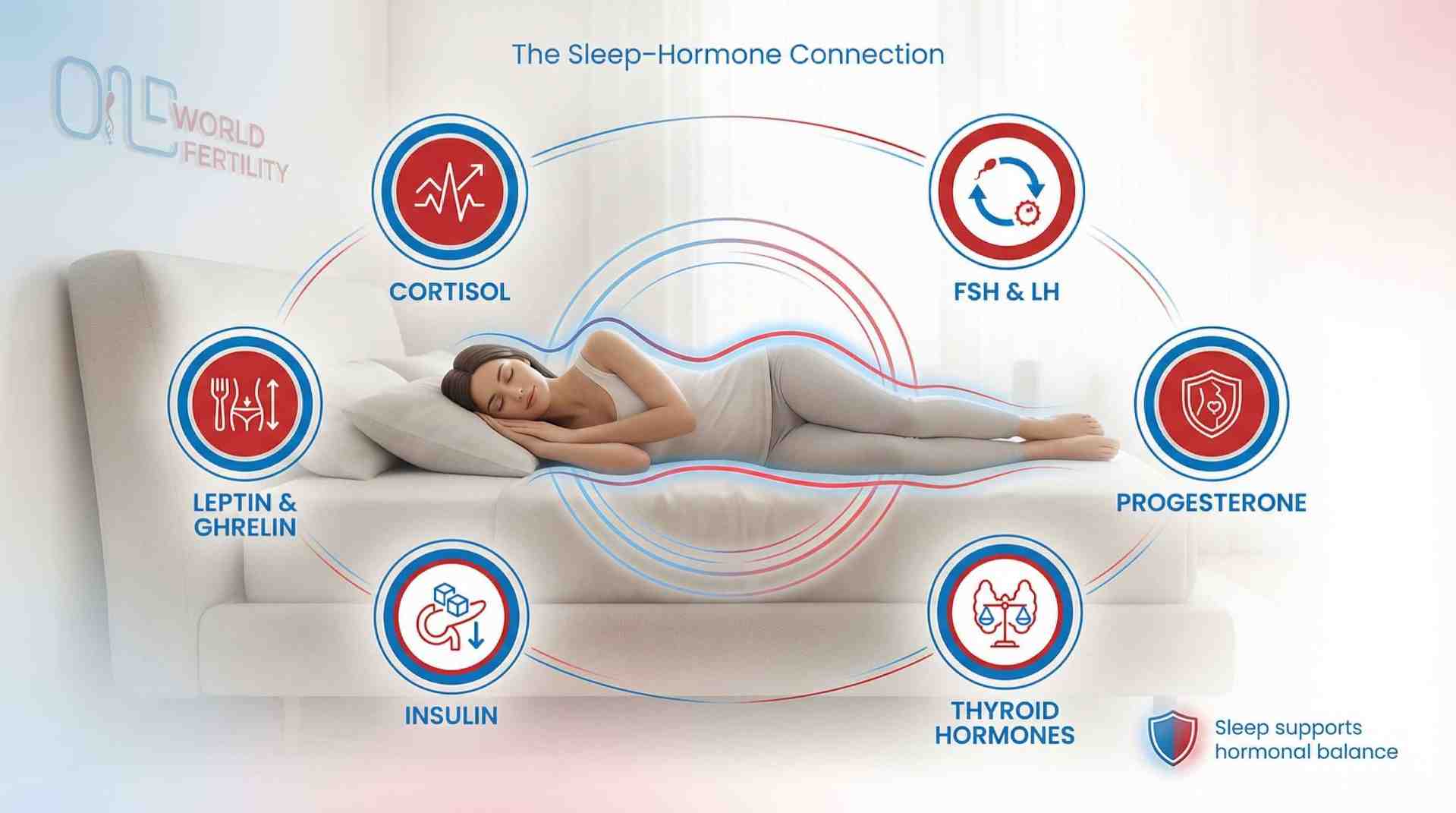
- Cortisol (stress hormone): Less sleep = more cortisol. High cortisol tells your body "danger mode"-not a good time to get pregnant. Result? Delayed ovulation and irregular cycles.
- FSH and LH (ovulation hormones): Made during deep sleep. Less sleep = less of these hormones = poor egg development and irregular ovulation.
- Progesterone (pregnancy hormone): Sleep deprivation lowers progesterone. Low progesterone means a shorter luteal phase and trouble maintaining early pregnancy.
- Thyroid hormones: Poor sleep disrupts thyroid function, which controls reproductive hormones. It can stop ovulation completely.
- Insulin: Sleep loss causes insulin resistance, affecting ovulation (especially with PCOS) and increasing miscarriage risk.
- Leptin and Ghrelin (appetite hormones): Not getting enough sleep messes these up, which leads to weight gain, which further messes up ovulation.
Key Fertility Hormones Affected by Sleep
Here are the specific fertility factors that are thrown off when you don't get enough rest. You can see why sleep isn't just "nice to have"-it's important for your reproductive health now that you know this link between sleep and reproductive hormones.
These important fertility factors are mostly made and controlled by your body while you sleep. They have trouble when they can't sleep. Finding out how lack of sleep can mess up your fertility levels can help you understand what's going on inside your body:
| Hormone |
Role in Fertility |
Effect of Poor Sleep |
| Melatonin |
Egg quality, ovulation timing |
Disrupted secretion |
| Estrogen |
Ovulation, uterine lining |
Hormonal imbalance |
| Progesterone |
Implantation support |
Reduced levels |
| Cortisol |
Stress regulation |
Elevated stress hormones |
| LH & FSH |
Ovulation signaling |
Irregular ovulation |
As you can see, not getting enough sleep affects more than one hormone. It messes up the whole system of hormones your body needs to get pregnant. The good news? Getting better sleep helps all the important fertility factors affected by sleep get back on track.
How Much Sleep Loss Matters?
If you miss a few hours, you might not think it's a big deal. But when it comes to getting pregnant, even a little sleep loss can change your hormones.
Less than seven hours a week:
- Fertility factors drop by 15 to 20 per cent
- Having irregular or no ovulation
- More likely to miscarry
- Less success with IVF
Less than six hours a week:
- 30% lower rates of getting pregnant
- Cycles were seriously messed up
- Not very good eggs
- Inflammation that makes pregnancy hard
Seven to nine hours a night is the best amount.
Can You Fix Hormone Disruption from Poor Sleep?
Yes! Good news: you can get back to sleeping well and having the right amount of hormones. According to research, if you sleep 7-8 hours instead of 5-6 hours, your cycles will be more stable in just two to three months. Hormone levels start to return to normal when you give your body regular, good rest. This makes a big difference. Studies have even shown that women have better luck with IVF when they make sleep a priority before treatment. So let your body rest for two to three months. It's not a waste of time; your eggs are getting ready for their best chance.
Warning Signs Sleep Is Disrupting Your Hormones
Not sure if poor sleep is affecting your fertility? Your body gives you signals. Here are the warning signs that sleep deprivation might be disrupting your hormones and cycle. If you recognise several of these signs and regularly sleep less than 7 hours, there's a good chance sleep and hormonal imbalance are connected in your situation.
1. Changes in cycles:
- Cycles that are longer, shorter, or not regular
- Periods that are heavier, lighter, or more painful
- Seeing spots between periods
2. Problems with ovulation:
- Ovulation is hard to spot.
- Not ovulating on time (after days 18–20)
- Confusing signs of pregnancy
3. Symptoms in the body:
We want you to pay attention to what your body is telling you. When poor sleep disrupts your hormones, you'll notice extreme tiredness even after sleeping, belly weight gain despite no diet changes, increased facial hair or acne, and hair thinning. These signs show that sleep deprivation is causing elevated cortisol, insulin resistance, and testosterone imbalance. If you have several of these symptoms and sleep less than 7 hours, your body needs more rest. Please listen to it.
4. Lack of mood:
- Anxiety or sadness
- More mood changes during PMS
- Brain fuzz
- Low energy all the time
Do you have any of these symptoms and sleep less than 7 hours a night? If so, sleep loss and ovulation may be linked for you.
| If You Improve Sleep From |
Expected Results |
Timeline |
| 5-6 hours → 7-8 hours |
Cycles become regular, hormone levels normalize |
2-3 months |
| Inconsistent sleep → Regular schedule |
Ovulation becomes predictable, better egg quality |
1-3 months |
| Poor quality → Deep, restful sleep |
Reduced inflammation, better progesterone levels |
4-8 weeks |
| Chronic exhaustion → Well-rested |
Improved IVF response and success rates |
Immediate to 2 months |
Do You Recognize These Signs? There's a good chance that sleep loss and pregnancy issues are linked for you if you have a number of these warning signs and regularly sleep less than 7 hours.
The good news? You can improve your sleep, but not many of the things that affect your fertility. Getting more sleep could help with a lot of these signs and increase your chances of getting pregnant.
Ovulation and Sleep -What's the Connection?
Have you noticed that your sleep changes throughout your menstrual cycle? Maybe you sleep like a baby some weeks, then toss and turn other weeks for no reason? You're not imagining it. There's a real connection between ovulation and sleep that many women don't know about.
Understanding how your cycle affects your sleep- and how your sleep affects ovulation-helps you know what's normal and when to be concerned.
Why Sleep Changes During Your Menstrual Cycle
It's not just your period that affects your monthly cycle. Your hormones change once a month, which impacts many parts of your body, including how well you sleep. As in your body estrogen and progesterone levels rise and fall during the cycle, so does the quality of your sleep.
It can be tough to fall or stay asleep around the time of ovulation because estrogen levels are high. Still, progesterone levels are high after ovulation and often make people feel calm and sleepy.
If you've ever wondered why your sleep changes so much during your cycle, it's not because of chance; it's because of your hormones.
Ovulation Phases and Sleep Changes
| Menstrual Phase |
Hormonal Change |
Common Sleep Issues |
| Follicular Phase (Days 1-13) |
Rising estrogen |
Light or restless sleep |
| Ovulation (Days 14-16) |
Estrogen peak |
Insomnia during ovulation |
| Luteal Phase (Days 17-28) |
Progesterone rise |
Increased sleepiness, but poor quality |
| Pre-Period Phase (Days 25-28) |
Hormone drop |
Poor sleep quality, night waking |
Understanding this pattern helps you realize that some sleep disruption during certain phases is normal—but chronic poor sleep affecting your whole cycle is not.
Trouble Sleeping During Ovulation
It's not just a lack of sleep that many women have trouble sleeping during ovulation. If you don't get enough sleep during ovulation, you may have restless nights, wake up often, and even when you do fall asleep, your sleep will not be as restful.
People who have trouble sleeping often take longer to fall asleep, wake up several times during the night, wake up earlier than usual and can't go back to sleep, feel like their sleep is lighter and less helpful, have bright dreams or nightmares, and feel physically restless in bed.
What helps:
1. To stop the temperature rise, keep your bedroom cooler at 65 to 68°F.
2. Blackout shades and white noise can help you sleep better.
3. During ovulation week, don't drink coffee after 2 p.m. because your body is already more alert that time of day.
4. Before going to bed, try deep breathing or light stretching to calm down.
It's normal to sleep less for two or three nights during ovulation. Worrying about it will only make sleep worse.
Sleep Deprivation, Fertility & Pregnancy Risks
Serious and important topics need to be discussed. Not getting enough sleep can make it harder to get pregnant and keep the baby healthy. This isn't meant to scare you; it's so that you know what the risks are so you can make sleep a priority as you try to get pregnant.
Sleep deprivation fertility problems go beyond just making conception harder—chronic poor sleep can also increase pregnancy risks. Let's look at what the research shows and what it means for you.
Does Lack of Sleep Cause Miscarriage?
This is a question that a lot of women have, sometimes after losing a baby. In short, not getting enough sleep does not directly cause miscarriage, but not getting enough sleep regularly can raise your risk.
What the research shows:
Studies show that women who regularly sleep less than six hours per night are more likely to lose their babies than women who sleep seven to eight hours. A large study found that women who slept less than six hours a night had a 20% higher chance of miscarriage in the first few months of pregnancy.
What you can do:
Get seven to nine hours of sleep every night if you're pregnant or trying to get pregnant. It's not necessary to be perfect-getting little sleep every once in a while won't hurt your pregnancy. Chronic, long-term lack of sleep is what puts you at risk. If you can't sleep in the early stages of pregnancy because of worry, nausea, or other symptoms, talk to your doctor, or we can provide you with our one world fertility doctors, who you can talk to about safe ways to get better sleep.
Instead of worrying about how you slept in the past, work on things you can control, like making good sleep habits, dealing with stress, and getting help for sleep problems. Getting better sleep is the most important thing right now.
Effects of Sleep Deprivation on Fertility & Pregnancy
| Sleep Issue |
Hormonal Effect |
Fertility Impact |
| Chronic sleep deprivation (less than 6 hours) |
Elevated cortisol levels |
Delayed or unpredictable periods |
| Irregular sleep patterns (varying bedtimes) |
Estrogen and progesterone imbalance |
Delayed or unpredictable periods |
| Poor sleep quality (frequent waking) |
Reduced melatonin production |
Decreased egg quality, higher oxidative stress |
| Long-term sleep loss (months/years) |
Overall hormone instability |
Increased miscarriage risk, implantation failure |
This table shows how different types of sleep problems affect your hormones and fertility in specific ways. Addressing your particular sleep issue helps target the specific fertility impact you're experiencing.
Melatonin, Sleep Hormone & Fertility
While melatonin is known as the "sleep hormone," it also plays a big role in making babies. Knowing how melatonin affects pregnancy can help you make smart choices about sleep and getting pregnant.
What Is Melatonin and Why Does It Matter for Fertility?
Melatonin is a hormone that tells your body it's time to sleep when it gets dark. Melanin does a lot more than just help you sleep, though.
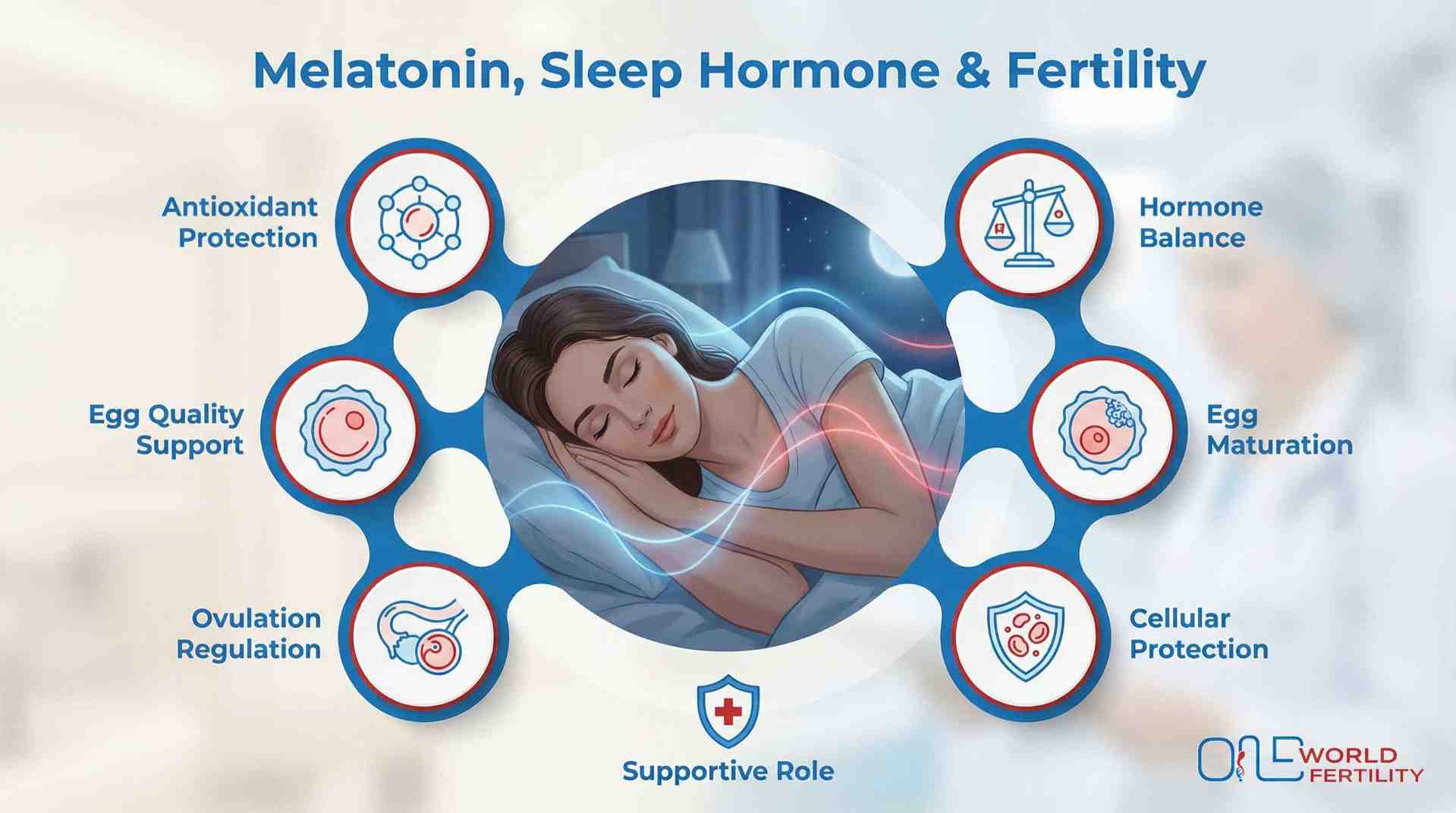
Melatonin's role in fertility:
Melatonin is a strong antioxidant that keeps your eggs from getting hurt. Your ovaries actually produce melatonin locally, where eggs develop. High melatonin concentrations are found in follicular fluid surrounding your eggs-it's there specifically to protect egg quality.
Research shows that melatonin and ovulation are connected.
Melatonin helps regulate reproductive hormones, influences egg maturation and quality, supports proper ovulation timing, and protects eggs from cellular damage that increases with age or stress.
Does Melatonin Affect Fertility?
Yes, melatonin has a good effect on fertility. It's not clear whether melatonin helps or hurts pregnancy, so this is important. There is strong proof that getting enough melatonin is good for your reproductive health.
How melatonin helps fertility:
As an antioxidant, melatonin keeps egg quality high, which is especially important for people over 35. Studies have shown that women whose follicular fluid has higher amounts of melatonin have better eggs and a higher success rate with IVF. It helps with fertility by controlling hormones, especially LH. It makes the embryo better-studies have linked taking extra melatonin to better embryo growth. It lowers inflammation that can make it hard to get pregnant and helps keep reproductive chemicals like estrogen, progesterone, FSH, and LH in balance.
When to See a Doctor for Sleep-Related Fertility Issues?
While better sleep habits help most people, sometimes you need professional support. Knowing when to see a doctor is important for both your sleep and your fertility. We want you to recognise the signs that indicate it's time to get medical help-not in six months, but now.
Questions to Ask Your Doctor
To get the most out of your meeting, come with specific questions:
1. Could my inability to sleep be hurting my ability to get pregnant or have periods?
2. Should I get my hormones checked to see if an imbalance is making it hard for me to sleep?
3. Should I get tested for sleep apnea because of my symptoms?
4. Are there sleep medications safe to use while trying to conceive?
5. Could my fertility medications be affecting my sleep?
6. Would melatonin supplementation be helpful in my situation?
7. Should I see a sleep specialist or a fertility specialist-or both?
8. How long should I work on improving sleep before expecting to see changes in my cycle or fertility?
Final Thoughts
We've covered a lot about sleep and fertility. If you're feeling overwhelmed, remember this: you don't need to be perfect.
Start Small
Sleep isn't another task-it's the foundation that supports everything else. Can't manage 8 hours yet? Start with 30 minutes more. Small changes add up, and your body responds quickly. Most women see hormonal improvements within 2-3 months of better sleep than usual.
Be Kind to Yourself
Some nights will be hard. You'll lie awake worrying. That's okay. One bad night won't ruin your fertility-it's the pattern over time that matters.
Today, take one step.
Choose just one thing to do: make your room darker, go to bed at the same time every night, or talk to your doctor if you're still having trouble sleeping.
You Deserve Rest
Your body can't give you a baby while running on empty. You deserve rest. Your future baby deserves a well-rested mother. Your fertility deserves the hormonal balance only sleep provides.
Give your body the rest it needs. Trust the process. Better sleep is one powerful step toward holding your baby. Your dream of parenthood is valid. Both your dream and your rest deserve attention. Sweet dreams.