
Why fertility treatment feels emotionally overwhelming
 Written by
One World Fertility
Feb 10, 2026 11 min read
Written by
One World Fertility
Feb 10, 2026 11 min read
Fertility treatment can feel emotionally exhausting. Learn why IVF and fertility care are so draining and how this stress affects mental health.

If you're feeling overwhelmed by your fertility treatment journey, you're not alone, and what you're feeling is completely normal. Starting fertility treatment can make you feel a lot of different things. Your mood changes quickly between hope and worry. It all adds up: the meetings, the waiting, the stress over money, and the constant not knowing what will happen.The truth is that fertility treatment is more than just a physical process. It's also a trip of emotions that affects every part of your life. And if you're having a hard time right now? You're not weak because of that. It means you're a person. We'll talk about why fertility treatment can be so hard on your emotions and tell you that you're stronger than you think, even on the worst days.
Why Fertility Treatment Is So Emotionally Stressful
There isn't just one reason why fertility treatment is upsetting; every day, more and more things add up.
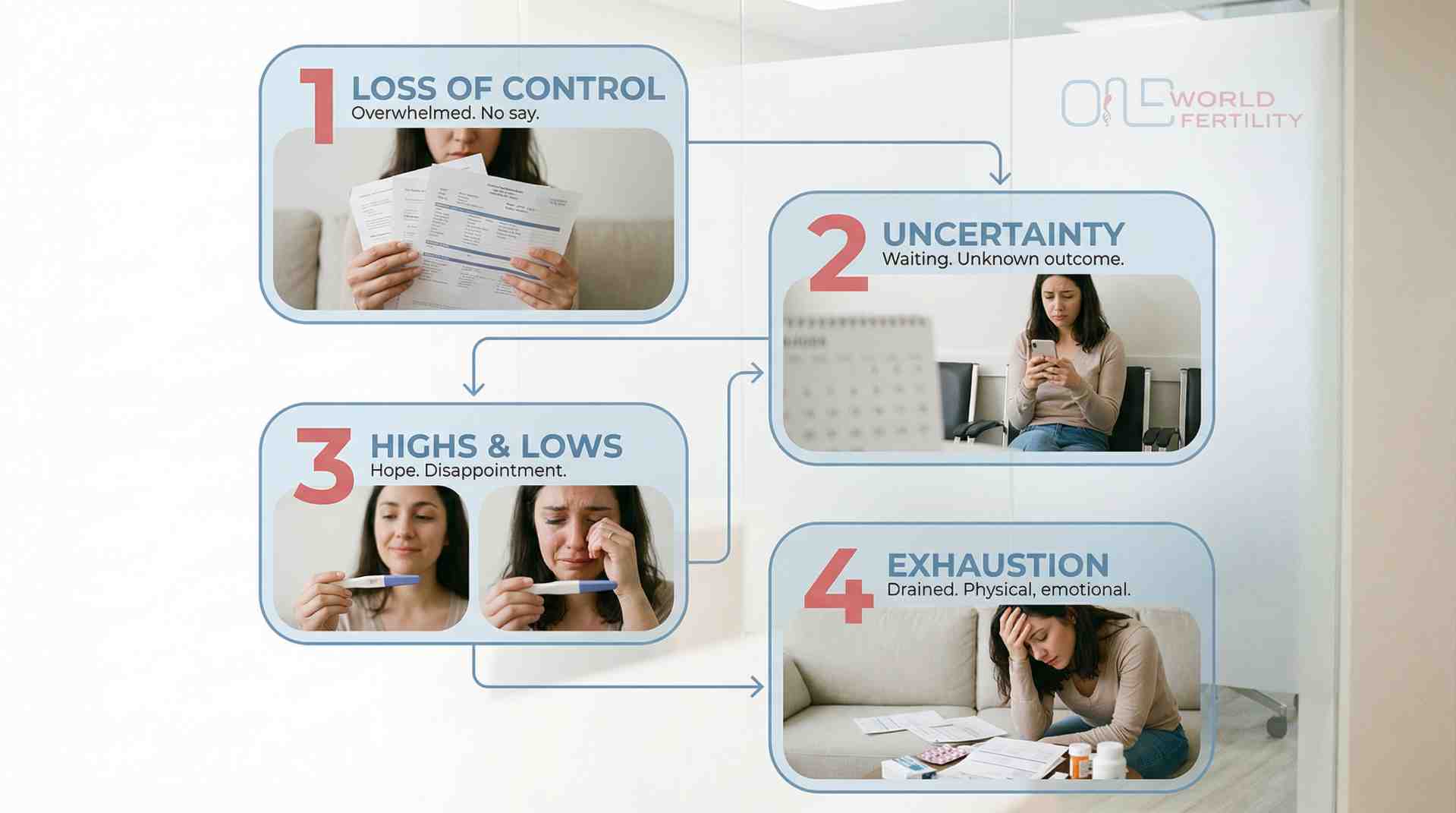
- Loss of Control:- You're used to making plans and following through. However, when you get fertility treatment, you can't do as much as you used to. It's possible to do everything "right" and still not get what you want. It is tiring to lose control like that.
- Uncertainty:- Is this cycle going to work? Should we try again? Can we pay for one more? The feeling of "not knowing" all the time creates a nervousness that is hard to shake.
- Repeated Emotional Highs and Lows:- There is hope and the very real chance of disappointment in every treatment session. During treatment, the two-week wait, and the test result are all parts of the same wave that you keep riding. That's hard for people who haven't been through it to understand how hard each cycle is on your emotions.
- Why "Trying" Itself Becomes Exhausting:- At some point, wishing, getting ready, waiting, and coping become too much to handle. It's no longer just about the medicine; it's also about how hard it is on your emotions to keep going.
Why Infertility Causes Emotional Pain
People don't always understand how much mental pain infertility causes. Beyond having a child, it's about missing the way you thought your life would go. Watching your friends announce their babies while you're still waiting. Feeling like your body let you down. Feeling alone while going through something so personal, while trying to act "normal" to other people.
Your identity is tested by infertility. Insecurities about your future, your relationships, and even your worth can stem from it. Those around you might not understand this pain because it's not always obvious.That pain really exists. What you said is true. And that should be recognised.
Is It Normal to Feel Overwhelmed During Fertility Treatment?
Yes. Without a doubt. If you feel stressed during IVF or any other fertility treatment, it doesn't mean you're not doing a good job; it means you're going through something really hard.
You're in charge of:
- Procedures and medicines for health
- Pressure from money
- Feelings of uncertainty
- Stress in relationships
- Taking care of work and life duties
- There is fear and hope at the same time.
That's too much for anyone. You're not failing if some days you feel like it's too much. You're a person. And everything you're going through is too much for anyone.
Why Fertility Treatment Feels Emotionally Heavy
| What Makes It Hard |
Why It Affects You |
| Loss of Control |
You can't "make" treatment work-so much is beyond your control |
| Financial Stress |
Treatment costs add up, creating pressure and limiting your options |
| Physical Demands |
Hormones, injections, and procedures affect your body and emotions |
| Uncertainty |
Not knowing if or when it will work makes planning impossible |
| Repeated Disappointment |
Each failed cycle brings grief that's harder to bounce back from |
| Social Isolation |
It's hard to talk about, so you often feel alone in this journey |
The Emotional Side Effects of IVF That No One Talks About
Everyone gets you ready for the injections, appointments, and treatments that are part of IVF. But how does IVF make you feel emotionally? People are often caught off guard by those.The treatment itself doesn't just cause the mental stress of IVF. You're putting your life on hold every two weeks while you wait for the next report. You keep going back and forth between hope and sadness, and most of the time, you do it alone while the rest of the world goes on.
These feelings of sadness aren't "side effects" that you should just get over. They're real, they matter, and you should get help for them.
IVF Anxiety and Constant Overthinking
There's no need to worry about IVF if it's taking over your mind. This is what happens when you're not sure about something so important. You question everything. Did I get enough rest? Was that cramp a sign? Did fear make my chances go away? You look up signs on Google at 2 a.m., think about every feeling, and stress over things you can't change. It's not that you're handling things badly because you're thinking too much. You are trying to protect what is most important to you because you care a lot.
IVF Depression and Emotional Burnout
Depression during IVF is more common than people realise, especially after multiple cycles. It's not just sadness-it's exhaustion. Emotional burnout. The feeling that you've given everything you have and you're not sure you can keep going. You might feel:
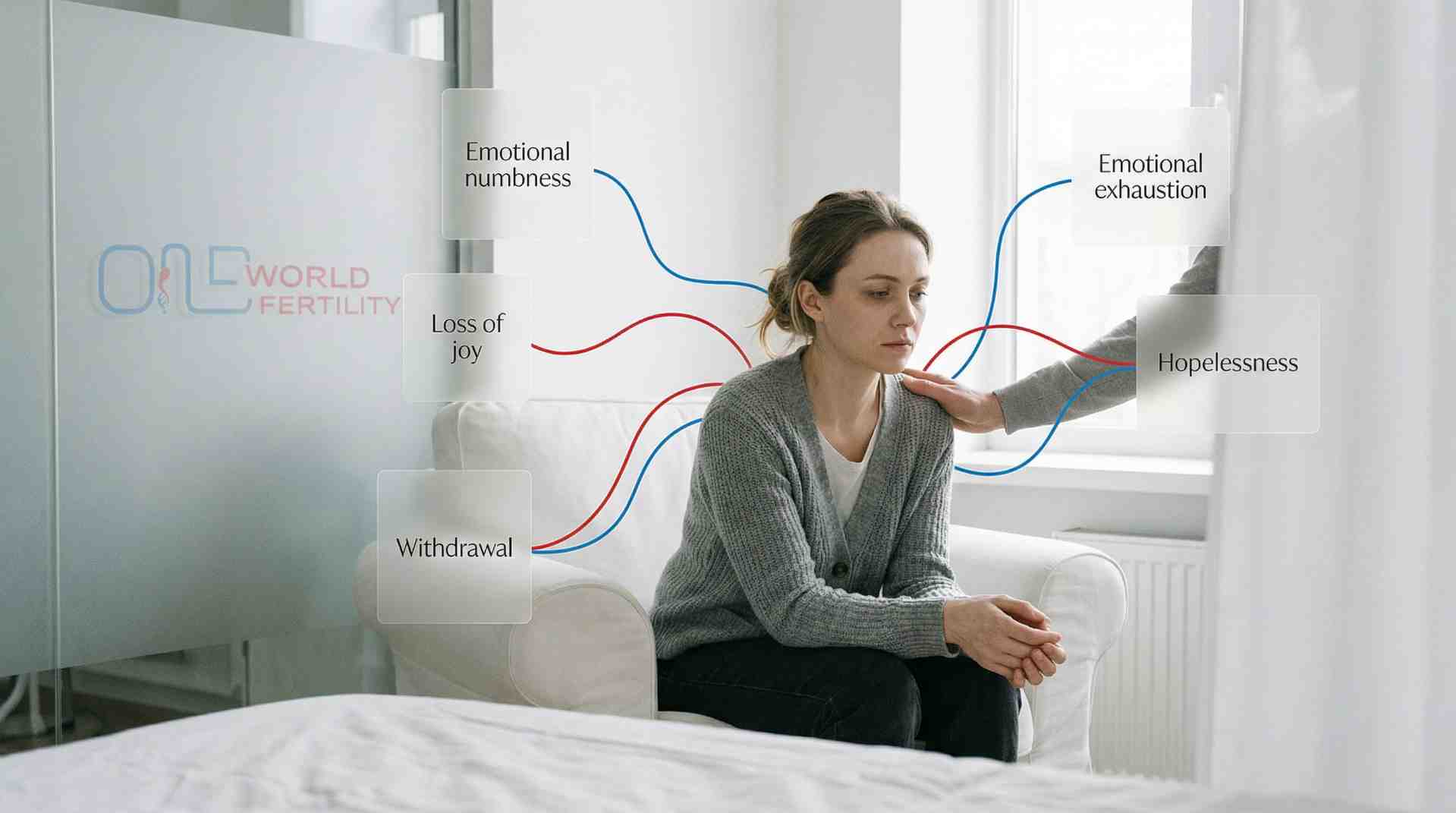
- Emotionally numb or disconnected
- Like you've lost joy in things you used to love
- Withdrawn from friends and family
- Hopeless about the future
If you're experiencing this, please know: It doesn't mean you're giving up or that you don't want this enough. It means you're human, and you've been carrying something heavy for a long time.
IVF Stages and Emotional Reactions
| IVF Stage |
What You Might Be Feeling |
| Stimulation & Retrieval |
Physical discomfort, worry about your body's response |
| Waiting for Results |
Constant anxiety, checking phone obsessively |
| Embryo Transfer |
Cautious hope, fear of doing something wrong |
| Two-Week Wait |
Overthinking every symptom, emotional exhaustion |
| Test Day |
Intense fear and hope all at once |
| After Results |
Either heartbroken grief or anxious joy |
Why Infertility Affects Mental Health So Deeply
Infertility and mental health are deeply connected. This isn't just about feeling sad. How infertility affects mental health touches every part of your life. Infertility challenges your identity, makes you question your body and worth, and affects your relationships. You're grieving something that hasn't happened yet, which makes it hard for others to understand.
The cycle of hope and disappointment, along with the constant lack of confidence, is very hard. You're not weak enough for your mental health to be in bad shape. It's fighting because what you're going through is really, really hard.
Infertility Grief: Mourning What Hasn't Happened Yet
One type of loss that people don't understand well is infertility sadness. You miss a child you haven't met and a future you pictured. Each month, it seems like life is getting farther away. This sadness has no end. Every negative test breaks my heart more. Watching other people celebrate what you're still fighting for makes you miss the timeline you set and the ease you thought would come. Maybe no one gets why you're upset about "something that hasn't happened yet." But your sadness is real. You have the right to mourn.
Mental Health Effects of Infertility
| Mental Health Impact |
How It Shows Up |
| Anxiety |
Racing thoughts, sleeplessness |
| Depression |
Hopelessness, numbness |
| Emotional fatigue |
Feeling “done” |
| Isolation |
Avoiding people |
How Fertility Treatment Affects Relationships
Most couples never thought they would have to deal with infertility in their relationship. This is how IVF relationship stress looks:
- Treatment plans, test findings, and next steps are the only things that are talked about.
- When everything is planned around clinic visits, spontaneity goes away.
- One partner may be open about their grief while the other stays strong, which can lead to unwanted distance.
- You two are so hurt that you can't stand to see each other's pain.
- It seems like everything is about getting better, and you forget how to just "be" together.
This doesn't mean that your relationship is over. It means that both of you are going through something very hard.
Why Couples Feel Emotionally Disconnected During IVF
IVF emotional distance creeps in quietly, and often both partners feel it without knowing how to fix it. You might be physically together but emotionally worlds apart. One of you might want to talk about treatment constantly, while the other needs space from it. You're both coping differently-maybe one researches obsessively while the other tries to stay distracted. These different coping styles can feel like rejection when really, you're both just trying to survive.
Sometimes the person going through the physical treatment feels alone in their body, while the other partner feels helpless watching from the sidelines. Neither feels truly understood, and that gap between you grows wider even though you're going through this together.
Hidden Stress Factors That Make Fertility Treatment Harder
Beyond the medical side, there are fertility treatment stress factors that weigh on you quietly. These IVF stress factors pile up in ways people don't always talk about. Financial stress that keeps you up at night:
- IVF financial stress is real-treatment costs thousands per cycle, often without insurance coverage
- Every failed cycle is both emotional and financial loss that limits future options
- You're making impossible choices: Can we afford another round? Should we take out a loan?
- The cost creates guilt between wanting a baby and maintaining financial security
- You delay other life decisions-buying a home, changing jobs-because everything revolves around treatment
Social pressure and unwanted questions:
- Social pressure infertility comes from everywhere-"when are you having kids?" at every family gathering
- Friends announcing pregnancies while you're struggling, and you have to smile through it
- Unsolicited advice: "just relax," "try this supplement," "maybe it's not meant to be"
- Avoiding social events because you can't handle another pregnancy announcement
- The loneliness of keeping your struggle private because it's too exhausting to explain
These hidden stressors make every step feel heavier than it already is.
Practical Tips to Cope Emotionally During Fertility Treatment
Coping with fertility treatment emotionally isn't about staying positive all the time-it's about protecting your heart in small, gentle ways. Here's what actually helps with managing IVF stress.

- Tip 1: Stop Expecting Yourself to "Be Strong" All the Time: Emotional support during infertility means letting yourself fall apart sometimes. Strength includes crying, resting, and stepping back when it's too much. You don't have to be brave every day. Sometimes admitting you're struggling is the bravest thing you can do.
- Tip 2: Limit Who You Share Your Journey With: Not everyone needs to know. Dealing with infertility questions gets easier when you choose just a few trusted people. Fewer people = fewer painful comments and advice you didn't ask for. It's not hiding-it's protecting your peace.
- Tip 3: Create Emotional Breaks Between Cycles: IVF emotional burnout is real. Even a short pause between cycles-a few weeks, a month-gives you space to breathe and reset your energy. It's not giving up. It's giving yourself room to heal before diving back in.
You Are Not Weak for Feeling This Way
If fertility treatment is making you feel tired, scared, or like you don't know what else you can handle, please know this: you are not weak. It's normal to feel this way when you're going through something really hard. Infertility isn't a luxury; you need emotional help. It's not something you only need when you're "really struggling." Of course you deserve it because this journey is so hard on your body, your emotions, your finances, and your mind.
You don’t always need to be strong. Every day doesn't mean you have to be positive. You can cry, rest, take a step back, and ask for help. Taking care of your mental health is what keeps you going, not letting up. Here at One World Fertility, we know that fertility treatment is more than just getting medical help; it's also a trip of feelings. We're here to help you through it if you need advice, encouragement, or just someone to listen without judging you. You don't need to go this way by yourself.