
When does age start influencing fertility decisions
 Written by
One World Fertility
Feb 20, 2026 12 min read
Written by
One World Fertility
Feb 20, 2026 12 min read
Learn when age starts affecting fertility, how it impacts pregnancy chances after 30 and 35, and what experts recommend for planning ahead.
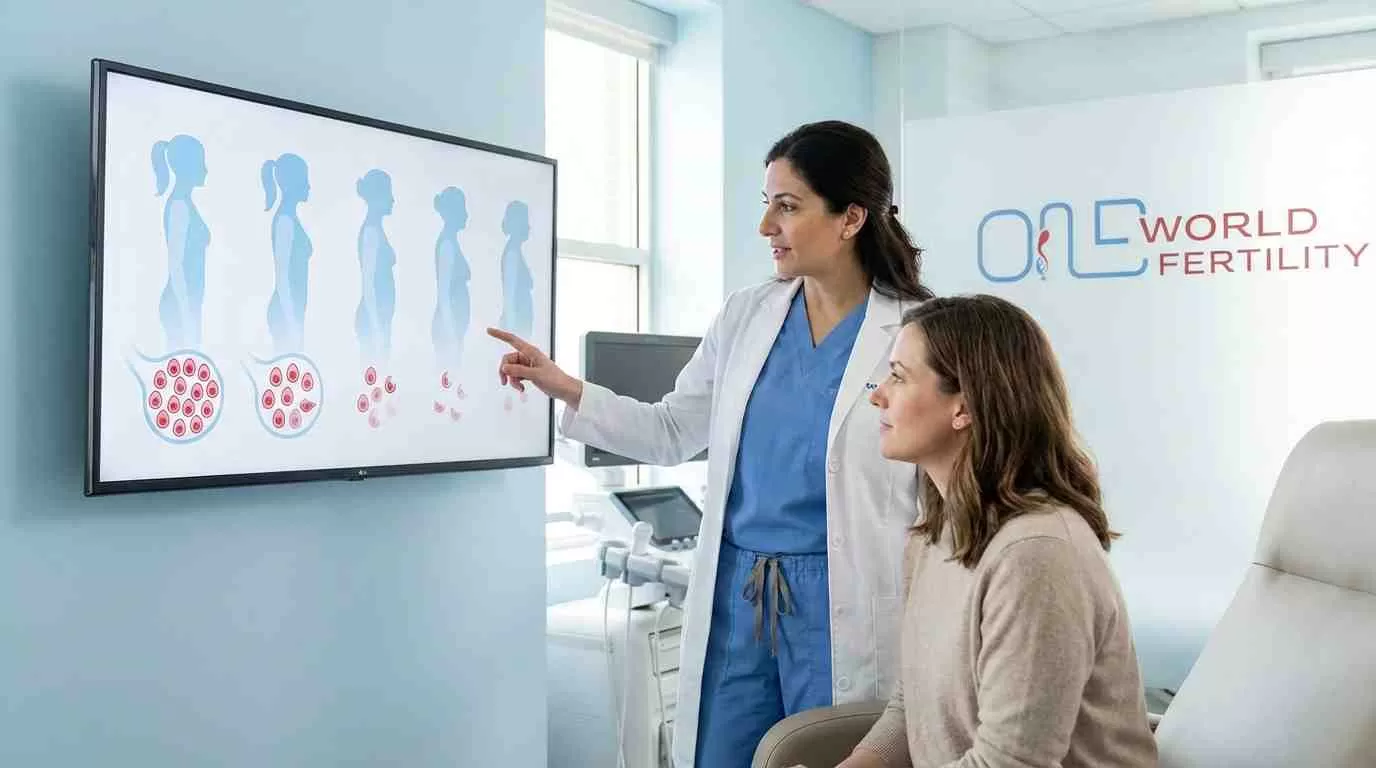
Is my age affecting my chances of getting pregnant? There are a lot of women who wonder this, and it's really one of the most important things to know when you want to start a family. It's true that age does influence fertility, but don't freak out. Don't be afraid; we're here to deliver the truth. This article will talk about when your fertility starts to change naturally, what your chances of getting pregnant are at different ages, and what experts say is the best age to get pregnant.
You need clear answers, whether you're in your twenties and planning for the future, your thirties and trying now, or your forties and looking at your alternatives. We'll help you understand what's going on with your body and what options you have so that you can move forward with your reproductive journey feeling knowledgeable and confident.
How Age and Fertility Are Connected (And Why It Matters)
Let's be honest: does age affect fertility? Yes, it does. But it doesn't have to be hard to understand how age and fertility are linked.This is what happens: you are born with all the eggs you will ever have. Men make sperm all the time, while women's fertility and age work on a separate schedule. You ovulate once a month, and with time, both the number and quality of your eggs naturally go down. When does this begin? Fertility with age starts to change in your late twenties, becomes more obvious in your thirties, and declines a lot after 35. The deterioration gets considerably faster by the time you reach your forties.
Think of a woman age and fertility like this: your body has a biological clock, and while everyone's ticks at a slightly different pace, it's ticking for all of us. Knowing this link will help you make smart decisions about when to start trying, whether to store your eggs, or just plan ahead with confidence.
Understanding Your Childbearing Years - What Is Reproductive Age?
Have you ever heard the phrase "childbearing age" and wondered what it meant? It's the time in your life when you can get pregnant, or your reproductive years. So, what is considered childbearing age? The medical definition of the childbearing age range is from the onset of your first period (about 12-13) until menopause (usually 45-55). But here's the catch: just because you can get pregnant doesn't mean your fertility stays the same over the years. Your age when you can have children is important since your fertility changes over time.
Childbearing Age Range and Fertility Phases
| Age Phase |
Age Range |
Fertility Level |
Key Characteristics |
| Peak Fertility |
20-24 |
Highest |
85-90% chance of conceiving within a year |
| Prime Years |
25-29 |
Very High |
80-85% conception rate, healthiest pregnancies |
| Good Fertility |
30-34 |
High |
75% conception rate, slight decline begins |
| Gradual Decline |
35-39 |
Moderate |
65% conception rate, increased miscarriage risk |
| Significant Decline |
40-44 |
Low |
40% conception rate, fertility treatments often needed |
| Low Fertility |
45+ |
Very Low |
<5% natural conception rate, menopause approaching |
What is the best pregnancy age range? That's the time between your twenties and early thirties. After that, things start to change slowly. Want to know how you're doing? Here's a look at how reproductive years for women usually go and what each stage means for your journey to get pregnant.
When Are Women Most Fertile? Your Peak Fertility Years Explained
Let's get to the point: at what age are women most fertile? Your twenties, most especially between the ages of 20 and 29. Here's what works in your favour during your female fertility peak:
- Eggs are the freshest and healthiest.
- Hormones are in perfect equilibrium.
- Monthly conception rates ranged from 25% to 30%.
When does fertility peak? Biologically, a woman is most fertile between the ages of 24 and 25. The Peak fertility age for females is when they have the highest chance of getting pregnant and the lowest chance of having a miscarriage. So, at what age are you most likely to get pregnant? The biological sweet spot is in the middle of your twenties, but here's the real talk: just because that's when women are most fertile doesn't mean you have to get pregnant then. A lot of women in their thirties are able to get pregnant. You can think of peak fertility age as the best time, but not the only time. If you know when the peak female fertility is, it can help you make smart choices without feeling like you have to make decisions that aren't good for you right now.
Your Fertility at Different Ages - Monthly Pregnancy Chances
At what age can you get pregnant? Let's have a look at the real numbers. What are the chances of getting pregnant at 25? About 25% of the time, if you time it right. If you're pregnant at 25, your eggs are in great shape, and the chance of miscarriage is very low. Here's how your chances change as you become older:
Monthly Pregnancy Chances by Age (Healthy Couples)
| Age |
Monthly Conception Rate |
Time to Pregnancy (Average) |
Annual Pregnancy Rate |
| 20-24 |
25-30% |
3-4 months |
95% |
| 25-29 |
20-25% |
4-5 months |
90% |
| 30-34 |
15-20% |
6-8 months |
85% |
| 35-39 |
10-15% |
10-12 months |
70-75% |
| 40-44 |
5-8% |
18-24 months |
40-50% |
| 45+ |
<2% |
Often requires assistance |
<5% |
Notice the gradual shift? Even at 35, your odds are still decent; it just takes longer. Your age affects timing, not whether pregnancy is possible.
When Does Fertility Start to Decline?
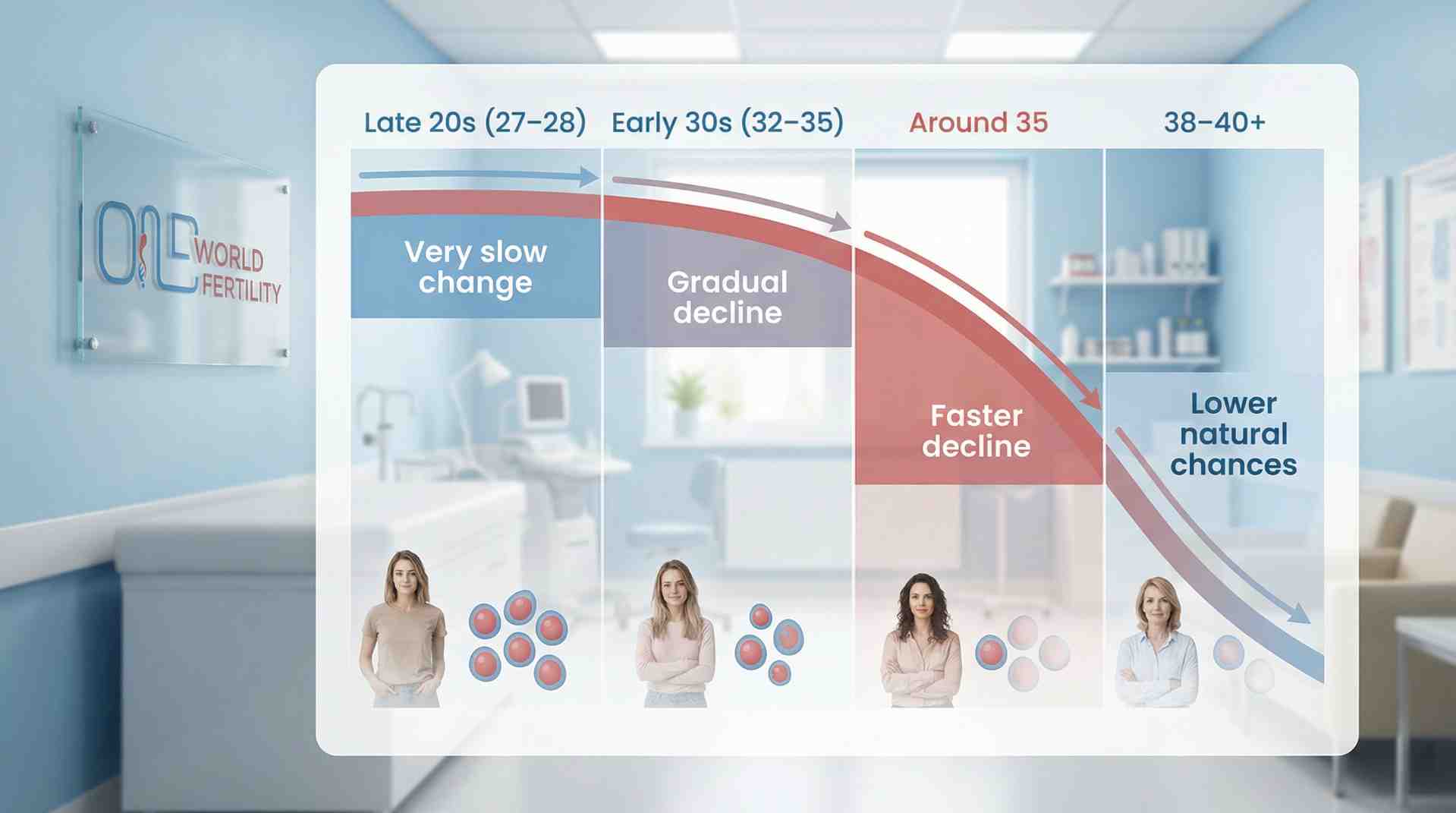
Okay, let's be honest: when does fertility decline? This is probably the question that keeps you up at night. The answer isn't one alarming number; it's more like a slow change that happens over time. Here's the reality about fertility declines with age:
In Your Late Twenties (27-28):
- Yes, fertility starts to go down with age here. But honestly? You probably won't even see it.
- The drop is so slow that it seems like losing 5% of your phone's battery.
In Your Early Thirties (32-35):
- This is when it becomes increasingly obvious that fertility decreases with age.
- Your chances go down from about 20% to 15% each month.
- It could take 8 to 12 months to get pregnant instead of 4 to 6.
- You're still able to get pregnant, but not as easily.
The Big 35:
- The age when fertility declines picks up speed.
- You lose eggs quickly. The quality of the eggs continues to decline significantly.
- The chance of having a miscarriage goes up from 15% to 20-25%.
After 38 to 40:
- When is it harder to get pregnant? This is it It gets much harder to get pregnant naturally.
- Many women need medical assistance or fertility treatments.
- But a lot of people still get pregnant naturally; it's just less certain.
To help you understand how fertility declines with age, picture yourself going down a modest hill in your twenties and early thirties. That hill gets steeper after you turn 35. You can definitely feel the decrease by the time you're 40. It's not falling off a cliff; it's going down slowly at first, then faster. The good news is that knowing where you are on this timetable might help you decide when to try, when to be tested, or when to consider other options, like storing your eggs.
Getting Pregnant After 35 - What Really Changes?
Turned 35 and suddenly everyone's treating pregnancy after 35 like Mission Impossible? Let's talk about what's really going on. Is it more difficult to conceive at 35? Yes. Is it harder to get pregnant at 35? Not always, just different. It takes longer, but many people do it. Why does fertility after 35 change?
- You have 1 to 2 million eggs when you're born, but by the time you're 35, you only have approximately 25,000.
- Egg quality declines, and there are more chromosomal issues.
- Ovulation is harder to anticipate.
- Hormone levels begin to change.
This is why your chances of getting pregnant each month go down to 10–15%, and your chances of having a miscarriage go up to 20-25%. Now things become tricky after 35 pregnancy, and the risk of getting pregnant after 35 is two very distinct things.
Risk #1: Is it possible for you to get pregnant? (challenges to getting pregnant)
Risk #2: What happens during pregnancy? (health problems). Both of them have a higher chance of getting pregnant as they get older. The pregnancy risk with age is real, but here's the good news: both are manageable with the right approach and medical care.
The Reality of After 35 Pregnancy
]What's really going on with pregnancy with age? Let's talk about age and pregnancy honestly.
Why does it get harder to get pregnant after 35?
- Blood vessels lose their ability to stretch, which can cause problems with blood pressure
- Insulin resistance rises = risk of gestational diabetes
- Eggs have more chromosomal mistakes = higher aberrant rates
- Fibroids and other conditions become more widespread
This has two effects on pregnancy and age:
Becoming pregnant:
- Average of 10 to 12 months (4 to 6 months younger)
- May need help getting pregnant
- Not as likely to succeed, but still quite possible
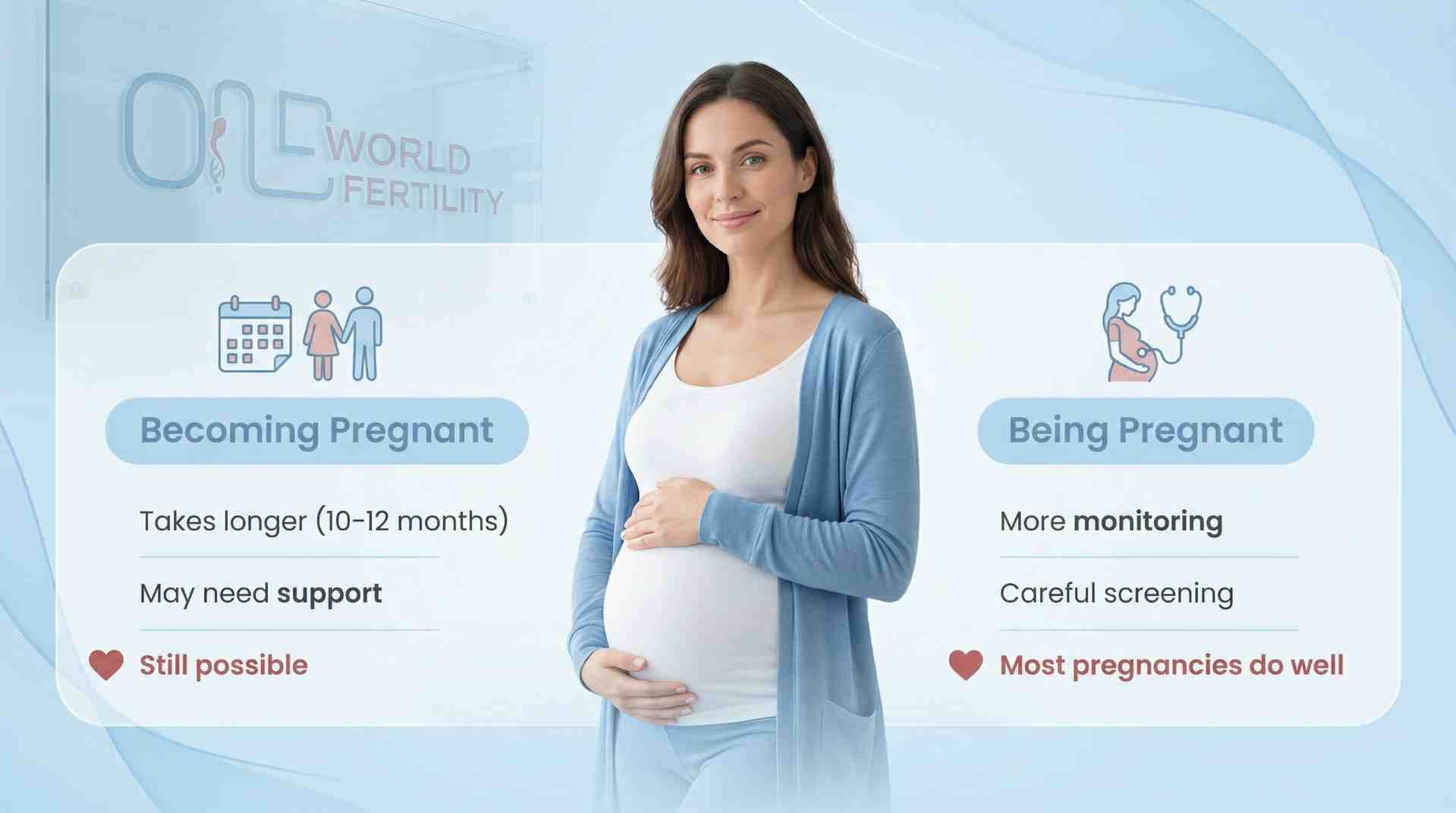
Being pregnant:
- More exams and monitoring
- More strict screening rules
- Increased risks of complications
- But most pregnancies? Still absolutely fine
The link between age and pregnancy isn't all bad. Modern prenatal care has changed pregnancy and its effects with age. You just need to know what's going to happen and be ready for it.
Pregnancy Outcomes and Risks by Age
| Age |
Miscarriage |
Down Syndrome |
Gestational Diabetes |
High Blood Pressure |
C-Section |
| 20-24 |
10-15% |
1 in 1,500 |
6-8% |
5-7% |
20-25% |
| 25-29 |
10-15% |
1 in 1,200 |
7-9% |
6-8% |
22-27% |
| 30-34 |
15-18% |
1 in 950 |
8-10% |
7-9% |
25-30% |
| 35-37 |
20-25% |
1 in 400 |
10-13% |
9-12% |
30-35% |
| 38-40 |
30-35% |
1 in 200 |
12-15% |
12-15% |
35-42% |
| 40-42 |
40-50% |
1 in 100 |
15-18% |
15-20% |
42-48% |
| 43-45 |
50%+ |
1 in 50 |
18-22% |
20-25% |
48-55% |
What You Can Do to Improve Your Chances After 35
So, fertility after 35 goes down, but you can still do something about it. Here's how to deal with the risks of getting pregnant after 35.
Boost Your Fertility: Get checked early. Tests for AMH levels, FSH, and antral follicle count will show you where you stand. Use ovulation kits to track your cycle, and pay close attention to what your body is telling you. Don't wait for help. If you're between 35 and 37, consult a doctor after six months. If you're above 38, go right away.
Treatment options for fertility after 35: You can use fertility drugs (such as Clomid or Letrozole), have IUI, IVF, or freeze your eggs.
Keep Pregnancy Healthy: Before conceiving: prenatal vitamins, healthy weight, control existing conditions, quit alcohol and smoking. During Pregnancy: early prenatal care, genetic screening, glucose testing, and choose an OB experienced with "advanced maternal age."
Your schedule: 35–37: Give it six months and then get help. 38-40: See a fertility doctor right now. 40+: Expect help with fertility and think about donating eggs. Being proactive is the key to pregnancy risk with age and pregnancy risk by age. Pregnancy after 35 is safer than ever, thanks to modern science. You can have a healthy baby if you get the correct help.
It's Not Just About Age - Other Fertility Factors That Matter
Yes, age is important, but it's not the only thing that matters. There are several factors affecting fertility that have nothing to do with your age. Your health is very important:
- BMI (too high or too low can stop ovulation)
- Conditions like endometriosis or PCOS
- Thyroid issues or autoimmune disorders
Your lifestyle decisions can affect your fertility: If you smoke, you could lose up to 50% of your fertility. Hormones are messed up by too much caffeine and alcohol. Chronic stress messes with your cycle. Don't forget about your partner: The quality of his sperm is just as important. His age, lifestyle, and health also affect his ability to have children.
Other things that affect fertility:
- Exercise (too much or too little both hurt)
- Nutrition and vitamin deficiencies
- Environmental toxins and chemicals
- Sleep quality and irregular schedules
The good news is? Most of these factors that affect fertility are something you can change, unlike age. A 38-year-old woman who is really healthy and has good habits might have an easier time getting pregnant than a 28-year-old woman with PCOS and a lot of stress. What you can change is what you should focus on. It really matters. When it comes to seeing a fertility specialist, here's when to see a fertility doctor based on your age:
- If you're under 35: Try for a year before asking for help. You have time, and most couples get pregnant spontaneously within a year.
- 35-37: Don't wait more than six months. Your ability to get pregnant is going down faster now, so acting sooner is better.
- 38-40: After only three to six months of trying, see a fertility doctor. Every month matters at this age.
- 40+: Get checked out right away, even before you start trying. Baseline testing tells you exactly what you're working with.
If you have any of the following, see a fertility doctor right away:
- You have irregular or absent periods Known fertility issues (PCOS, endometriosis)
- History of pelvic infections or surgeries
- Your partner has fertility concerns
- Previous miscarriages
Don't think you're "giving up" if you ask for help early. A fertility expert can rapidly find problems that can be fixed. Sometimes it's as easy as timing or a lack of vitamins. It's not about failure when it comes to seeing a reproductive doctor; it's about being wise with your time.
Take Control of Your Fertility Journey
Your age doesn't define your fertility story; your actions do. One World Fertility is available for you, whether you require fertility testing, IVF, ICSI for male factor problems, IUI for simpler procedures, egg freezing, or just expert advice on when to do things.We know that planning for fertility isn't only about biology; it's about your whole life. Our experts make treatment plans that are right for you based on your age, health, and goals. We're with you every step of the way, from your first appointment to when you hold your baby.
Are you ready to learn about your fertility? Don't wait to find out, get answers now. Make an Appointment for Your Fertility Consultation. Let's make a clear plan for how to deal with your fertility issues. This is where your trip begins.