One day you're nauseous all morning. The next day, nothing happened. Your breasts hurt with every step one day. The next day, they feel completely normal. If this sounds like anything you're experiencing, welcome to the 7 weeks of IVF pregnancy, which is the most confusing time in early pregnancy.
At this point, the symptoms don't follow a straight path. They change. They come and go. And every time they go away, even for a few hours, your mind immediately goes to the worst place. You start checking and begin to compare. You start to think that something might have gone wrong.
Well, in this blog, we'll talk about why symptoms change at week 7, what's really going on in your body, which changes are normal, when you should really be worried, what to eat on the unpredictable days, and what appointments are coming up next.
Your symptoms don't have to be constant to indicate a healthy pregnancy. Let's talk about why.
Where Are You at Week 7? - A Quick Orientation
If you had a Day 5 blastocyst transfer, you are now about 5 weeks past that day, which is 7 weeks in obstetric terminology. For most women, the first ultrasound happened last week. You saw the heartbeat. You took a breath. Now you're in the middle, waiting for the next scan.
Your baby is around the size of a blueberry, roughly 7 to 10 mm. The brain, lungs, digestive system, and tiny limb buds are all growing very quickly. This is also the week when many clinics start talking to you about moving to an OB-GYN.
Why Do Symptoms Fluctuate at 7 Weeks?
This is the question that brought you here. You felt terrible yesterday - nauseous, tired, and barely able to do anything. You woke up today and felt absolutely fine. And instead of being happy, you're scared. So let's talk about what's really going on. Once you know the "why," the panic will be at ease.
Your Hormones Don't Rise in a Straight Line
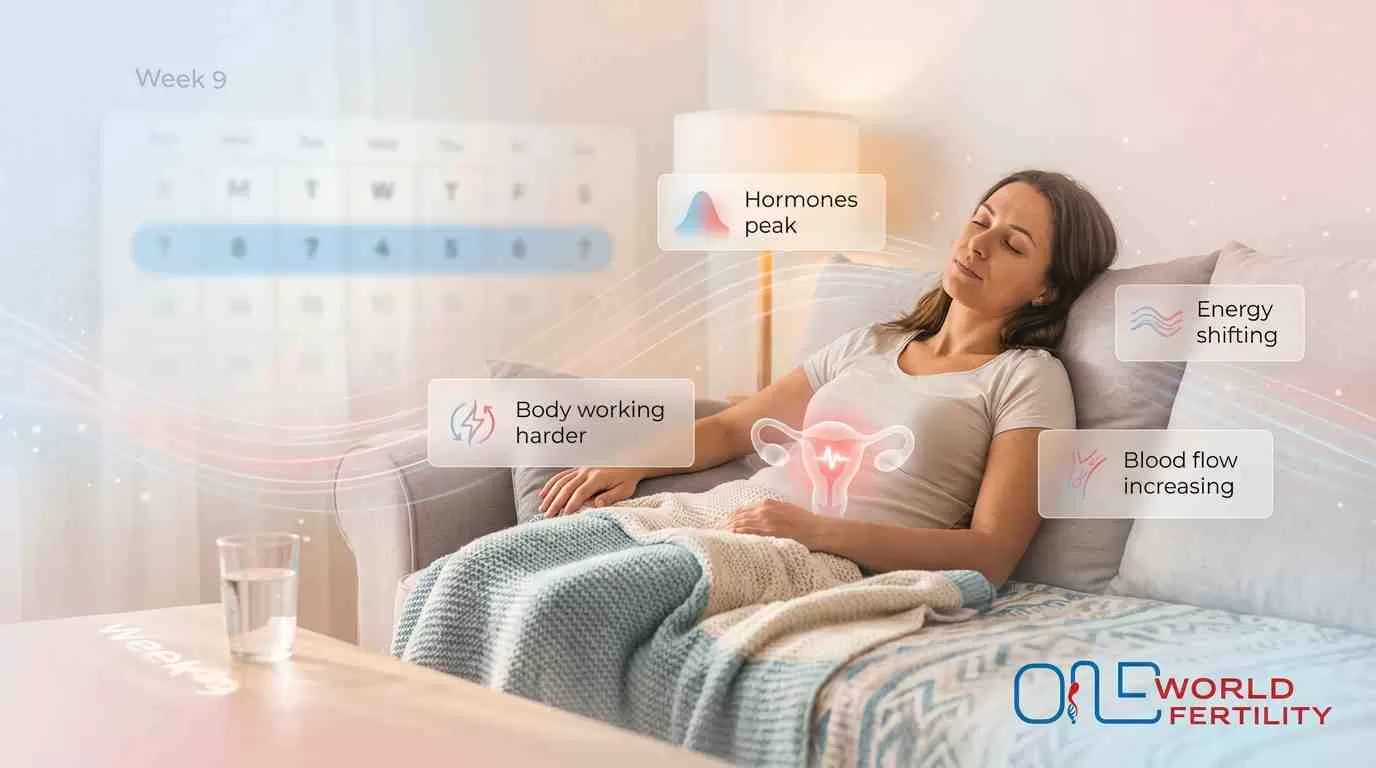
hCG and progesterone are the two hormones that are causing your symptoms right now. Most women think of these hormones going up in a straight line, like a graph that only goes up. But that's not how it works in real life.
Hormones change naturally during the day. They can be higher in the morning and lower at night, or the other way around. They don't go up at the same speed every hour or every day. And since these hormones are what cause your symptoms, they fluctuate too. Some mornings, you will feel stronger, and in the afternoons, weaker. Some days, they are almost absent.
This is normal. Your body isn't a machine that works according to a set program. It's a living system that changes naturally, and changes don't mean it's a problem.
Your Body Is Adapting
Your body has been dealing with high hormones for a few weeks by week 7. And now it's starting to adjust. That means some symptoms may feel less intense. It is not because the hormones are dropping, but because your body is getting used to their presence.
Think of it this way: When you first enter the room with loud music, it's too much. By the seventh day, you barely notice it. The music hasn't stopped; you've just become used to it. Your pregnancy symptoms are doing the same thing. Your body is becoming used to these higher hormone levels, which means that some days the symptoms are less noticeable.
hCG Is Approaching Its Peak
hCG, the hormone that has caused most of your symptoms since the beginning, usually peaks between weeks 8 and 11. It slowly goes down after that. At week 7, you're approaching that peak, which means the rate of increase is starting to slow down.
It's important to know that a slower rise doesn't mean that levels are going down. Your hCG is still going up, but not as quickly as it was from weeks 4 to 6. And since many symptoms are caused by how fast that surge happens rather than its level. So, even though it is at a higher level than they've ever been, your symptoms might feel less intense this week.
Daily Factors Affect How You Feel
In addition to hormones, everyday items can also affect how your symptoms show up:
- Quality of sleep: A good night's sleep can help with nausea the next day. That's not a bad sign; that's your body recovering.
- Food and water: Eating small meals often helps keep blood sugar stable, which helps you feel "better." That's not the pregnancy weakening. That's a good habit that works.
- Stress levels: Anxiety can make some symptoms worse or hide them. Symptoms may get better if the day is calmer.
- Activity, weather, even your emotional state: All of these shift how your body feels on any given day.
So if you wake up one morning and feel surprisingly normal, it might just mean you got enough sleep, ate at the proper times, and your hormones happened to be on a quieter phase of their regular cycle. That's all, and you need not be worried.

What Symptoms Are Common at Week 7?
Week 7 is when the symptoms are usually at their worst or very near it. But the tricky part? They don't stay at the same level all day, every day. Some days are just too much to handle. Some days seem too normal to be believed. So, both are part of this week.
Symptoms That Are Likely at Their Strongest (or Close to It)
- Morning sickness/Nausea: Approaching peak intensity. For some women, it's as usual, morning, noon, and night. Weeks 7 to 10 are always the hardest. If it's striking you hard right now, you're in the middle of it.
- Fatigue: Still deep and heavy. Your body is making a placenta and helping the embryo grow quickly, which takes more energy than you might think.
- Breast changes: Heavier, larger, sorer. Your nipples may be darker, and the veins on your chest may be more noticeable.
- Bloating and constipation: Progesterone is still slowing digestion. Most days, your belly feels swollen and tight.
- Mood swings: The emotional rollercoaster keeps going, and the anxiety over symptoms changing this week only makes it worse.
- Food aversions and cravings: This symptom may shift daily. The food that you liked yesterday makes you sick today. What you couldn't stand last week is suddenly the only thing you want.
- Frequent urination: More noticeable now as your blood volume increases and your uterus grows and presses against your bladder.
- Headaches: Changes in hormones, more blood volume, and dehydration from nausea can all cause headaches this week.
- Excess saliva: Surprising but common. Some women report that their mouths are making more saliva than usual, especially when nauseated.
- Mild cramps: Your uterus is getting bigger all the time. It's typical to have mild, dull cramps, and they usually don't mean anything to worry about.
- Heartburn or indigestion: This may be the first time you notice it because the valve between your stomach and oesophagus is relaxed due to the progesterone hormone, which helps acid to rise.
What If Symptoms Suddenly Disappear for a Day or Two?
This is most likely why you're reading this blog right now. So let's talk about it honestly.One of the most common things that happens in the first trimester is that symptoms come and go. It's also one of the least-discussed things. No one tells you that a day without sickness will feel scarier than a day full of it. But that's the reality of week 7.
Here's what you need to know:
- Not feeling sick for a whole day doesn't mean you had a miscarriage. It's a normal hormonal fluctuation.
- Hormones don't go away overnight. They go up, then down a little, then up again. Your body changes in waves, and your symptoms react to those waves.
- Many women who panicked over a "good day" at week 7 went on to have their worst nausea at week 8 or 9. The break was temporary. But the pregnancy was fine.
- Your body having a quiet day does not mean your baby has stopped growing.
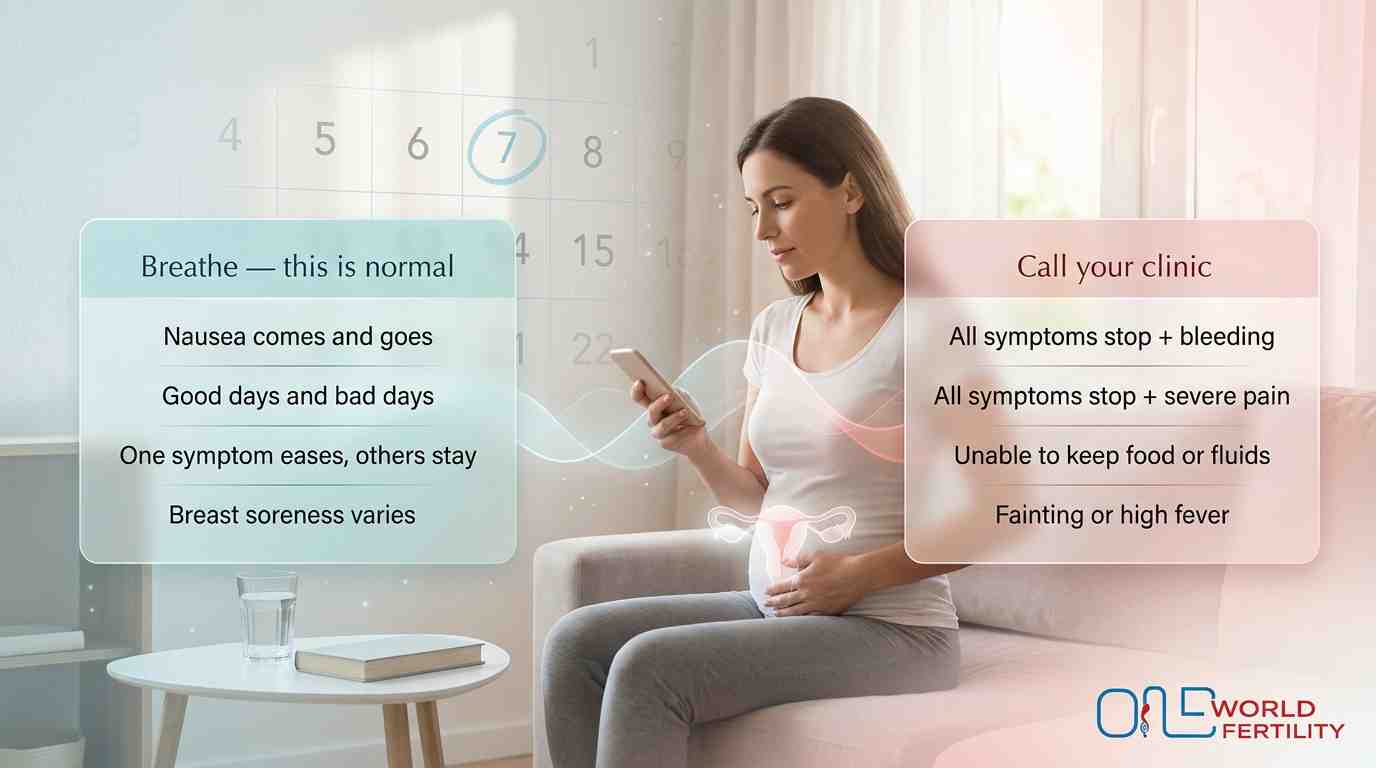
Now here's the honest part you also need to hear: if all symptoms suddenly and completely disappear like nausea, breast tenderness, fatigue, everything at once, and this is accompanied by heavy bleeding or severe pain, then you need to be alert. Immediately contact your clinic.
But changes in symptoms, with no blood or pain? Then that's completely normal, and you don't have to panic.
Warning Signs - When to Actually Call
Most of what you're experiencing this week is normal. But these signs need immediate attention:
- Heavy bleeding - soaking through a pad
- Severe, sharp, or one-sided pain
- Fainting
- High fever
- Can't keep any food or water down for 24+ hours
- ALL symptoms disappear suddenly, AND you have bleeding or pain
Same rule as always: if it scares you, call your clinic. Don't wait. Don't Google. Just call.
Your Baby at Week 7 - What's Developing Right Now
While your symptoms come and go, your baby isn't taking any days off. Here's what's happening inside you right now:
- Your baby is about the size of a blueberry, which is about 7 to 10 mm long.
- The brain is developing rapidly and is already starting to divide into sections that will control different parts of the body.
- Tiny arm and leg buds are forming. You can't see them yet, but the base for those little hands and feet is being built right now.
- The heart is beating faster than it was last week, at about 110-130 bpm, and keeps rising. That flicker you saw at your first scan? It's getting stronger every day.
- The face is starting to take shape with small dark spots where the eyes will be. Small openings where the nostrils will form. The earliest outline of a face that will one day look at you.
- Even though your baby's body won't require them for months, the lungs and digestive system are starting to take shape. Your baby's body is already in a preparation mode.
Right now, inside you, something the size of a blueberry is growing a brain, a heart, and the beginning of a face. That's not nothing. That's everything.

What Should You Eat This Week?
Week 7's food reality is unpredictable, and that's okay. This week, the goal isn't to eat a perfect diet. It's getting through each day with whatever your body will accept.
The Fluctuating Appetite Challenge
Some days you can eat a proper meal. And there are days when just thinking about food makes you sick before you even open the fridge. And, on certain days, you feel hungry in the middle of the day.
Yes, this is what week 7 is really like, and it's the same kind of change that your symptoms are going through. Instead of a strict diet, here's a two-track approach: one for the days you can eat, and one for the days you can't.
On Good Days - Eat Well
When your appetite shows up, make the most of it:
- Protein-rich foods - eggs, chicken, lentils, Greek yoghurt, nuts
- Leafy greens and colourful vegetables - whatever you can tolerate
- Cooked fish - salmon, sardines - great for omega-3
- Whole grains, oats, sweet potatoes - steady energy
- Fruits - especially those rich in iron and vitamin C
- Water - aim for 8 to 10 glasses throughout the day
On Bad Days - Eat Anything You Can
When nausea is running the show, the only rule is: something is better than nothing.
- BRAT foods - banana, rice, applesauce, toast
- Crackers, dry cereal, plain pasta - bland and gentle
- Ginger tea, ginger chews - still your best friend for nausea
- Lemon water, popsicles, ice chips - when even water feels heavy
- Cold foods and smoothies - less smell, easier to handle
- Small, frequent bites every 2-3 hours - don't let your stomach go empty
Foods to Still Avoid
Same list carries forward - no exceptions:
- Raw or undercooked fish, meat, or eggs
- Unpasteurized dairy and soft cheeses
- High-mercury fish (shark, swordfish, king mackerel)
- Alcohol - zero
- Caffeine beyond 200mg per day
- Junk food and heavily processed snacks
- Unwashed fruits and vegetables
Week 7 Food Guide - For Fluctuating Days
Good Days - Eat Well
|
Bad Days - Eat What You Can
|
Still Avoid
|
Eggs, chicken, lentils
|
BRAT: banana, rice, toast
|
Raw fish, meat, eggs
|
Leafy greens, vegetables
|
Crackers, dry cereal
|
Unpasteurized dairy
|
Cooked salmon, nuts
|
Ginger tea, ginger chews
|
High-mercury fish
|
Whole grains, oats
|
Lemon water, popsicles
|
Alcohol (zero)
|
Greek yogurt, fruits
|
Cold foods, smoothies
|
Caffeine >200mg
|
8-10 glasses of water
|
Small bites every 2-3 hours
|
Junk food, processed snacks
|
What Should You Do and Avoid This Week?
In Week 7, keep doing what works for you, let your body change without fighting it, and show up for whatever your clinic has scheduled.
Do's
- Continue all medications as prescribed: Progesterone, estrogen, prenatal vitamins. Nothing should be changed without your doctor's word.
- Follow-up: Attend your follow-up ultrasound if it's scheduled this week. This scan will show that your baby's heart is beating faster and growing stronger than it was last week.
- Rest when you need to: Fatigue is still heavy. If your body says stop, stop. You're not being lazy, you're growing a human being.
- Light walking if you feel up to it: A short, gentle walk helps with bloating and clears your head. But don't feel bad about skipping it on hard days.
- Stay hydrated: Even more important this week if nausea is coming and going unpredictably. Always have water close by.
- Start thinking about your OB-GYN transition: Your fertility clinic might bring this up shortly. It's a good sign since it means they trust that you're making progress.
- Have good days without guilt: It's not a warning indication if you feel better for a day. Your body is getting used to it. Enjoy the break instead of fearing it.
- Keep talking to your support system: Partner, friend, therapist, support group, whoever helps you feel less alone in this.
Don'ts
- Don't stop taking any medicine, especially progesterone. This is important every week.
- Don't worry if you don't have any symptoms for a day; we've already explained why it happens. Believe that explanation on the calm days.
- Don't perform hard lifting or intense workouts; keep things light and simple.
- Don't use hot tubs, saunas, or steam rooms; elevated heat is still not safe.
- Don't smoke or drink alcohol, no exceptions.
- Don't take any new medication or supplement without your doctor's approval.
- Don't compare your symptoms with anyone else's - not online, not with friends, not with forum strangers. Your pregnancy is writing its own story.
Quick Questions
- Do I have a scan this week? Many clinics set up a follow-up appointment for weeks 7 to 8. If your week 6 scan was normal, this one will probably show that the baby is growing and the heartbeat is getting stronger. Ask your clinic for your exact timetable.
- When do I graduate to my OB-GYN? Usually around week 8 to 10. Your fertility clinic will start discussing this transition soon if they haven't already. It's a good thing, so don't worry about it.
- Can I exercise? If your doctor says it's okay, you can perform light walking and easy prenatal yoga. No vigorous or high-impact activities.
- Is it safe to travel? Most of the time, short, simple outings are acceptable. Stay away from anything that is hard on your body or mind. Keep snacks and drinks with you always. Your tummy will thank you.
- My nausea stopped for two days. Should I call my doctor? If nausea is the only thing that eased, and you have no bleeding or pain, then this is most likely a normal fluctuation. If all of your symptoms go away at once and you are also bleeding or in pain, call your clinic immediately.
What Appointments Happen This Week?
Week 7 may be quieter when it comes to appointments after last week's big scan, but it could also be the week of your follow-up. Here's what to expect.
Follow-Up Ultrasound
If your first scan was at week 6, many clinics may schedule a follow-up scan between weeks 7 and 8. This scan looks at three important things:
- Heart rate: It should be higher than last week, now approximately 110-130+ bpm. One of the best things about early pregnancy is watching that number go up.
- Embryo growth: Your doctor will measure the crown-rump length to confirm your baby is growing at the expected rate, roughly 1mm per day.
- Overall development: Making sure everything looks on track for your gestational age.
If your week 6 scan was completely normal and your clinic was sure, they might wait until week 8 for the follow-up instead. That doesn't mean they've forgotten about you; it means your first scan gave them enough confidence to wait.
Progesterone and Medication Check
This week, your clinic might check your progesterone levels to make sure they remain high. Some clinics also start discussing when progesterone will be lowered or stopped, but that typically doesn't happen until weeks 8 to 10.
The keyword is "discussing", not "doing." Don't make any changes on your own. Wait for your doctor to tell you exactly when and how to adjust your medications.
The OB-GYN Transition — It's Getting Close
This is a conversation that may come up this week or next: graduating from your fertility clinic to your OB-GYN.
Around weeks 8 to 10, most women go through this OB-GYN transition. The word "graduating" sounds happy, and it is, but it can also make you feel surprisingly sad. You've been working with your fertility team for weeks or even months. They've been there to catch you when you fall. It can be scary to leave that behind.
But here is what it means: your pregnancy is stable enough that you can have regular prenatal care.Your fertility clinic will coordinate the handover. You don't have to set it up yourself. And if your clinic hasn't told you yet, it's fine to ask about the timing. It shows that you are planning ahead, and your team will appreciate that.

The Emotional Reality of Week 7
Week 7 is emotionally strange. You were in the ultrasound room just a few days ago. You saw the flicker. You heard someone say, "I can see a heartbeat." And for a moment, maybe the first time in this entire journey, you truly breathed.
But suddenly the symptoms are changing. You felt awful yesterday, but now you feel fine. And just like that, the breathing of peace has stopped again.
There's an awful irony to IVF pregnancy that no one tells you about - Every piece of good news makes the question "what if it doesn't last?" You can't just be happy because you've learned the hard way that happiness can be taken back.
And thus, by week 7, you are keeping an eye on your own body like a security camera. Every hour that goes by without nausea is a question mark. Every morning when you wake up without pain makes you panic instead of feel better. You press your breasts to see if they're still hurting. You can't sleep because you're worried that feeling "normal" means something bad is about to happen.
You are not crazy for feeling this way. You are a woman who has fought too hard and lost too much to take anything for granted. That's not anxiety; it's experience.
Here's what might help you get through this week:
- Remember what you learned today. Fluctuation is a natural part of life. It's not a warning, but it is a sign that your body is a body.
- Your last scan showed a heartbeat. So, your nausea has gone, but that doesn't mean that the heartbeat has disappeared.
- Don't Google it; talk to someone who knows what you're going through. Google doesn't know anything about you. People who care about you do.
- Focus on what you can control - Eat when you can. Take a break when you need to. Be there for your appointments. Take care of yourself on the days when you don't have much to do.
- And remember this - a good day is still a pregnant day. No need to worry much.
Final Thoughts
Week 7 is when your body teaches you something that most people don't talk about: pregnancy symptoms don't always follow a pattern. They come. They leave. They get louder. They get quiet. And none of that, by itself, suggests that something is wrong.
Your baby's heartbeat is seen. Your baby is growing. And a calm morning doesn't change any of that.
If you want to revisit last week's milestone, our sixth week blog walks you through the heartbeat scan and everything that came with it. When you're ready for what's next, our eighth week guide will be available to help you with new adjustments, your upcoming graduation, and the next steps in your path.
One World Fertility knows that the hardest part of this journey isn't the pain; it's the silence between the words of comfort. We're here in that silence with you.
Frequently Asked Questions
Remember that fluctuation is biological - not a warning sign. Your last scan showed a heartbeat, and that hasn't changed because your nausea took a break. Talk to someone who understands instead of searching online. Focus on what you can control - eating, resting, attending appointments. And remind yourself every quiet morning: a good day is still a pregnant day.
Yes. Mild, dull cramping is common at week 7 as your uterus continues to stretch and grow. As long as the cramping stays mild and isn't accompanied by heavy bleeding or severe pain, it's usually nothing to worry about. If it becomes sharp, intense, or one-sided - contact your clinic.
Most women make this transition around week 8 to 10. Your fertility clinic will continue monitoring you with scans and blood work until your pregnancy is stable enough for routine prenatal care. They'll coordinate the handover to your OB-GYN - you don't need to arrange it yourself.
On good days, focus on protein, leafy greens, whole grains, cooked fish, and plenty of water. On bad days, eat whatever you can manage - BRAT foods, crackers, ginger tea, lemon water, cold foods, and small bites every 2 to 3 hours. The goal isn't perfection - it's getting through each day with whatever your body accepts.
Your doctor will check the heart rate, which should be higher than week 6, around 110 to 130+ bpm. They'll also measure the embryo's crown-rump length to confirm growth is on track and assess overall development. A stronger heartbeat at this scan is one of the most reassuring signs of a healthy pregnancy.
Your baby is roughly the size of a blueberry - about 7 to 10mm. The brain is developing rapidly, tiny arm and leg buds are forming, the heart is beating at approximately 110 to 130 bpm, and the earliest facial features are beginning to appear. The digestive system and lungs are also starting to take shape.
Not on its own. Symptom fluctuation without bleeding or pain is normal. Hormones don't vanish in a day - they dip and rise naturally. However, if all symptoms suddenly and completely disappear and you also experience heavy bleeding or severe pain - contact your clinic. That combination deserves attention.
Common symptoms include nausea approaching peak intensity, deep fatigue, breast changes, bloating, constipation, mood swings, food aversions and cravings, frequent urination, headaches, mild cramping, excess saliva, and early heartburn. Some women experience most of these, others just a few - and symptoms may vary from day to day.
Yes. Morning sickness coming and going is one of the most common experiences in the first trimester. A day without nausea doesn't mean something is wrong - it means your hormones are fluctuating naturally. Many women who have a "good day" at week 7 go on to have their worst nausea at week 8 or 9.
Hormones like hCG and progesterone don't rise in a smooth, straight line - they naturally fluctuate throughout the day. By week 7, your body is also adapting to elevated hormone levels, and hCG is approaching its peak with a naturally slowing rise. Daily factors like sleep, food, and stress also affect how symptoms show up.