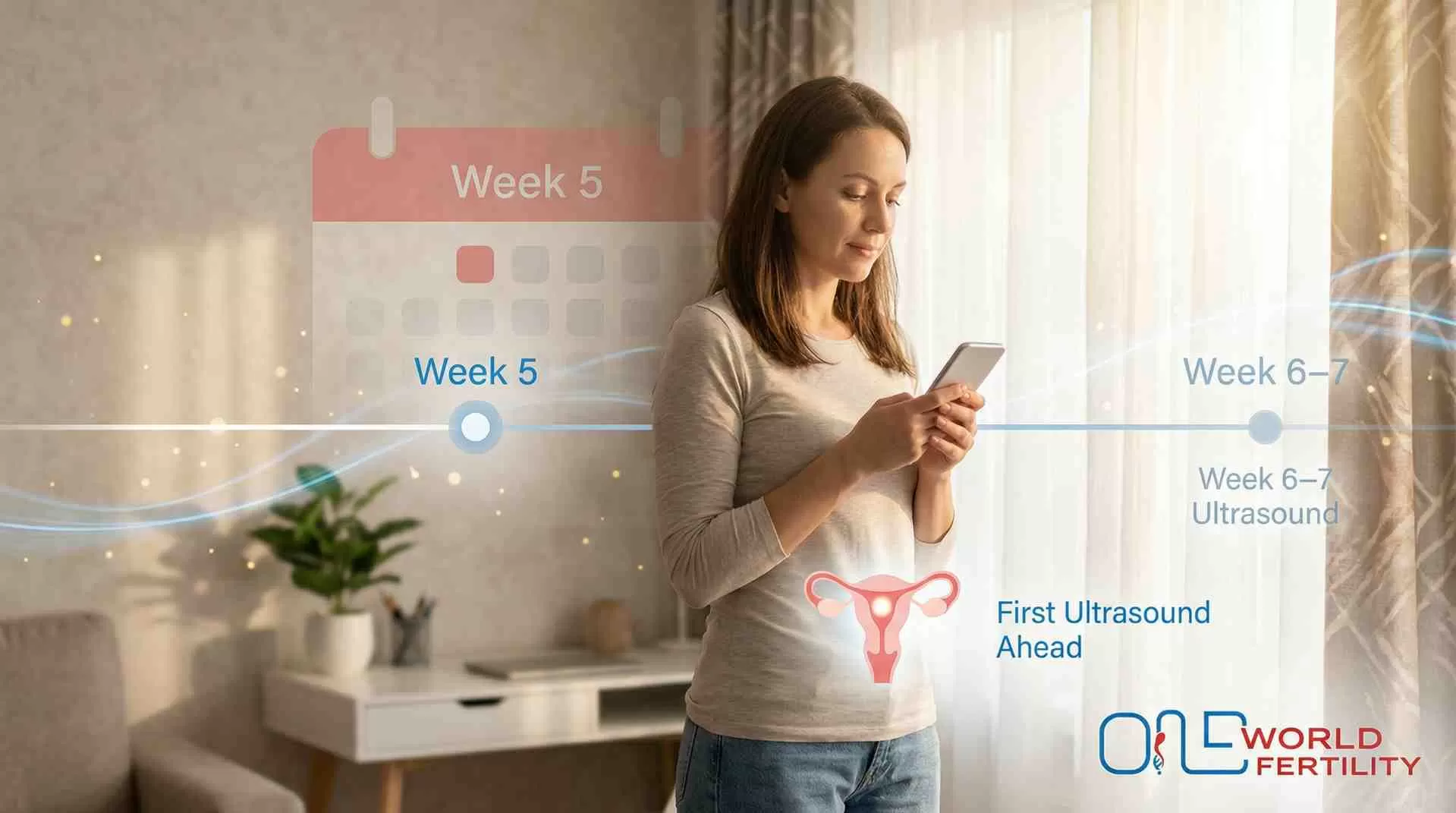
Welcome to week 5, the week when your body finally starts to speak louder than your doubts. If you've been waiting to "feel pregnant," this could be the week it happens. The 5-week IVF pregnancy symptoms you've been reading about, such as nausea, deep tiredness, and food suddenly smelling wrong, might be the week they show up.
For some women, symptoms arrive full force this week. For some, it's still quiet. Both are completely okay.
This blog will tell you what's normal at week 5, how to deal with morning sickness when it happens, what to eat when you can't eat anything, what your first ultrasound will look like, and how to take care of your body and mind as this pregnancy becomes more real than ever.
The wait is almost over. Your first scan is coming up soon. Let's help you through this week.
Where Are You at Week 5? A Quick Orientation
If you had a Day 5 blastocyst transfer, you are now about three weeks past that point. However, in terms of pregnancy, your doctor calls this five weeks pregnant. The dating confusion from earlier weeks is still going on, so don't overthink the math.
Right now, your body is totally in early pregnancy mode, and the gestational sac is growing inside your uterus. Your hCG levels are rising rapidly. Everything is building. And the best part? You might have to wait 1 to 2 weeks for your first ultrasound. The wait is almost over.
What Symptoms Are Common at 5 Weeks of IVF Pregnancy?
This is the week when your body stops whispering and starts talking. Weeks 3 and 4 were all about waiting and wondering. Week 5 is when a lot of women actually felt something real happening inside them. So let's go through it honestly, symptom by symptom.
Symptoms That Are Getting Real This Week
- Morning sickness or nausea: This is the main symptom in week 5. It could happen in the morning, at night, or all day. Some women feel mild queasiness that comes and goes. Some people can't even look at food without feeling sick. The major reason you're feeling sick is that your hCG levels are rising quickly right now. It's awful, but here's something that most women find curiously comforting: it's actually a good hormonal sign.
- Extreme exhaustion: This isn't the same tiredness you felt in the last few weeks. This is deeper, and this kind says, "I can't stay awake at 3 PM, and a full night's sleep isn't enough." It's happening because Progesterone and hCG are both working overtime, and it's like your body is giving extra effort.
- Breast Changes: They're not only sore anymore. Your breasts may look bigger, feel heavier, and hurt more. You might notice the area around the nipples darkening or the veins becoming more prominent. Even this early, your body is getting ready.
- Constipation and bloating: Progesterone slows down your digestion. Even if nothing has literally "grown" yet, your belly may feel puffy, tight, and uncomfortable.
- Frequent urination: Are you going to the restroom more often than usual? hCG is increasing blood flow to your kidneys, and your uterus is getting bigger and pressing against your bladder. From here on out, this will happen more often.
- Mood swings and emotional sensitivity: Crying at things that never bothered you before. Getting upset over little things and being angry for no reason. Your hormones are going wild, and your emotions are too.
- Cramping: You might still be having mild, dull cramps. Your uterus is getting bigger and expanding to make room. This is usually normal as long as it isn't harsh or painful.
- Food aversions and cravings: It is stronger this week than before. You can suddenly hate foods you used to enjoy. You might suddenly find smells that you never noticed to be intolerable. And you might crave the most random thing at the most random hour.
- Headaches: This week, you might have a lot of them since your hormones are changing and your body is working to manage increased blood circulation.
- Feeling dizzy or lightheaded: Changes in blood pressure and not eating enough (if nausea is keeping you from eating) can make you feel unsteady.
- Increased saliva: This one surprises many women. Your mouth may make more saliva than normal. It's a true symptom, also known as ptyalism, and it's not dangerous, just weird.

Morning Sickness - The Week 5 Reality
If there's one symptom that defines week 5, it's this one - Morning Sickness. So let's give it the attention it deserves.
Most women start to feel nauseous in the morning between weeks 5 and 6. But even though it's called "morning sickness," it can happen at any time of day. It can happen in the morning, get worse in the afternoon, or happen at midnight. So, what is causing this?
It's caused by your hCG levels rising quickly. This is a good sign that your pregnancy hormones are working as they should, even though it's uncomfortable to hear while you're nauseous.
The level of intensity varies greatly. Some women get mild queasiness that passes with a cracker. Others experience full vomiting several times a day. It's merely how your body reacts; neither extreme is "better" or "worse." Most women have their worst morning sickness between weeks 8 and 10, and it starts to get better by weeks 12 to 14.
What actually helps:
- Eat before getting out of bed: keep crackers or dry toast on your nightstand. A few bites before you get up can really help.
- Small, frequent meals: never let your stomach go completely empty. An empty stomach makes nausea worse.
- Ginger: tea, chews, candies, and raw ginger in warm water. It's one of the most proven natural remedies.
- Lemon: drinking lemon water, sucking on a lemon slice, or even simply smelling a cut lemon will help your stomach feel better.
- Cold foods over hot: cold foods produce less smell, which means fewer nausea triggers.
- Stay hydrated: sip water constantly throughout the day, even when you can't eat.
- Vitamin B6: ask your doctor if this could help. People often suggest it for nausea during pregnancy.
- Avoid your triggers: strong cooking smells, greasy food, heavy spices. If anything makes you nauseate, it's better to stay away from it.
When to call your doctor about nausea:
- You can't keep any food or water down for 24 hours
- You're losing weight.
- Your urine is dark, or you're barely urinating
- You feel faint or constantly dizzy
This could be hyperemesis gravidarum, which is severe pregnant nausea that is worse than usual morning sickness. It's treatable, but it needs medical attention. So, don't push through it silently and consult with your doctor.

What If I Have No Symptoms at 5 Weeks?
Still worried even though you feel fine? You're not the only one, and you're not at risk.
Some women don't detect any symptoms until weeks 6 to 8. You might just not be there yet. No symptoms does not mean no pregnancy, and it does not mean no healthy baby. Your body is reacting in its own way and on its own timeline. Don't compare what you've been through to what other people have been through.
Warning Signs - Call Your Doctor Now
Most of what you're feeling this week is normal. But some things need immediate attention:
- Heavy bleeding, like soaking through a pad, not just faint spots
- Pain that is very bad, acute, or only on one side
- Feeling faint or dizzy all the time
- High fever
- Unable to keep any food or water down for 24+ hours
Same rule as every week: If it scares you, call your clinic. Don't wait for the next appointment. You must not search for the solution on Google. Better make a call.
Your First Ultrasound Is Almost Here - What to Expect
This is the section you've probably been scrolling for. After weeks of blood tests, numbers, and invisible progress, you're about to actually see something. So let's make sure you know exactly what to expect so that nothing surprises you.
When Will It Happen?
Most reproductive clinics do the first ultrasound between weeks 6 and 7. That indicates it's roughly one to two weeks from now for most women.
But some clinics may schedule an early scan at the end of week 5. This generally happens in certain situations:
- Your hCG levels were rising more slowly than expected, and your doctor wants to make sure the pregnancy is in the right location.
- There is a worry regarding ectopic pregnancy, which is when the embryo implants outside the uterus.
- You have had ectopic pregnancies or repeated losses in the past, and your doctor wants early visual confirmation.
- Your clinic follows a protocol of earlier monitoring for IVF pregnancies as standard practice.
If none of these applies to you and your scan is set for week 6 or 7, that's totally fine. It doesn't imply your doctor is being careless. In other words, your stats made them feel OK about waiting for a scan that will provide more information.
If your clinic hasn't given you a date yet - don't panic. Yes, they will. And if you're really eager for the answer, it's fine to call and ask.
What Will the Ultrasound Show If Done at Week 5?
If your clinic schedules an ultrasound for week 5, the following are what you can see at this stage and what's still too early to show up:
- Gestational sac: A small, round, fluid-filled structure inside your uterus. This is the first clear sign that the pregnancy is real and in the right place. Finding this alone at week 5 is a healthy and expected sign.
- Yolk sac: It might not be visible yet, but if it shows up, that's a good indicator. If it doesn't, that's generally too early at week 5.
- Fetal pole: Unlikely to be visible at week 5. This tiny structure, which will eventually become your baby, usually appears closer to week 6.
- Heartbeat: This is probably not visible at week 5. Around weeks 6 to 7, you should be able to hear a heartbeat. If your scan occurs at week 5 and you don't hear a heartbeat, that's normal, not scary. Your doctor will just schedule another scan for 1 to 2 weeks.
The bottom line: A week 5 ultrasound is not meant to show you everything. This is done just to confirm the location of pregnancy and early growth. The whole picture, including the heartbeat, is visible on the scan between weeks 6 and 7. So if your first scan only shows a sac and nothing else, don't worry. That's exactly what week 5 is supposed to look like.
Will It Be a Transvaginal or Abdominal Ultrasound?
At this early stage, it's almost always a transvaginal ultrasound - a small, slim probe that's inserted gently. We understand it sounds uncomfortable, but the truth is that it delivers a far clearer and more thorough picture than an abdominal scan can at this point.
It doesn't hurt. At most, a little unpleasant, and it's over quickly. Most clinics will let your partner or a support person be in the room with you, and they will usually turn the screen so you can view it too.
How to Emotionally Prepare
No one tells you this, but your first ultrasound might make you feel great relief or very anxious. Sometimes both happen at the same moment.
Don't make this scan seem like the most important part of your whole pregnancy. It's a checkpoint, and it's a very important one. No matter what happens, your doctor will tell you exactly what's normal for your stage of pregnancy. It's normal for scans to look different in the same week.
Bring someone who makes you feel better, or your partner. Before you walk in, take a deep breath. And don't forget that you've already come a long way to reach this room.

What Should You Eat This Week (Especially If Nausea Is Winning)?
If you have morning sickness, the idea of a "healthy balanced diet" sounds like a cruel joke right now. This section isn't about being perfect. It's about survival. Eat what you can, when you can, and don't feel guilty about any of it.
When You CAN Eat - Choose These
Your foundation from weeks 3 and 4 remains the same: leafy greens, cooked eggs, avocado, nuts, cooked fish, whole grains, lentils, and yoghurt. But week 5 adds a new layer, which means eating even when you have the nausea. This is what helps:
- BRAT foods: Bananas, Rice, Applesauce, Toast. These are bland, easy on the stomach, and easy to keep down when nothing else works.
- Protein snacks: Cheese cubes, boiled eggs, and nut butter on crackers. Protein helps your blood sugar to remain stable, which directly reduces nausea. Keep these close by.
- Cold foods: Sandwiches, salads, smoothies, chilled fruit. Cold foods smell less than hot ones, and less smell means fewer nausea triggers.
- Ginger in any form: Tea, chews, biscuits, fresh ginger in warm water. This week, ginger is the food you should befriend.
- Lemon: Lemon water, lemon slices, or even just smelling a cut lemon. It sounds odd, but many women prove it works.
When You CAN'T Eat - Do This
There are days when nothing sounds good. Nothing stays down. And that's when you need to hear this: don't make yourself eat whole meals. Eat what you can when you can. Even a few bites are enough.
- Small and bland foods like crackers, dry bread, and plain rice win the day.
- Drink water all the time; right now, hydration is more vital than food. Keep drinking even if you can't eat.
- If water makes your stomach feel heavy, try popsicles or ice chips instead.
- Call your doctor if you can't keep anything down for 24 hours. You could require IV fluids or medicine to stop the nausea. Don't try to get through it by yourself.
Foods to Still Avoid
The same list carries forward from every previous week, and it's still non-negotiable:
- Raw or undercooked fish, meat, or eggs
- Unpasteurized dairy and soft cheeses
- High-mercury fish (shark, swordfish, king mackerel)
- Alcohol - zero
- Caffeine beyond 200mg per day
- Junk food and heavily processed snacks
- Unwashed fruits and vegetables
Week 5 Food Guide - Nausea-Friendly Edition
When You Can Eat
|
When Nausea Is Bad
|
Still Avoid
|
Leafy greens, eggs, avocado
|
BRAT: banana, rice, toast
|
Raw fish, meat, eggs
|
Cooked salmon, nuts, seeds
|
Crackers, dry cereal
|
Unpasteurized dairy
|
Whole grains, lentils
|
Ginger tea, ginger chews
|
High-mercury fish
|
Greek yogurt, fruits
|
Lemon water, popsicles
|
Alcohol
|
Protein snacks (cheese, nut butter)
|
Cold foods (sandwiches, smoothies)
|
Caffeine >200mg
|
8-10 glasses water
|
Sip water, ice chips
|
Junk food, processed snacks
|
What Should You Do and Avoid This Week?
In Week 5, you need to pay more attention to your body than ever. It's asking you to calm down, get more sleep, and eat what you can. Your job is to listen.
Do's
- Continue ALL medications as prescribed - progesterone, estrogen, everything. These are silently holding up the base of your pregnancy. Don't change or skip anything without your doctor's permission.
- Rest more - fatigue is peaking. Listen to your body when it suggests that you calm down. It is not the laziness but it is the real pregnancy.
- Light walking - a slow walk is still excellent. It's okay if you don't want to walk today.Stay hydrated: especially if nausea is making eating difficult. Even if you don't feel like eating, keep drinking water.
- Eat what you can, when you can - toast and a banana are enough on a hard day. Right now, the goal isn't to be perfect.
- Prepare mentally for your first ultrasound - it's close. When the week feels heavy, remember that. Something lovely is just around the corner.
- Continue prenatal vitamins - if they trigger nausea, ask your doctor about gummy versions or taking them at bedtime instead.
- Stay connected - talk to your partner, a friend, or someone who understands. You don't have to carry this alone.
Don'ts
- Don't stop taking any medicines on your own, especially progesterone. Always talk to your doctor first.
- Don't push through hard workouts; your body is telling you to slow down for a reason.
- Don't skip meals on purpose; even a few little bites are better than an empty stomach.
- Don't use hot tubs, saunas, or steam rooms right now since the heat is too high.
- Don't smoke or drink alcohol.
- Don't take any new supplements, even herbal or over-the-counter ones; talk to your doctor.
- Don't compare your ultrasound timing with anyone else's, because it's common for clinics to schedule ultrasounds at different times.

Quick Questions This Week
- Can I still work at 5 weeks IVF? Yes, most women keep working as usual. If you're feeling really sick, you should talk to your boss about flexible hours, working from home, or taking brief breaks during the day.
- Can I travel? Most of the time, short, easy journeys are fine. Stay away from anything that is hard on your body or mind. And always have snacks and water with you. Your stomach will be happy.
- Can I exercise? Yes, light walking is fine. No to heavy lifting, hot yoga, and hard workouts. Be gentle and pay attention to how your body reacts.
- Should I tell anyone at work? That's a very personal decision. After the initial ultrasound, some women share. Some people wait until the end of the first trimester. There is no right or wrong time; only what feels right for you.
- What should I do if my prenatal vitamin makes me sick? This happens more often than you might expect. Talk to your doctor about switching to a gummy or chewable form. Taking it with food or before bed, rather than in the morning, can make a major difference.
The Emotional Reality of Week 5
Week 5 is a strange place to be. Your body is changing. You're feeling sick, nauseated, tired, and heavy in your chest, something you didn't feel previously. Part of you thinks, "okay, this is real." But the other part, the quieter and more scared part, keeps saying, "What if something goes wrong before I even get to see it?"
If you've lost something before - a failed cycle, a miscarriage, or a time when everything fell apart after you'd already started to hope. So, this week can feel like walking on glass. You want to have faith. But you've been hurt in the past. And that kind of memory doesn't just go away because a blood test came back "positive."
We want you to know that you are not broken for feeling this way. You aren't being negative. You're being a person, and you've been through more than most people around you will ever understand.
Some things that might help you breathe a little easier this week:
- Count the days to your ultrasound. Put the date somewhere you can see it. Look at that date when your thoughts start to spiral. You're getting closer.
- Let both hope and fear be present together. You don't have to choose one. Some mornings you'll be happy, while you'll cry some nights. Both are real, and that's okay.
- Find your person. It's okay if not everyone understands how this week feels. But you should find at least one person who does. A friend who has been there, or a group of people who help each other, or a therapist. Find someone who listens and doesn't try to fix things right away.
- Stop using your phone. Stop looking through forums and threads about symptoms. Someone else's horror story is not your story. Don't use someone else's miracle as a guide. Google doesn't understand your pregnancy; you do.
- And when the fear gets loud, say this to yourself: "Today, I am pregnant. And that's enough."
Final Thoughts
In week 5, your pregnancy starts to feel real in your body, in your symptoms, and in the way everything around you is slowly changing. It's also the week when the greatest wait of this journey, which began when your embryo was transferred, finally comes to its conclusion. And 'YES', the ultrasound is coming up soon.
You made it through the beta. Through the doubling. And also weeks of improvement that only numbers could prove. You'll soon see what your body has been working on all along.
Our 4-week blog goes over every step that brought you to this point, so you can go back and see how you got here. And when you're ready to go into that ultrasound room, our 6-week guide will be there for the week that changes everything.
One World Fertility has been with you through every number, every symptom, and every night you couldn't sleep. And we'll be here for you when you finally see what your heart already believes.
Frequently Asked Questions
Count the days to your scan - having a date gives your mind something to hold onto. Talk to someone who understands. Step away from Google and forums. Let yourself feel both hope and fear - they can coexist. And remind yourself every day: today I am pregnant, and today that is enough.
This is very common and usually not a cause for worry. A heartbeat typically becomes visible around week 6 to 7. If your scan happens at week 5 and shows a gestational sac but no heartbeat - your doctor will likely schedule a follow-up scan in 1 to 2 weeks. That's standard practice.
Yes. Mild, dull cramping is common as your uterus continues to stretch and grow. It can feel similar to period cramps. However, if the cramping becomes severe, sharp, or one-sided - contact your clinic immediately as this may need evaluation.
Light walking is still encouraged and safe. But avoid intense workouts, heavy lifting, hot yoga, or anything that pushes your body hard. Fatigue is peaking this week; if your body is asking you to rest, honour that request.
Stick with bland, easy foods: bananas, rice, toast, crackers. Ginger tea, lemon water, and cold foods help many women. Eat small, frequent meals and never let your stomach go fully empty. If you can't keep anything down for 24 hours, call your doctor.
At week 5, your doctor will typically see a gestational sac, a small fluid-filled structure confirming the pregnancy is in the right place. A yolk sac may also be visible. A heartbeat is usually not detectable this early, and that's expected, not a cause for concern.
Most fertility clinics schedule the first ultrasound between week 6 and 7. Some may do an early scan at the end of week 5 if there are specific concerns like slow-rising hCG or a history of ectopic pregnancy. Your clinic will tell you when it's time.
Completely normal. Many women don't feel noticeable symptoms until weeks 6 to 8. Your body responds on its own timeline. No symptoms at week 5 does not mean no pregnancy and does not mean no healthy baby. Try not to compare your experience with anyone else's.
Yes, morning sickness is driven by rapidly rising hCG levels, which is actually a positive indicator that your pregnancy hormones are progressing well. That said, not having morning sickness doesn't mean anything is wrong. Some women never experience it and have perfectly healthy pregnancies.
The most common symptoms include nausea or morning sickness, deep fatigue, breast changes, bloating, frequent urination, mood swings, mild cramping, food aversions, headaches, and dizziness. Some women experience all of these, some notice just a few - and some feel nothing at all. Every response is normal.