
Can irregular periods be regulated naturally for pregnancy
 Written by
One World Fertility
Dec 25, 2025 15 min read
Written by
One World Fertility
Dec 25, 2025 15 min read
Irregular periods? Learn natural ways to regulate cycles for pregnancy, lifestyle tips, fertility support, and when medical help is needed.

If you're reading this, it's likely that your periods don't come when you expect them to, and that has started to worry you. It can be hard to plan a pregnancy when your cycles are irregular. Your period is late one month and early the next. Slowly, a quiet question starts to build in your mind: "Can I get pregnant like this?"
First, let's stop and take a breath. Many people don't know that having irregular periods and being pregnant are more closely linked than they think. Just because your cycle is erratic doesn't imply you can't get pregnant. Your body could just want balance, not perfection. The first step to naturally and gently supporting your reproductive health is to learn about your menstrual and fertility cycles.
We won't be afraid, pressured, or make promises we can't keep in this blog. You'll learn natural strategies to control your periods that work with your body instead of against it. This will help you get closer to getting pregnant with patience, care, and confidence.
What Are Irregular Periods And Why They Matter for Pregnancy
Irregular periods just mean that your body isn't following a set schedule. Some months your period arrives early, some months it comes late, and other times you have to wait and wonder when it will come. This might be annoying on its own, but it can seem even worse when you're thinking about having a baby. Menstrual cycles are significant because they show us when ovulation happens, which is when your body is ready to get pregnant. It's harder to plan for pregnancy when your periods are irregular because ovulation might also be unpredictable. Not impossible, but not as easy. A lot of the time, it's your body's way of saying it needs more care and balance.
What Is Considered an Irregular Menstrual Cycle?
A normal menstrual cycle has typically a regular rhythm that tells your body when you are ovulating and fertile. People frequently call it an irregular menstrual cycle when this rhythm continues to change. If you're a woman who wants to get pregnant, it's really crucial to know this pattern.
If your period cycle is less than 21 days or longer than 35 days, or if your periods don't occur every month, it's usually termed irregular. Irregular periods are sometimes linked to uncertain ovulation, which can make it tougher to figure out when you are most likely to get pregnant.
If you don't receive your period at all, it could also mean that your body isn't ovulating consistently. This doesn't mean there's something "wrong" with you; it just indicates your hormones need help and care.
Some symptoms that your menstrual cycle is irregular are:
- Late periods
- Early periods
- Skipped months
- Heavy or very light flow
If you see one or more of these patterns, your body may be sending you delicate signs that your menstrual cycle and fertility need a little additional care, especially if you want to get pregnant.
How Irregular Periods Affect Ovulation
The most important step in getting pregnant is ovulation. This happens when the ovary releases an egg, which makes it possible for natural conception to occur. Even if everything else seems fine, you can't get pregnant if you don't ovulate.
When a woman has a regular menstrual cycle, ovulation normally happens in a set pattern. This rhythm helps you figure out when you're most likely to get pregnant and provides you with confidence that your menstrual cycle and fertility are working together.
This rhythm often gets messed up when periods are irregular. If your cycles are erratic, it's likely that your ovulation is too. Ovulation may not happen every month at the same time, and in some cycles, it may not happen at all.
Some of the most common ways that irregular periods affect ovulation are:
- Ovulation happening sooner than expected
- Ovulation being late by a few days or weeks
- Ovulation happens in certain cycles but not in others.
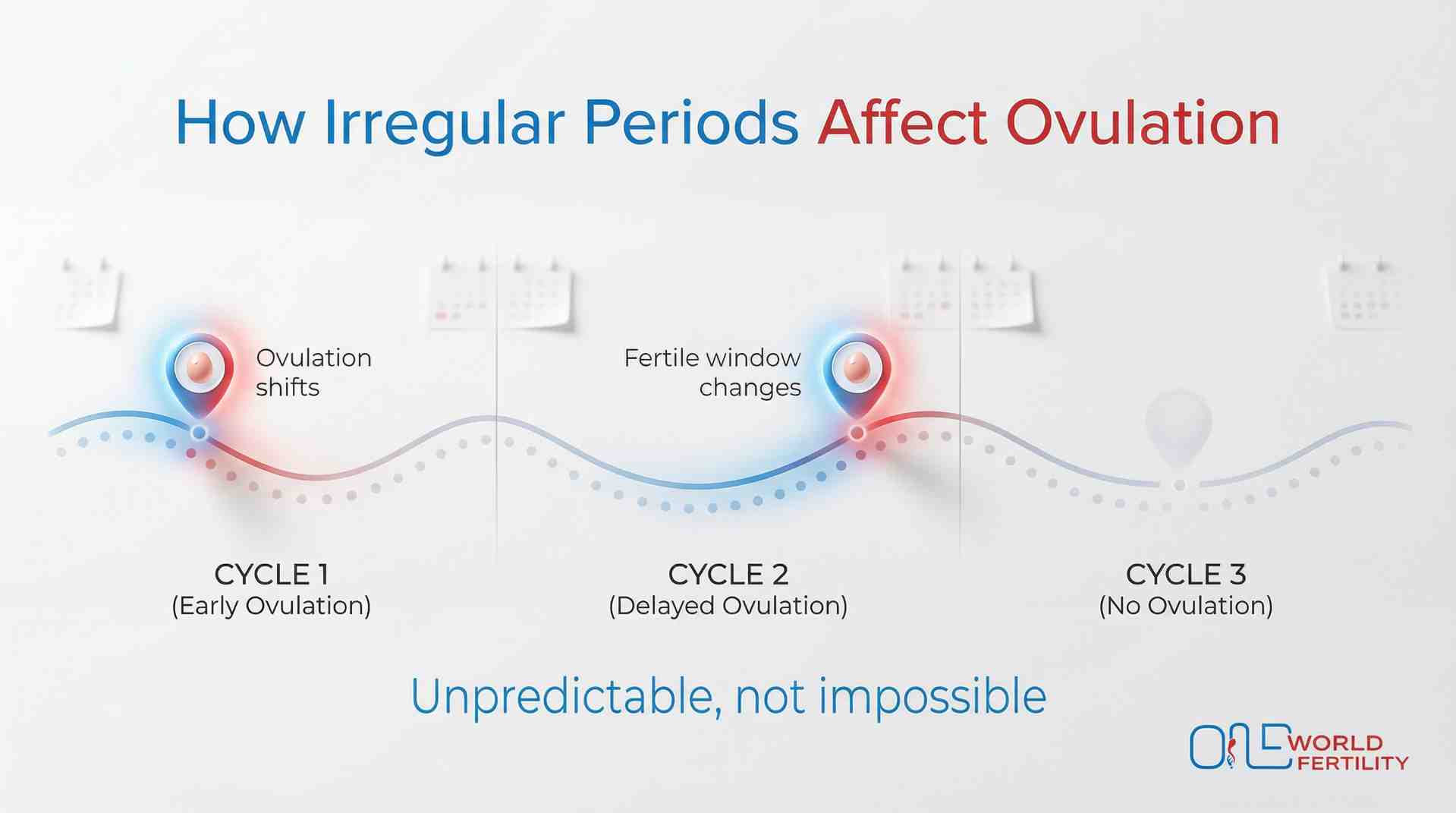
This inconsistency makes it challenging to plan a pregnancy. A lot of ladies don't know when they are fertile or keep questioning if they have already ovulated or if they still have to.
You should know that having irregular periods doesn't mean you're pregnant. It doesn't become impossible to get pregnant; it becomes unclear. A lot of women with irregular periods still release healthy eggs and can get pregnant on their own if their cycles become more regular.
Most of the time, delayed ovulation doesn't last forever. It's usually the body's reaction to an imbalance, like changes in hormones, stress, sudden weight changes, not getting enough sleep, or not getting enough nutrients. These signs aren't failures; they're messages that someone needs help and balance.
It can be hard to know when you ovulate if your menstrual cycle isn't regular. Instead of only looking at calendar dates, it can be helpful to pay attention to how your body feels, like changes in cervical mucus, your period, and your overall health.
Most importantly, keep in mind that unpredictable ovulation does not mean you can't have children. With time, patience, understanding, and gentle care, many women can get their periods to be more regular.
If your periods aren't normal, it doesn't mean you can't have children. It just means your body needs balance, patience, and gentle support.
Common Causes of Irregular Periods When Trying to Conceive
It can be distressing and unfair when your periods become irregular when you are trying to conceive. You could begin to question your actions and ask what went wrong. Uneven menstrual cycles are more often than not the result of internal imbalances rather than external causes. The irregular menstrual cycle is affected by a variety of factors, including hormones, stress, health issues, and daily behaviours. Rather than focusing on your shortcomings, try to become aware of your body's current needs by learning about these causes. That way, you may assist it gently rather than battle it.
Hormonal Imbalance
Hormones function together like a fine-tuned machine, and even a slight change can change your cycle. When they become out of balance, periods may not happen as often as they should.
Some common hormonal influences are:
- An estrogen and progesterone hormone imbalance can cause ovulation to be late or not happen at all.
- Problems with the thyroid, which can cause periods to be irregular if the levels are either low or too high.
- Stress hormones, such as cortisol, which increase while you're under stress, can stop ovulation.
A lot of the time, the body isn't broken; it's just reacting to stress or tiredness.
PCOS and Irregular Periods
PCOS is the common causes of irregular periods, as it affects the production of eggs by the ovaries, which may result in cycles that are unpredictable.
With PCOS:
- Ovulation may occur irregularly or less often.
- Periods can be delayed, skipped, or highly irregular.
- Hormonal imbalances might make cycle timing unclear.
This does not mean that pregnancy is not possible. For many women with PCOS, natural regulation becomes important with an emphasis on balance, stability, and long-term support rather than short-term cures.
Lifestyle Factors That Disrupt Period
Daily routines frequently have a more significant influence than we are aware of. It is possible for the body to delay regular ovulation when it is experiencing stress or when it does not feel supported.
Typical aspects of lifestyle include the following:
- Stress that is persistent, either mental or emotional
- Inadequate sleep or sleep patterns that are not consistent
- Loss of weight or gain of weight all of a sudden
- Overworking oneself without allowing sufficient time for recovery
- Deficiency in nutrients as a result of eating habits that are either restrictive or inadequate
A significant number of women report that their periods gradually return to their normal patterns when these regions are gently adjusted.
Can Irregular Periods Be Regulated Naturally for Pregnancy?
The honest answer is yes- many women can control their periods on their own, especially if the problem is caused by their lifestyle, stress, or a slight hormonal imbalance. When we help our bodies in the right way, they are built to find balance.
Naturally, this doesn't work the same way for everyone. What is causing the irregularity, how often changes are made, and how long the body is given to act all affect how well it works. It's fine if it takes longer for some women for their cycles to get better than for others. It happens to everyone.
Natural methods don't put stress on the body. Instead, they help keep hormones in balance, improve ovulation patterns, and make the body feel safe enough to start focusing on reproduction again. Some of the things that could change are your food, your stress level, your sleep, your movement, and your mental health. Remember that natural control is about helping, not guaranteeing. It doesn't guarantee a quick pregnancy, but it does make the chances of getting pregnant better. The body usually acts on its own time when it feels healthy and cared for.
Natural Ways to Regulate Periods for Pregnancy
The purpose of naturally regulating periods is not to force the body to do anything. It's about creating the right conditions in your body so it can do what it already knows how to do. Small, gradual changes are often better than large ones. The idea is to gently support your hormones so that ovulation happens more regularly over time and your fertility seems less uncertain.It takes time for hormones to get back in balance, but the body works better when it feels supported instead of agitated. Many natural methods focus on getting important hormones to operate together rather than against each other.
Balancing Hormones Naturally
It takes time for hormones to get back in balance, but the body works better when it feels supported instead of agitated. Many natural methods focus on getting important hormones to operate together rather than against each other.
This includes:
-
Supporting the balance of estrogen and progesterone so that the cycle can follow a healthier rhythm, and ovulation is more likely to happen.
-
Lowering cortisol (the stress hormone), as being stressed all the time might discreetly delay or stop ovulation.
-
Making insulin more sensitive, which is very significant for women with PCOS or irregular cycles caused by high blood sugar levels
When these areas start to stabilise, a lot of women notice that their periods become more regular over time, typically without needing to do anything drastic.
Diet Changes That Support Regular Periods
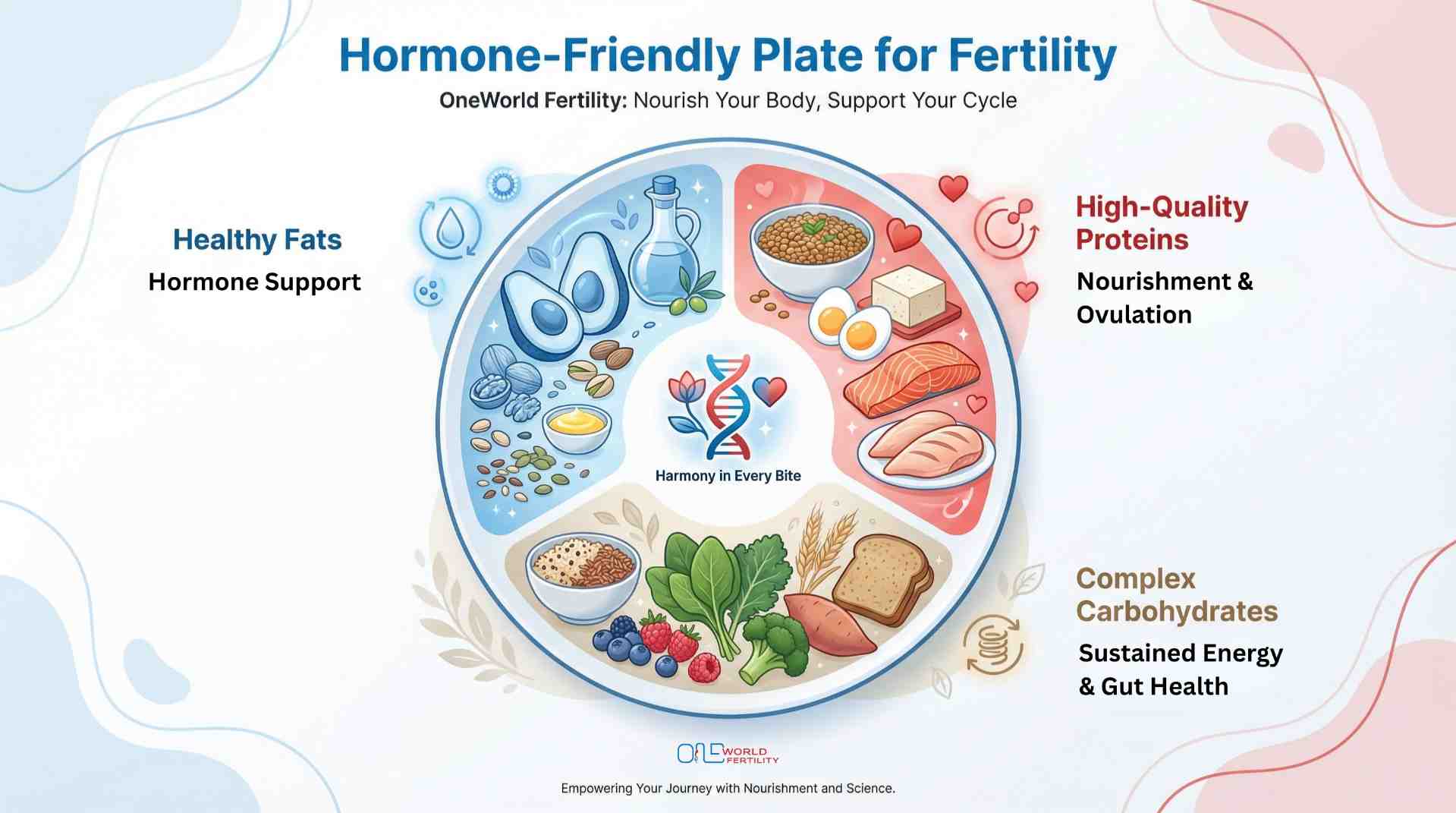
Your hormones get messages from the food you eat every day. When the body is well-fed and stable, it is more likely to ovulate regularly. It's not about following rigid rules about food or being flawless; it's about giving your body what it needs to feel good.
Helpful dietary shifts include:
- Choosing natural foods instead of processed foods can help lower inflammation and hormonal stress.
- Adding healthy fats, as hormones are generated from lipids and need them to work properly.
- Getting adequate protein, which helps with ovulation and keeps blood sugar levels stable
Role of Stress Reduction in Cycle Regulation
Your menstrual cycle is significantly affected by stress. If the body feels like it is under constant stress, it may stop ovulating as a way to protect itself. Stressful emotions, especially when attempting to get pregnant, can make periods even more irregular.
Stress can impact fertility in two primary ways:
- It directly stops ovulation.
- The stress of trying to get pregnant can make cycle irregularity worse.
Some gentle stress-relieving activities that often work are:
- Gentle yoga
- Meditation
- Breath work
- Going for a walk
Even modest moments of peace, when done regularly, can make a significant effect over time.
Sleep and Circadian Rhythm
In the process of regulating cycles, sleep is one of the most frequently neglected aspects. Hormones that are responsible for reproduction follow a regular daily rhythm, and a lack of sleep might throw off this equilibrium.
Irregular sleep patterns include:
- Hormonal signals can be delayed.
- The time of ovulation may change or be delayed.
In order to support the normal hormonal cycle of your body, you should strive to maintain consistent sleep and wake intervals.
Natural Supplements
Some women think that taking supplements is a natural way to regulate their cycles. These can be helpful, but only if you use them wisely and for the correct reasons.
Among the supplements that are frequently addressed are:
- An Inositol
- The omega-3
- Vitamin D
- Iron (only if deficient)
This supplement is not intended to replace healthy behaviours; rather, it is designed to maintain hormonal balance.
It is imperative that you seek the advice of a qualified medical professional before beginning any supplement regimen when you are attempting to conceive.
How Long Does It Take to Regulate Periods Naturally?
When it comes to inquiries, "How long will this take?" is one of the most frequently asked questions by women.
A truthful response would be that it varies.
In most cases, the majority of women start to observe changes between 2 and 6 months, depending on the reason for the irregularity and the degree to which lifestyle adjustments are adhered to consistently. The body needs time to rebalance, and patience is an essential component of the reproductive recovery process.
Expected Timeline for Natural Regulation
| Natural Change | Expected Timeline |
|---|---|
| Diet & lifestyle | 1–3 months |
| Stress reduction | 1–2 months |
| Hormonal balance | 3–6 months |
Progress may be slow, but little changes generally mean that the body is responding.
Signs Your Body Is Responding to Natural Regulation
Your body frequently reacts slowly and discreetly when you start making natural adjustments. These indications may not always be significant, but they do imply something. If you pay attention to subtle changes, you can tell if your hormones and cycle are starting to level out. These early changes frequently mean that your body is responding in a good way, even if your periods aren't quite regular yet.
Positive Signs to Look For
As balance begins to return, the body often gives gentle signs of improvement:
- Periods becoming more predictable
- Improved cervical mucus patterns
- Reduced PMS symptoms
- Better energy levels and mood
Cycle Improvement Signs Table
| Sign |
What It May Indicate |
| More regular periods |
Ovulation becoming consistent |
| Clearer cervical mucus |
Improved fertility window |
| Reduced PMS |
Better hormonal balance |
| Stable energy |
Healthier cycle rhythm |
These signs suggest that your body is moving in the right direction - even if pregnancy hasn’t happened yet.
When Natural Methods May Not Be Enough
Although natural methods are effective, it is not always the case that they are sufficient just by themselves. To take care of oneself and avoid giving up, it is important to know when to seek medical assistance.
Red Flags That Need Medical Support
You should seek the advice of a professional if you experience:
- No periods for a duration of three months or longer
- Severe pain or bleeding that is extremely heavy
- High or low body mass index (BMI)
- Known diseases affecting the thyroid or PCOS
Not only is this not a failure, but it is also the next step in providing support.
Combining Natural Regulation with Medical Guidance
A lot of women think they have to pick between natural ways and medical help, but the truth is that the two can work quite well together. Natural control helps the body prepare by enhancing balance, while medical advice can help when you need it. Getting help early doesn't mean you've failed. In fact, it frequently means you're giving yourself the best shot.
Combining natural and medicinal methods can:
- Help the body from the inside while also dealing with the problems that are causing it.
- Help identify problems early, which increases the odds of a healthy pregnancy.
- Stop guessing and start knowing to lower your emotional stress.
It's not bad to require help. Fertility journeys are very private, and asking for help shows that you care, not that you are weak.

Emotional Side of Irregular Periods While Trying to Conceive
Trying to get pregnant when your periods are irregular is not simply a medical struggle; it's also an emotional one. The waiting, the not knowing, and the continual mental math can all have an effect on you. A lot of women feel this way, even though it's very common.
The Mental Stress of “Waiting and Wondering”
When cycles are hard to predict, emotions tend to follow the same pattern. You might feel:
-
Fear about whether or not you will get pregnant
Blaming yourself and wondering if your body is letting you down
Seeing how easy it is for friends or family to get pregnant compared to you
These feelings doesn't mean that you are weak. It means you care a lot.
Gentle Counseling Advice
If this path feels hard, it's crucial to remember a few things:
- Your body is not hurt.
- Healing doesn't happen in a straight line; it can be gradual and uneven.
- Compassion is good for hormones, too, because it keeps you emotionally safe, which helps you stay physically balanced.
Taking care of yourself is not selfish; it's part of caring for your fertility.
Final Thoughts – Listening to Your Body with Patience
If there's one thing to remember from all of this, it's that irregular periods are not a sign that your body has failed you. They are simply signals-quiet ways your body asks for rest, balance, or care. Nothing more.
When you try to manage your cycle naturally, you don't have to rush or force things to happen. It's about taking your time to listen. When the body feels comfortable, nourished, and supported, it often reacts in ways we don't expect.
It's not just about the timing of pregnancy; it's also about being ready. And being prepared grows when stress is replaced with patience. Once their bodies reach that equilibrium again, many women do get pregnant.
If you ever feel stuck or confused, getting specialised help can help you see things more clearly and feel better. You don't have to do this on your own. And if you want to keep learning, reading other fertility blogs may make you feel more knowledgeable, supported, and hopeful as you go along.