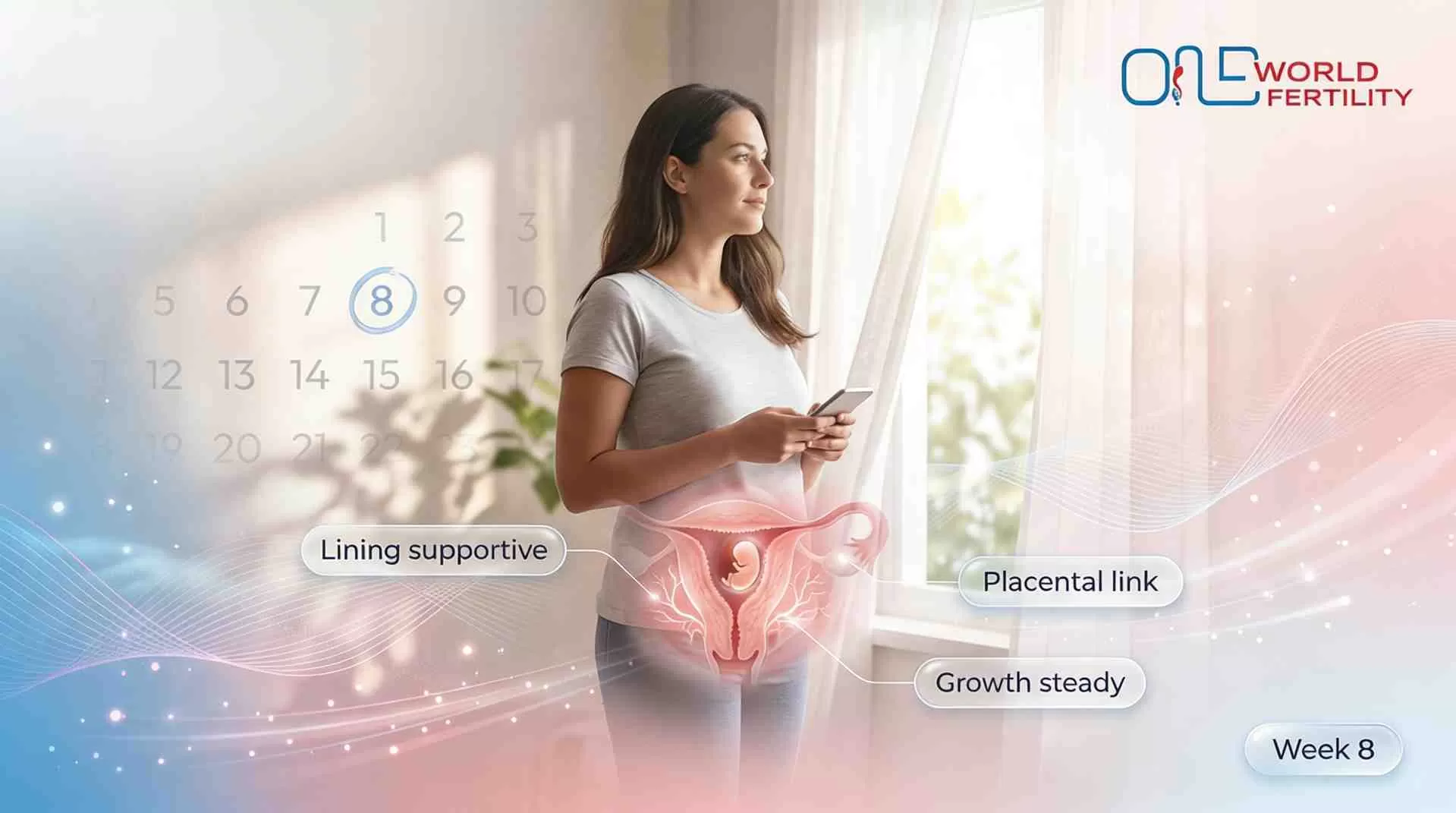
Something is changing, and this time it's not just your symptoms. At 8 weeks of IVF pregnancy, you may be able to feel your uterus is actually growing in reality. A feeling of fullness in your lower belly. A pressure that wasn't there before, but is now. A body that's rearranging itself from the inside out.
This is also the week when many women go through two huge changes: their baby officially becomes a fetus, and their fertility clinic may be getting ready to transfer over their care to an OB-GYN.
We'll talk about what's really going on in your uterus, why your symptoms are getting worse, what the transition from embryo to fetus means, what your appointments are like this week (including the big graduation), what to eat and what not to eat, and how to deal with the emotions of moving forward.
You've been waiting 8 weeks for things to feel real. This is the week they do.
Where Are You at Week 8? - A Quick Orientation
If you had a Day 5 blastocyst transfer, you're currently about six weeks past that day, which is eight weeks in pregnancy terms. And this week is full of important events.
Your baby is now officially a fetus instead of an embryo. Your uterus has grown almost twice its size. Your hCG levels are at or near their highest point. Your fertility clinic might also be starting to talk about graduation, which is giving your care to an OB-GYN.
Your baby right now? About the same size as a raspberry, which is 14 to 18 mm. So, the baby is though small in size but growing fast.
What's Happening to Your Uterus at 8 Weeks?
Since the day of your transfer, your uterus has been working silently behind the scenes. But by week 8, those changes are actually big enough to feel. Here's what's going on.
How Big Is Your Uterus Right Now?
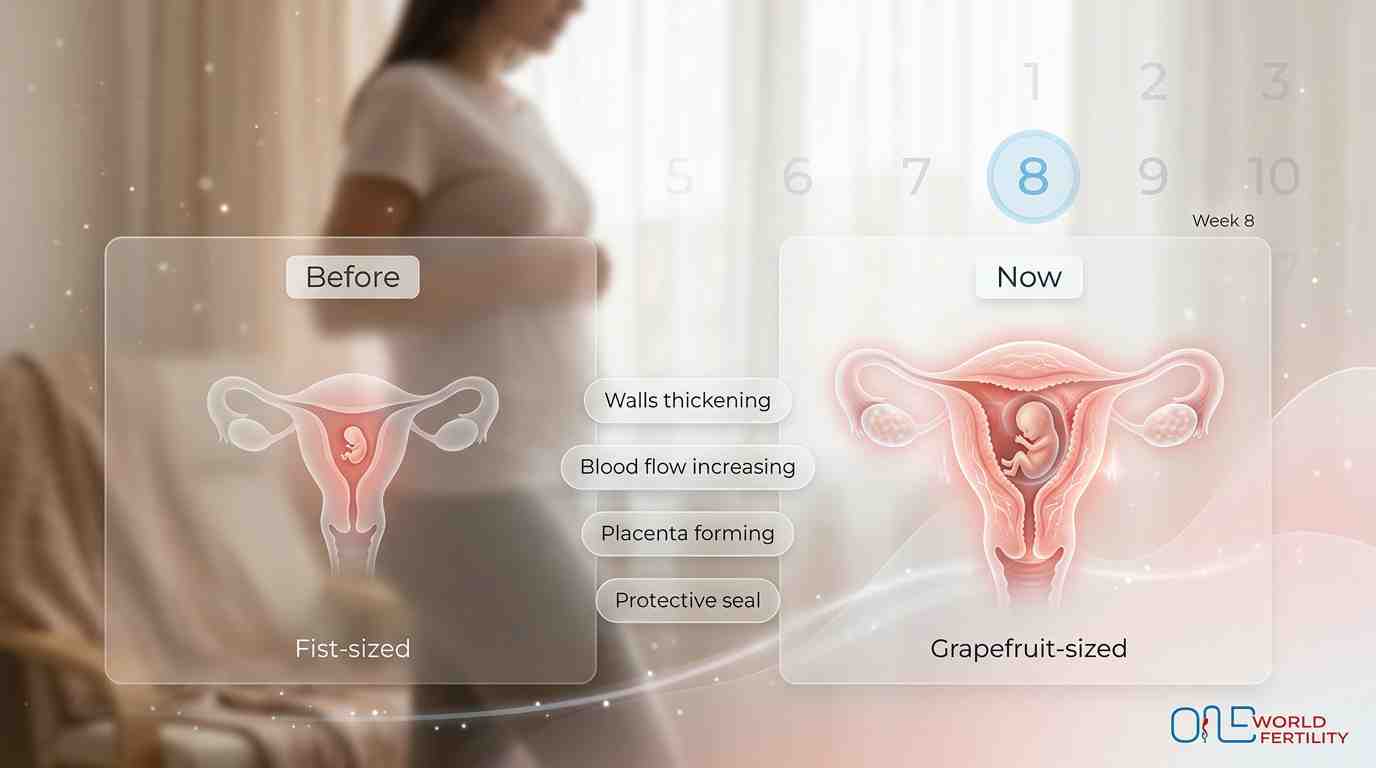
Your uterus was around the size of your fist or a little pear before you got pregnant. At 8 weeks, it is about the size of a grapefruit. That's almost twice as much as it was a few weeks ago.
It's still sitting entirely within your pelvis, so you won't "show" from the outside yet. But you might feel it: a fullness in your lower tummy, a pressure that wasn't there before, or a tightness that surprises you when you sit or bend. Your jeans can be a little tight around the waist, and it is not because the baby is that big, but because your uterus is getting bigger, you're holding onto more fluid, and you're bloating on top of all that.
What's the Uterus Doing Internally?
A lot is happening inside that you can't see or feel directly, but it's all working to keep your pregnancy supported:
- The uterine walls are thickening and strengthening - building a stronger structure to hold and protect your growing baby in the months ahead.
- Blood flow to the uterus has increased dramatically - your body is delivering more nutrients and oxygen to the placenta and baby than ever before. This is one reason you might feel warmer, more exhausted, or flushed than usual.
- Your cervix has developed a mucus plug - a natural barrier that seals the opening of the uterus and protects your baby from infection throughout the entire pregnancy. It builds quietly and stays in place until close to delivery.
- The placenta is maturing - this is a critical change. The placenta is beginning to produce progesterone instead of the corpus luteum. This handover is one of the most critical changes that happens in the early pregnancy, and it's happening right now inside you.
Why Do I Feel Pressure, Fullness, or Cramping?
If your lower abdomen feels heavier than usual, it's because your uterus is taking up more space. And as it expands, it pushes on the structures around it:
- Bladder pressure: That's why you're running to the bathroom more often. The uterus is pushing directly on it as it grows.
- Intestinal pressure: This contributes to bloating and constipation. There's just not enough room, and on top of that, progesterone is still slowing down your digestion.
- Pelvic heaviness or fullness: A feeling of heaviness or fullness in your lower belly is common and expected. It's simply your uterus needing more space.
Alongside these things that are happening, you may also feel mild cramping due to the round ligaments supporting your uterus stretching as it grows, causing occasional twinges or pulling sensations. These don't last long and come and go. This is a normal part of the uterine growth, and not a warning that something is wrong.
When to worry: If the cramping gets really bad, sharp, or only happens on one side, especially if it's accompanied by significant bleeding, call your clinic right away. If this happens, then it needs urgent attention.
Your Baby's Big Transition - Embryo to Fetus
This week, something changes in the way your baby is described, and it matters more than you'd expect.
Until now, your baby has been known as an embryo. But by week 8, it officially becomes a fetus, which is a medical milestone that implies all the major organ systems have begun to form. The base of the human body is there. From here, it's all about becoming better, growing, and getting stronger.
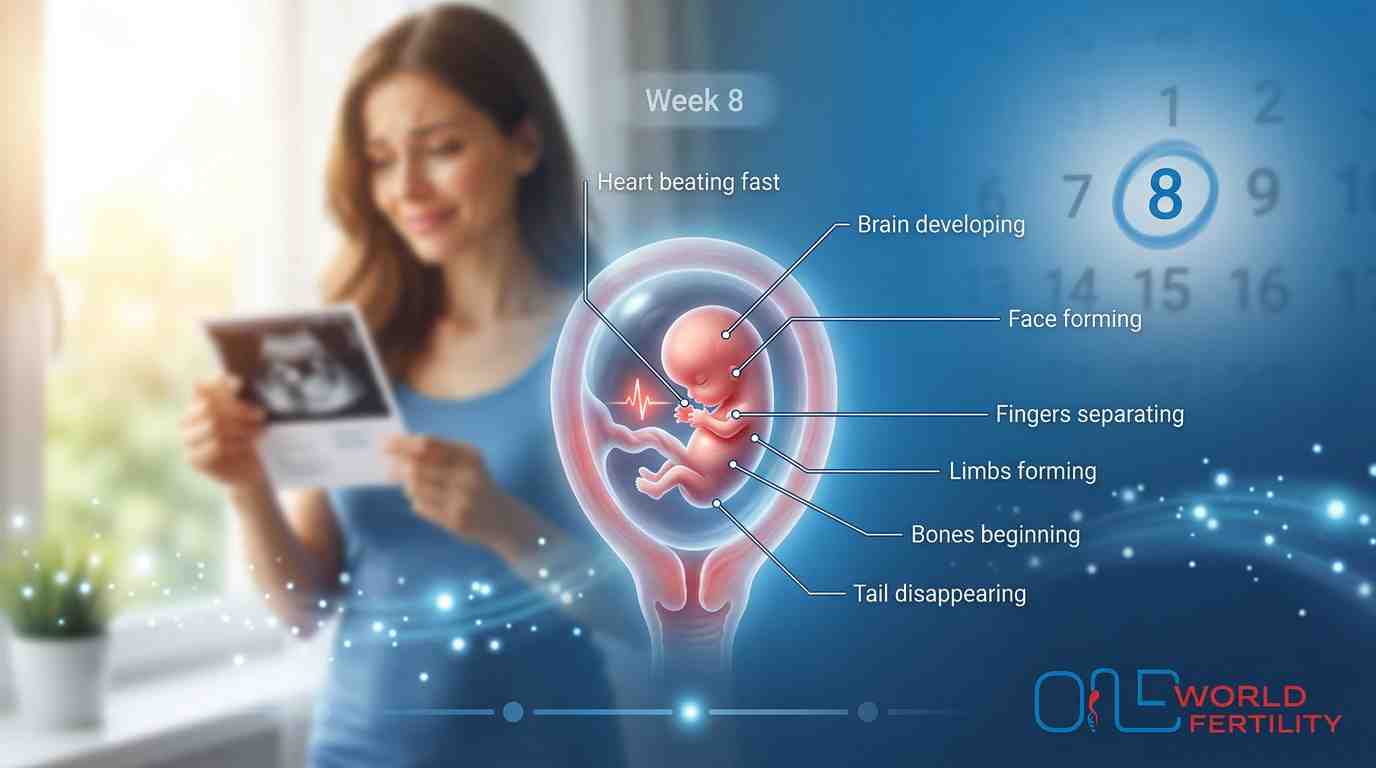
Your baby is about the size of a raspberry, which is about 14 to 18 mm. And here's what's going on right now:
- Heart: Beats at a rate of about 150 to 170 bpm, which is almost twice as fast as yours.
- Fingers and toes: They are separating from each other and are no longer webbed. They are small, but taking shape.
- Facial features: becoming more defined. You can see the tip of the nose. Those little dark specks are turning into eyelids that will become eyes.
- Brain: The development of complex structures is happening rapidly. Every day, new connections are forming.
- Bones: They are beginning to harden, and the earliest stages of a skeleton are taking shape.
- Movement: There have been some small, random motions. You can't feel them because they are far too tiny, yet they are happening inside your body.
- Embryonic tail: It is disappearing now. Your baby is looking more and more like a human every day.
From this week forward, the tiny thing inside you is officially called a fetus. It's turning into a human and no longer just cells.
Why Do Symptoms Peak at Week 8?
If everything feels more intense this week - the nausea, the exhaustion, the emotions, there's a clear reason. And understanding it can help you get through the hardest days.
hCG Is at Its Peak
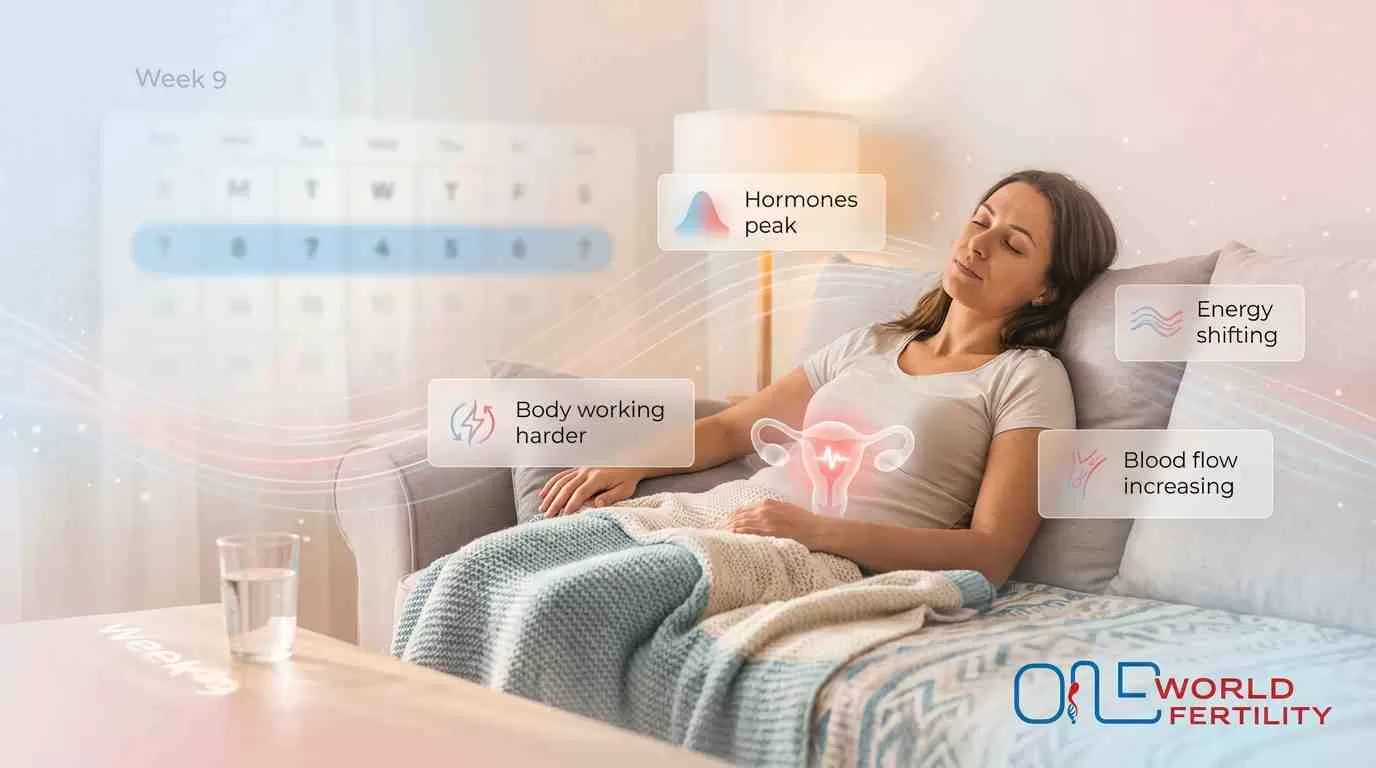
The hormone hCG, which has been causing most of your symptoms since the beginning, reaches its peak level somewhere between weeks 8 and 11. You're in the peak zone at week 8. That's why this week everything seems to be at its highest level.
The good news is that hCG starts to go down slowly after the peak. And for most women, that means that many of the worst symptoms, especially nausea, start to get better by weeks 12 to 14. You're in the hardest part right now, but don't worry, since the other side is coming soon.
Symptoms You May Be Feeling at Their Strongest
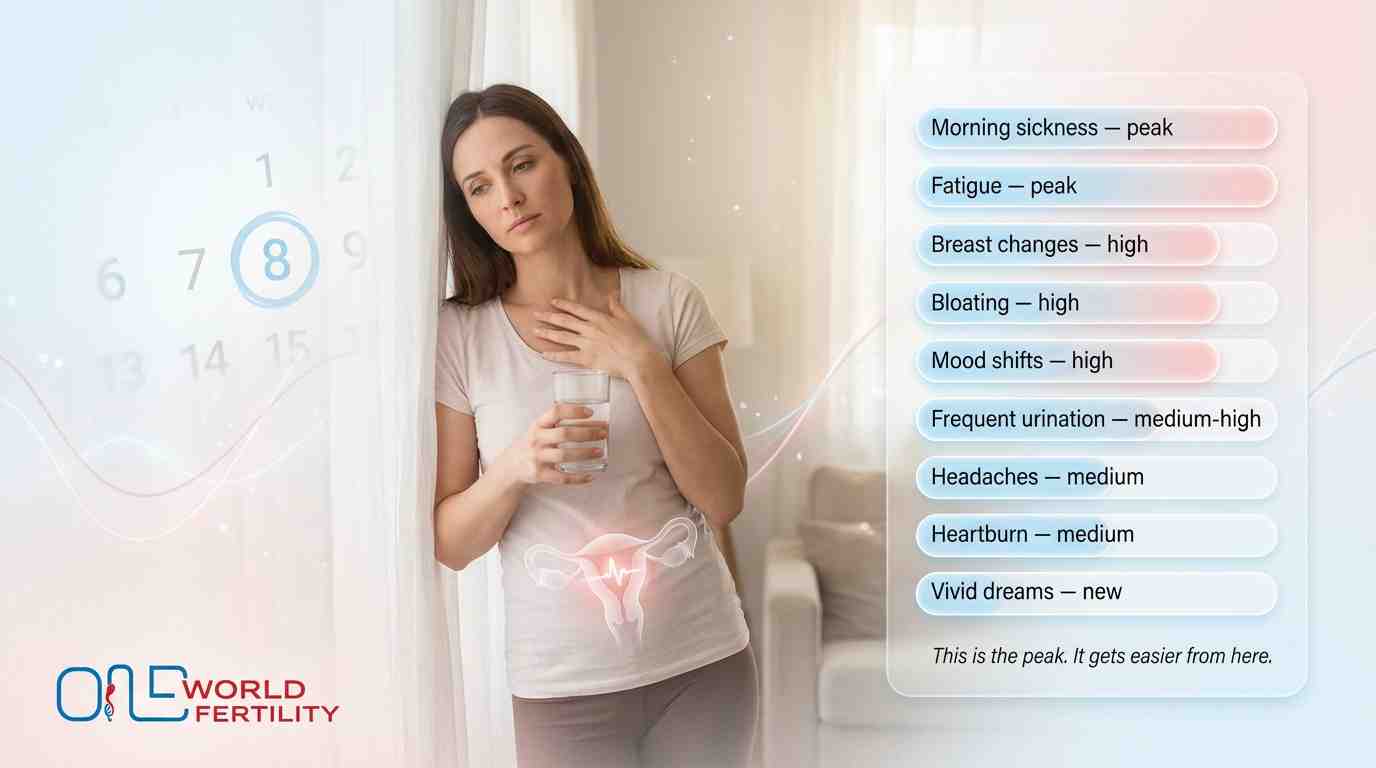
- Morning sickness: The hardest time for many women. Not only in the morning anymore, this week you might feel all-day nausea, vomiting, and food aversions.
- Extreme tiredness: Your body is making a placenta and helping the baby grow quickly. The exhaustion this week is real and deep.
- Breast changes: May feel their heaviest and most tender. You can see your veins better. Nipples are darker than they used to be.
- Bloating and constipation: Your digestive system is at its slowest right now because your uterus is growing and you're taking progesterone.
- Mood swings: When hormones are at their maximum, so are feelings. Crying, irritability, and anxiety - all intensified.
- Frequent urination: Your developing uterus is putting more and more pressure on your bladder every day.
- Headaches: Changes in hormones and rising blood volume may cause headaches to occur often.
- Heartburn or indigestion: Progesterone relaxes the valve between your stomach and oesophagus, allowing acid to rise. This might be new this week.
- Vivid or strange dreams: Common at this stage. Hormonal changes are messing with your sleep, and a lot of women say they have strange or very vivid nightmares around week 8.
What If Symptoms Start to Ease?
Some women notice a change starting about week 8. The symptoms don't go away, but the pattern does. You might start having "bad days and better days" instead of always having the same level of intensity. One morning, you might feel sick, but the next, you might not.
This marks the start of your body's natural changes as hCG levels rise and then level off. It's not an indication that something is wrong; it's just your body returning to normal after weeks of rapidly rising hormone levels.
If all symptoms vanish suddenly and you experience heavy bleeding or severe pain, call your clinic. If things are just moving and settling down, though? That's your body getting back into balance.
What Should You Eat This Week?
This is probably the hardest eating week of your pregnancy so far. Nausea is at its worst, food aversions are at their peak, and some days just getting through one cracker feels like a big deal. So let's keep this realistic.
Nausea Is at Its Peak - Eat What Survives
Your nausea plan from the last few weeks still works: BRAT foods, ginger, lemon, small meals throughout the day, cold foods, and protein bars are still your best options. But your body needs some extra nutrients in week 8:
- Iron-rich foods: Your blood volume has increased by 40 to 50% by now. To keep going, your body requires iron. Spinach, lentils, well-cooked red meat, and iron-fortified cereals are your best options whenever you can keep them down.
- Calcium: This week, your baby's bones are starting to get stronger. Yoghurt, cheese, and fortified plant milk are good sources of calcium. A tiny serving on a good day can still make a difference.
- Protein at every opportunity: A boiled egg, a handful of nuts, some cheese cubes, a spoon of nut butter. With the help of protein, blood sugar levels stabilise, and it directly helps stop nausea.
- Fibre: When the uterus grows, and progesterone slows everything down, constipation is at its worst. Eating whole grains, fruits, and vegetables, and drinking plenty of water can help things move along. On the days when none of that sounds possible, don't feel down.
At this time, a few crackers and some water are still enough. The goal right now is getting through, not eating perfectly.
Foods to Still Avoid
Same list - no changes, no exceptions:
- Raw or undercooked fish, meat, or eggs
- Unpasteurized dairy and soft cheeses
- High-mercury fish (shark, swordfish, king mackerel)
- Alcohol - zero
- Caffeine beyond 200mg per day
- Junk food and heavily processed snacks
- Unwashed fruits and vegetables
Week 8 Food Guide - Peak Nausea Edition
Eat This
|
When Nausea Peaks
|
Still Avoid
|
Iron-rich: spinach, lentils, red meat
|
BRAT: banana, rice, toast
|
Raw fish, meat, eggs
|
Calcium: yoghurt, cheese
|
Crackers, dry cereal
|
Unpasteurized dairy
|
Protein at every meal
|
Ginger tea, ginger chews
|
High-mercury fish
|
Fibre: whole grains, fruits
|
Lemon water, popsicles
|
Alcohol (zero)
|
Cooked fish, nuts, and seeds
|
Cold foods, smoothies
|
Caffeine >200mg
|
8-10 glasses water
|
Small bites every 2-3 hours
|
Junk food, processed snacks
|
Your Appointments This Week - And the Big Graduation
Week 8 might be the most stressful, emotional, and busiest appointment week of your entire IVF process. Here's everything that happens, step by step.
The Graduation Ultrasound
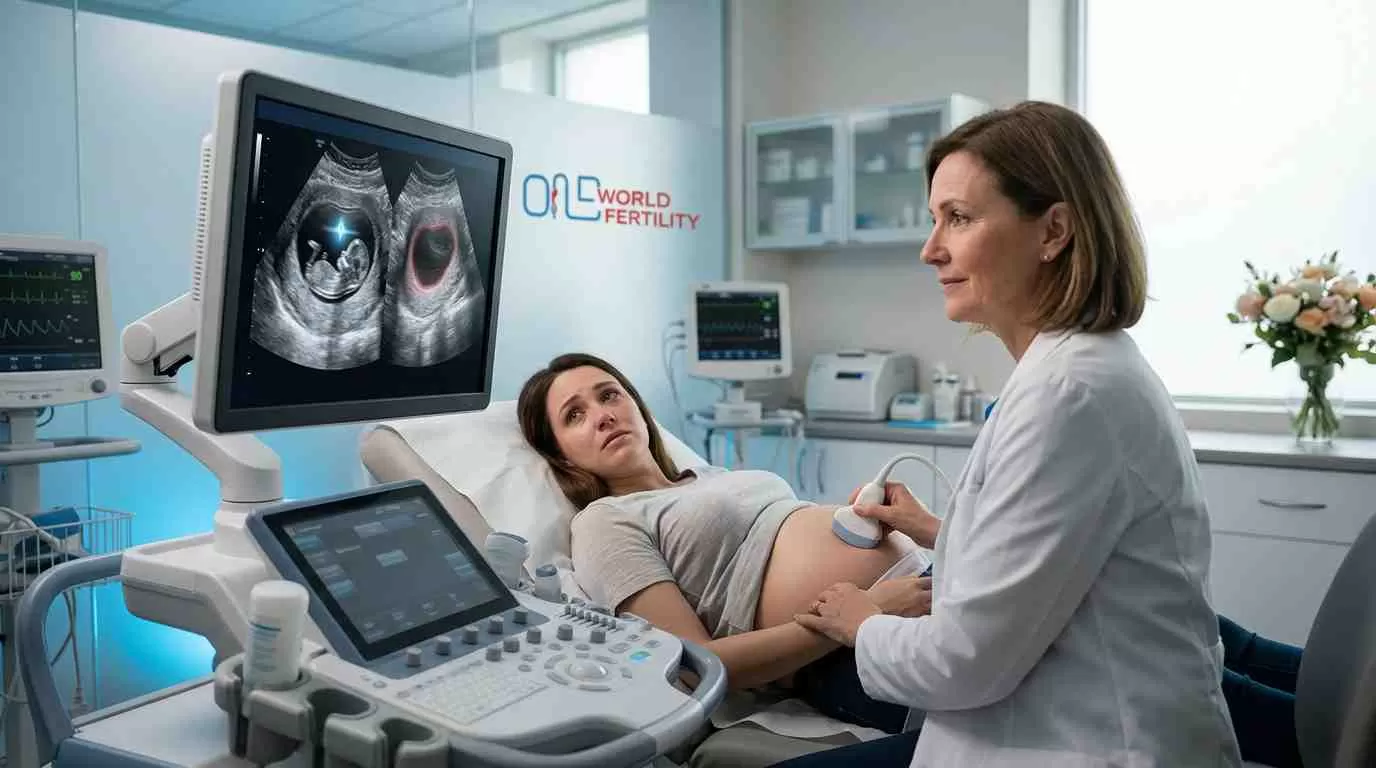
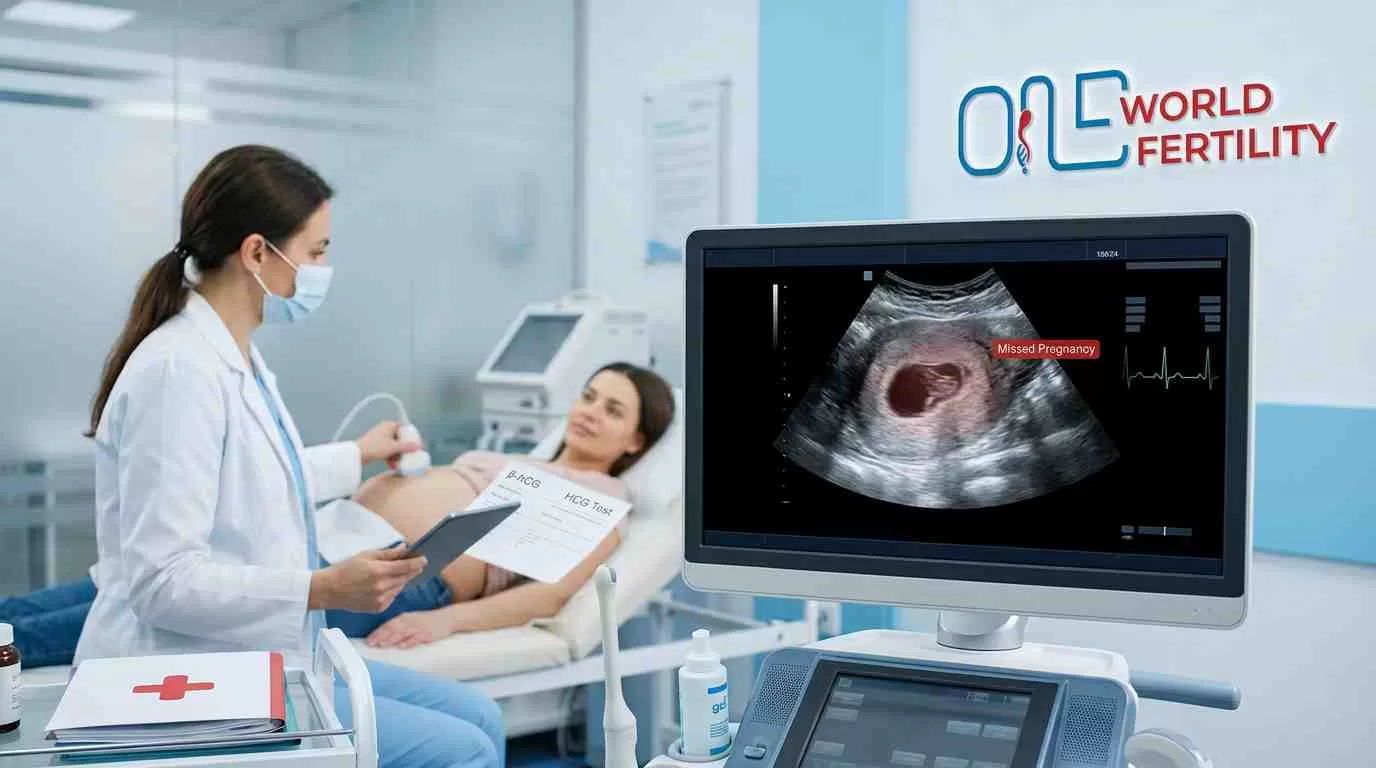
Most fertility clinics schedule a final ultrasound at week 8 or between weeks 8 and 10. This scan will tell you if you're ready to move on.Your doctor will check three things:
- heart rate (which should now be approximately 150 to 170 bpm),
- crown-rump length (confirming your baby is growing at the expected rate),
- and overall development to make sure everything looks healthy and on track.
If all looks good, this scan confirms that your pregnancy is stable enough for the transition to OB-GYN care.
And here's something worth pausing for: this may be the last time you see your baby on your fertility clinic's screen. The same screen where you saw the first flicker just a couple of weeks ago. Take a moment to enjoy that because this means more than you realise.
Progesterone and Medication Review
Your doctor will review everything you're currently taking - progesterone, estrogen, supplements, prenatal vitamins. This is the week when the conversation of lessening progesterone might begin.
Some clinics begin to lower progesterone levels at week 8. Others continue until week 10 or even 12. To be sure that the placenta is making enough progesterone on its own to support the pregnancy without any supplements, your doctor may undertake blood testing to evaluate your levels.
Every clinic has its own protocol, and the right timeline is the one your doctor sets for you. Don't stop or adjust anything until you have clear instructions. Don't stop after reading something on a forum or based on what someone else's clinic did. Stick with your doctor's instructions only.
Booking Your OB-GYN
This is the week to make sure you know who your OB-GYN is and set up your first prenatal appointment if you haven't already.
Your first OB visit usually happens between weeks 8 and 12. It usually takes longer because it includes your whole medical history, blood testing, and maybe even another ultrasound. Your fertility clinic will make a summary of your IVF history and pregnancy records to give to your OB, so they have all the information they need from the start.
It's normal to have a few days between graduating from your fertility clinic and seeing your OB. It doesn't mean that you are lost or forgotten. It just means the scheduling overlapped, and both teams are aware of it.
What's Coming Up After Graduation?
Here's what to expect after you start seeing your OB-GYN:
- The Nuchal Translucency (NT) scan is usually done between weeks 11 and 14. This is a test to see if someone has chromosomal problems, such as Down syndrome.
- Blood tests in the first trimester may be done alongside the NT scan as part of a full first-trimester screening package.
- Regular checkups during pregnancy, about every four weeks until the second trimester.
- At your initial visit, your OB-GYN will give you a complete calendar so you know precisely what to expect and when.
The Emotional Side of Graduating
Let's be honest: graduating from your fertility clinic isn't just a medical transition. It's an emotional one.
This team has been with you through beta tests, egg retrievals, embryo transfers, injections, and sleepless nights. They've seen you at your weakest. They've been there for you at times that most people in your life will never truly understand. And now you're being asked to walk away from that safety net.
It's a mix of good and bad feelings. You may be happy that you've come this far, and you may also be afraid of losing the people who helped you get here. Sadness and gratitude are next to each other. But everything you are feeling is real.
But here's the truth: no one is leaving you. You're being promoted. Your fertility clinic isn't pushing you away; they're sending you forward because you're ready. And your OB-GYN is trained for exactly this, carrying your care into the next chapter.
If you need help, your fertility clinic is always just a phone call away. They haven't forgotten you the moment you walk out that door.
And before you leave, thank your fertility team. A letter. One word. A look in the eye that says, "I wouldn't be here without you." They carried you. Now it's time to keep walking.
"I am safe enough to move forward. And moving forward is what I've been fighting for."

What Should You Do and Avoid This Week?
Week 8 is about showing up: for your appointments, for your body, and for the emotions that come with a week this big.
Do's
- Continue all medications until your doctor says otherwise: Even if graduation is happening, don't assume anything changes on its own. Wait for clear instructions.
- Attend your graduation appointment: This is the scan you've been building toward. Don't let your nerves make you change your plans, and be there no matter what.
- Confirm your OB-GYN: If you haven't already, book your first prenatal visit this week. Don't leave this for next week and get it on the calendar now.
- Rest: Your body needs it the most right now. When you're tired, it's your body telling you it needs time to heal. So, rest whenever you need and want.
- Light walking if you feel up to it: Light walking is still helpful for bloating and stress. But if your body says no today, do what it says.
- Stay hydrated: Especially important with nausea and your blood volume still increasing. Always have water close by.
- Eat iron and calcium-rich foods when possible: Your baby's bones are getting stronger, and your blood needs help. Even a little amount of iron-rich food on good days counts.
- Let yourself feel the emotions of graduating: Joy, fear, gratitude, sadness - they may all show up at once. That's not confusion. It is the feeling that most women understand how much the moment means.
Don'ts
- Don't stop progesterone without your doctor's instruction: Even if you've heard that some people stopped progesterone at week 8. Your timeline is your own. Your doctor is the only one who can decide.
- Don't skip your graduation appointment: This is one of the most important scans of your entire IVF journey.
- Don't do intense exercise or heavy lifting: Be gentle with things. Your body is working harder than it ever has before.
- Don't use hot tubs, saunas, or steam rooms: Still not safe at this stage.
- Don't smoke or drink alcohol: No exceptions.
- Don't panic if symptoms start to shift: Symptoms peaking doesn't mean they'll stay forever. Your body is starting to stabilise, which is a positive thing, not a warning sign.
- Don't compare your graduation timeline to anyone else's: some women graduate in week 8, and some in week 10. Both are normal, and your clinic will know when you're ready.
Quick Questions
Is my pregnancy safe at 8 weeks? At 8 weeks, when a heartbeat is verified and the baby is growing normally, the risk of miscarriage goes down significantly, generally less than 3 to 5%. That may make you feel better. But your clinic will still monitor your numbers.
Can I tell people now? Many couples decide to share after the 8-week scan or after they finish their time at the fertility clinic. Some people wait until 12 weeks. There are no rules; just do what feels good for you and your partner.
When does morning sickness get better? It usually gets worse between weeks 8 and 10, but starts to get better between weeks 12 to 14. You're in the hardest stage right now, but things will get better soon.
Do I still need prenatal vitamins? Yes, all during your pregnancy. If they make you feel sick, ask your doctor if you may switch to gummy ones or take them before bed with a little snack.
What if my OB-GYN doesn't know about my IVF history? Your fertility clinic will make a summary for you to hand over. You can also bring your own records for safety. Don't hesitate to tell your OB everything - your IVF history matters for your ongoing care.
Final Thoughts
Week 8 is a turning point. Your uterus has grown, and your baby is no longer an embryo; it has become a fetus. And you might be leaving your fertility clinic as well. Three big events, all in one week. You've come further than you ever imagined during those early days of injections and waiting rooms.
If you wish to remember last week's trip, our week seven blog discusses the changes in symptoms and follow-up scans that brought you here. When you're ready for what's next, our ninth week guide will be there. This is the week when your symptoms start to improve, and your new chapter of prenatal care really begins.
One World Fertility led you here, from the first shot to the first heartbeat to this moment. And when you move on to the next chapter, remember that we will always be proud to have been part of where it all began.
Frequently Asked Questions
It's normal to feel bittersweet. This team has been your safety net through the hardest part of your journey. Thank them - a note, a word, a moment of eye contact means more than you know. Trust that your OB-GYN is trained for exactly this. You're not losing support, you're stepping into a new chapter.
Your fertility clinic will do a final ultrasound checking heartbeat, growth, and crown-rump length. They'll review your medications and discuss progesterone tapering. They'll prepare your IVF history and pregnancy records for your OB-GYN. And for many clinics, it's also a moment of celebration for how far you've come.
After a confirmed heartbeat and healthy growth at 8 weeks, miscarriage risk drops to approximately 3 to 5%. This is one of the most reassuring milestones of early pregnancy. Your clinic or OB will continue monitoring, but the odds are strongly in your favor now.
Focus on iron-rich foods like spinach, lentils, and well-cooked red meat, and your blood volume has increased significantly. Calcium is also important as a baby's bones are beginning to harden. When nausea is bad, stick with BRAT foods, ginger, lemon water, and small, frequent bites. Eat what you can manage.
Only if your doctor specifically tells you to. Some clinics begin tapering at week 8, others continue until week 10 or 12. The placenta is gradually taking over progesterone production, but the timing of this handover varies by patient. Never stop or adjust on your own.
Most women graduate between weeks 8 and 10. Your fertility clinic will do a final ultrasound to confirm healthy growth and heartbeat, review your medications, and prepare a summary of your IVF history to hand over to your OB-GYN. It's a positive milestone; it means your pregnancy is stable.
The hormone hCG, which drives most early pregnancy symptoms, reaches its highest level between weeks 8 and 11. At week 8, you're right in the peak zone. This explains why nausea, fatigue, and other symptoms feel more intense this week than any week before. Relief usually begins around week 12 to 14.
At week 8, your baby officially transitions from embryo to fetus. This means all major organ systems have begun forming - heart, brain, lungs, digestive system, bones, and limbs. From this point forward, development is about growth and refinement rather than building from scratch.
Approximately the size of a grapefruit. It's still entirely within your pelvis and won't be visible from the outside yet. But you may feel fullness, pressure, or tightness in your lower abdomen, and your clothes around the waist may feel a bit snug.
By week 8, your uterus has nearly doubled in size, from roughly the size of a fist to the size of a grapefruit. The uterine walls are thickening, blood flow has increased dramatically, a mucus plug has formed to protect the baby, and the placenta is maturing and taking over progesterone production.